
Diabetes and Dizziness: Why You May Feel Lightheaded or Off Balance
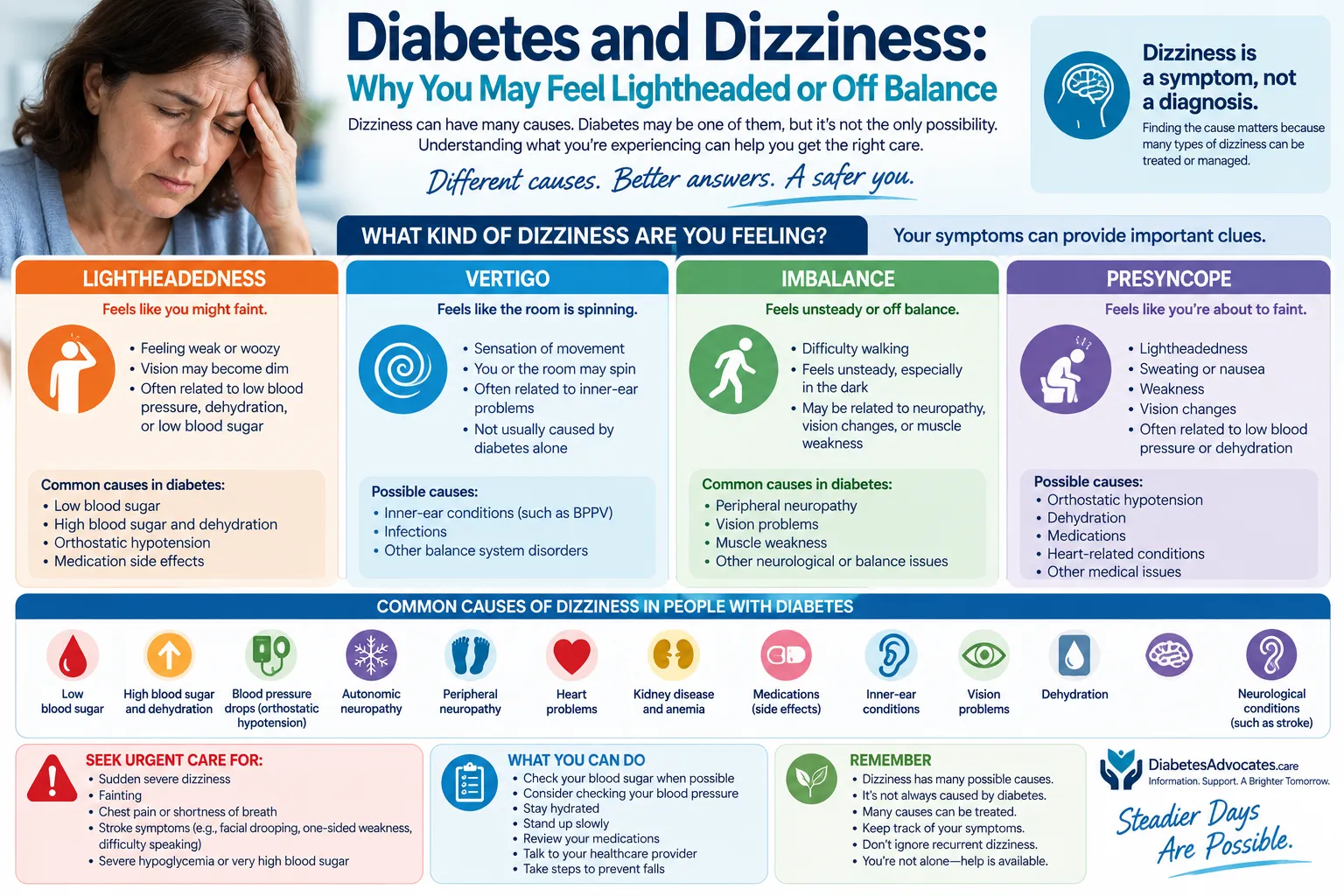
Feeling dizzy can be unsettling.
You may stand up and suddenly feel lightheaded. The room may seem to spin. You might feel unsteady while walking or worry that you are about to faint.
For someone with diabetes, the first thought may be:
- “Is my blood sugar causing this?”
- Sometimes it is.
Low blood glucose can cause dizziness and other neurological symptoms. High glucose may contribute indirectly through dehydration. Diabetes-related autonomic neuropathy can interfere with the body's ability to regulate blood pressure when you stand, while peripheral neuropathy can make maintaining balance more difficult.
But dizziness has many possible causes that have nothing to do with diabetes.
Inner-ear disorders, dehydration, anemia, medications, heart conditions, blood pressure problems, infections, vision changes, and neurological conditions can all cause dizziness or imbalance.
That makes one principle particularly important:
Dizziness in someone with diabetes should not automatically be blamed on diabetes.
Understanding what kind of dizziness you are experiencing—and what is happening when it occurs—can help you and your healthcare team determine the cause.
What Does “Dizzy” Actually Mean?
People use the word dizzy to describe several different sensations.
Those differences matter.
Lightheadedness
Lightheadedness can feel like:
- You may faint
- Your head feels unusually light
- Your vision becomes dim
- You feel weak or unstable
It may occur after standing quickly, during dehydration, or when blood pressure falls.
Vertigo
Vertigo creates a false sensation of movement.
You may feel as though:
- The room is spinning
- You are spinning
- The floor is moving
- Your surroundings are tilting
Vertigo frequently involves the inner ear or balance system and is not the same thing as ordinary lightheadedness.
Imbalance
Imbalance means feeling unsteady when standing or walking.
You may:
- Veer to one side
- Need to hold furniture
- Feel unstable in darkness
- Have difficulty walking on uneven surfaces
- Worry about falling
Peripheral neuropathy, muscle weakness, vision problems, inner-ear conditions, and other factors may contribute.
Presyncope
Presyncope is the sensation that you are close to fainting without actually losing consciousness.
People may experience:
- Weakness
- Sweating
- Nausea
- Blurred or narrowing vision
- Lightheadedness
Determining which sensation best describes your symptoms gives your healthcare provider an important starting point.
Low Blood Sugar and Dizziness
Hypoglycemia, or low blood glucose, is one important cause of dizziness in people with diabetes.
It is particularly relevant for people who use insulin or other medications capable of causing hypoglycemia.
Symptoms can include:
- Shakiness
- Sweating
- Hunger
- Fast heartbeat
- Dizziness
- Weakness
- Irritability
- Difficulty concentrating
- Confusion
- Symptoms differ between individuals and may also change over time.
If dizziness occurs and you are at risk of hypoglycemia, checking your glucose can help determine whether a low is responsible.
Follow your individualized hypoglycemia treatment plan.
Severe Hypoglycemia Is an Emergency
As glucose falls further, the brain may not receive enough fuel to function normally.
Severe hypoglycemia can lead to:
- Extreme confusion
- Inability to safely treat yourself
- Seizures
- Loss of consciousness
Someone experiencing severe hypoglycemia may need assistance from another person.
People at meaningful risk of severe hypoglycemia should discuss glucagon availability and emergency planning with their diabetes care team.
Do not attempt to give food or drink to an unconscious person because of the risk of choking.
Why Might Glucose Drop Unexpectedly?
Hypoglycemia can occur for several reasons.
Possible triggers include:
- Taking more insulin than needed
- Eating less carbohydrate than expected
- Delaying or skipping meals
- Increased physical activity
- Alcohol
- Illness
- Changes in kidney function
- Changes in medication or routine
- Sometimes there is no immediately obvious explanation.
- Keeping track of what happened before an episode may help identify patterns.
- Don't Assume Every Dizzy Spell Is a Low
Because dizziness can occur during hypoglycemia, people with diabetes sometimes automatically reach for juice, candy, or another source of carbohydrate whenever they feel dizzy.
That may be appropriate if glucose is actually low or if your diabetes plan tells you to treat suspected hypoglycemia immediately when testing is unavailable.
But repeatedly treating dizziness with carbohydrate when glucose is not low can create unnecessary glucose spikes while leaving the real cause untreated.
When possible, check rather than guess.
Can High Blood Sugar Cause Dizziness?
High glucose may also be associated with lightheadedness, although the connection is often less direct.
When blood glucose becomes significantly elevated, excess glucose can enter the urine.
Water follows it.
This can lead to:
- Increased urination
- Excessive thirst
- Fluid loss
- Dehydration
- Dehydration may then contribute to:
- Lightheadedness
- Weakness
- Fatigue
- Headache
- Dry mouth
If dizziness occurs alongside unusually high glucose, frequent urination, and intense thirst, dehydration may be part of the picture.
Very High Glucose Can Become an Emergency
Severe hyperglycemia can sometimes progress to a hyperglycemic crisis, including diabetic ketoacidosis (DKA) or hyperosmolar hyperglycemic state (HHS).
Warning signs vary but may include:
- Severe thirst
- Frequent urination
- Significant dehydration
- Nausea or vomiting
- Abdominal pain
- Extreme weakness
- Confusion
- Altered consciousness
- DKA may also cause rapid or deep breathing and other characteristic symptoms.
Follow your diabetes sick-day and emergency plan if glucose becomes severely elevated or ketones are present.
Confusion, severe dehydration, repeated vomiting, difficulty breathing, or reduced consciousness requires urgent medical attention.
Dehydration Can Cause Dizziness Even Without Severe Hyperglycemia
You do not need extremely high glucose to become dehydrated.
Fluid loss can occur because of:
- Hot weather
- Heavy exercise
- Vomiting
- Diarrhea
- Fever
- Certain medications
- Inadequate fluid intake
- Older adults may also have a less noticeable thirst response.
If you become dehydrated, blood volume can fall, making lightheadedness more likely—particularly when standing.
Don't Overcorrect With Excessive Water
Drinking appropriate fluids is important, but more is not always better.
People with certain conditions, including heart failure or advanced kidney disease, may have individualized fluid recommendations.
Excessive water consumption can also create dangerous electrolyte disturbances in extreme circumstances.
If you have been given a fluid restriction, follow your healthcare team's guidance rather than generic hydration advice.
What Is Orthostatic Hypotension?
Have you ever stood up and suddenly felt:
- Lightheaded
- Weak
- Unsteady
- Like your vision was fading
- As though you might faint?
One possible explanation is orthostatic hypotension, also called postural hypotension.
Normally, when you stand, gravity causes some blood to move toward your legs.
Your body quickly responds by adjusting heart rate and blood vessel tone so enough blood continues reaching your brain.
If this response does not work properly, blood pressure can drop after standing.
The result may be dizziness, weakness, visual disturbance, or even fainting.
The 2026 ADA Standards recognize dizziness, lightheadedness, and weakness with standing as symptoms that can occur with diabetic autonomic neuropathy.
How Diabetes Can Contribute to Orthostatic Hypotension
Long-term diabetes can damage the autonomic nerves that help regulate heart rate and blood pressure.
This is sometimes part of cardiovascular autonomic neuropathy, or CAN.
When these nerves do not respond normally to a change in body position, blood pressure may fall excessively when someone stands.
NIDDK similarly notes that autonomic nerve damage can cause people to feel lightheaded or faint when standing or during physical activity.
This does not mean every person with diabetes who becomes dizzy after standing has autonomic neuropathy.
Other possible causes include dehydration, medication effects, blood loss, heart problems, and other medical conditions.
How Is Orthostatic Hypotension Checked?
Healthcare professionals can compare blood pressure and pulse while you are in different positions.
The 2026 ADA Standards note that lying, sitting, and standing blood pressure measurements should be checked when indicated because postural changes can provide evidence of autonomic neuropathy.
If your dizziness consistently begins after standing, tell your healthcare provider.
That timing is an important clue.
Stand Up Gradually
If you experience postural lightheadedness, moving more slowly may reduce symptoms.
For example:
- Sit on the edge of the bed before standing.
- Give yourself a moment to adjust.
- Stand while holding a stable surface if necessary.
- Wait before beginning to walk.
- If you become dizzy, sit or lie down rather than trying to push through it.
- This can reduce your risk of falling.
However, frequent orthostatic symptoms deserve medical evaluation. Moving slowly may reduce symptoms, but it does not identify why they are happening.
Review Your Medications
Many medications can contribute to dizziness or low blood pressure.
Examples may include certain:
- Blood pressure medications
- Diuretics
- Heart medications
- Sedatives
- Antidepressants
- Pain medications
- Diabetes medications may contribute indirectly when they cause hypoglycemia.
- The important question is often when the dizziness began.
- Did it start after:
- Beginning a new medication?
- Increasing a dose?
- Adding another blood pressure medication?
- Becoming ill?
- Losing weight?
- Changing your diet?
Bring an up-to-date medication and supplement list to your healthcare appointments.
Do not stop prescribed medication on your own because you feel dizzy. Your healthcare provider may need to adjust the dose, timing, or medication safely.
Diuretics and Fluid Loss
Diuretics—sometimes called “water pills”—help the body remove sodium and water through urine.
They are commonly prescribed for conditions such as high blood pressure and heart failure.
In some circumstances, diuretics can contribute to:
- Lower blood pressure
- Dehydration
- Electrolyte abnormalities
- Lightheadedness
- However, these medications may be medically important.
Do not compensate by dramatically increasing fluids or salt without medical guidance, particularly if you have heart or kidney disease.
Blood Pressure That Is Too Low Can Cause Symptoms
Much attention in diabetes care focuses on high blood pressure because it increases cardiovascular and kidney risks.
But blood pressure can also become low enough to cause symptoms.
These may include:
- Dizziness
- Weakness
- Blurry vision
- Fatigue
- Fainting
- A blood pressure number should always be interpreted in context.
Someone who feels perfectly well may tolerate a reading that causes significant symptoms in another person.
If dizziness seems connected to blood pressure, discuss your readings and symptoms with your healthcare provider.
Diabetes and Balance Problems
Dizziness is not always the sensation that the room is spinning or that you are going to faint.
Sometimes the main problem is unsteadiness.
Diabetic peripheral neuropathy can damage sensory nerves in the feet and legs.
Those nerves provide information to the brain about:
- Pressure
- Position
- Movement
- Contact with the ground
When that sensory information becomes less reliable, balance can become more difficult.
The current ADA Standards note that involvement of large nerve fibers can cause balance problems and contribute to falls.
Why Balance Can Be Worse in the Dark
Your brain uses several systems to maintain balance, including:
- Vision
- Inner-ear signals
- Sensory information from muscles and joints
- Sensation from the feet
When sensation in the feet is reduced, a person may rely more heavily on vision.
This can explain why someone feels relatively stable during the day but becomes much more unsteady:
- At night
- In a dark bedroom
- When closing their eyes
- On uneven ground
- This type of imbalance is different from classic spinning vertigo.
- Neuropathy Can Increase Fall Risk
- Falls can cause serious injuries, particularly in older adults.
- If neuropathy affects balance, additional factors may increase risk, including:
- Muscle weakness
- Poor vision
- Dizziness after standing
- Sedating medications
- Unsafe footwear
- Clutter
- Loose rugs
- Poor lighting
- Fall prevention should address as many of these factors as possible.
You do not need to wait until after a serious fall to discuss balance problems with your healthcare provider.
Simple Changes Can Make the Home Safer
If you experience dizziness or imbalance, practical changes may reduce fall risk.
Consider:
- Improving hallway and stair lighting
- Using night-lights
- Removing loose rugs
- Keeping walkways clear
- Installing secure handrails where needed
- Wearing supportive footwear
- Keeping commonly used items within easy reach
Avoid using unstable furniture as a substitute for a proper handrail or mobility aid.
Vision Can Affect Balance Too
Your eyes provide the brain with essential information about your position and surroundings.
Blurred vision or reduced vision can therefore contribute to unsteadiness.
People with diabetes may experience temporary blurry vision during major glucose changes, and diabetes can also increase the risk of several eye diseases.
If dizziness seems more like difficulty navigating your surroundings than a faint or spinning sensation, vision may be one part of the evaluation.
What About Vertigo?
Vertigo—the sensation that you or the room is moving—is often associated with the vestibular system of the inner ear.
Common causes of vertigo may include inner-ear conditions that can occur whether or not someone has diabetes.
Symptoms may be triggered by:
- Turning the head
- Rolling over in bed
- Looking upward
- Changing position
Some forms of vertigo are brief and positional, while others can last much longer.
Because treatment depends on the cause, repeated vertigo should be evaluated rather than automatically attributed to glucose.
Hearing Changes Can Provide a Clue
The inner ear contains structures involved in both hearing and balance.
If dizziness or vertigo occurs together with:
- New hearing loss
- Ringing in the ears
- Ear pressure
- Ear pain
- tell your healthcare provider.
These symptoms may point toward an ear-related problem requiring further evaluation.
Dizziness After Exercise
Exercise can affect:
- Glucose
- Blood pressure
- Hydration
- Heart rate
If you become dizzy during or after physical activity, possible explanations include:
- Hypoglycemia
- Dehydration
- Low blood pressure
- Overheating
- Medication effects
- Cardiovascular problems
- Stop exercising if you feel faint or severely dizzy.
- Check glucose when appropriate and follow your diabetes plan.
Chest pain, severe shortness of breath, fainting, or other concerning cardiovascular symptoms require urgent evaluation.
Keep a Dizziness Diary
Dizziness can be difficult to describe days later during an appointment.
A short symptom diary can help.
Record:
- When dizziness occurred
- What it felt like
- Whether you were sitting, lying, standing, or walking
- How long it lasted
- Your glucose level
- Blood pressure if available
- What you had eaten
- Medication timing
- Exercise
- Fluid intake
- Other symptoms
Also note whether anything triggered the episode, such as standing quickly or turning your head.
These details can help distinguish between glucose problems, blood pressure changes, vertigo, and imbalance.
Don't Ignore Recurrent Dizziness
One brief episode after standing too quickly may have a simple explanation.
Repeated dizziness is different.
Talk with your healthcare provider if dizziness:
- Happens frequently
- Is becoming worse
- Causes falls
- Occurs during exercise
- Causes fainting
- Appears after a medication change
- Occurs despite normal glucose
- Interferes with walking or daily activities
- The goal is not simply to stop the sensation.
- It is to determine why it is happening.
- Anemia Can Cause Lightheadedness
- Not every dizzy spell is caused by glucose or blood pressure.
Anemia occurs when the body does not have enough healthy red blood cells or hemoglobin to carry oxygen effectively.
Possible symptoms include:
- Dizziness or lightheadedness
- Fatigue
- Weakness
- Shortness of breath
- Pale skin
- Rapid heartbeat
- Reduced exercise tolerance
Anemia has many possible causes, including iron deficiency, vitamin deficiencies, blood loss, and certain chronic diseases.
People with chronic kidney disease may also develop anemia because damaged kidneys may produce less erythropoietin, a hormone involved in red blood cell production.
A blood test is needed to determine whether anemia is present.
Kidney Disease Can Contribute Indirectly to Dizziness
Diabetes is a major risk factor for chronic kidney disease.
Kidney disease itself does not always directly cause dizziness, especially in its early stages. However, complications associated with more advanced kidney disease may contribute.
These can include:
- Anemia
- Fluid imbalances
- Electrolyte abnormalities
- Blood pressure changes
- Medication accumulation or altered medication effects
This is another reason routine kidney screening matters even when you do not have obvious kidney symptoms.
If you have kidney disease and develop new dizziness, tell your healthcare provider.
Heart Problems Can Sometimes Cause Dizziness
The brain depends on a continuous supply of oxygen-rich blood.
If the heart cannot pump effectively or the heartbeat becomes abnormally fast, slow, or irregular, someone may feel lightheaded or faint.
Possible accompanying symptoms include:
- Palpitations
- Chest discomfort
- Shortness of breath
- Weakness
- Exercise intolerance
- Fainting
Diabetes increases cardiovascular risk, so dizziness associated with heart-related symptoms deserves particular attention.
Dizziness During Exercise Should Not Be Ignored
Feeling mildly tired during exercise is one thing.
Feeling as though you may faint is different.
If significant dizziness occurs during physical activity:
- Stop exercising.
- Sit or lie down somewhere safe.
- Check glucose when appropriate.
- Follow your hypoglycemia plan if glucose is low.
Seek medical help if symptoms are severe or accompanied by chest pain, breathing difficulty, palpitations, or fainting.
Repeated exercise-related dizziness deserves medical evaluation even if glucose appears normal.
Could Dizziness Be a Sign of a Stroke?
Sudden dizziness or loss of balance can sometimes occur during a stroke, particularly when accompanied by other neurological symptoms.
Warning signs can include sudden:
- Facial weakness or drooping
- Arm or leg weakness
- Numbness, especially on one side
- Difficulty speaking or understanding speech
- Vision changes
- Severe trouble walking
- Loss of coordination
- Severe unexplained headache
- A person does not need to have every classic stroke symptom.
Sudden severe dizziness with new neurological symptoms requires emergency medical attention.
Do not wait to see whether the symptoms disappear.
Low Blood Sugar Can Sometimes Resemble Neurological Problems
Severe hypoglycemia can cause:
- Confusion
- Difficulty speaking
- Poor coordination
- Weakness
- Abnormal behavior
- Loss of consciousness
- These symptoms can sometimes resemble a neurological emergency.
If glucose can be checked immediately without delaying emergency care, that information may be useful.
However, do not assume severe neurological symptoms are “just a low.”
Stroke and hypoglycemia can both require urgent treatment.
What If You Actually Faint?
Fainting is also called syncope.
It is a temporary loss of consciousness caused by reduced blood flow to the brain.
Possible causes include:
- A sudden blood pressure drop
- Dehydration
- Heart rhythm problems
- Certain medications
- Vasovagal reactions
- Other cardiovascular or neurological conditions
Severe hypoglycemia can also cause loss of consciousness, although this is not the same mechanism as ordinary fainting.
An unexplained episode of loss of consciousness deserves medical evaluation.
Repeated fainting, fainting during exercise, or fainting associated with chest pain or palpitations is particularly concerning.
When Should You Check Your Glucose?
If you have diabetes and suddenly become dizzy, checking glucose is often useful—especially if you use insulin or medications that can cause hypoglycemia.
Consider glucose particularly when dizziness occurs with:
- Sweating
- Shakiness
- Hunger
- Confusion
- Weakness
- Fast heartbeat
- Recent exercise
- A delayed or missed meal
- If glucose is low, follow your individualized hypoglycemia treatment plan.
If glucose is normal but dizziness continues, another cause should be considered.
When Should You Check Blood Pressure?
Blood pressure information may be especially useful if dizziness:
- Begins after standing
- Occurs after getting out of bed
- Happens after a medication change
- Appears during dehydration
- Is associated with feeling faint
If your healthcare provider asks you to monitor blood pressure at home, use a validated device and follow instructions for proper positioning.
Do not become overly focused on a single reading.
Patterns combined with symptoms are usually more informative.
Don't Change Blood Pressure Medication on Your Own
If your blood pressure appears low during dizzy episodes, you may be tempted to skip medication.
That can be unsafe.
Some blood pressure medications also provide important benefits for the heart or kidneys.
Instead, record your readings and symptoms and discuss them with your healthcare provider.
Your treatment may need adjustment, but that decision should be individualized.
How Do Healthcare Professionals Evaluate Dizziness?
There is no single “dizziness test.”
Evaluation begins with understanding exactly what you are experiencing.
Your healthcare provider may ask:
Does the room spin?
Do you feel as though you will faint?
Are you mainly unsteady when walking?
Does it happen when you stand?
Does turning your head trigger it?
How long does it last?
What is your glucose when it happens?
Have you actually fainted?
Did symptoms begin after a medication change?
Do you have hearing, vision, heart, or neurological symptoms?
These details can narrow down possible causes considerably.
Your Physical Examination May Provide Clues
Depending on your symptoms, an evaluation may include:
- Blood pressure while lying and standing
- Heart rate
- Neurological examination
- Balance and walking assessment
- Foot sensation testing
- Eye examination
- Ear examination
- Cardiovascular assessment
- Additional testing depends on what the clinician suspects.
- Blood Tests May Be Needed
- Laboratory testing may help identify conditions contributing to dizziness.
- Depending on the situation, testing could include:
- Blood glucose
- Complete blood count
- Kidney function
- Electrolytes
- Thyroid testing
- Vitamin levels
- Other appropriate laboratory studies
- Not every person needs every test.
- Testing should be guided by symptoms and medical history.
- Heart Testing May Sometimes Be Appropriate
If symptoms suggest a cardiovascular cause, a healthcare professional may recommend an electrocardiogram (ECG) or other heart monitoring.
Someone who experiences intermittent palpitations may sometimes require longer monitoring because an abnormal rhythm may not occur during a brief office visit.
Further cardiovascular testing depends on symptoms and individual risk.
Inner-Ear Evaluation May Be Needed for Vertigo
If the room spins when you roll over in bed, look upward, or turn your head, an inner-ear condition may be responsible.
One common cause of positional vertigo is benign paroxysmal positional vertigo (BPPV).
A trained healthcare professional can perform specific positional tests to determine whether this is likely.
Certain repositioning maneuvers may help BPPV, but not every form of dizziness should be treated with these maneuvers.
Diagnosis comes first.
Balance Problems May Benefit From Physical Therapy
Physical therapy is not only for injuries.
Someone with neuropathy, weakness, vestibular problems, or recurrent falls may benefit from a targeted balance and strengthening program.
Depending on the cause, therapy may focus on:
- Leg strength
- Gait
- Balance
- Coordination
- Safe transfers
- Vestibular rehabilitation
- Appropriate use of mobility aids
- The goal is not merely to prevent falls.
- Improved balance can help people remain active and independent.
- Footwear Matters When You Feel Unsteady
- Shoes influence stability.
- If you have neuropathy or balance problems, choose footwear that:
- Fits securely
- Provides appropriate support
- Does not slide easily
- Protects the feet
- Does not create pressure points
- Loose slippers and unstable footwear may increase fall risk.
People with diabetes should also regularly inspect their feet for blisters, sores, redness, and other injuries.
Don't Let Fear of Falling Eliminate All Activity
After experiencing dizziness or a fall, some people become afraid to move.
They may stop walking, exercising, or leaving home.
Unfortunately, prolonged inactivity can contribute to:
- Muscle weakness
- Reduced endurance
- Further balance problems
- Loss of independence
The better strategy is to determine why you are unsteady and develop a safe activity plan.
A healthcare provider or physical therapist can help.
Review Vision and Hearing
Balance depends on multiple sensory systems.
Regular eye care is particularly important for people with diabetes because diabetic retinopathy, cataracts, glaucoma, and other eye conditions can affect vision.
Hearing and inner-ear problems may also provide clues when dizziness involves vertigo or imbalance.
Tell your healthcare provider if dizziness occurs with new:
- Hearing loss
- Ringing in the ears
- Double vision
- Significant blurry vision
- Other visual or hearing changes
- Be Careful on Stairs
- Stairs can become particularly hazardous when someone experiences:
- Neuropathy
- Poor vision
- Orthostatic dizziness
- Muscle weakness
- Balance problems
- Use secure handrails.
- Make sure stairways are well lit and free of clutter.
If you become dizzy immediately after standing, wait until you feel stable before attempting stairs.
Bathroom Safety Matters
Bathrooms combine several fall risks:
- Wet floors
- Hard surfaces
- Getting up quickly
- Poor nighttime lighting
If dizziness or balance problems are frequent, consider appropriate safety features such as:
- Secure grab bars
- Non-slip surfaces
- Adequate lighting
- Clear walkways
Avoid relying on towel racks as grab bars because they may not support your weight.
Nighttime Dizziness Requires Extra Care
Getting out of bed quickly in the dark can be risky if you experience orthostatic hypotension or neuropathy.
Consider:
- Sitting at the edge of the bed first
- Standing gradually
- Using a night-light
- Keeping the floor clear
- Wearing secure footwear when appropriate
- If nighttime dizziness happens repeatedly, tell your healthcare provider.
- What About Compression Garments?
In selected people with orthostatic hypotension, healthcare professionals may recommend compression garments to help reduce blood pooling in the legs or abdomen.
They are not appropriate or sufficient for every cause of dizziness.
A clinician should determine whether they are suitable for you, particularly if you have circulation problems or other medical conditions.
Salt Is Not a Universal Treatment for Low Blood Pressure
You may hear that eating more salt helps dizziness caused by low blood pressure.
That advice is not appropriate for everyone.
Many people with diabetes also have:
- High blood pressure
- Heart disease
- Kidney disease
- Heart failure
- Increasing sodium without medical guidance could worsen these conditions.
If orthostatic hypotension is confirmed, your healthcare team can recommend appropriate treatment based on your overall health.
Medication May Be Used for Orthostatic Hypotension
When lifestyle and medication adjustments are not enough, prescription treatment may sometimes be considered for persistent symptomatic orthostatic hypotension.
The appropriate treatment depends on the cause, blood pressure patterns, other health conditions, and current medications.
This is not a condition to self-treat based solely on internet advice.
Dizziness and Driving
Dizziness can make driving unsafe.
Do not drive if you:
- Feel faint
- Have active vertigo
- Are severely unsteady
- Have significant visual disturbance
- Are confused
- Have untreated hypoglycemia
If recurrent dizziness occurs unpredictably, discuss driving safety with your healthcare provider.
People at risk of hypoglycemia should follow their diabetes care team's recommendations for glucose monitoring and treatment before and during driving.
What Should You Do During a Dizzy Spell?
The appropriate response depends on the cause, but a few immediate safety steps are broadly useful.
Stop what you are doing.
Sit or lie down somewhere safe.
Avoid walking if you feel faint.
Trying to “push through” severe dizziness can result in a fall.
Check glucose when appropriate.
Especially if you use insulin or another medication that can cause hypoglycemia.
Notice what the dizziness feels like.
Is the room spinning, are you about to faint, or are you simply unsteady?
Look for other symptoms.
Chest pain, weakness on one side, speech difficulty, severe headache, or shortness of breath changes the urgency considerably.
When Should You Contact Your Healthcare Provider?
Schedule an evaluation if dizziness:
- Keeps returning
- Is becoming more frequent
- Causes falls or near-falls
- Occurs after standing
- Happens despite normal glucose
- Began after a medication change
- Is accompanied by new hearing problems
- Interferes with walking
- Prevents normal daily activities
- Persistent dizziness deserves an explanation.
- When Is Dizziness an Emergency?
- Seek emergency medical attention for dizziness accompanied by:
- New facial drooping
- New one-sided weakness or numbness
- Difficulty speaking
- Sudden major vision changes
- Severe difficulty walking
- A sudden severe headache
- Chest pain or pressure
- Severe shortness of breath
- Fainting during physical activity
- Persistent loss of consciousness
- Seizure
- Severe confusion
- Severe hypoglycemia that the person cannot self-treat
- Signs of a hyperglycemic emergency
Sudden severe dizziness that is dramatically different from your usual symptoms also deserves prompt evaluation, particularly when neurological or cardiovascular symptoms are present.
Frequently Asked Questions
Can diabetes cause dizziness?
Yes, but there is no single type of “diabetic dizziness.” Low glucose, dehydration associated with high glucose, autonomic neuropathy, blood pressure changes, and balance problems related to peripheral neuropathy can all contribute.
How do I know whether dizziness is from low blood sugar?
Check your glucose when possible. Hypoglycemia may also cause sweating, shakiness, hunger, weakness, confusion, or a rapid heartbeat. Follow your individualized treatment plan if glucose is low.
Can high blood sugar make you dizzy?
Significant hyperglycemia can increase urination and fluid loss, potentially leading to dehydration and lightheadedness. Severe hyperglycemia accompanied by vomiting, confusion, breathing changes, or major dehydration may indicate an emergency.
Why do I get dizzy when I stand up?
A blood pressure drop after standing may cause lightheadedness. Diabetes-related autonomic neuropathy is one possible cause, but dehydration, medications, cardiovascular conditions, and other problems can also contribute.
Can diabetic neuropathy cause balance problems?
Yes. Neuropathy can reduce sensation and position awareness in the feet and legs, making balance more difficult and increasing fall risk.
Why am I more unsteady in the dark?
When sensation in the feet is reduced, the brain may rely more heavily on vision for balance. Removing visual information in darkness can therefore make unsteadiness more noticeable.
Is vertigo caused by diabetes?
Vertigo has many possible causes, particularly disorders involving the inner ear. A person with diabetes can develop vertigo, but it should not automatically be assumed to be a diabetes complication.
Can diabetes medications cause dizziness?
Some diabetes medications can cause dizziness indirectly if they produce hypoglycemia. Other medications, including certain blood pressure medicines and diuretics, can also contribute to dizziness or low blood pressure.
Should I drink more water if I feel dizzy?
If dehydration is responsible, appropriate fluid replacement may help. But dizziness has many causes, and some people with heart or kidney disease have fluid restrictions. Recurrent dizziness should be properly evaluated.
Can anemia cause dizziness in someone with diabetes?
Yes. Anemia can cause lightheadedness, fatigue, weakness, and shortness of breath. Chronic kidney disease is one possible contributor to anemia, but many other causes exist.
Should I drive if I feel dizzy?
No. Active dizziness, vertigo, severe imbalance, visual disturbance, or hypoglycemia can make driving unsafe. Wait until the problem has resolved and follow medical guidance if episodes recur.
When should dizziness worry me?
Dizziness needs urgent attention when accompanied by stroke symptoms, chest pain, severe shortness of breath, fainting, seizure, severe confusion, or a diabetes emergency.
Key Takeaways
Dizziness is a symptom, not a diagnosis.
People use the word to describe several different experiences, including lightheadedness, spinning vertigo, near-fainting, and imbalance. Identifying which sensation you are experiencing can help determine the cause.
For people with diabetes, hypoglycemia is an important possibility—particularly when insulin or other medications capable of causing low glucose are used.
Significant hyperglycemia may contribute to dizziness through frequent urination and dehydration.
Diabetic autonomic neuropathy can interfere with normal blood pressure regulation, causing lightheadedness when standing.
Peripheral neuropathy may reduce sensation in the feet and legs, making balance more difficult and increasing fall risk.
But diabetes is only one part of the picture.
Anemia, kidney disease, medications, dehydration, heart conditions, inner-ear disorders, vision problems, and neurological conditions can also cause dizziness.
When symptoms occur, check rather than guess whenever possible. Glucose readings, blood pressure patterns, symptom timing, and a short dizziness diary can provide valuable clues.
Do not repeatedly treat every dizzy spell as hypoglycemia unless glucose is low or your emergency plan instructs you to treat suspected hypoglycemia when testing is unavailable.
Take recurrent dizziness seriously, especially if it causes falls, fainting, difficulty walking, or interferes with daily life.
And know the emergency warning signs. Sudden dizziness accompanied by weakness on one side, facial drooping, speech difficulty, major vision changes, severe headache, chest pain, shortness of breath, seizure, or loss of consciousness requires immediate medical attention.
The most useful question is not simply, “Does diabetes cause dizziness?” It is, “What is causing my dizziness?” Finding that answer can lead to safer and more effective treatment.
DiabetesAdvocates.care does not provide medical advice, diagnosis, or treatment. Please consult with your healthcare provider for questions and personalized medical advice.