
Diabetes and Excessive Sweating: Why You May Sweat Too Much or Too Little
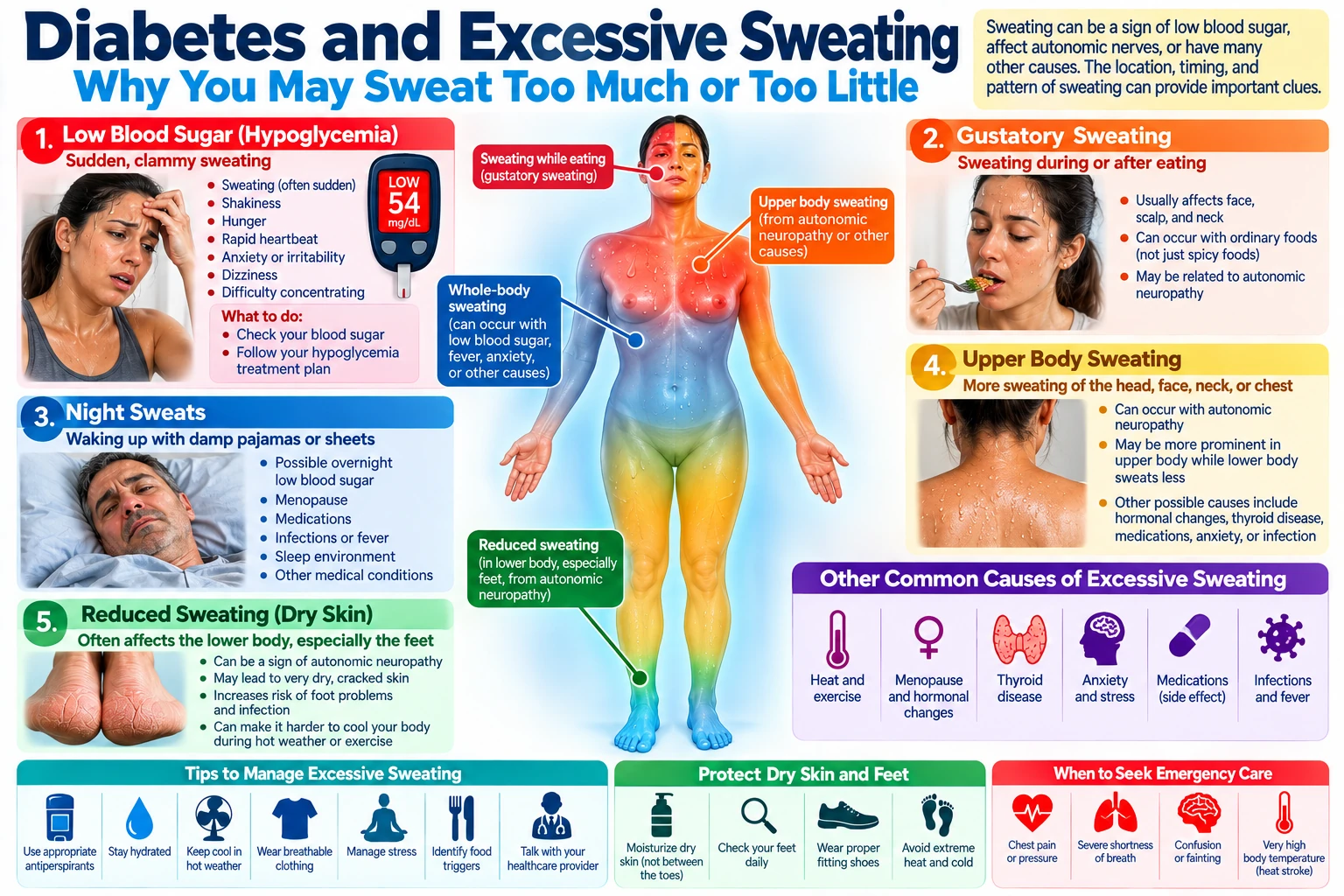
Sweating is one of your body's built-in cooling systems.
When your temperature rises, sweat glands release moisture onto the skin. As that moisture evaporates, it helps cool you down.
So sweating after exercise or during a hot afternoon is completely normal.
But what if you suddenly become drenched in sweat while sitting still?
What if you regularly wake with damp pajamas or sheets?
Or what if the opposite happens—your feet remain unusually dry even when the rest of your body is sweating?
For people with diabetes, changes in sweating can sometimes provide useful clues about what is happening in the body.
Low blood sugar can trigger sudden sweating. Long-term diabetes can affect the autonomic nerves that control sweat glands. Some people may sweat excessively in certain areas while sweating too little in others.
However, diabetes is only one possible explanation.
Hormonal changes, thyroid disease, medications, infections, anxiety, environmental heat, and other medical conditions can also affect sweating.
Understanding when, where, and why you sweat can help determine whether the symptom deserves further evaluation.
Why Do We Sweat?
Sweating is controlled largely by the autonomic nervous system.
This is the part of your nervous system that manages many functions without conscious effort, including:
- Heart rate
- Blood pressure
- Digestion
- Bladder function
- Body temperature
- Sweating
Your nervous system receives information about temperature and other conditions and adjusts sweat production accordingly.
You usually do not have to think:
“It's hot. I should start sweating now.”
Your body handles the process automatically.
How Can Diabetes Affect Sweating?
Diabetes can affect sweating in several ways.
The most important include:
- Hypoglycemia
- Autonomic neuropathy
- Abnormal temperature regulation
- Dehydration
- Medication effects
- Other diabetes-associated medical conditions
Some people experience too much sweating, while others develop too little sweating.
And occasionally both patterns can occur in the same person.
Excessive Sweating Has a Medical Name
Excessive sweating is known as hyperhidrosis.
It can affect:
- Underarms
- Hands
- Feet
- Face
- Scalp
- Upper body
- Multiple areas
Hyperhidrosis can occur independently of diabetes.
Some people have excessive sweating without another underlying medical condition.
Others develop increased sweating because of:
- Medications
- Hormonal changes
- Neurological conditions
- Endocrine disorders
- Infections
- Hypoglycemia
The pattern matters.
Too Little Sweating Matters Too
Reduced or absent sweating is called hypohidrosis or anhidrosis, depending on severity.
This may sound less troublesome than excessive sweating.
But sweating is an important cooling mechanism.
If large areas of the body cannot sweat normally, overheating becomes easier.
Reduced sweating may also contribute to very dry skin, particularly on the feet.
For someone with diabetes and neuropathy, dry, cracked skin can create additional foot-care concerns.
Sweating Is a Classic Sign of Hypoglycemia
One of the most important diabetes-related causes of sudden sweating is low blood sugar.
Hypoglycemia generally refers to glucose below 70 mg/dL (3.9 mmol/L).
When glucose falls, the body activates counter-regulatory responses designed to raise it.
This can trigger symptoms such as:
- Sweating
- Shakiness
- Hunger
- Rapid heartbeat
- Anxiety
- Irritability
- Dizziness
- Weakness
- Difficulty concentrating
Sweating can be particularly noticeable during a low.
Why Does Low Blood Sugar Make You Sweat?
When glucose drops, the body releases hormones and activates the sympathetic nervous system.
These responses are essentially an internal alarm system.
They help warn you that glucose is falling and encourage behaviors—such as eating—that can restore glucose.
Sweating is one manifestation of that response.
The sweating may feel:
- Sudden
- Cool or clammy
- Out of proportion to the room temperature
This is different from slowly becoming sweaty because you are sitting outside on a hot day.
Don't Diagnose a Low From Sweat Alone
Sweating can be an important hypoglycemia warning sign.
But sweating does not prove that glucose is low.
You might also sweat because of:
- Heat
- Exercise
- Stress
- Menopause
- Fever
- Medication
- Pain
- Anxiety
If you have diabetes and suddenly become sweaty, check your glucose when possible rather than automatically assuming the cause.
This is especially important if you use insulin or another medication that can cause hypoglycemia.
Other Symptoms Can Provide Clues
Imagine two situations.
Situation 1
You suddenly become sweaty and shaky, your heart is racing, you feel intensely hungry, and your glucose is 54 mg/dL.
Hypoglycemia is clearly important.
Situation 2
You experience hot flashes and sweating several times a day, but your glucose remains stable during every episode.
Another explanation deserves consideration.
Measurements can help separate these situations.
Treat Confirmed Hypoglycemia Promptly
If glucose is low and you are conscious and able to swallow safely, follow your established hypoglycemia treatment plan.
For many people, this involves fast-acting carbohydrate followed by another glucose check after the recommended interval.
If severe hypoglycemia causes:
- Loss of consciousness
- Seizure
- Severe confusion
- Inability to safely swallow
the person may need glucagon and emergency assistance.
Do not give food or drink by mouth to someone who cannot swallow safely.
Sweating Can Be an Early Warning Sign
Some people recognize sweating as one of their most reliable early symptoms of hypoglycemia.
For example, they may notice:
“My neck suddenly gets sweaty whenever I'm going low.”
Recognizing your personal pattern can be useful.
But symptoms can change over time.
People with impaired hypoglycemia awareness may lose some of the early warning signs they previously relied upon.
What Is Hypoglycemia Unawareness?
Repeated episodes of hypoglycemia can reduce the body's warning response in some people.
Someone who previously experienced:
- Sweating
- Shaking
- Hunger
may begin to notice fewer symptoms before glucose becomes dangerously low.
This is known as impaired hypoglycemia awareness.
It increases the risk of severe hypoglycemia.
If you frequently experience lows without warning, tell your diabetes care team.
Night Sweats and Diabetes
Waking up sweaty can be particularly confusing.
You may find:
- Damp pajamas
- Wet sheets
- Sweaty hair
- A damp pillow
- A clammy neck or chest
One possible cause is overnight hypoglycemia.
If glucose falls while you are sleeping, the body's counter-regulatory response can trigger sweating.
Check the Glucose Pattern
Night sweats do not automatically mean nighttime hypoglycemia.
If you use a CGM, review what glucose was doing during the hours before you woke.
Look for:
- Low readings
- Repeated low alerts
- Downward trends
- Patterns at similar times on multiple nights
If you do not use CGM, your healthcare team may recommend other ways of evaluating suspected overnight lows.
Don't Assume Every Night Sweat Is Diabetes
Night sweats have many possible causes.
These include:
- Menopause
- Perimenopause
- Fever or infection
- Medications
- Alcohol
- Sleep environment
- Anxiety
- Sleep disorders
- Other medical conditions
Persistent or unexplained night sweats deserve evaluation, particularly when accompanied by other symptoms such as fever or unexplained weight loss.
Autonomic Neuropathy Can Affect Sweating
Diabetes can damage autonomic nerves.
This is known as diabetic autonomic neuropathy.
Because autonomic nerves help regulate sweat glands, nerve damage can change how much you sweat and where sweating occurs.
Possible patterns include:
- Excessive sweating
- Reduced sweating
- Sweating in unusual areas
- Sweating associated with eating
- Abnormally dry feet
Autonomic neuropathy may affect multiple body systems, not just sweating.
Other Signs of Autonomic Neuropathy
Depending on which nerves are affected, autonomic neuropathy can also contribute to:
- Blood-pressure changes when standing
- Abnormal heart-rate responses
- Digestive problems
- Bladder problems
- Sexual dysfunction
- Abnormal temperature regulation
Someone with several of these symptoms may need broader evaluation rather than treating each symptom separately.
Why Might the Upper Body Sweat More?
One unusual pattern associated with diabetic autonomic neuropathy is increased sweating of the upper body.
A person may experience excessive sweating around the:
- Face
- Head
- Neck
- Chest
- Upper torso
At the same time, sweating may be reduced in the lower body.
This can create an odd situation where the upper body feels drenched while the feet remain unusually dry.
The Body May Be Trying to Compensate
When sweat production is reduced in one region, sweating may become more prominent elsewhere.
This can contribute to disproportionate upper-body sweating.
However, upper-body sweating is not automatically proof of diabetic autonomic neuropathy.
Other causes still need consideration.
What Is Gustatory Sweating?
Gustatory sweating means sweating triggered by eating.
Someone may begin sweating around the:
- Forehead
- Face
- Scalp
- Neck
soon after starting a meal.
This can happen even when the food is not particularly hot.
In people with diabetes, gustatory sweating can occur as a manifestation of autonomic neuropathy.
Spicy Food Sweating Is Not Necessarily Abnormal
Spicy foods naturally cause sweating in many people.
That is different from repeatedly developing pronounced facial or scalp sweating while eating ordinary foods.
If nearly every meal causes significant sweating, tell your healthcare provider.
The timing and food triggers can help determine what is happening.
Reduced Sweating Can Affect the Feet
Autonomic nerve damage can reduce sweating in the feet.
As a result, the skin may become:
- Very dry
- Flaky
- Rough
- Cracked
This matters because cracks in the skin can create openings for infection.
If neuropathy also reduces sensation, you may not notice a crack or injury immediately.
Dry Feet Are More Than a Cosmetic Issue
People sometimes focus on the appearance of dry skin.
With diabetes, the bigger concern is maintaining the skin barrier.
Cracks—particularly around the heels—can become:
- Painful
- Deep
- Irritated
- Infected
Moisturizing dry areas can help protect the skin.
But avoid putting moisturizer between the toes unless your healthcare professional specifically recommends it, because excess moisture there can encourage fungal growth.
Check Your Feet Every Day
If your feet are unusually dry or you have neuropathy, inspect them regularly.
Look for:
- Cracks
- Blisters
- Cuts
- Redness or discoloration
- Drainage
- Swelling
- Calluses
- Ulcers
Remember:
A serious foot problem does not always hurt when neuropathy is present.
Visual inspection can compensate for reduced sensation.
Reduced Sweating Can Increase Heat Risk
If large areas of the body do not sweat normally, cooling becomes more difficult.
During hot weather or exercise, body temperature may rise more easily.
Possible heat-related symptoms include:
- Dizziness
- Weakness
- Headache
- Nausea
- Muscle cramps
- Confusion
People with autonomic neuropathy should be particularly attentive to heat exposure.
Heat and Diabetes Can Create Multiple Problems at Once
Hot weather may contribute to:
- Increased fluid loss
- Dehydration
- Glucose changes
- Heat exhaustion
- Problems with diabetes medication or device storage
If sweating is impaired, the risk of overheating may increase further.
Plan outdoor activity according to weather conditions and your medical needs.
Dehydration Can Change Sweating
Sweating itself causes fluid loss.
Heavy sweating during:
- Exercise
- Outdoor work
- Hot weather
- Fever
can contribute to dehydration.
At the same time, high glucose can increase urination and cause additional fluid loss.
The combination can make someone feel:
- Thirsty
- Weak
- Dizzy
- Fatigued
- Headachy
Hydration needs should be individualized, particularly for people with heart or kidney disease.
Menopause Is an Important Alternative Explanation
Hot flashes and night sweats are common during perimenopause and menopause.
They can involve sudden:
- Warmth
- Flushing
- Sweating
- Nighttime awakenings
For a woman with diabetes, it may be difficult to distinguish a hot flash from hypoglycemia based on sensation alone.
Checking glucose during episodes can help clarify whether low glucose is actually present.
Hormonal Changes Can Also Affect Glucose
Menstrual cycles, perimenopause, menopause, pregnancy, and other hormonal changes can influence glucose patterns in some people.
This means two things may happen simultaneously:
Hormonal changes may cause sweating
and
hormonal changes may alter glucose.
Tracking symptoms alongside glucose can make patterns easier to understand.
Thyroid Disease Can Cause Excessive Sweating
An overactive thyroid, known as hyperthyroidism, can increase metabolism.
Possible symptoms include:
- Excessive sweating
- Heat intolerance
- Rapid heartbeat
- Tremor
- Anxiety
- Unexplained weight loss
- Difficulty sleeping
These symptoms can overlap with hypoglycemia.
Persistent symptoms deserve evaluation rather than repeatedly treating them as low glucose without checking.
Anxiety and Stress Can Trigger Sweating
The autonomic nervous system also responds to emotional stress.
Anxiety can cause:
- Sweaty palms
- Facial sweating
- Rapid heartbeat
- Trembling
- A feeling of warmth
These symptoms overlap considerably with hypoglycemia.
Again, glucose measurement can help.
If glucose is normal during repeated episodes, consider other causes.
Don't Automatically Label Symptoms “Anxiety”
The reverse is also important.
Someone experiencing sweating and palpitations should not automatically be told they are anxious.
Hypoglycemia, thyroid disease, medication effects, heart problems, and other conditions may cause similar symptoms.
Context and appropriate evaluation matter.
Medications Can Cause Sweating
A variety of medications may increase sweating.
Depending on the individual, these can include certain:
- Antidepressants
- Pain medications
- Hormonal therapies
- Fever-reducing medications
- Other prescription drugs
Diabetes medications can indirectly cause sweating if they produce hypoglycemia.
If excessive sweating began soon after starting or changing a medication, mention the timing to your healthcare provider or pharmacist.
Don't Stop Medication Suddenly
If you suspect a medication is contributing to sweating, do not automatically discontinue it.
Some medications can cause withdrawal symptoms or other problems when stopped abruptly.
Ask whether:
- Sweating is a known side effect
- The dose could be adjusted
- Another medication is available
- Another condition could be responsible
A medication review can often clarify the situation.
Infection and Fever Can Cause Sweating
When your immune system responds to infection, body temperature can rise.
Sweating may occur as a fever changes or “breaks.”
Other symptoms may include:
- Chills
- Fatigue
- Body aches
- Cough
- Urinary symptoms
- Skin redness
- Wound drainage
Illness can also make glucose harder to manage.
This means fever, sweating, and elevated glucose may occur together without the glucose itself being the primary cause of the sweating.
Watch Foot Wounds Carefully
If you have diabetes and sweating occurs with:
- Fever
- Chills
- A red or discolored foot
- Swelling
- Drainage
- An open wound
seek medical advice promptly.
A diabetic foot infection can become serious, especially when neuropathy or poor circulation is present.
Exercise Sweating Is Usually Normal
Sweating during exercise is a normal cooling response.
The amount varies widely among individuals.
Factors include:
- Temperature
- Humidity
- Exercise intensity
- Fitness
- Clothing
- Genetics
- Hydration
Sweating heavily does not necessarily mean something is wrong.
The context matters.
Exercise Can Also Cause Hypoglycemia
For people using insulin or certain glucose-lowering medications, physical activity can lower glucose during or after exercise.
If sweating during exercise seems excessive and is accompanied by:
- Shakiness
- Sudden weakness
- Confusion
- Hunger
- Dizziness
check glucose when possible.
Do not assume all exercise-related sweating is simply from heat.
Delayed Lows Can Occur After Exercise
Exercise can increase insulin sensitivity for hours afterward.
For some people, this creates a risk of delayed hypoglycemia, including overnight.
If you repeatedly experience nighttime sweating after evening exercise, review your glucose data.
The pattern may reveal whether overnight lows are involved.
Sweating With Chest Pain Is Different
Sweating can occur during serious cardiovascular events.
A heart attack may produce symptoms such as:
- Chest pressure or discomfort
- Shortness of breath
- Nausea
- Lightheadedness
- Unusual weakness
- Sweating
Symptoms are not always dramatic or identical from person to person.
Diabetes is an important cardiovascular risk factor.
Don't Assume Sudden Sweating Is “Just My Sugar”
If you suddenly become sweaty and also develop:
- Chest pressure
- Chest pain
- Significant shortness of breath
- Fainting
- Severe weakness
seek urgent medical attention.
Checking glucose can be useful, but it should not delay emergency care when symptoms suggest a cardiovascular emergency.
Keep a Sweating and Glucose Log
When abnormal sweating repeatedly occurs, patterns can help.
Record:
- Time of episode
- Glucose level
- CGM trend
- Where you were sweating
- What you were doing
- Room or outdoor temperature
- Meals
- Exercise
- Medications
- Menstrual or menopausal symptoms when relevant
- Fever or illness
- Stress
- Other symptoms
After several episodes, you may notice a consistent pattern.
Where You Sweat Can Be as Important as How Much
Compare these examples:
Sudden whole-body clammy sweating + glucose 55 mg/dL
Hypoglycemia is an important explanation.
Face and scalp sweating whenever you eat
Gustatory sweating may need consideration.
Upper body sweating + unusually dry feet + other autonomic symptoms
Autonomic neuropathy may be contributing.
Hot flashes + normal glucose + menopausal symptoms
Hormonal changes may be more likely.
Sweating + fever + infected foot wound
Infection requires attention.
The pattern provides clues.
When Should Excessive Sweating Be Evaluated?
Talk with your healthcare provider if sweating:
- Is new
- Has become significantly worse
- Regularly wakes you at night
- Occurs without an obvious trigger
- Happens during meals
- Is associated with frequent hypoglycemia
- Interferes with daily activities
- Is accompanied by unexplained weight loss
- Occurs with persistent fever
- Is accompanied by other symptoms of autonomic neuropathy
Likewise, report a major reduction in your ability to sweat, particularly if you are developing heat intolerance.
The Most Important Lesson
Sweating is a normal body function.
But diabetes can change that function in several different ways.
A sudden episode of sweating may signal hypoglycemia.
Long-term autonomic nerve damage may cause excessive, reduced, or unusually distributed sweating.
Night sweats may be caused by overnight lows—but they may also result from menopause, medication, infection, sleep conditions, or other causes.
And a person who sweats heavily from the head and chest while having unusually dry feet may be experiencing an entirely different mechanism from someone who becomes clammy during a glucose low.
Instead of asking only:
“Am I sweating too much?”
also ask:
Where am I sweating?
When does it happen?
What is my glucose doing?
What other symptoms are occurring?
Those details can make the cause much easier to identify.
Can Abnormal Sweating Be Treated?
Often, yes.
But treatment depends on why the sweating is happening.
Someone experiencing sudden sweating during hypoglycemia needs a completely different approach from someone with:
- Primary hyperhidrosis
- Diabetic autonomic neuropathy
- Gustatory sweating
- Menopausal hot flashes
- Hyperthyroidism
- Medication-related sweating
- Infection
- Reduced ability to sweat
That is why identifying the pattern comes before choosing treatment.
Start by Looking for a Treatable Cause
When excessive sweating is new or unexplained, a healthcare professional may review:
- Glucose patterns
- Diabetes medications
- Other prescription medications
- Thyroid symptoms
- Menopausal symptoms
- Fever or infection
- Alcohol use
- Anxiety or stress
- Neurological symptoms
They may also ask where the sweating occurs and whether it happens during sleep, meals, exercise, or episodes of suspected hypoglycemia.
If Hypoglycemia Is Causing the Sweating
The goal is not to stop the sweat.
The goal is to correct the low glucose.
Follow your established hypoglycemia treatment plan.
For many conscious people who can safely swallow, this involves taking an appropriate amount of fast-acting carbohydrate and checking glucose again after the recommended interval.
If hypoglycemia happens repeatedly, treating every episode is only part of the solution.
The bigger question is:
Why do the lows keep happening?
Repeated Lows May Require a Treatment Review
Frequent hypoglycemia may be related to:
- Insulin doses
- Meal timing
- Exercise
- Alcohol
- Changes in kidney function
- Weight changes
- Changes in eating patterns
- Other medications
Your healthcare team may need to adjust your diabetes plan.
Repeated lows should not simply become a normal part of living with diabetes.
CGM Can Help Reveal Hidden Patterns
Continuous glucose monitoring can be particularly useful when sweating occurs:
- Overnight
- After exercise
- Between meals
- At unpredictable times
Review whether the sweating consistently corresponds with falling glucose.
If it does not, another cause becomes more likely.
Remember that CGM measures glucose in interstitial fluid rather than directly in the bloodstream. If symptoms and CGM readings do not match, follow the manufacturer's instructions, which may include confirming with a fingerstick.
Managing Night Sweats
If you repeatedly wake sweaty, start by looking at the pattern.
Ask:
- Was glucose low?
- Did a CGM alert occur?
- Was the room unusually warm?
- Did I drink alcohol?
- Did I exercise late?
- Am I experiencing menopausal symptoms?
- Did I recently start a medication?
- Do I have fever or signs of illness?
Avoid assuming every night sweat is an overnight low.
Don't Eat Extra Carbohydrates Every Night Without Evidence
Someone who fears overnight hypoglycemia may begin eating a large bedtime snack “just in case.”
For some people, that can unnecessarily raise overnight glucose.
If nighttime lows are actually occurring, the diabetes treatment plan may need adjustment.
Use glucose information to guide the discussion rather than repeatedly compensating for a medication problem with extra food.
Make the Sleep Environment More Comfortable
When night sweats are not caused by an urgent medical problem, practical measures may improve comfort.
These can include:
- Lightweight sleepwear
- Breathable bedding
- Appropriate room temperature
- A fan when suitable
- Changing damp clothing promptly
These measures manage the symptom but do not identify the underlying cause.
Persistent unexplained night sweats still deserve medical evaluation.
What About Excessive Sweating During the Day?
For localized excessive sweating, treatment may begin with an antiperspirant.
Antiperspirants are different from deodorants.
Deodorant
Primarily helps control odor.
Antiperspirant
Reduces sweat production.
Many products combine both.
Stronger Antiperspirants Are Available
Products containing aluminum-based ingredients can temporarily block sweat ducts and reduce sweating.
Stronger formulations may be available over the counter or by prescription.
They are commonly used for underarm sweating and, depending on the product and medical guidance, may sometimes be used on other areas.
Follow application instructions carefully.
Don't Put Strong Antiperspirant Everywhere
Skin around the:
- Face
- Eyes
- Genitals
- Broken skin
is more sensitive.
A product designed for the underarms should not automatically be applied to every sweaty area.
Ask a healthcare professional or dermatologist about safe treatment when excessive sweating involves the face, scalp, hands, or other sensitive locations.
Prescription Treatments for Hyperhidrosis
When ordinary antiperspirants are not enough, additional treatments may be considered.
Depending on the location and cause of sweating, options can include:
- Prescription topical medications
- Oral medications
- Iontophoresis
- Botulinum toxin injections
- Procedures for severe cases
These treatments are generally used for persistent excessive sweating rather than normal sweating from heat or exercise.
What Is Iontophoresis?
Iontophoresis uses a mild electrical current, typically through water, to reduce sweating.
It is most often used for excessive sweating of the:
- Hands
- Feet
Treatment usually requires repeated sessions.
It is not appropriate for everyone, so medical guidance is important.
Botulinum Toxin Can Reduce Sweating
Botulinum toxin injections can temporarily reduce signaling to sweat glands.
They may be used for certain forms of excessive sweating.
The effects are not permanent, so repeat treatment may eventually be needed.
Treatment location, risks, cost, and expected benefit should be discussed with a qualified healthcare professional.
Oral Medicines Can Have Side Effects
Some medications reduce sweating by blocking nerve signals involved in sweat production.
But because the autonomic nervous system controls many functions, these medicines can produce effects elsewhere in the body.
Possible side effects may include:
- Dry mouth
- Constipation
- Blurred vision
- Urinary problems
- Increased overheating risk
This is particularly important for someone who already has diabetic autonomic neuropathy.
Treating Gustatory Sweating
If eating repeatedly causes pronounced sweating around the face, scalp, or neck, tell your healthcare provider.
Treatment depends on severity and the underlying cause.
Some people may benefit from topical or other prescription treatments.
But first distinguish abnormal gustatory sweating from ordinary sweating after spicy or very hot foods.
A simple symptom diary can help.
Record Which Foods Trigger It
If meal-related sweating is a problem, record:
- What you ate
- Whether the food was spicy
- Meal temperature
- Where sweating occurred
- How quickly it began
- How long it lasted
- Glucose level when relevant
If virtually every meal causes substantial facial or scalp sweating regardless of food type, that information is useful for your clinician.
Reduced Sweating Requires a Different Approach
If autonomic neuropathy has reduced your ability to sweat, treatments designed to block sweating are obviously inappropriate.
Instead, the priority becomes:
- Preventing overheating
- Protecting dry skin
- Maintaining appropriate hydration
- Adjusting exercise and heat exposure
This illustrates why knowing the cause matters so much.
Protect Yourself During Hot Weather
If you do not sweat normally, your body may have more difficulty releasing heat.
During hot conditions:
- Limit intense activity during the hottest part of the day.
- Seek shade or air conditioning.
- Wear lightweight clothing.
- Take cooling breaks.
- Monitor how you feel.
- Drink fluids according to your medical needs.
Do not wait until you feel severely overheated before responding.
Learn the Signs of Heat Exhaustion
Heat exhaustion can cause:
- Heavy sweating—or sometimes inadequate sweating
- Weakness
- Dizziness
- Headache
- Nausea
- Muscle cramps
- Rapid heartbeat
Move to a cooler environment and seek medical assistance when symptoms are significant or not improving.
Heat Stroke Is an Emergency
Heat stroke is much more serious.
Possible signs include:
- Very high body temperature
- Confusion
- Abnormal behavior
- Seizure
- Loss of consciousness
Call for emergency medical help.
Do not assume confusion in hot weather is simply caused by glucose.
Check glucose when practical, but emergency treatment should not be delayed.
Hydration Needs Are Individual
Sweating increases fluid loss.
Hot weather, exercise, fever, and high glucose can increase fluid needs further.
Water is often an appropriate hydration choice, but there is no single amount everyone with diabetes should drink.
Fluid needs vary according to:
- Activity
- Climate
- Body size
- Kidney function
- Heart function
- Pregnancy
- Medications
Some people with advanced heart or kidney disease may have specific fluid restrictions.
Follow individualized medical advice.
Do You Need Electrolyte Drinks?
Not every sweaty workout requires a sports drink.
For ordinary daily activity, water and regular meals may be sufficient for many people.
Long-duration exercise, very heavy sweating, illness, or specific medical situations may change electrolyte needs.
Remember that many sports drinks contain significant carbohydrate.
Check the label and consider how the beverage fits into your diabetes plan.
Protect Very Dry Feet
When sweating is reduced in the feet, skin may become extremely dry.
A basic foot-care routine may include:
- Washing gently
- Drying carefully
- Applying moisturizer to dry skin
- Inspecting the feet daily
Avoid soaking the feet for prolonged periods, which can further disrupt the skin.
Keep Moisturizer Away From Between the Toes
Moisturizing dry heels and other dry areas can help reduce cracking.
However, the spaces between the toes generally need to stay dry.
Excess moisture there can encourage fungal growth.
If you have significant skin cracking or uncertainty about which product to use, ask your healthcare provider or podiatrist.
Don't Remove Thick Skin Aggressively
Dry feet may develop calluses.
Avoid cutting calluses yourself or using harsh chemical corn and callus removers without medical guidance.
Neuropathy can make it difficult to recognize when healthy skin has been injured.
Professional foot care may be safer for people at increased risk.
Wear Appropriate Shoes
Dry or numb feet need protection.
Choose shoes that:
- Fit properly
- Do not create excessive pressure
- Protect the toes
- Do not rub the skin
Check inside shoes before putting them on if you have significant neuropathy.
A small stone or foreign object may cause injury without creating enough pain to warn you.
Exercise Safely When Sweating Is Abnormal
Physical activity remains valuable for most people with diabetes.
But adjust your routine when temperature regulation is impaired.
Consider:
- Exercising during cooler hours
- Using indoor climate-controlled spaces
- Taking more frequent breaks
- Monitoring glucose
- Carrying hypoglycemia treatment
- Maintaining appropriate hydration
If you have significant autonomic neuropathy, discuss exercise safety with your healthcare team.
Sweating Can Affect Diabetes Devices
Heavy sweating can loosen adhesives used for:
- Continuous glucose monitors
- Insulin pumps
- Infusion sets
If this happens frequently, discuss appropriate adhesive products, overpatches, or skin-preparation strategies with your diabetes team or device manufacturer.
Rotate sites according to device recommendations.
Watch for Skin Irritation Under Devices
Sweat trapped under adhesive can contribute to irritation.
Possible signs include:
- Itching
- Redness
- Rash
- Blistering
A mild adhesive reaction is different from infection.
Increasing warmth, swelling, pain, drainage, or spreading redness deserves medical attention.
Review Your Medications
If abnormal sweating began after starting or increasing a medication, create a complete medication list.
Include:
- Prescription drugs
- Over-the-counter medicines
- Supplements
- Herbal products
A pharmacist or healthcare provider can look for medications that may contribute.
Do not stop important medications suddenly without guidance.
When Should Thyroid Testing Be Considered?
If sweating occurs with symptoms such as:
- Heat intolerance
- Tremor
- Rapid heartbeat
- Unexplained weight loss
- Anxiety
- Sleep problems
your healthcare provider may consider thyroid evaluation.
These symptoms can overlap with hypoglycemia, making glucose measurements particularly helpful.
Persistent Night Sweats Need a Broader Evaluation
Occasional nighttime sweating in a warm bedroom is common.
Repeated drenching night sweats without an obvious explanation deserve more attention.
Tell your healthcare provider if night sweats occur with:
- Persistent fever
- Unexplained weight loss
- Enlarged lymph nodes
- Persistent cough
- Significant fatigue
- Other new symptoms
Diabetes should not become the automatic explanation for every night sweat.
When Should You See a Dermatologist?
A dermatologist may help when excessive sweating:
- Is persistent
- Significantly affects daily life
- Causes frequent skin problems
- Has not responded to basic measures
Dermatologists can evaluate hyperhidrosis and discuss treatments such as stronger topical therapies, procedures, or other options.
When Should You Talk to Your Diabetes Care Team?
Discuss abnormal sweating when it:
- Occurs with repeated hypoglycemia
- Frequently happens overnight
- Appears during meals
- Is associated with other autonomic symptoms
- Has changed significantly
- Is accompanied by unusually dry feet
- Makes exercise or heat exposure difficult
Your diabetes team can review glucose patterns and determine whether autonomic neuropathy or medication effects may be involved.
When Is Sweating an Emergency?
Sweating alone is rarely an emergency.
Sweating with certain other symptoms can be.
Seek emergency medical attention for sweating accompanied by:
- Chest pressure or severe chest discomfort
- Significant shortness of breath
- Fainting
- Severe confusion
- Seizure
- Loss of consciousness
- Signs of heat stroke
Severe hypoglycemia requiring assistance is also an emergency situation.
Sweating and Heart Attack Symptoms
Heart attacks do not always produce dramatic crushing chest pain.
Possible symptoms can include:
- Chest pressure or discomfort
- Shortness of breath
- Nausea
- Lightheadedness
- Cold sweating
- Unusual weakness
- Discomfort in the arm, shoulder, back, neck, or jaw
People with diabetes have an increased risk of cardiovascular disease.
Do not dismiss unexplained sweating with concerning cardiovascular symptoms as “just my sugar.”
Severe Hypoglycemia Requires Immediate Help
A person with severe hypoglycemia may be:
- Confused
- Unable to treat themselves
- Having a seizure
- Unconscious
Glucagon should be used when available and appropriate according to the person's emergency plan.
Someone who cannot safely swallow should not be given food or drink by mouth.
Emergency assistance may be necessary.
Build a Simple Sweating Checklist
When an unusual episode occurs, ask:
1. What Is My Glucose?
Check when appropriate.
2. Where Am I Sweating?
Whole body?
Face and scalp?
Upper body?
Hands?
Feet?
3. What Was I Doing?
Sleeping?
Eating?
Exercising?
Sitting still?
Feeling anxious?
4. What Else Is Happening?
Look for:
- Shakiness
- Hunger
- Fever
- Palpitations
- Chest discomfort
- Shortness of breath
- Menopausal symptoms
- Weight loss
- Other autonomic symptoms
5. Is This a Pattern?
One isolated episode tells you less than repeated episodes occurring under similar circumstances.
Frequently Asked Questions
Can diabetes cause excessive sweating?
Yes. Diabetes may contribute to excessive sweating through hypoglycemia or autonomic neuropathy. However, medications, menopause, thyroid disease, anxiety, infections, and other conditions can also cause increased sweating.
Why do I sweat when my blood sugar is low?
Hypoglycemia activates hormonal and nervous-system responses designed to protect the body from falling glucose. Sweating is one of the common warning symptoms.
What does low-blood-sugar sweating feel like?
Some people describe sudden cool or clammy sweating accompanied by shakiness, hunger, palpitations, weakness, or difficulty concentrating. Symptoms vary, so checking glucose is more reliable than judging by sweat alone.
Can high blood sugar cause sweating?
High glucose is not as classic a cause of sudden sweating as hypoglycemia. However, high glucose can contribute to dehydration and may occur alongside illness or other conditions that affect sweating.
Why do I wake up sweating at night?
Possible causes include overnight hypoglycemia, menopause, medications, infection, alcohol, sleep environment, and other medical conditions. Glucose or CGM data can help determine whether nighttime lows are involved.
Can diabetic neuropathy cause sweating?
Yes. Autonomic neuropathy can damage nerves controlling sweat glands, leading to excessive, reduced, or abnormally distributed sweating.
Why does my face sweat when I eat?
Pronounced facial, scalp, or neck sweating triggered by meals may represent gustatory sweating. This can occur with diabetic autonomic neuropathy, although sweating after spicy foods can also be normal.
Why is my upper body sweaty but my feet are dry?
Autonomic nerve damage can reduce sweating in the lower body while sweating becomes more prominent elsewhere. Other causes are possible, so persistent symptoms should be evaluated.
Why are my feet so dry if I have diabetes?
Reduced sweating from autonomic neuropathy can contribute to dry feet. Dry skin can crack, so moisturizing appropriate areas and daily foot inspection are important.
Should I use antiperspirant for excessive sweating?
Antiperspirants may help certain types of localized excessive sweating. Strong products and treatments for sensitive areas should be discussed with a healthcare professional.
Can menopause be mistaken for low blood sugar?
Yes. Hot flashes may cause sweating, warmth, and sometimes palpitations that can resemble hypoglycemia. Checking glucose during an episode can help distinguish them.
Can anxiety cause the same symptoms as low blood sugar?
There can be substantial overlap. Anxiety and hypoglycemia can both cause sweating, shaking, and a racing heart. A glucose measurement helps determine whether hypoglycemia is present.
Should I drink more water if I sweat heavily?
Heavy sweating increases fluid loss, but fluid needs vary. People with heart or kidney disease may have individualized fluid recommendations, so follow your healthcare team's guidance.
When should night sweats be evaluated?
Talk with a healthcare provider if night sweats are persistent, severe, unexplained, or associated with fever, unexplained weight loss, enlarged lymph nodes, persistent cough, or other concerning symptoms.
When should sweating worry me?
Seek urgent medical care when sudden sweating occurs with chest discomfort, severe shortness of breath, fainting, severe confusion, seizure, loss of consciousness, or signs of heat stroke.
Key Takeaways
Sweating is an essential part of the body's temperature-control system.
Diabetes can affect sweating in several different ways.
Sudden sweating can be an important warning sign of hypoglycemia, particularly when it occurs with shakiness, hunger, palpitations, dizziness, or confusion.
But sweating alone cannot tell you whether glucose is low.
Check rather than guess whenever possible.
Night sweats may occur during overnight hypoglycemia, but menopause, medications, infection, alcohol, environmental heat, and other conditions can also cause them.
Diabetic autonomic neuropathy may produce unusual sweating patterns, including:
- Excessive upper-body sweating
- Reduced sweating in the lower body
- Very dry feet
- Facial or scalp sweating during meals
Reduced sweating is important too because it can interfere with the body's ability to cool itself.
People who cannot sweat normally may be more vulnerable to overheating during hot weather and exercise.
Dry feet require careful skin protection because cracks can increase the risk of infection, especially when neuropathy reduces sensation.
Treatment for excessive sweating depends on the cause and may include antiperspirants, prescription topical treatments, oral medications, iontophoresis, botulinum toxin injections, or other approaches.
However, treating the sweat should never replace identifying the underlying problem.
Pay attention to four things:
When does it happen?
Where are you sweating?
What is your glucose doing?
What other symptoms are occurring?
And remember that sudden sweating accompanied by chest discomfort, severe shortness of breath, fainting, severe confusion, seizure, or loss of consciousness requires urgent medical attention.
The goal is not to eliminate normal sweating.
It is to recognize when your body's normal cooling and warning system is behaving differently—and understand what that change may be telling you.
DiabetesAdvocates.care does not provide medical advice, diagnosis, or treatment. Please consult with your healthcare provider for questions and personalized medical advice.