
Diabetes and Hair Loss: Why Your Hair May Be Thinning or Falling Out
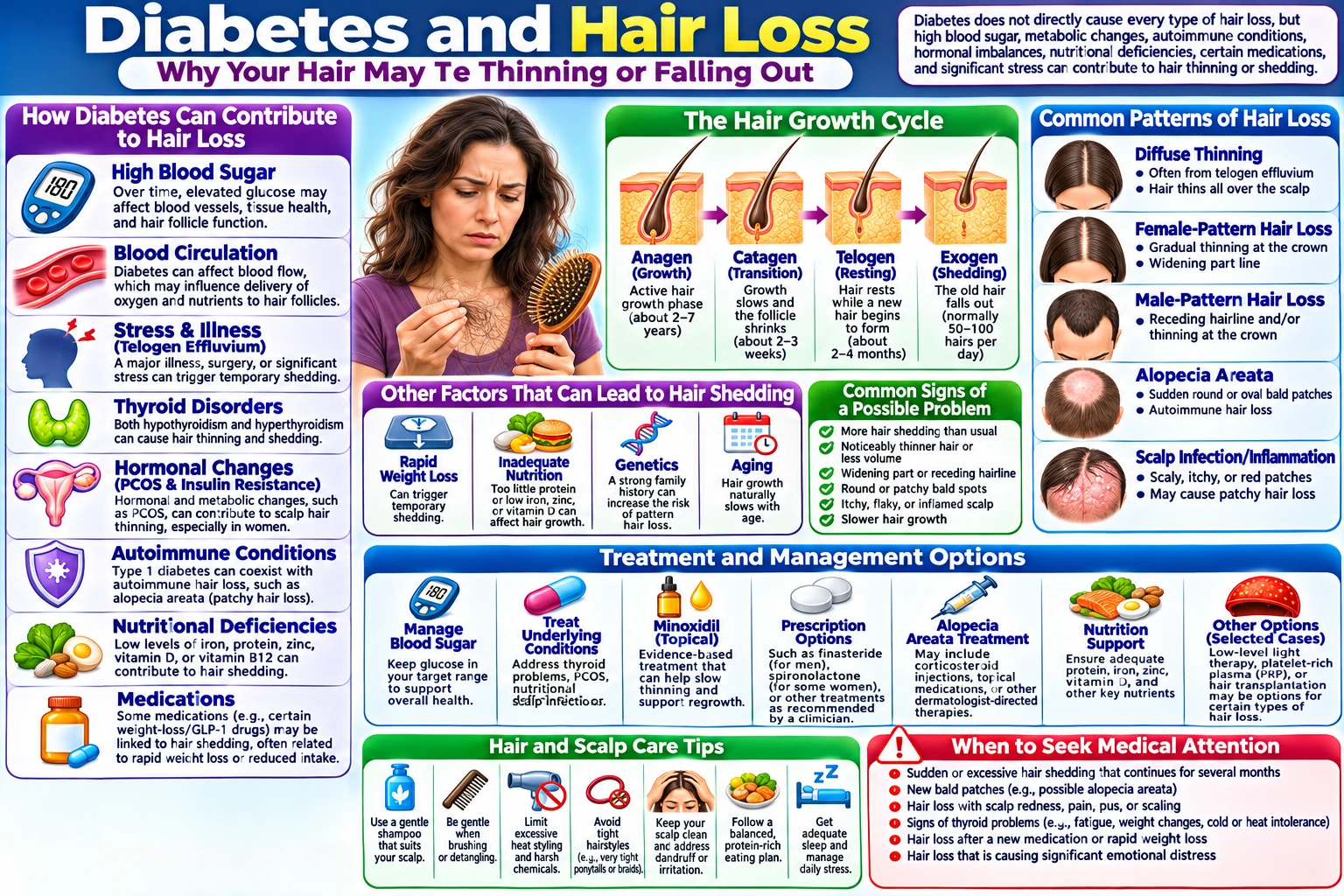
Have you noticed more hair than usual collecting in your shower drain, on your pillow, or in your hairbrush?
Perhaps your ponytail feels thinner than it used to. Maybe your scalp is becoming more visible, your hairline is changing, or your hair seems to be growing more slowly.
If you have diabetes, you may wonder:
“Is my diabetes causing my hair to fall out?”
The answer is that diabetes may contribute to certain types of hair loss, but the relationship is not always direct.
Hair growth depends on many factors, including genetics, hormones, nutrition, immune function, and overall health.
Persistent high blood glucose may influence some processes that support healthy tissues. Diabetes can also coexist with thyroid disorders, autoimmune conditions, and other health problems associated with hair loss.
Additionally, significant illness, emotional stress, rapid weight loss, and inadequate nutrition can temporarily disrupt the normal hair growth cycle.
However, not everyone with diabetes experiences hair loss.
And not every case of thinning hair is related to blood glucose.
Understanding the possible causes is the first step toward identifying appropriate treatment and protecting long-term hair health.
Can Diabetes Cause Hair Loss?
Diabetes may be associated with hair thinning or shedding through several possible pathways.
These include:
- Persistent hyperglycemia
- Changes in blood vessel health
- Significant physical stress
- Autoimmune conditions
- Thyroid disorders
- Hormonal imbalances
- Nutritional deficiencies
- Rapid weight loss
- Certain medications
- Scalp conditions
However, evidence directly linking diabetes to every form of hair loss is limited.
Many types of hair loss are common in people without diabetes.
Having diabetes does not automatically mean that your hair follicles are damaged or that hair loss is inevitable.
The most important step is identifying the specific pattern and cause of hair loss.
Understanding the Normal Hair Growth Cycle
Hair does not grow continuously at the same rate.
Each hair follicle moves through a cycle involving growth, transition, rest, and shedding.
1. Anagen: The Growth Phase
Anagen is the active growth phase.
During this stage, cells within the hair follicle produce the hair shaft.
Scalp hair may remain in this phase for several years.
The length of the growth phase varies according to genetics, age, hormones, and other factors.
2. Catagen: The Transition Phase
Catagen is a relatively short transitional stage.
Hair growth slows, and the follicle undergoes structural changes.
This phase generally lasts a few weeks.
3. Telogen: The Resting Phase
During telogen, the follicle enters a resting stage.
The hair is no longer actively growing.
This phase usually lasts several months.
4. Exogen: The Shedding Phase
Exogen refers to the release of the hair shaft.
Shedding is a normal part of the hair cycle.
New hair growth can begin as follicles return to the anagen phase.
How Much Hair Shedding Is Normal?
Many people naturally shed approximately 50 to 100 scalp hairs per day, although the amount varies.
Washing frequency, hair length, styling habits, and individual hair cycles can affect how much shedding is noticed.
Finding hair in your brush does not automatically indicate a medical problem.
However, a noticeable increase in shedding, progressive thinning, or new bald patches deserves attention.
1. High Blood Sugar and Hair Follicle Health
Persistent hyperglycemia can affect blood vessels, nerves, and other tissues throughout the body.
Researchers have explored whether metabolic changes associated with diabetes may also influence hair follicle function.
Hair follicles are biologically active structures that require nutrients, oxygen, and normal cellular signaling.
Can High Blood Sugar Damage Hair Follicles?
It is possible that chronic metabolic and vascular changes may contribute to hair problems in some individuals.
However, the evidence is not strong enough to conclude that elevated glucose directly causes most cases of scalp hair loss.
Hair loss in someone with diabetes should not automatically be attributed to poor glucose management.
Other causes may be more likely.
Does Lowering Blood Sugar Make Hair Grow Back?
Not necessarily.
Appropriate glucose management supports overall health, but it is not a guaranteed hair-regrowth treatment.
If hair shedding was associated with a period of significant illness or metabolic stress, improvement in overall health may support recovery.
However, genetic hair loss, autoimmune hair loss, and certain scalp disorders often require specific treatment.
2. Blood Circulation and Hair Growth
Hair follicles receive oxygen and nutrients through blood vessels in the scalp.
Normal circulation supports follicle activity.
Diabetes can affect blood vessel health over time, particularly when glucose remains elevated.
This has led to interest in whether diabetes-related vascular changes may influence hair growth.
Does Poor Circulation Always Cause Hair Loss?
No.
Most common forms of scalp hair loss are not diagnosed as circulation problems.
For example, androgenetic alopecia, commonly called pattern hair loss, is strongly influenced by genetics and hormonal sensitivity.
A person may have diabetes and pattern hair loss without one directly causing the other.
Hair Loss on the Legs
Some people with diabetes notice reduced hair growth on their lower legs.
In certain cases, loss of leg hair may occur alongside peripheral artery disease, which reduces blood flow to the legs.
Other possible causes include aging, friction, skin conditions, and hormonal changes.
If reduced leg hair occurs with cold feet, leg pain during walking, wounds that heal slowly, or skin color changes, medical evaluation is important.
3. Stress-Related Hair Shedding: Telogen Effluvium
Telogen effluvium is a common cause of diffuse hair shedding.
It occurs when a larger-than-usual number of hair follicles shift into the resting phase.
Hair shedding often becomes noticeable several weeks to a few months after a triggering event.
Common Triggers
Possible triggers include:
- Significant illness
- High fever
- Surgery
- Major emotional stress
- Rapid weight loss
- Childbirth
- Nutritional deficiencies
- Certain medications
- Other substantial physical stressors
Can Diabetes Trigger Telogen Effluvium?
A severe diabetes-related illness or period of significant metabolic stress may contribute to telogen effluvium.
For example, hospitalization for diabetic ketoacidosis or another serious illness could act as a trigger.
However, ordinary day-to-day glucose fluctuations have not been established as a direct cause of telogen effluvium.
What Does Telogen Effluvium Look Like?
Typical features include:
- Increased shedding across the scalp
- Hair collecting in the shower or brush
- Reduced overall hair volume
- A thinner ponytail
- Diffuse thinning rather than a single bald patch
The scalp usually does not develop scarring from telogen effluvium.
Is Telogen Effluvium Permanent?
Acute telogen effluvium is often temporary.
Once the underlying trigger has resolved, shedding may gradually decrease.
However, visible regrowth can take several months, and recovery varies.
Persistent shedding should be evaluated because multiple causes may coexist.
4. Type 1 Diabetes and Alopecia Areata
Alopecia areata is an autoimmune condition that causes hair loss.
It develops when the immune system targets hair follicles, disrupting normal hair growth.
Type 1 diabetes is also an autoimmune condition.
People with one autoimmune disease may have an increased likelihood of developing certain others.
Does Type 1 Diabetes Cause Alopecia Areata?
Not directly.
The two conditions may coexist because of shared autoimmune susceptibility.
However, most people with Type 1 diabetes do not develop alopecia areata.
Common Symptoms of Alopecia Areata
Possible signs include:
- Round or oval patches of hair loss
- Smooth areas of exposed scalp
- Sudden patchy shedding
- Hair loss in the eyebrows or beard
- Nail changes in some people
Some individuals experience more extensive hair loss.
Can Hair Grow Back?
Hair regrowth is possible.
Some people experience spontaneous regrowth, while others need treatment.
The course is unpredictable, and recurrence can occur.
A dermatologist can help determine the diagnosis and discuss appropriate treatment.
5. Thyroid Disorders and Hair Thinning
Thyroid hormones influence metabolism and many biological processes, including hair follicle activity.
Both hypothyroidism and hyperthyroidism may contribute to hair changes.
Hypothyroidism
Hypothyroidism occurs when the thyroid gland produces insufficient thyroid hormone.
Possible symptoms include:
- Fatigue
- Cold intolerance
- Dry skin
- Constipation
- Weight gain
- Hair thinning
- Brittle or dry hair
Hyperthyroidism
Hyperthyroidism occurs when the thyroid produces excessive thyroid hormone.
Possible symptoms include:
- Unexplained weight loss
- Rapid heartbeat
- Heat intolerance
- Excessive sweating
- Tremor
- Anxiety
- Hair thinning
Why Thyroid Disease Matters in Diabetes
Autoimmune thyroid disease is more common in people with Type 1 diabetes.
Thyroid disorders can also occur in people with Type 2 diabetes.
If hair thinning develops alongside symptoms suggesting thyroid dysfunction, a healthcare professional may recommend thyroid testing.
Will Hair Regrow After Thyroid Treatment?
Hair growth may improve after thyroid hormone levels return to an appropriate range.
However, regrowth takes time.
Some people also have additional causes of hair loss that require separate treatment.
6. Insulin Resistance and Hormonal Changes
Insulin resistance occurs when cells respond less effectively to insulin.
It is a central feature of Type 2 diabetes.
Insulin resistance can coexist with hormonal conditions that influence hair growth.
However, insulin resistance alone does not explain every case of thinning hair.
How Hormones Affect Hair
Hair follicles respond to hormonal signals.
Androgens, including testosterone and dihydrotestosterone, can influence hair growth differently depending on the body area and individual sensitivity.
In genetically susceptible individuals, androgen-related processes can contribute to scalp hair follicle miniaturization.
This is an important mechanism in pattern hair loss.
7. Polycystic Ovary Syndrome (PCOS)
Polycystic ovary syndrome is a hormonal and metabolic condition that can affect people of reproductive age.
PCOS is frequently associated with insulin resistance.
It can also increase the risk of developing Type 2 diabetes.
How PCOS Can Affect Hair
Some people with PCOS experience androgen-related symptoms, including:
- Scalp hair thinning
- Increased facial hair
- Acne
- Irregular menstrual cycles
What Does PCOS-Related Hair Thinning Look Like?
Hair may gradually become thinner around the crown or central scalp.
The part line may widen.
However, the frontal hairline may remain relatively preserved.
This pattern can overlap with female-pattern hair loss.
Does Everyone With PCOS Lose Hair?
No.
PCOS symptoms vary considerably.
Some people experience hair thinning, while others do not.
A healthcare professional may consider PCOS when scalp hair loss occurs with irregular periods, acne, or increased facial hair.
8. Female-Pattern Hair Loss
Female-pattern hair loss is a common form of progressive scalp hair thinning.
It is influenced by genetics and other biological factors.
It may occur with or without diabetes.
Common Signs
Possible features include:
- Gradual thinning near the crown
- A widening central part
- Reduced hair density
- Increased scalp visibility
- Progressive loss of hair volume
Unlike telogen effluvium, female-pattern hair loss often develops gradually over months or years.
Is Female-Pattern Hair Loss Caused by High Blood Sugar?
Not necessarily.
Some studies have investigated relationships between metabolic conditions and pattern hair loss.
However, an association does not establish that diabetes is the direct cause.
9. Male-Pattern Hair Loss
Male-pattern hair loss, or androgenetic alopecia, is a common condition influenced by genetics and androgen sensitivity.
Typical features include:
- Receding hairline
- Thinning at the temples
- Reduced hair density at the crown
- Gradual progression over time
Does Diabetes Cause Male-Pattern Baldness?
Diabetes is not considered the primary cause of male-pattern baldness.
Some studies have explored associations between metabolic health and androgenetic alopecia, but findings do not establish a simple cause-and-effect relationship.
A person can have both conditions independently.
10. Nutritional Deficiencies and Hair Loss
Hair follicles require adequate energy and nutrients to support normal growth.
Insufficient nutrition may contribute to shedding or changes in hair quality.
Possible contributors include:
- Iron deficiency
- Inadequate protein intake
- Zinc deficiency
- Certain vitamin deficiencies
- Severe calorie restriction
- Malabsorption
However, taking extra nutrients does not necessarily improve hair growth when no deficiency exists.
Iron Deficiency
Iron deficiency can contribute to hair shedding in some individuals.
Possible accompanying symptoms include:
- Fatigue
- Weakness
- Pale skin
- Reduced exercise tolerance
A clinician may order blood tests such as a complete blood count and ferritin when appropriate.
Zinc Deficiency
Zinc is involved in numerous cellular processes.
Significant zinc deficiency can affect skin and hair health.
However, excessive zinc supplementation can cause problems, including copper deficiency.
Do not take high-dose zinc solely for hair growth without medical guidance.
Vitamin D
Vitamin D has been studied in relation to several hair-loss conditions.
Some studies have found associations between low vitamin D levels and certain forms of hair loss.
However, supplementation has not been proven to restore hair growth in everyone.
Testing and treatment should reflect individual risk factors and medical needs.
11. Protein Intake and Hair Health
Hair is primarily composed of keratin, a structural protein.
Adequate dietary protein supports normal tissue maintenance and growth.
Severe protein deficiency can contribute to hair changes.
Protein Sources
Examples include:
- Fish
- Eggs
- Poultry
- Dairy products
- Beans
- Lentils
- Tofu
- Other protein-rich foods
Protein requirements vary according to age, activity, illness, and kidney function.
People with chronic kidney disease may need individualized recommendations.
12. Rapid Weight Loss and Hair Shedding
Rapid weight loss can act as a physical stressor.
It may contribute to telogen effluvium, particularly when accompanied by inadequate calorie or protein intake.
Hair shedding may become noticeable several months after the weight-loss period begins.
Does Weight Loss Always Cause Hair Loss?
No.
Many people lose weight without experiencing significant shedding.
Risk may depend on:
- Speed of weight loss
- Nutritional intake
- Illness
- Medication effects
- Individual susceptibility
- Other medical conditions
Why This Matters for Diabetes
Some people with Type 2 diabetes intentionally lose weight through dietary changes, physical activity, or medication.
Others lose weight unintentionally because of significant hyperglycemia or illness.
Both situations may involve changes in nutritional intake and body metabolism.
Persistent or substantial hair shedding deserves evaluation.
13. GLP-1 Medications and Hair Loss
GLP-1 receptor agonists and related medications are used for diabetes and, depending on the product, weight management.
Examples include:
- Semaglutide
- Liraglutide
- Dulaglutide
- Tirzepatide, which acts on both GIP and GLP-1 receptors
Hair-loss reports have occurred with some weight-management treatments.
However, the relationship is not fully understood.
Why Might Hair Shedding Occur?
Possible contributors include:
- Rapid weight loss
- Reduced calorie intake
- Inadequate protein intake
- Nutritional deficiencies
- Physical stress associated with substantial weight changes
Researchers are still investigating whether certain medications may have additional effects on hair growth.
Should You Stop Your Medication?
Do not stop prescribed medication solely because of hair shedding without discussing it with your healthcare provider.
The clinician may review your weight-loss rate, nutritional intake, medication history, and other possible causes.
14. Metformin and Hair Health
Metformin is commonly prescribed for Type 2 diabetes.
It is not generally recognized as a common direct cause of hair loss.
However, long-term metformin use can contribute to vitamin B12 deficiency in some people.
Does Vitamin B12 Deficiency Cause Hair Loss?
Vitamin B12 is essential for normal red blood cell production and nervous system function.
Deficiency can cause anemia and neurological symptoms.
Although nutritional problems may affect hair health, evidence that metformin-related B12 deficiency commonly causes hair loss is limited.
Hair thinning alone should not be assumed to indicate B12 deficiency.
Testing may be appropriate when risk factors or additional symptoms are present.
15. Other Medications That May Affect Hair
Some medications used for conditions that commonly coexist with diabetes may contribute to hair shedding in certain individuals.
Examples can include selected:
- Anticoagulants
- Thyroid medications when hormone levels are not appropriately balanced
- Blood pressure medications
- Other prescription treatments
However, medication-related hair loss varies considerably.
A medication should not be blamed simply because hair loss began while taking it.
What Information Should You Share With Your Doctor?
Tell your healthcare provider:
- When the hair loss began
- Which medications you take
- Whether any doses changed
- Whether you recently lost weight
- Whether you experienced a major illness
- Whether shedding is diffuse or patchy
This information can help identify potential triggers.
16. Scalp Infections and Hair Loss
Certain scalp infections can cause hair loss.
One example is tinea capitis, a fungal infection of the scalp.
It is more common in children but can also occur in adults.
Symptoms of Scalp Fungal Infection
Possible signs include:
- Scaly patches
- Itching
- Broken hairs
- Patchy hair loss
- Redness
- Tenderness
Some infections cause significant inflammation.
Why Early Treatment Matters
Inflammatory scalp infections may occasionally lead to scarring and permanent hair loss if not treated appropriately.
Scalp ringworm generally requires prescription oral antifungal treatment.
Shampoo alone is usually not sufficient to cure the infection.
Seek medical evaluation for patchy hair loss with scaling, broken hairs, or scalp inflammation.
17. Seborrheic Dermatitis and Scalp Inflammation
Seborrheic dermatitis is a common inflammatory skin condition that can affect the scalp.
It may cause:
- Flaking
- Itching
- Redness
- Greasy scales
- Irritation
It is not caused simply by poor hygiene.
Does Dandruff Cause Permanent Hair Loss?
Ordinary dandruff does not usually cause permanent hair loss.
However, significant inflammation and scratching may contribute to temporary shedding or hair breakage.
Persistent symptoms may require medicated shampoos or other treatment.
18. Scarring Alopecia
Some inflammatory scalp conditions can permanently damage hair follicles.
These are known as scarring alopecias.
They are different from common temporary shedding conditions.
Possible Warning Signs
Symptoms may include:
- Persistent scalp redness
- Burning
- Pain
- Pustules
- Scaling
- Areas where follicle openings appear absent
- Progressive patches of hair loss
Scarring alopecia requires prompt dermatological evaluation.
Early treatment may help prevent additional permanent follicle damage.
19. Hair Breakage Versus Hair Shedding
Not all apparent hair loss involves hairs falling out from the root.
Sometimes the hair shaft breaks.
Hair Shedding
Shedding involves release of hairs from the follicle.
You may notice full-length hairs in your brush or shower.
Hair Breakage
Breakage occurs when the hair shaft snaps.
Possible contributors include:
- Tight hairstyles
- Excessive heat styling
- Chemical treatments
- Repeated friction
- Fragile hair shafts
Breakage may produce shorter, uneven hairs.
Identifying the difference helps guide treatment.
20. How to Recognize Different Hair-Loss Patterns
The pattern of hair loss can provide important clues.
Hair-Loss Pattern | Possible Causes |
|---|---|
Sudden diffuse shedding | Telogen effluvium |
Round or oval bald patches | Alopecia areata |
Gradual thinning at the crown | Pattern hair loss |
Receding hairline | Male-pattern hair loss, traction alopecia, or other conditions |
Hair loss with scalp scaling | Fungal infection or inflammatory scalp condition |
Hair thinning with fatigue and cold intolerance | Possible hypothyroidism |
Hair thinning with irregular periods and acne | Possible PCOS |
Hair loss after rapid weight loss | Possible telogen effluvium |
Hair loss with scalp pain or pustules | Possible inflammatory or scarring alopecia |
These patterns are not diagnostic on their own.
Different conditions can overlap, and some people have more than one cause of hair loss.
21. Can Stress From Managing Diabetes Affect Hair?
Living with diabetes can involve significant emotional and practical demands.
Stress may affect sleep, appetite, and overall well-being.
Severe or prolonged stress can sometimes contribute to telogen effluvium.
However, ordinary daily stress does not inevitably cause hair loss.
What About Diabetes Distress?
Diabetes distress refers to the emotional burden of managing a chronic condition.
It can affect daily routines and quality of life.
If you are experiencing persistent emotional strain, discussing it with your healthcare team may help.
Mental health support is part of comprehensive diabetes care.
22. Does Hair Loss Mean Your Diabetes Is Getting Worse?
Not necessarily.
Hair thinning can occur for many reasons unrelated to glucose management.
For example:
- Genetic pattern hair loss
- Thyroid disorders
- Alopecia areata
- Nutritional deficiencies
- Rapid weight loss
- Scalp inflammation
Hair loss alone cannot determine whether diabetes is well controlled.
Blood glucose readings, A1C, clinical evaluation, and other health information are more useful for assessing diabetes management.
23. Can Diabetes Cause Hair to Grow More Slowly?
Some people with diabetes report changes in hair growth.
However, slow hair growth is not a specific diagnostic sign of diabetes.
Hair growth varies naturally according to:
- Genetics
- Age
- Hormones
- Nutrition
- Hair follicle health
- Medical conditions
If hair appears to stop growing, breakage may also be contributing.
A dermatologist can help distinguish slow growth from excessive shedding or hair shaft damage.
24. Is Hair Loss Reversible?
It depends on the cause.
Often Potentially Reversible
Examples include:
- Acute telogen effluvium
- Certain nutritional deficiencies
- Some medication-related shedding
- Hair loss associated with treatable thyroid dysfunction
Variable Recovery
Alopecia areata may improve, recur, or become persistent.
Often Progressive Without Treatment
Pattern hair loss may continue over time, although treatment can help some people maintain or regrow hair.
Potentially Permanent
Scarring alopecia can permanently damage hair follicles.
This is why early diagnosis matters.
25. When Should You See a Healthcare Professional?
Arrange an evaluation if you experience:
- Sudden excessive shedding
- New bald patches
- Progressive thinning
- Hair loss lasting several months
- Scalp itching or scaling
- Changes in eyebrows or eyelashes
- Hair loss with fatigue or other systemic symptoms
- Hair thinning after a medication change
- Significant weight loss with shedding
- Hair loss affecting your emotional well-being
A primary care clinician or dermatologist can help determine the next steps.
26. When Does Hair Loss Require Prompt Medical Attention?
Seek prompt evaluation if hair loss occurs with:
- Significant scalp pain
- Pus or drainage
- Rapidly spreading redness
- Fever
- Severe scalp inflammation
- Rapidly progressing patches of hair loss
- Signs of a potentially scarring scalp disorder
These symptoms may indicate infection or inflammatory disease requiring treatment.
27. Why Self-Diagnosing Hair Loss Can Be Difficult
Several hair-loss conditions can look similar.
For example, diffuse thinning may result from:
- Telogen effluvium
- Pattern hair loss
- Thyroid disease
- Nutritional deficiency
- Medication effects
A person may also have more than one condition simultaneously.
Using hair-growth products without identifying the cause may delay appropriate care.
The Most Important Lesson From Part 1
Diabetes may contribute to hair changes through several indirect pathways, but hair loss is not an inevitable consequence of diabetes.
Persistent hyperglycemia, major illness, rapid weight loss, and nutritional problems may affect overall health and hair growth.
Type 1 diabetes can coexist with autoimmune conditions such as alopecia areata and autoimmune thyroid disease.
Type 2 diabetes may coexist with insulin resistance, hormonal conditions, and other factors associated with certain hair-loss patterns.
Some diabetes medications and weight-management treatments may also be associated with hair shedding, particularly when substantial weight loss occurs.
However, many cases of hair thinning are caused by common conditions that also affect people without diabetes.
These include:
- Androgenetic alopecia
- Telogen effluvium
- Thyroid disorders
- Nutritional deficiencies
- Alopecia areata
- Scalp infections
- Inflammatory scalp disorders
The pattern of hair loss, associated symptoms, medication history, and overall health help determine the likely cause.
Can Hair Loss in People With Diabetes Be Treated?
Yes. Many types of hair loss can be treated or managed, and some forms of shedding improve once the underlying cause has been addressed.
However, the right treatment depends on why the hair loss is happening.
Someone experiencing temporary shedding after a serious illness may recover gradually without needing a specific hair-growth medication.
A person with iron deficiency or thyroid disease may benefit from treatment of the underlying condition.
Someone with hereditary pattern hair loss may need ongoing therapy to maintain or improve hair density.
Meanwhile, autoimmune hair loss and inflammatory scalp disorders may require specialized treatment.
The most important step is identifying the cause rather than assuming diabetes itself is responsible.
1. How Doctors Diagnose Hair Loss
A healthcare professional will usually begin with a detailed medical history.
Important questions may include:
- When did the hair loss begin?
- Did it develop suddenly or gradually?
- Are you shedding more hair or noticing progressive thinning?
- Are there bald patches?
- Have you experienced a recent illness?
- Have you lost weight rapidly?
- Have you started a new medication?
- Have you experienced major emotional stress?
- Do you have scalp itching, redness, or pain?
- Is there a family history of hair loss?
For people with diabetes, clinicians may also review glucose management, recent illness, medication changes, and nutritional status.
Why Timing Matters
Hair shedding may begin several weeks to months after a triggering event.
For example, telogen effluvium may become noticeable approximately two to three months after a significant illness, surgery, childbirth, or rapid weight loss.
This delay can make it difficult to identify the original trigger.
A timeline of recent health changes can be useful.
2. Scalp Examination
A dermatologist may examine the scalp to identify the pattern and characteristics of hair loss.
The examination may include:
- Hair density
- Distribution of thinning
- Hair shaft thickness
- Scalp redness
- Scaling
- Broken hairs
- Bald patches
- Signs of inflammation
- Evidence of scarring
Dermoscopy and Trichoscopy
Trichoscopy is a technique that uses magnification to examine hair and scalp structures.
It may help identify features associated with:
- Pattern hair loss
- Alopecia areata
- Telogen effluvium
- Scarring alopecia
- Certain scalp infections
Trichoscopy is noninvasive and can provide useful diagnostic information.
3. Hair Pull Test
A clinician may perform a gentle hair pull test.
This involves lightly pulling a small group of hairs to assess how many are released.
An increased number of easily removed hairs may suggest active shedding.
However, the result depends on factors such as recent hair washing and the stage of the condition.
The test is only one part of the evaluation.
4. Blood Tests for Hair Loss
Not everyone with hair loss needs extensive laboratory testing.
Testing is usually selected according to symptoms, medical history, and examination findings.
Possible tests include:
- Complete blood count
- Ferritin or iron studies
- Thyroid-stimulating hormone (TSH)
- Vitamin B12 when indicated
- Vitamin D when clinically appropriate
- Zinc testing in selected cases
- Other tests based on suspected conditions
Why Iron Testing May Matter
Iron deficiency can contribute to hair shedding in some people.
However, low ferritin is not the explanation for every case of hair loss.
Iron supplements should generally be used when deficiency is established or a clinician recommends them.
Excessive iron intake can be harmful.
Thyroid Testing
Thyroid testing may be particularly relevant when hair thinning occurs alongside:
- Fatigue
- Cold intolerance
- Heat intolerance
- Weight changes
- Palpitations
- Constipation
- Other thyroid-related symptoms
People with Type 1 diabetes have an increased risk of autoimmune thyroid disease.
5. Hormonal Testing for Hair Thinning
Hormonal evaluation may be appropriate when hair loss occurs with symptoms suggesting androgen excess or another endocrine disorder.
Possible clues include:
- Irregular menstrual cycles
- Increased facial or body hair
- Persistent acne
- Rapidly progressive scalp thinning
A clinician may consider testing for androgen-related abnormalities or evaluating for polycystic ovary syndrome.
However, hormonal testing is not necessary for every person with pattern hair loss.
6. When Is a Scalp Biopsy Necessary?
A scalp biopsy involves removing a small sample of scalp tissue for microscopic examination.
It may be recommended when:
- The diagnosis remains uncertain
- Scarring alopecia is suspected
- Inflammation is present
- Hair loss progresses unexpectedly
- Other testing does not explain the findings
A biopsy is not routinely required for common, straightforward pattern hair loss.
7. Managing Blood Glucose and Overall Health
Appropriate glucose management supports general health and may reduce the risk of diabetes-related complications.
Persistent hyperglycemia can affect blood vessels, nerves, and other tissues.
However, there is limited evidence that lowering glucose alone directly reverses common forms of scalp hair loss.
Can Better Glucose Management Help Hair Regrow?
It may support recovery when hair shedding is associated with significant illness or metabolic stress.
But it is not a guaranteed hair-regrowth treatment.
For example:
- Pattern hair loss may require specific therapy.
- Alopecia areata may require dermatological treatment.
- Thyroid-related hair loss requires appropriate thyroid management.
- Scarring alopecia requires early treatment to limit further follicle damage.
Hair loss should be evaluated on its own merits.
8. Treating Telogen Effluvium
Telogen effluvium is a common cause of diffuse hair shedding.
It may occur after:
- Serious illness
- Surgery
- Rapid weight loss
- Childbirth
- Significant physical stress
- Nutritional deficiencies
- Certain medications
What Is the Main Treatment?
Treatment generally focuses on identifying and addressing the trigger.
This may involve:
- Restoring adequate nutrition
- Treating an underlying medical condition
- Reviewing medications
- Correcting confirmed deficiencies
- Supporting recovery after illness
Acute telogen effluvium often improves once the trigger has resolved.
Does Telogen Effluvium Require Hair-Growth Medication?
Not always.
Many cases improve without medication.
However, a dermatologist may consider additional treatment when shedding persists or overlaps with another hair-loss condition.
9. How Long Does Telogen Effluvium Last?
Hair shedding often begins two to three months after a triggering event.
Once the trigger resolves, excessive shedding may gradually improve over several months.
Visible restoration of hair density can take longer because scalp hair grows slowly.
Why Hair May Still Look Thin After Shedding Stops
Even after follicles return to normal growth, new hairs need time to become long enough to contribute visibly to overall hair volume.
This means recovery may continue for many months.
Persistent shedding or progressive thinning should be reassessed.
10. Minoxidil for Hair Loss
Minoxidil is an evidence-based treatment for certain forms of hair loss, particularly androgenetic alopecia.
It is available in topical formulations such as solutions and foams.
How Does Minoxidil Work?
Minoxidil can influence hair follicle activity and help prolong or support the growth phase of the hair cycle.
It may improve hair density in some individuals.
However, results vary.
What Should You Expect?
Possible outcomes include:
- Reduced progression of thinning
- Increased hair density
- Some regrowth
- Maintenance of existing hair
Improvement generally requires consistent use over several months.
Can Minoxidil Cause Initial Shedding?
Yes.
Some people notice temporary increased shedding after starting treatment.
This may occur as follicles transition through the hair cycle.
However, severe or persistent shedding should be discussed with a healthcare professional.
Is Minoxidil Safe for People With Diabetes?
Diabetes alone does not automatically prevent someone from using topical minoxidil.
However, individual medical conditions, scalp health, and other medications should be considered.
Possible side effects include:
- Scalp irritation
- Itching
- Unwanted facial hair growth
- Rare systemic effects
Topical minoxidil should be used according to product instructions or medical guidance.
11. Oral Minoxidil
Low-dose oral minoxidil is sometimes prescribed by dermatologists for certain hair-loss conditions.
This use is off-label in many countries.
Unlike topical minoxidil, oral minoxidil can affect the cardiovascular system.
Potential side effects include:
- Fluid retention
- Swelling
- Increased heart rate
- Dizziness
- Changes in blood pressure
- Unwanted hair growth
Rare but serious cardiovascular complications are possible.
Why Extra Caution May Be Needed
People with diabetes may also have kidney disease, heart disease, or blood pressure problems.
These conditions may influence whether oral minoxidil is appropriate.
Do not take oral minoxidil for hair growth without a prescription and medical supervision.
12. Finasteride for Pattern Hair Loss
Finasteride reduces the conversion of testosterone into dihydrotestosterone, or DHT.
DHT contributes to follicle miniaturization in genetically susceptible individuals.
Oral finasteride is an established treatment for male-pattern hair loss.
Does Finasteride Work for Everyone?
No.
Response varies, and treatment generally needs to be continued to maintain benefits.
Possible adverse effects include sexual side effects and mood-related concerns.
Finasteride is not appropriate for everyone and requires special precautions around pregnancy because of potential harm to a developing male fetus.
A healthcare professional should discuss risks, benefits, and alternatives.
13. Treatment for Female-Pattern Hair Loss
Treatment may include:
- Topical minoxidil
- Selected prescription medications
- Management of contributing hormonal conditions
- Other dermatologist-directed therapies
Spironolactone
Spironolactone is sometimes prescribed off-label for androgen-related hair loss in women.
It has antiandrogen effects.
However, it may affect:
- Blood pressure
- Potassium levels
- Kidney function
It is generally avoided during pregnancy because of potential fetal risks.
People with diabetes and kidney disease may require additional caution.
Treatment should be supervised by a qualified healthcare professional.
14. Treating PCOS-Related Hair Thinning
Hair thinning associated with polycystic ovary syndrome may require management of hormonal and metabolic factors.
Depending on the individual, treatment may involve:
- Management of insulin resistance
- Appropriate nutrition
- Physical activity
- Hormonal treatment
- Hair-specific medications
- Dermatological care
Will Treating Insulin Resistance Restore Hair?
Not necessarily.
Improving metabolic health can be beneficial, but scalp hair loss may persist because of genetic susceptibility and androgen-related follicle changes.
Hair-specific treatment may still be necessary.
15. Treating Alopecia Areata
Alopecia areata is an autoimmune hair-loss condition.
Treatment depends on:
- Extent of hair loss
- Age
- Disease severity
- Rate of progression
- Other medical conditions
Possible treatments include:
- Corticosteroid injections
- Topical corticosteroids
- Other topical treatments
- Selected systemic medications
- Janus kinase (JAK) inhibitors for certain patients
Corticosteroid Injections
Dermatologists may use corticosteroid injections for limited patchy alopecia areata.
These treatments can help some people regrow hair.
However, results vary, and recurrence is possible.
JAK Inhibitors
Certain JAK inhibitors are approved in some countries for severe alopecia areata in eligible patients.
These medications affect immune signaling pathways.
They can carry important risks, including serious infections and other adverse effects.
They require specialist evaluation and monitoring.
Does Type 1 Diabetes Change Treatment?
Having Type 1 diabetes may influence the overall treatment plan, particularly when other autoimmune conditions or medical complications are present.
Treatment decisions should be individualized.
16. Treating Thyroid-Related Hair Loss
When thyroid dysfunction contributes to hair thinning, treatment focuses on restoring appropriate thyroid hormone levels.
Hypothyroidism
Treatment commonly involves thyroid hormone replacement when indicated.
Hyperthyroidism
Treatment may include medication, radioactive iodine, or surgery, depending on the cause and clinical circumstances.
When Will Hair Improve?
Hair shedding may gradually decrease as thyroid function stabilizes.
However, visible regrowth can take several months.
If thinning continues despite appropriate thyroid treatment, another hair-loss condition may also be present.
17. Correcting Nutritional Deficiencies
Nutritional deficiencies should be treated according to the specific deficiency and its cause.
Possible approaches include:
- Dietary changes
- Oral supplements
- Treatment of malabsorption
- Addressing underlying medical conditions
Should Everyone With Hair Loss Take Biotin?
No.
Biotin deficiency is uncommon, and high-dose biotin supplements have not been shown to improve hair growth in people without deficiency.
High-dose biotin can also interfere with certain laboratory tests, including thyroid and cardiac tests.
Tell your healthcare team about any biotin supplements you take.
What About Collagen Supplements?
Collagen products are frequently marketed for hair growth.
However, high-quality evidence demonstrating meaningful hair regrowth from collagen supplementation is limited.
Collagen supplements should not replace evidence-based treatment.
18. Nutrition for Healthy Hair Growth
Hair follicles require adequate energy and nutrients.
A balanced eating pattern may support normal hair growth and general health.
Important dietary components include:
- Protein
- Iron
- Zinc
- Essential fatty acids
- Vitamins
- Adequate overall calories
Protein-Rich Foods
Examples include:
- Eggs
- Fish
- Chicken
- Tofu
- Beans
- Lentils
- Yogurt
Protein needs should be individualized, especially for people with chronic kidney disease.
Iron-Containing Foods
Examples include:
- Lean meat
- Beans
- Lentils
- Fortified cereals
- Leafy green vegetables
Plant-based iron is generally absorbed less efficiently than iron from animal sources.
Combining plant-based iron foods with vitamin C-containing foods can improve absorption.
Healthy Fats
Sources include:
- Olive oil
- Nuts
- Seeds
- Avocado
- Fatty fish
These foods can contribute to a balanced diet.
However, eating more of any single food does not guarantee hair regrowth.
19. Avoid Rapid or Excessively Restrictive Weight Loss
Rapid weight loss and inadequate nutrition may contribute to telogen effluvium.
If you are intentionally losing weight as part of diabetes management, discuss an appropriate pace and nutritional plan with your healthcare team.
If You Take GLP-1 Medications
Pay attention to:
- Appetite changes
- Protein intake
- Overall calorie intake
- Persistent nausea
- Rapid weight changes
- Hair shedding
A registered dietitian may help ensure that nutritional needs are being met.
Do not independently discontinue medication because of hair loss.
20. Healthy Scalp Care
Good scalp care supports comfort and helps prevent avoidable irritation.
Practical habits include:
- Washing hair according to scalp needs
- Using gentle products when appropriate
- Avoiding excessive scratching
- Treating persistent dandruff
- Seeking care for scalp inflammation
- Avoiding harsh chemical treatments when hair is fragile
Does Washing Hair Too Often Cause Hair Loss?
Normal washing does not usually cause permanent hair loss.
Shampooing may release hairs that were already in the shedding phase.
However, harsh products and excessive manipulation can contribute to breakage.
Choose a routine that suits your scalp and hair type.
21. Avoid Tight Hairstyles
Hairstyles that repeatedly pull on the hair can contribute to traction alopecia.
Examples may include:
- Very tight ponytails
- Tight braids
- Certain hair extensions
- Hairstyles that place repeated tension on the hairline
Early Signs of Traction Alopecia
Possible signs include:
- Hairline thinning
- Broken hairs
- Scalp tenderness
- Small bumps near the hairline
- Hair loss in areas under tension
Reducing tension early may help prevent progression.
Longstanding traction alopecia can sometimes become permanent.
22. Limit Excessive Heat and Chemical Damage
Frequent high-heat styling, bleaching, and chemical processing can weaken hair shafts.
This may cause breakage rather than true follicle-related hair loss.
To reduce damage:
- Use lower heat settings when possible.
- Avoid repeated harsh chemical treatments.
- Handle wet hair gently.
- Reduce excessive brushing or pulling.
- Consider protective styling without tight tension.
These habits may improve hair shaft condition but will not treat autoimmune or hereditary hair loss.
23. Can Scalp Massage Help Hair Grow?
Scalp massage is sometimes promoted as a hair-growth strategy.
However, strong clinical evidence demonstrating meaningful hair regrowth is limited.
Gentle massage may feel relaxing.
Avoid vigorous rubbing, particularly when the scalp is inflamed or painful.
Massage should not replace medical treatment for progressive hair loss.
24. Do Hair-Growth Shampoos Work?
Many shampoos claim to stimulate hair growth.
However, ordinary cosmetic shampoos generally cannot reverse genetic follicle miniaturization or autoimmune hair loss.
Some medicated shampoos can help treat scalp conditions.
For example, antifungal shampoos may help manage certain dandruff-related conditions.
But scalp ringworm usually requires oral antifungal treatment.
Choose products based on the diagnosed problem rather than advertising claims.
25. What About Rosemary Oil and Other Natural Remedies?
Rosemary oil and other botanical products are frequently promoted for hair growth.
However, evidence is limited compared with established medical treatments.
Essential oils may also cause:
- Skin irritation
- Allergic reactions
- Contact dermatitis
Never apply concentrated essential oils to an inflamed or damaged scalp.
Natural products are not automatically safe or effective.
26. Platelet-Rich Plasma (PRP) Therapy
Platelet-rich plasma therapy involves processing a person's blood to concentrate platelets and injecting the preparation into the scalp.
PRP has been studied for certain hair-loss conditions, particularly androgenetic alopecia.
Some studies suggest potential benefits.
However, treatment protocols vary, and the quality of evidence is inconsistent.
Is PRP a Guaranteed Treatment?
No.
Results vary, and repeated sessions may be needed.
PRP is not appropriate for every type of hair loss.
A dermatologist can explain the evidence, costs, and uncertainties.
27. Low-Level Light Therapy
Low-level light therapy uses specialized light-emitting devices.
Some devices are cleared or authorized in certain countries for specific hair-loss indications.
Research suggests that selected devices may provide modest benefits for androgenetic alopecia.
However, effectiveness varies, and treatment requires consistent use.
These devices do not treat every cause of hair loss.
28. Hair Transplantation
Hair transplantation involves moving hair follicles from one area of the scalp to another.
It may be an option for selected people with stable pattern hair loss.
Can Someone With Diabetes Have a Hair Transplant?
Diabetes does not automatically prevent hair transplantation.
However, surgical suitability depends on factors such as:
- Glucose management
- Circulation
- Wound-healing ability
- Infection risk
- Overall medical health
A qualified specialist should evaluate the risks and benefits.
Hair transplantation is not appropriate for all forms of hair loss, especially active inflammatory or scarring conditions.
29. Understanding Hair Regrowth Timelines
Hair regrowth takes time.
Scalp hair grows approximately one centimeter per month on average, although individual rates vary.
Even when a treatment is effective, visible improvement may take several months.
Typical Patterns
Telogen effluvium: Shedding may improve within several months after the trigger resolves, with fuller recovery taking longer.
Pattern hair loss: Treatments such as minoxidil often require several months before meaningful results can be assessed.
Thyroid-related hair loss: Improvement may follow successful treatment, but regrowth can be gradual.
Alopecia areata: Regrowth is unpredictable and depends on disease severity and treatment response.
Scarring alopecia: Destroyed follicles generally cannot regrow hair, making early treatment important.
30. How to Track Hair Changes
If you are concerned about hair thinning, tracking changes may help.
Consider:
- Taking scalp photographs under similar lighting
- Recording when shedding began
- Noting medication changes
- Tracking significant weight changes
- Recording scalp symptoms
- Following up with your dermatologist
Avoid Constantly Counting Every Hair
Excessive monitoring can increase anxiety without improving diagnosis.
A consistent monthly photograph may be more useful than repeatedly counting individual shed hairs.
31. When Should You See a Dermatologist?
A dermatologist may be particularly helpful when you experience:
- Progressive hair thinning
- New bald patches
- Persistent shedding
- Scalp redness or pain
- Hair loss with scaling
- Suspected scarring alopecia
- Hair loss that does not improve after addressing an apparent trigger
- Significant emotional distress related to hair changes
Early diagnosis may improve treatment options.
32. When Does Hair Loss Require Prompt Medical Care?
Seek prompt evaluation for:
- Painful scalp inflammation
- Pus or drainage
- Rapidly spreading redness
- Fever with scalp symptoms
- Rapidly progressing bald patches
- Signs of scarring
- Severe symptoms suggesting infection
These findings may indicate conditions requiring timely treatment.
Common Hair-Loss Myths
Myth 1: Diabetes Always Causes Hair Loss
Fact: Many people with diabetes do not experience significant hair loss. Other conditions are often responsible.
Myth 2: High Blood Sugar Is the Only Cause of Hair Thinning
Fact: Genetics, hormones, autoimmune disease, nutrition, medications, and scalp conditions can all contribute.
Myth 3: Hair Loss Means Diabetes Is Getting Worse
Fact: Hair loss alone cannot determine glucose management or diabetes progression.
Myth 4: Hair Vitamins Work for Everyone
Fact: Supplements are most useful when a relevant deficiency exists. Excessive supplementation can cause harm.
Myth 5: Cutting Your Hair Makes It Grow Faster
Fact: Trimming affects the hair shaft, not the growth rate inside the follicle.
Myth 6: Natural Oils Can Cure Baldness
Fact: Evidence for many natural hair-growth products is limited. They cannot reliably reverse every type of hair loss.
Myth 7: Hair Loss Is Always Permanent
Fact: Some forms, including acute telogen effluvium, often improve. Others may be progressive or permanent.
Frequently Asked Questions
Can diabetes cause hair loss?
Diabetes may contribute indirectly through significant illness, metabolic stress, or associated medical conditions. However, it is not the direct cause of every type of hair loss.
Will my hair grow back if I control my blood sugar?
Improved glucose management supports overall health, but hair regrowth depends on the underlying cause. Some conditions require additional treatment.
Can Type 1 diabetes cause bald patches?
Type 1 diabetes can coexist with alopecia areata, an autoimmune condition that may cause round or oval bald patches.
Does Type 2 diabetes cause thinning hair?
Some studies have found associations between Type 2 diabetes and certain hair-loss patterns, but genetics, hormones, age, and other factors may be more important.
Can metformin cause hair loss?
Metformin is not generally considered a common direct cause of hair loss. Other causes should be investigated.
Can Ozempic or other GLP-1 medications cause hair shedding?
Hair shedding has been reported with some weight-management treatments. Rapid weight loss and nutritional changes may contribute, but the relationship is still being studied.
Can low blood sugar cause hair loss?
Occasional hypoglycemia is not an established direct cause of hair loss. However, severe illness or substantial physical stress may contribute to temporary shedding.
Can stress from diabetes cause hair loss?
Significant physical or emotional stress may trigger telogen effluvium in some people.
Can thyroid disease cause hair thinning?
Yes. Both hypothyroidism and hyperthyroidism can affect hair growth.
Does insulin resistance cause female-pattern hair loss?
Insulin resistance may coexist with hormonal conditions such as PCOS, but it does not explain every case of female-pattern hair loss.
Can vitamin deficiency cause hair loss?
Yes. Certain deficiencies, including iron deficiency and severe protein or zinc deficiency, may contribute to shedding.
Should I take biotin for hair growth?
Biotin supplementation is generally not beneficial unless deficiency is present. High doses can interfere with laboratory tests.
Is minoxidil safe for people with diabetes?
Topical minoxidil may be appropriate for many people with diabetes, depending on their medical circumstances. Discuss concerns with a healthcare professional.
Can hair loss from rapid weight loss be reversed?
Hair shedding related to telogen effluvium often improves after the trigger resolves and adequate nutrition is restored.
How long does it take for hair to grow back?
Recovery varies. Visible improvement often takes several months because hair grows slowly.
Does washing hair every day cause baldness?
Normal washing does not usually cause permanent hair loss. Harsh products and excessive manipulation may contribute to breakage.
Can hair loss be permanent?
Yes. Some forms of scarring alopecia can permanently destroy hair follicles. Other conditions are potentially reversible or manageable.
When should I see a doctor for hair loss?
Seek evaluation for sudden shedding, progressive thinning, bald patches, scalp inflammation, or hair loss accompanied by other medical symptoms.
Key Takeaways
Hair loss in people with diabetes can have several possible explanations.
Persistent hyperglycemia may influence overall tissue health, but diabetes is not the direct cause of every type of hair loss.
Common causes include:
- Telogen effluvium
- Androgenetic alopecia
- Alopecia areata
- Thyroid disorders
- Hormonal changes
- Nutritional deficiencies
- Rapid weight loss
- Medication-related changes
- Scalp infections
- Inflammatory scalp conditions
The pattern of hair loss helps guide diagnosis.
Diffuse shedding may suggest telogen effluvium, while gradual thinning at the crown may indicate pattern hair loss.
Round bald patches may suggest alopecia areata.
Painful or inflamed scalp areas may require prompt evaluation.
Treatment depends on the underlying condition.
Evidence-based options may include topical minoxidil, selected prescription medications, corticosteroid treatments, or specialist therapies.
Correcting confirmed nutritional deficiencies and treating thyroid disorders can also be important.
Adequate nutrition supports normal hair growth, but supplements do not guarantee regrowth.
Avoid tight hairstyles, excessive heat, harsh chemical treatments, and unnecessary scalp irritation.
Be cautious about products promising rapid or permanent hair restoration.
Hair growth is slow, and meaningful improvement often takes several months.
Most importantly:
Hair loss is not a reliable measure of how well your diabetes is controlled.
With an accurate diagnosis and appropriate treatment, many people can reduce shedding, protect existing hair, and improve hair health.
DiabetesAdvocates.care does not provide medical advice, diagnosis, or treatment. Please consult with your healthcare provider for questions and personalized medical advice.