
Diabetes and Headaches: Can High or Low Blood Sugar Cause Headaches?
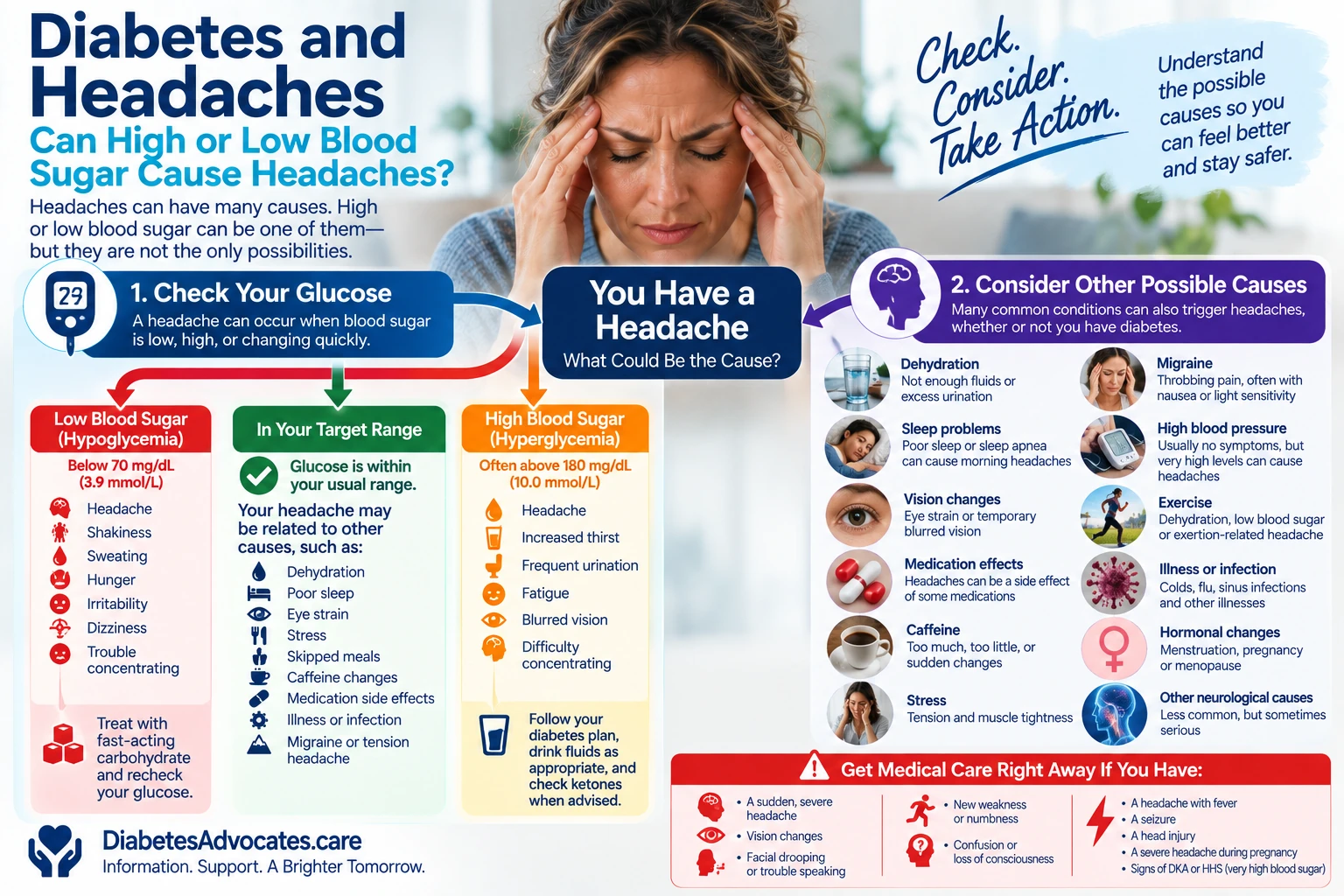
Headaches happen to almost everyone.
Sometimes the reason is obvious. You stayed up too late, skipped lunch, did not drink enough water, or spent hours staring at a screen.
Other times, a headache seems to appear without explanation.
If you have diabetes, you may immediately wonder:
Is my blood sugar causing this headache?
It is possible.
Both low and high glucose can be associated with headaches in some people. Diabetes-related factors such as dehydration, medication changes, sleep problems, and missed meals can contribute as well.
But having diabetes does not mean every headache is a “diabetes headache.”
Migraine, tension headaches, infections, vision problems, caffeine withdrawal, stress, and many other conditions can cause head pain.
The challenge is learning to recognize patterns without automatically blaming every headache on glucose.
Is There Such a Thing as a Diabetes Headache?
“Diabetes headache” is not one specific type of headache.
Instead, a headache may sometimes occur alongside conditions related to diabetes, such as:
- Hypoglycemia
- Hyperglycemia
- Dehydration
- Significant glucose fluctuations
- Missed or delayed meals
- Sleep disruption
- Medication effects
This distinction matters.
A headache is a symptom, not a glucose measurement.
You cannot reliably determine whether glucose is high or low based on a headache alone.
When possible, check rather than guess.
Low Blood Sugar Can Cause Headaches
Hypoglycemia occurs when glucose falls below a healthy level.
The American Diabetes Association defines level 1 hypoglycemia as glucose below 70 mg/dL (3.9 mmol/L) but at least 54 mg/dL. Glucose below 54 mg/dL (3.0 mmol/L) is considered level 2 hypoglycemia and requires immediate action.
Because the brain depends heavily on glucose for energy, falling glucose can produce neurological symptoms.
A headache may occur along with symptoms such as:
- Shakiness
- Sweating
- Hunger
- Dizziness
- Irritability
- Weakness
- Difficulty concentrating
- Rapid heartbeat
- Confusion
Not everyone experiences the same warning signs.
Some people notice headache early, while others rarely experience one during a low.
Why Does Hypoglycemia Affect the Brain?
The brain requires a continuous energy supply.
When circulating glucose falls too far, brain function can become impaired.
Early symptoms may be uncomfortable but manageable.
If glucose continues falling, more serious neurological symptoms can develop, including:
- Confusion
- Difficulty speaking
- Abnormal behavior
- Poor coordination
- Seizures
- Loss of consciousness
A headache should therefore never be the only symptom used to determine whether hypoglycemia is occurring.
If you are at risk for lows and develop an unexplained headache, checking your glucose can provide much more useful information.
Who Is More Likely to Experience Hypoglycemia?
Hypoglycemia is particularly relevant for people using:
- Insulin
- Sulfonylureas
- Meglitinides
But many circumstances can change glucose response.
Lows may become more likely after:
- Taking too much insulin
- Eating fewer carbohydrates than expected
- Delaying or skipping a meal
- Exercising more than usual
- Drinking alcohol
- Illness
- Changes in kidney function
- Changes in medication needs
If lows happen repeatedly, do not simply keep treating each episode without discussing the pattern with your diabetes care team.
Frequent hypoglycemia may mean the treatment plan needs adjustment.
Treat the Low, Not Just the Headache
If glucose is low, correcting the hypoglycemia is the priority.
For many conscious people who can safely swallow, standard treatment involves fast-acting carbohydrate followed by another glucose check after the recommended interval.
Your personal hypoglycemia plan may differ depending on medications, age, health conditions, and technology.
Severe hypoglycemia is different.
If someone is unable to safely treat themselves because of confusion, unconsciousness, seizures, or another major impairment, assistance is required. Glucagon may be used when available and appropriate, and emergency help may be necessary.
Do not try to give food or drink by mouth to someone who cannot safely swallow.
Can a Headache Continue After a Low?
Yes.
Correcting the glucose level does not necessarily make every symptom disappear instantly.
Some people may continue to feel:
- Headachy
- Tired
- Mentally foggy
- Weak
- Irritable
for a period after hypoglycemia has been corrected.
The important first step is confirming that glucose has recovered.
If the headache is unusually severe, persistent, or accompanied by concerning neurological symptoms, do not automatically assume it is simply an after-effect of hypoglycemia.
Overnight Lows May Cause Morning Symptoms
Glucose can fall during sleep.
Possible clues to overnight hypoglycemia may include:
- CGM low alerts
- Waking sweaty
- Disturbed sleep
- Nightmares
- Morning fatigue
- Feeling unusually unwell after waking
Some people also report morning headaches.
However, a morning headache does not prove that glucose was low overnight.
Sleep apnea, dehydration, migraine, caffeine withdrawal, teeth grinding, poor sleep, and numerous other conditions can cause morning headaches.
CGM or appropriately timed glucose measurements may help determine whether there is actually a glucose pattern.
Hypoglycemia Unawareness Makes Guessing Riskier
Some people lose the typical early warning symptoms of hypoglycemia.
This is known as impaired hypoglycemia awareness.
A person may not experience obvious shakiness, hunger, or sweating before glucose becomes dangerously low.
Instead, the first noticeable signs might involve:
- Confusion
- Difficulty concentrating
- Abnormal behavior
- Weakness
- Coordination problems
This makes glucose monitoring and hypoglycemia prevention particularly important.
If you are experiencing repeated lows without warning, tell your healthcare team.
High Blood Sugar Can Be Associated With Headaches Too
Hyperglycemia may also be accompanied by headache.
Unlike hypoglycemia, which can produce neurological symptoms relatively quickly, mild hyperglycemia may cause few or no obvious symptoms.
As glucose rises further, possible symptoms include:
- Increased thirst
- Frequent urination
- Fatigue
- Blurred vision
- Dry mouth
- Headache
- Difficulty concentrating
Again, these symptoms are not specific enough to diagnose high glucose.
Check your glucose when appropriate.
Dehydration May Explain Part of the Connection
One reason significant hyperglycemia may contribute to headache is fluid loss.
When glucose becomes high enough, the kidneys attempt to remove excess glucose through urine.
Glucose pulls water with it.
The result can be:
High glucose → increased urination → fluid loss → dehydration
Dehydration itself can contribute to headache.
Other possible signs include:
- Thirst
- Dry mouth
- Darker urine
- Dizziness
- Fatigue
- Weakness
Correcting significant hyperglycemia involves more than simply drinking water, particularly when glucose is very high or ketones are present.
Follow your diabetes treatment or sick-day plan.
Don't Force Excessive Water
Hydration is important, but more water is not always better.
Some people with:
- Heart failure
- Advanced kidney disease
- Certain electrolyte disorders
may have individualized fluid recommendations.
If you have been instructed to restrict fluids, follow your healthcare team's guidance rather than dramatically increasing intake because of a headache.
What About Rapid Changes in Glucose?
Some people report feeling poorly when glucose changes quickly, even if the final reading is not extremely high or low.
They may describe:
- Headache
- Fatigue
- Irritability
- Difficulty concentrating
- A general feeling of being “off”
However, symptoms alone cannot tell you how rapidly glucose is changing.
A CGM can sometimes provide helpful trend information.
Instead of focusing on one isolated reading, look at the broader pattern.
CGM Data Can Help Identify Patterns
If headaches occur repeatedly, CGM data may help answer useful questions.
For example:
- Do headaches occur during lows?
- Do they follow prolonged high glucose?
- Are they happening after exercise?
- Do they appear overnight?
- Do they occur after meals?
- Are glucose levels normal when the headache happens?
The last question can be particularly informative.
If headaches repeatedly occur while glucose is stable and within your usual target range, another cause becomes more likely.
Don't Chase CGM Readings Based on Symptoms Alone
A headache may make you suspect glucose is changing before the CGM reflects it.
But avoid repeatedly taking extra insulin or carbohydrates based solely on symptoms without confirming what is happening.
Overcorrecting can create a glucose roller coaster.
When CGM readings do not match how you feel, follow the device manufacturer's recommendations, which may include confirming glucose with a fingerstick in certain situations.
Very High Blood Sugar Can Become an Emergency
Most headaches are not medical emergencies.
However, severe hyperglycemia can progress to dangerous conditions such as:
- Diabetic ketoacidosis (DKA)
- Hyperosmolar hyperglycemic state (HHS)
These are much more serious than an ordinary headache.
Headache and Diabetic Ketoacidosis
DKA occurs when there is insufficient effective insulin and the body begins producing excessive ketones.
It is most common in Type 1 diabetes but can occur in other forms of diabetes as well.
Possible symptoms include:
- High glucose
- Excessive thirst
- Frequent urination
- Nausea
- Vomiting
- Abdominal pain
- Dehydration
- Deep or unusual breathing
- Fruity-smelling breath
- Fatigue
- Confusion
Headache may occur, but it is not the defining symptom.
DKA requires urgent medical treatment.
Follow your sick-day and ketone-testing instructions when appropriate.
HHS Can Cause Serious Neurological Symptoms
Hyperosmolar hyperglycemic state is another dangerous diabetes emergency, occurring more often in people with Type 2 diabetes.
Glucose becomes extremely elevated and severe dehydration develops.
Neurological symptoms may include:
- Confusion
- Drowsiness
- Weakness
- Seizures
- Changes in consciousness
A person with extreme hyperglycemia and altered mental status needs emergency medical evaluation.
This is far beyond an ordinary “high blood sugar headache.”
Morning Headaches Have Many Possible Causes
If you regularly wake with a headache, glucose is only one possibility.
Other causes may include:
- Sleep apnea
- Poor sleep
- Teeth grinding
- Dehydration
- Migraine
- Caffeine withdrawal
- Medication effects
- Other headache disorders
Looking at both glucose patterns and sleep symptoms can help narrow down possibilities.
Diabetes and Sleep Apnea
Obstructive sleep apnea causes repeated pauses or reductions in breathing during sleep.
Risk factors overlap considerably with those for Type 2 diabetes.
Possible signs include:
- Loud snoring
- Gasping or choking during sleep
- Witnessed breathing pauses
- Morning headaches
- Dry mouth on waking
- Excessive daytime sleepiness
- Difficulty concentrating
Someone may assume morning headaches are caused by overnight glucose when untreated sleep apnea is actually contributing.
If these symptoms sound familiar, discuss them with your healthcare provider.
Poor Sleep Alone Can Trigger Headaches
You do not need sleep apnea for sleep to affect your head.
Too little sleep, irregular sleep schedules, or frequently interrupted sleep can contribute to headaches in susceptible people.
Diabetes can itself interrupt sleep through:
- Nocturia
- CGM alarms
- Hypoglycemia
- Hyperglycemia
- Neuropathy pain
Improving sleep may therefore be one part of reducing headaches.
High Blood Pressure and Headaches
Many people with diabetes also have hypertension.
It is tempting to assume that any headache means blood pressure is high.
Usually, uncomplicated mild or moderate hypertension causes no obvious symptoms.
Extremely high blood pressure, particularly when accompanied by signs of acute organ injury, is different and can constitute a hypertensive emergency.
Do not use headache severity as a substitute for measuring blood pressure.
If blood pressure is a concern, measure it properly.
Headache Plus Very High Blood Pressure
A severe headache accompanied by extremely elevated blood pressure and symptoms such as:
- Chest pain
- Shortness of breath
- Confusion
- Weakness
- Vision changes
- Difficulty speaking
requires urgent medical assessment.
Do not simply take additional blood-pressure medication unless your healthcare provider has specifically instructed you to do so in that situation.
Vision Changes Can Contribute to Headaches
Glucose changes can temporarily affect the eye's focusing ability, causing blurred vision.
Separately, uncorrected vision problems may contribute to eye strain and headaches.
Possible clues include headaches after:
- Reading
- Computer work
- Driving
- Focusing on small print
Persistent visual changes should be evaluated rather than repeatedly blamed on glucose.
People with diabetes also need appropriate eye examinations to detect diabetic retinopathy and other eye diseases, many of which may initially cause few symptoms.
A Sudden Vision Problem Is Different
Sudden loss of vision, a curtain-like shadow, a major increase in floaters, or flashing lights requires prompt eye evaluation.
A headache accompanied by sudden neurological or visual symptoms may also require emergency care.
Do not wait for your glucose to normalize before seeking help when symptoms suggest an acute eye or neurological emergency.
Migraine and Diabetes Can Coexist
People with diabetes can develop migraine just like anyone else.
Migraine may cause:
- Throbbing or pulsating pain
- Pain on one side or both sides
- Nausea
- Vomiting
- Light sensitivity
- Sound sensitivity
Some people experience migraine aura, which can cause temporary neurological symptoms such as visual disturbances.
Migraine patterns vary significantly from person to person.
Skipping Meals Can Create More Than One Trigger
Skipping a meal may contribute to headache even in someone without diabetes.
For someone using glucose-lowering medication, a missed meal may also increase hypoglycemia risk.
This can make the cause difficult to separate.
A regular meal pattern may help some people who experience frequent headaches, but diabetes nutrition plans should remain individualized.
Caffeine Can Complicate Headaches
Caffeine has an interesting relationship with headache.
It is included in some headache medications and may help certain headaches.
But excessive caffeine or suddenly stopping regular caffeine intake can also trigger headaches.
If you drink several caffeinated beverages every day and then abruptly stop, caffeine withdrawal may be responsible for a headache that is mistakenly attributed to glucose.
Consistency can help identify the pattern.
Stress Is a Common Headache Trigger
Managing diabetes can be stressful.
Glucose readings, medications, appointments, food decisions, insurance, devices, and concerns about complications can create a significant mental burden.
Stress may contribute to muscle tension and headaches.
This does not mean the pain is imaginary.
Stress produces real physical responses.
Consider whether headaches appear during particularly stressful periods, especially when glucose readings do not explain the pattern.
Illness Can Affect Both Glucose and Headaches
Viral and bacterial illnesses frequently cause headaches.
At the same time, illness can make glucose harder to manage.
This means someone might experience:
Illness + headache + elevated glucose
without the high glucose necessarily being the primary cause of the headache.
Other symptoms—such as fever, congestion, cough, vomiting, diarrhea, or body aches—can provide additional clues.
Follow your diabetes sick-day plan and seek medical advice when appropriate.
Medication Changes Matter
Many medications can cause headache as a side effect.
This includes medications unrelated to diabetes.
If headaches began shortly after:
- Starting a medication
- Increasing a dose
- Decreasing a dose
- Stopping a medication
mention the timing to your healthcare provider or pharmacist.
Do not stop an important prescription medication solely because you suspect it is causing headaches without obtaining appropriate guidance.
Keep a Headache and Glucose Log
When headaches keep returning, patterns can be more useful than memory.
Consider recording:
- Time headache started
- Glucose level
- CGM trend
- Meals
- Hydration
- Exercise
- Sleep
- Caffeine
- Medications
- Stress
- Blood pressure when relevant
- Menstrual cycle when relevant
- How long the headache lasted
- What helped
After several episodes, a pattern may become easier to recognize.
For example:
Headache + glucose 55 mg/dL repeatedly
is very different from:
Headache + stable glucose + poor sleep + skipped morning coffee repeatedly.
Check, Don't Guess
One of the simplest lessons for headaches and diabetes is:
Symptoms provide clues. Measurements provide information.
A headache cannot reliably tell you whether glucose is high or low.
When appropriate, check your glucose.
Then consider the bigger picture.
If glucose is normal, don't keep trying to “fix” it.
Look for other explanations.
And if headaches are frequent, worsening, or unusual for you, discuss them with a healthcare professional.
What Should You Do When a Headache Starts?
If you have diabetes and develop a headache, you do not need to assume something serious is happening.
Start by looking at the situation.
Ask yourself:
- Is my glucose low?
- Is my glucose unusually high?
- Have I eaten recently?
- Have I had enough fluids?
- Did I sleep poorly?
- Did I suddenly reduce my caffeine intake?
- Am I sick?
- Have I recently changed medications?
- Are there any unusual neurological symptoms?
If you use a glucose meter or CGM, checking your glucose may quickly answer one important question.
Then respond to what the measurement actually shows rather than treating based on symptoms alone.
If Your Glucose Is Low
Follow your established hypoglycemia treatment plan.
For many people who are conscious and able to swallow safely, treatment involves fast-acting carbohydrate followed by another glucose check after the recommended interval.
Examples of fast-acting carbohydrates may include:
- Glucose tablets
- Glucose gel
- Regular soda
- Juice
- Other measured sources of rapidly absorbed carbohydrate
Chocolate and high-fat foods are generally less suitable for initially treating hypoglycemia because fat can slow carbohydrate absorption.
Once glucose has recovered, consider what may have caused the low.
Repeated episodes deserve medical review.
Avoid Overtreating Hypoglycemia
When you feel shaky, hungry, and headachy, it can be tempting to eat everything nearby.
But excessive treatment may send glucose sharply upward.
This can create a frustrating cycle:
Low glucose → excessive carbohydrate → high glucose → correction → another low
Following an established hypoglycemia treatment plan can reduce this roller coaster.
If you repeatedly need large amounts of carbohydrate to prevent or treat lows, discuss the pattern with your healthcare team.
If Your Glucose Is High
Follow your individualized diabetes plan.
Depending on the situation, this may include:
- Taking prescribed medication
- Using a correction dose if prescribed
- Drinking appropriate fluids
- Monitoring glucose
- Checking ketones when indicated
Avoid taking extra insulin beyond your prescribed correction strategy simply because you have a headache.
“Stacking” insulin doses too closely together can cause delayed hypoglycemia.
Know When to Check Ketones
People at risk for diabetic ketoacidosis may be instructed to check ketones during illness or when glucose remains significantly elevated.
Your healthcare team should tell you:
- When to check
- Whether to use blood or urine ketones
- What the results mean
- When to call for help
DKA can progress quickly and should not be treated as an ordinary headache or dehydration problem.
What If Your Glucose Is Normal?
This is valuable information.
If glucose is within your usual target range, consider other possibilities.
These might include:
- Migraine
- Tension headache
- Dehydration
- Poor sleep
- Sleep apnea
- Eye strain
- Caffeine withdrawal
- Stress
- Illness
- Medication effects
Diabetes can sometimes distract attention from common conditions that would occur whether or not you had diabetes.
Headache Treatment Should Fit Your Overall Health
Over-the-counter pain relievers can help some headaches.
However, the best choice depends on your medical history.
Common pain relievers include medications containing:
- Acetaminophen
- Ibuprofen
- Naproxen
- Aspirin
These medications are not interchangeable for everyone.
Kidney disease, stomach ulcers, cardiovascular disease, blood-thinning medications, liver disease, pregnancy, and other health factors can affect which products are appropriate.
Diabetes and Kidney Disease Require Extra Caution
Diabetes is a major cause of chronic kidney disease.
Nonsteroidal anti-inflammatory drugs, or NSAIDs, include medications such as ibuprofen and naproxen.
These medicines can reduce blood flow to the kidneys and may be inappropriate for some people with chronic kidney disease, particularly during dehydration or acute illness.
If you have kidney disease—or are unsure whether you do—ask your healthcare provider or pharmacist which pain relievers are appropriate for you.
Acetaminophen Has Considerations Too
Acetaminophen is commonly used for headaches and is not an NSAID.
However, taking too much can cause serious liver injury.
Acetaminophen can also be present in combination cold, flu, and pain medicines, making accidental double-dosing possible.
Always check labels and follow recommended dosing.
People with liver disease or substantial alcohol use should discuss safe use with a healthcare professional.
Be Careful With Combination Headache Medicines
Some headache products contain multiple ingredients, such as:
- Acetaminophen
- Aspirin
- Caffeine
Combination medicines may be useful in certain circumstances, but they can also make it easier to accidentally duplicate ingredients.
Read labels carefully.
If you regularly need headache medication several days each week, discuss this with a healthcare professional rather than continually increasing treatment.
Medication-Overuse Headache Is Real
Frequent use of acute headache medications can sometimes contribute to medication-overuse headache.
The headache returns repeatedly, which leads to more medication, which may perpetuate the cycle.
If you are taking headache medicine frequently, tell your healthcare provider how often you use it.
Preventive treatment may be more appropriate than repeatedly treating individual headaches.
Migraine Treatment and Diabetes
Migraine treatment can involve:
- Lifestyle strategies
- Acute medications
- Preventive medications
- Newer migraine-specific therapies
The best option depends on migraine frequency, cardiovascular history, kidney function, other medications, pregnancy status, and other individual factors.
Having diabetes does not prevent migraine treatment, but your overall medical history matters when choosing therapy.
Learn Your Migraine Pattern
If you have migraine, identifying triggers may help.
Possible triggers vary greatly and can include:
- Missed meals
- Sleep changes
- Stress
- Hormonal changes
- Alcohol
- Certain foods
- Dehydration
- Bright lights
Not everyone has identifiable triggers.
Avoid creating an unnecessarily restrictive lifestyle by trying to eliminate every possible migraine trigger at once.
A headache diary is usually more useful.
Migraine Aura Can Be Confusing
Some people experience an aura before or during migraine.
Aura can include:
- Flashing lights
- Zigzag patterns
- Blind spots
- Tingling
- Language difficulties
These symptoms can overlap with signs of other neurological problems.
A person's established, medically evaluated migraine aura may follow a recognizable pattern.
However, new, dramatically different, prolonged, or sudden neurological symptoms require medical evaluation, particularly when stroke is a possibility.
Do not assume a first-time neurological symptom is “just migraine.”
Diabetes Increases the Importance of Stroke Awareness
Diabetes is a risk factor for cardiovascular disease and stroke.
Stroke symptoms can include sudden:
- Facial drooping
- Arm or leg weakness
- Numbness, especially on one side
- Difficulty speaking
- Difficulty understanding speech
- Vision changes
- Loss of coordination
- Severe dizziness
- Confusion
A headache can sometimes occur as well.
If stroke is suspected, seek emergency medical help immediately.
Do not wait to see whether glucose correction makes the neurological symptoms disappear.
Hypoglycemia Can Sometimes Mimic Stroke
Severe hypoglycemia can produce neurological symptoms that resemble a stroke.
That makes rapid glucose testing useful when available.
But this creates an important safety rule:
Checking glucose should not delay emergency stroke care.
If someone has sudden one-sided weakness, facial drooping, speech difficulty, or another major neurological change, treat the situation seriously even if diabetes is present.
Exercise and Headaches
Exercise can influence both glucose and headache patterns.
For many people, regular physical activity can support overall health and may be beneficial for migraine prevention.
However, headaches can occasionally occur during or after exercise.
Possible contributors include:
- Dehydration
- Hypoglycemia
- Heat
- Skipped meals
- Overexertion
- Exercise-related headache disorders
If headaches repeatedly occur with physical activity, discuss them with your healthcare provider.
A Sudden Severe Exercise Headache Needs Attention
A mild familiar headache after a difficult workout is different from a sudden explosive headache during exercise.
A severe headache that reaches maximum intensity very rapidly should be medically evaluated urgently, especially when it is new.
Do not simply assume it resulted from dehydration.
Heat Can Affect Both Headaches and Diabetes
Hot weather can increase fluid loss through sweating.
For someone with diabetes, dehydration can make glucose management more difficult.
During hot weather:
- Drink fluids according to your medical needs.
- Monitor glucose as appropriate.
- Protect diabetes equipment from extreme temperatures.
- Avoid excessive heat exposure.
- Recognize symptoms of heat exhaustion.
Headache can be one symptom of heat-related illness.
Know the Signs of Heat Illness
Heat exhaustion may cause:
- Heavy sweating
- Weakness
- Dizziness
- Headache
- Nausea
- Muscle cramps
Heat stroke is a medical emergency.
Severe confusion, altered consciousness, very high body temperature, seizures, or other signs of severe heat illness require immediate medical attention.
Hormonal Changes Can Affect Headaches
Some people experience headaches or migraines in connection with hormonal fluctuations.
Headache patterns may change around:
- Menstruation
- Pregnancy
- Postpartum periods
- Perimenopause
- Menopause
Hormonal changes can also affect glucose patterns.
Tracking both glucose and menstrual or hormonal patterns may help identify connections.
Pregnancy Changes the Headache Safety Picture
Headaches are common during pregnancy, but some require medical evaluation.
A new or severe headache during pregnancy—particularly with high blood pressure, visual symptoms, swelling, or other concerning symptoms—should be discussed promptly with the obstetric care team.
Medication choices also change during pregnancy.
Do not assume an over-the-counter headache medicine is appropriate simply because you used it before pregnancy.
Stress and Muscle Tension
Tension-type headaches are among the most common headaches.
They may feel like:
- Pressure
- Tightness
- A band around the head
- Tenderness around the scalp, neck, or shoulders
Stress, prolonged computer work, poor posture, and muscle tension may contribute.
Helpful strategies can include:
- Movement breaks
- Stretching
- Relaxation
- Improving workstation ergonomics
- Adequate sleep
If headaches persist, medical evaluation can help determine whether another headache disorder is present.
Screen Time May Be Part of the Pattern
Long periods using computers, phones, or tablets can contribute to:
- Eye strain
- Neck tension
- Reduced blinking
- Poor posture
Take regular breaks and make sure vision prescriptions are current.
If headaches consistently appear after close visual work, an eye examination may be worthwhile.
Regular Meals May Help Some People
Long periods without eating can trigger headaches in some individuals.
For people using insulin or medications that can cause hypoglycemia, skipped meals can create an additional problem.
Your eating schedule should fit your diabetes treatment plan rather than following a universal rule.
If headaches frequently occur before meals, record glucose during those episodes.
That helps distinguish hunger-related headaches from true hypoglycemia.
Hydration Should Be Consistent
Instead of waiting until you are extremely thirsty, maintaining reasonable hydration throughout the day may help prevent dehydration-related headaches.
Needs vary according to:
- Climate
- Activity
- Body size
- Pregnancy
- Kidney function
- Heart function
- Medications
There is no single water target appropriate for everyone.
Sleep Consistency May Reduce Headache Frequency
Both too little and, for some people, substantial changes in sleep schedule may trigger headaches.
Try to keep sleep and wake times reasonably consistent.
If you regularly wake with headaches despite adequate sleep time, consider whether symptoms suggest sleep apnea.
These may include:
- Loud snoring
- Gasping during sleep
- Witnessed breathing pauses
- Excessive daytime sleepiness
- Morning dry mouth
Sleep apnea is treatable and should not be dismissed as ordinary snoring.
Review Your Caffeine Routine
If you consume caffeine daily, large fluctuations in intake can contribute to headaches.
For example:
Three coffees every weekday → no caffeine Saturday → Saturday headache
may suggest caffeine withdrawal.
If you want to reduce caffeine, gradual reduction may be easier for some people than stopping suddenly.
Remember that caffeine can also affect sleep.
A Headache Diary Can Make Medical Visits More Productive
Before an appointment, record several headaches if possible.
Include:
- Date
- Start time
- Duration
- Location of pain
- Severity
- Associated symptoms
- Glucose reading
- CGM trend
- Blood pressure when relevant
- Meals
- Caffeine
- Hydration
- Sleep
- Medications
- Menstrual cycle when relevant
- Possible triggers
- What relieved the headache
This can provide much more useful information than simply saying:
“I get headaches a lot.”
When Should Recurring Headaches Be Evaluated?
Make an appointment when headaches:
- Are becoming more frequent
- Are becoming more severe
- Repeatedly wake you from sleep
- Regularly occur in the morning
- Interfere with work or daily activities
- Require frequent pain medication
- Have changed significantly from your usual pattern
- Are consistently associated with unusual glucose changes
- Begin after a medication change
- Are accompanied by persistent visual symptoms
A healthcare provider can determine whether additional testing or headache-specific treatment is appropriate.
When Is a Headache an Emergency?
Seek emergency medical attention for a headache accompanied by serious warning signs.
These may include:
- A sudden, extremely severe headache
- A headache reaching maximum intensity within seconds or minutes
- New one-sided weakness or numbness
- Facial drooping
- Difficulty speaking
- New confusion
- Loss of consciousness
- Seizure
- Severe or sudden vision loss
- Significant difficulty walking
- High fever with neck stiffness
- Headache after a significant head injury
- Severe headache with persistent vomiting
- Severe headache with signs of DKA or HHS
A new severe headache during pregnancy or the postpartum period also deserves prompt medical attention, particularly when accompanied by high blood pressure or neurological or visual symptoms.
Don't Let Diabetes Explain Away a Dangerous Headache
This may be the most important lesson in the article.
When someone with diabetes develops a headache, it is easy to think:
“My sugar must be off.”
Sometimes it is.
But diabetes does not protect you from:
- Migraine
- Stroke
- Infection
- Head injury
- Eye emergencies
- Hypertensive emergencies
- Other neurological conditions
If the headache or associated symptoms are unusual, severe, or sudden, look beyond glucose.
Build a Simple Headache Action Plan
You can think of a headache in four steps.
Step 1: Check
If appropriate, check your glucose.
Step 2: Correct
If glucose is low or high, follow your established treatment plan.
Step 3: Consider
If glucose is not the explanation, consider hydration, sleep, meals, caffeine, illness, medications, stress, migraine, and other factors.
Step 4: Escalate
Seek medical help when the headache is unusual, severe, persistent, worsening, or accompanied by emergency warning signs.
This approach helps prevent both underreacting and overreacting.
Frequently Asked Questions
Can diabetes cause headaches?
Diabetes itself does not create one specific type of headache. However, hypoglycemia, significant hyperglycemia, dehydration, and other diabetes-related factors can sometimes contribute to headaches.
Can low blood sugar cause a headache?
Yes. Hypoglycemia can cause headache along with symptoms such as shakiness, sweating, hunger, dizziness, weakness, irritability, and difficulty concentrating.
Can high blood sugar cause headaches?
Some people experience headaches when glucose is significantly elevated. Dehydration from increased urination may contribute. Headache alone cannot determine whether glucose is high.
What does a blood sugar headache feel like?
There is no reliable headache pattern that tells you whether glucose is high or low. Symptoms vary between individuals. Checking glucose is more useful than trying to identify the cause from the type of pain.
Why do I wake up with a headache when I have diabetes?
Possible causes include overnight glucose changes, dehydration, sleep apnea, poor sleep, teeth grinding, migraine, caffeine withdrawal, and other conditions. Recurrent morning headaches should be evaluated rather than automatically attributed to diabetes.
Can hypoglycemia cause a headache even after glucose returns to normal?
Some people continue to experience headache, fatigue, or mental fog for a period after treating a low. Persistent, severe, or unusual symptoms should not automatically be attributed to the previous hypoglycemia.
Should I eat sugar whenever I have a headache?
No. Treating every headache with sugar can unnecessarily raise glucose. Check your glucose when appropriate and use fast-acting carbohydrate when hypoglycemia is actually present or according to your established treatment plan.
Should I take extra insulin for a headache if my glucose is high?
Follow your prescribed correction plan. Taking additional insulin outside your treatment strategy can lead to insulin stacking and hypoglycemia.
Can dehydration cause headaches when blood sugar is high?
Yes. Significant hyperglycemia can increase urination and fluid loss, which may contribute to dehydration and headache.
Can a CGM tell whether my headache is caused by diabetes?
CGM data can reveal whether headaches coincide with glucose highs, lows, or rapid changes. It cannot prove that glucose caused the headache, but repeated patterns can provide useful clues.
Can sleep apnea cause morning headaches?
Yes. Morning headaches can occur with obstructive sleep apnea. Loud snoring, witnessed breathing pauses, gasping during sleep, and daytime sleepiness are additional reasons to discuss sleep evaluation with a healthcare provider.
Can migraine be mistaken for low blood sugar?
Some symptoms can overlap. Migraine and hypoglycemia may both cause headache, nausea, visual symptoms, or difficulty concentrating. A glucose measurement can help identify whether hypoglycemia is present.
What pain reliever is safest for someone with diabetes?
There is no single safest medication for everyone with diabetes. Kidney disease, liver disease, cardiovascular conditions, stomach problems, pregnancy, blood thinners, and other medications all influence which pain reliever is appropriate. Ask your healthcare provider or pharmacist when uncertain.
When should I worry about a headache?
Seek immediate care for a sudden extremely severe headache or one accompanied by new weakness, numbness, facial drooping, speech difficulty, confusion, seizures, loss of consciousness, severe vision changes, or other major neurological symptoms.
Key Takeaways
A headache can occur when glucose is too low or significantly elevated, but there is no specific “diabetes headache.”
Symptoms alone cannot reliably tell you whether glucose is high or low.
Check rather than guess.
Hypoglycemia can cause headache along with sweating, shakiness, hunger, dizziness, confusion, and other neurological symptoms.
Significant hyperglycemia can increase urination and dehydration, which may contribute to headache and fatigue.
DKA and HHS are diabetes emergencies and can involve serious neurological symptoms. They should never be treated as ordinary headaches.
Morning headaches are not always caused by overnight glucose changes. Sleep apnea, poor sleep, dehydration, caffeine withdrawal, migraine, and other conditions should also be considered.
CGM data and a headache diary can help identify whether recurring headaches consistently coincide with glucose changes.
Avoid repeatedly treating headaches with sugar or extra insulin without knowing what your glucose is doing.
Over-the-counter pain relievers also require consideration of kidney, liver, cardiovascular, gastrointestinal, and other health conditions.
Most importantly, do not let diabetes explain away a potentially serious neurological symptom.
A sudden severe headache, new weakness, facial drooping, speech difficulty, confusion, seizure, or major vision change requires urgent medical attention.
The best approach is simple:
Check your glucose. Treat what you find. Look for patterns. And recognize when the headache needs medical care.
DiabetesAdvocates.care does not provide medical advice, diagnosis, or treatment. Please consult with your healthcare provider for questions and personalized medical advice.