
Diabetes and Joint Pain: Why Your Joints May Feel Stiff, Swollen, or Painful
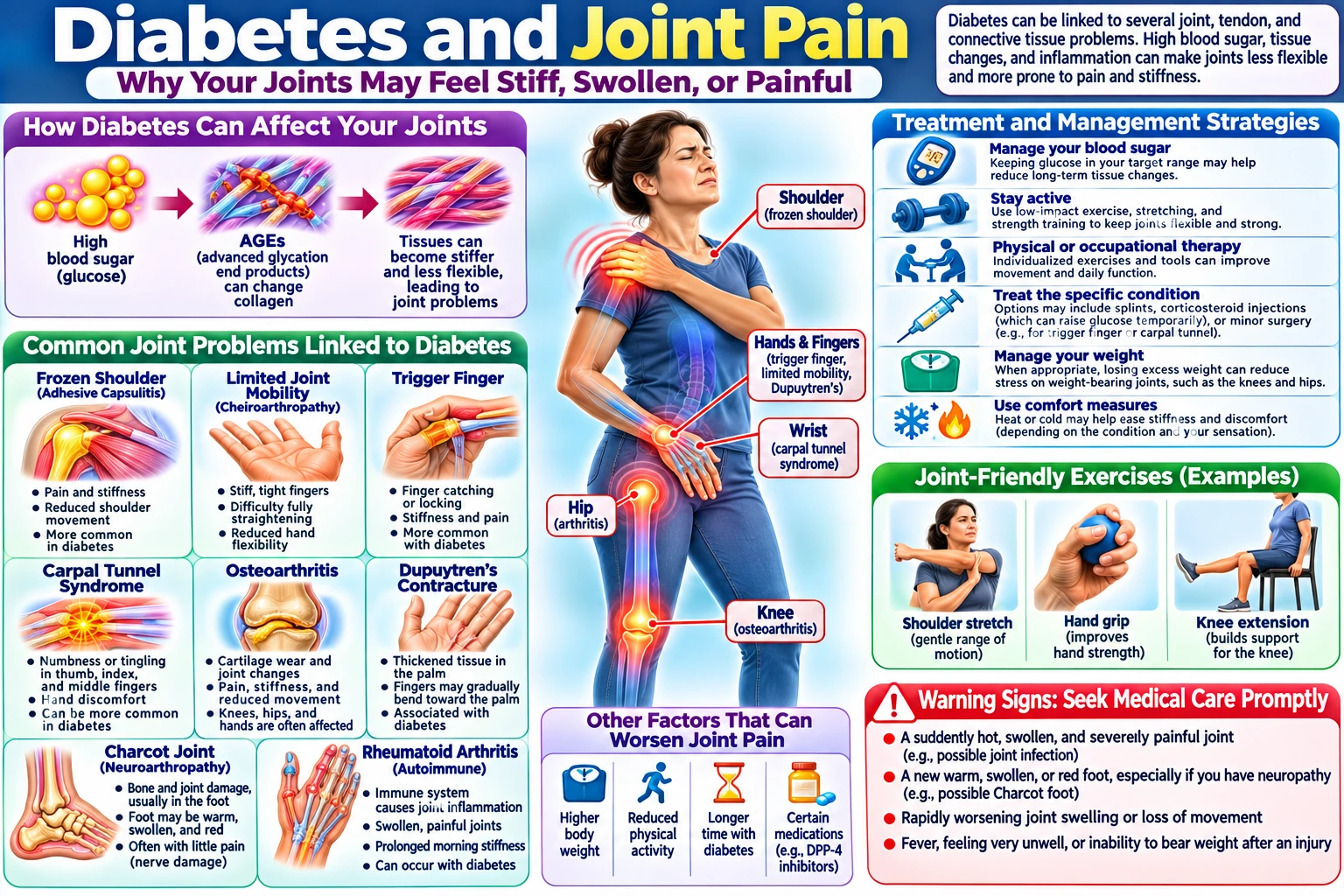
Have you ever woken up with stiff fingers, aching knees, or shoulders that feel difficult to move?
Perhaps your hands feel unusually tight when you try to make a fist. Maybe your shoulder hurts when you reach overhead, or your knees become uncomfortable after walking or standing for long periods.
If you have diabetes, you might wonder:
“Is my diabetes causing my joint pain?”
The answer is that diabetes can be associated with several conditions affecting the joints, tendons, nerves, and connective tissues.
Over time, elevated blood glucose may contribute to changes in collagen and other structural proteins that help tissues remain flexible.
Diabetes is also associated with certain musculoskeletal conditions, including frozen shoulder, trigger finger, and limited joint mobility.
However, not every painful or stiff joint is caused by diabetes.
Osteoarthritis, inflammatory arthritis, injuries, infections, and other medical conditions can produce similar symptoms.
Understanding these differences is important because the right treatment depends on identifying the underlying cause.
Can Diabetes Cause Joint Pain?
Diabetes can contribute to joint-related problems, but the relationship is not always straightforward.
Some conditions are more common in people with diabetes, while others are influenced by factors such as age, body weight, genetics, activity level, and autoimmune disease.
Diabetes-related musculoskeletal problems may affect:
- Shoulders
- Hands
- Fingers
- Wrists
- Knees
- Hips
- Feet
- Ankles
Symptoms may include pain, stiffness, swelling, reduced flexibility, or difficulty performing everyday movements.
Does Everyone With Diabetes Develop Joint Problems?
No.
Many people with diabetes maintain good joint function throughout their lives.
Risk varies according to factors such as:
- Age
- Duration of diabetes
- Glucose management
- Body weight
- Physical activity
- Previous injuries
- Neuropathy
- Other medical conditions
Having diabetes does not mean joint pain is inevitable.
How High Blood Sugar May Affect Connective Tissues
Connective tissues help support and stabilize the body's structures.
They include:
- Tendons
- Ligaments
- Joint capsules
- Cartilage
- Other collagen-containing tissues
Collagen is an important structural protein found throughout the body.
It provides strength and support while helping tissues maintain their normal mechanical properties.
Persistent hyperglycemia may contribute to chemical changes in collagen.
These changes can influence tissue stiffness and flexibility.
Advanced Glycation End Products (AGEs)
One proposed mechanism linking diabetes to connective tissue changes involves advanced glycation end products, commonly called AGEs.
AGEs form through chemical reactions involving sugars and proteins or other molecules.
Some AGE formation occurs naturally with aging.
However, prolonged hyperglycemia can accelerate certain glycation processes.
How AGEs Affect Collagen
AGE-related cross-linking can alter collagen's mechanical properties.
As collagen becomes more cross-linked, some tissues may become less flexible.
This may contribute to stiffness in tendons, joint capsules, and other connective tissues.
Researchers have investigated these mechanisms in conditions such as diabetic limited joint mobility and frozen shoulder.
However, joint disorders are complex, and AGEs are not the sole explanation for every diabetes-associated musculoskeletal problem.
Inflammation, Insulin Resistance, and Joint Health
Inflammation is part of the body's normal response to injury and infection.
However, persistent low-grade inflammation may contribute to certain chronic health conditions.
Type 2 diabetes and insulin resistance are often associated with metabolic changes that can influence inflammatory pathways.
These processes may affect musculoskeletal health.
Does Inflammation Automatically Cause Joint Pain?
No.
Inflammation is only one possible contributor.
Joint pain may also result from:
- Cartilage changes
- Tendon irritation
- Nerve compression
- Previous injuries
- Mechanical stress
- Autoimmune disease
- Infection
The location, duration, and pattern of symptoms help determine the likely cause.
1. Frozen Shoulder and Diabetes
Frozen shoulder, medically called adhesive capsulitis, is a condition involving pain and restricted movement of the shoulder.
It occurs when the shoulder joint capsule becomes inflamed and stiff, with thickening and tightening of the surrounding tissues.
Frozen shoulder is more common among people with diabetes than among those without diabetes.
Common Symptoms of Frozen Shoulder
Symptoms may include:
- Shoulder pain
- Difficulty raising the arm
- Trouble reaching behind the back
- Reduced ability to rotate the shoulder
- Nighttime shoulder discomfort
- Stiffness that interferes with daily activities
Someone may struggle to:
- Put on a jacket
- Fasten clothing behind the back
- Reach a high shelf
- Wash their hair
- Sleep comfortably on the affected side
Why Is Frozen Shoulder Associated With Diabetes?
The exact relationship is not fully understood.
Potential contributors include connective tissue changes, collagen glycation, inflammation, and other metabolic factors.
People with diabetes may also experience a more prolonged or difficult recovery in some cases.
However, frozen shoulder can occur in people without diabetes.
The Three Commonly Described Stages
Frozen shoulder is often described in three overlapping stages.
Freezing stage: Pain gradually increases, and shoulder movement becomes more limited.
Frozen stage: Stiffness becomes prominent. Pain may lessen, but movement remains restricted.
Thawing stage: Shoulder mobility gradually improves.
These stages are simplified descriptions. Not everyone follows the same pattern, and symptoms may persist for months or longer.
Is Frozen Shoulder Permanent?
Many people improve over time, especially with appropriate management.
However, some experience persistent stiffness or reduced range of motion.
Early assessment can help distinguish frozen shoulder from other conditions, such as rotator cuff injuries or arthritis.
2. Diabetic Cheiroarthropathy: Limited Joint Mobility
Diabetic cheiroarthropathy is sometimes called diabetic stiff hand syndrome.
It involves reduced flexibility of the fingers and hands.
The condition is associated with changes in connective tissues.
Common Symptoms
Possible signs include:
- Stiff fingers
- Difficulty fully straightening the fingers
- Reduced hand flexibility
- Tight or thickened skin
- Difficulty bringing the palms together
- Reduced ability to perform fine hand movements
The condition may develop gradually.
The Prayer Sign
A healthcare professional may assess hand mobility using the prayer sign.
The person places their palms together with fingers pointing upward, as though praying.
Someone with limited joint mobility may be unable to bring the palms and fingers completely together.
Does a Positive Prayer Sign Confirm Diabetes-Related Joint Disease?
Not by itself.
Other conditions can limit hand movement.
A clinician must consider the overall examination and medical history.
Why It Matters
Reduced hand flexibility can interfere with everyday activities, including:
- Writing
- Buttoning clothing
- Opening containers
- Gripping objects
- Using a phone
- Preparing meals
Although the condition is not always painful, it may affect hand function.
3. Trigger Finger and Diabetes
Trigger finger, medically known as stenosing flexor tenosynovitis, occurs when a finger tendon does not glide smoothly through its surrounding pulley system.
This can cause catching, clicking, or locking during finger movement.
Trigger finger is more common among people with diabetes.
Common Symptoms
Symptoms may include:
- Clicking when bending a finger
- Catching during movement
- Finger stiffness
- Tenderness near the base of the finger
- A finger that temporarily locks in a bent position
- Difficulty straightening the affected finger
Symptoms may be more noticeable in the morning.
Why Does Trigger Finger Happen?
The flexor tendons help bend the fingers.
These tendons pass through structures that keep them close to the bones.
When the tendon or surrounding pulley becomes thickened, movement can become restricted.
The finger may catch or lock.
Can More Than One Finger Be Affected?
Yes.
People with diabetes may experience trigger finger in multiple digits.
Some people also have other hand conditions at the same time.
Is Trigger Finger the Same as Arthritis?
No.
Trigger finger primarily involves a tendon and its pulley system.
Arthritis involves joint structures.
Although both may cause stiffness or discomfort, their treatments differ.
4. Carpal Tunnel Syndrome
Carpal tunnel syndrome occurs when the median nerve becomes compressed as it passes through a narrow space in the wrist.
Diabetes is associated with an increased risk of carpal tunnel syndrome.
Common Symptoms
Symptoms may include:
- Tingling in the thumb, index, and middle fingers
- Numbness
- Burning sensations
- Hand discomfort
- Symptoms that worsen at night
- Weakness when gripping objects
Some people wake up needing to shake their hands.
Why Can Diabetes Increase the Risk?
Several factors may contribute, including changes in connective tissues and susceptibility to nerve injury.
However, carpal tunnel syndrome can also occur because of repetitive activities, pregnancy-related swelling, anatomical factors, and other medical conditions.
Carpal Tunnel Syndrome Versus Diabetic Neuropathy
These conditions are not identical.
Carpal tunnel syndrome involves compression of the median nerve at the wrist.
Diabetic peripheral neuropathy commonly affects nerves in a more widespread pattern, often beginning in the feet.
A person with diabetes can have both conditions.
Accurate diagnosis matters because treatment differs.
5. Dupuytren's Contracture
Dupuytren's contracture affects connective tissue beneath the skin of the palm.
The tissue may gradually thicken and form cords.
Over time, one or more fingers may become pulled toward the palm.
The condition is associated with diabetes, although genetics and other factors also play important roles.
Common Signs
Possible symptoms include:
- Firm nodules in the palm
- Thickened tissue
- Tight cords beneath the skin
- Difficulty straightening a finger
- Gradual finger contracture
The ring and little fingers are commonly affected.
Is Dupuytren's Contracture Painful?
It may cause discomfort, particularly early on, but pain is not always prominent.
The main concern is progressive limitation of finger extension.
How Is It Different From Trigger Finger?
Trigger finger causes catching or locking as a tendon moves.
Dupuytren's contracture causes progressive tightening of tissue beneath the palm.
A clinician can distinguish them through examination.
6. Osteoarthritis and Type 2 Diabetes
Osteoarthritis is a common joint condition involving changes in cartilage, bone, and other joint structures.
It frequently affects:
- Knees
- Hips
- Hands
- Spine
Osteoarthritis becomes more common with age.
It is also associated with factors such as previous joint injuries, genetics, and excess mechanical loading.
Is Osteoarthritis More Common in People With Type 2 Diabetes?
Some research suggests an association between Type 2 diabetes and osteoarthritis.
However, age, body weight, and other shared risk factors make the relationship difficult to interpret.
Researchers are also studying whether metabolic inflammation and other diabetes-related changes contribute independently.
The evidence does not mean diabetes directly causes every case of osteoarthritis.
Common Symptoms
Osteoarthritis may cause:
- Joint pain during activity
- Stiffness after rest
- Reduced range of motion
- Joint tenderness
- Grinding or cracking sensations
- Occasional swelling
Symptoms often develop gradually.
Morning Stiffness
People with osteoarthritis may experience stiffness after waking or sitting for a prolonged period.
This stiffness often improves relatively quickly with movement.
Prolonged morning stiffness may suggest an inflammatory condition, although symptoms overlap.
7. Rheumatoid Arthritis and Diabetes
Rheumatoid arthritis is an autoimmune inflammatory disease.
It occurs when the immune system attacks tissues within joints.
This can cause persistent inflammation and, without appropriate treatment, joint damage.
Common Symptoms
Possible symptoms include:
- Swollen joints
- Warmth
- Pain
- Prolonged morning stiffness
- Fatigue
- Reduced joint function
Rheumatoid arthritis often affects small joints of the hands and feet, sometimes in a symmetrical pattern.
Does Diabetes Cause Rheumatoid Arthritis?
Diabetes does not directly cause rheumatoid arthritis.
However, autoimmune conditions can coexist.
People with Type 1 diabetes may have a greater likelihood of certain other autoimmune disorders.
Rheumatoid arthritis also has complex associations with metabolic health.
Why Accurate Diagnosis Matters
Inflammatory arthritis requires different treatment from mechanical joint problems.
Persistent joint swelling, warmth, and prolonged stiffness deserve medical evaluation.
8. Charcot Joint and Diabetic Neuropathy
Charcot neuroarthropathy, often called Charcot foot, is a serious condition that can affect bones and joints in people with significant peripheral neuropathy.
It most commonly involves the foot and ankle.
Because protective sensation is reduced, repeated injury and inflammation can lead to progressive bone and joint damage.
Early Warning Signs
An affected foot may become:
- Warm
- Swollen
- Red
- Noticeably different from the other foot
Pain may be mild or absent despite significant injury.
Why Charcot Foot Is Dangerous
Without prompt recognition and treatment, Charcot neuroarthropathy can lead to:
- Fractures
- Joint instability
- Foot deformity
- Pressure-related wounds
- Ulceration
- Increased risk of infection and other complications
Can Charcot Foot Be Mistaken for an Infection?
Yes.
Charcot foot may resemble cellulitis, gout, or other inflammatory conditions.
A healthcare professional must evaluate the cause.
A person with diabetes and neuropathy who develops a newly hot, swollen, or red foot should seek urgent medical assessment, even if there is little pain.
Until evaluated, avoid unnecessary weight-bearing on the affected foot.
9. Gout and Diabetes
Gout is a form of inflammatory arthritis caused by the deposition of monosodium urate crystals in joints.
It often causes sudden episodes of intense pain and swelling.
The big toe is a common location, although other joints may be affected.
Symptoms of Gout
An attack may cause:
- Sudden severe joint pain
- Redness
- Swelling
- Warmth
- Extreme tenderness
Gout is associated with several metabolic conditions, including obesity, insulin resistance, and chronic kidney disease.
These conditions can also occur in people with Type 2 diabetes.
Does High Blood Sugar Directly Cause Gout?
Not necessarily.
Gout involves urate metabolism and crystal deposition.
Diabetes and gout share several risk factors, but the relationship is complex.
Important Safety Note
A suddenly hot, swollen, painful joint may also indicate septic arthritis, a serious joint infection.
Do not assume a first episode is gout without medical assessment.
10. Septic Arthritis: A Joint Infection
Septic arthritis occurs when an infection develops inside a joint.
It is a medical emergency because infection can rapidly damage joint structures.
Possible Symptoms
Symptoms may include:
- Sudden severe joint pain
- Significant swelling
- Warmth
- Redness
- Difficulty moving the joint
- Fever, although fever may be absent
A person may find it extremely painful to move or bear weight on the affected joint.
Why Diabetes Matters
Diabetes can increase susceptibility to certain infections, particularly when glucose is poorly controlled.
However, septic arthritis can occur in anyone.
A suddenly swollen, hot, and painful joint requires urgent medical evaluation, particularly if movement is severely limited or the person feels unwell.
11. Why Joint Pain May Be Worse in the Morning
Morning stiffness can occur for several reasons.
During sleep, joints remain relatively still for several hours.
Some people experience temporary stiffness after inactivity.
However, the duration and pattern of stiffness may provide clues.
Osteoarthritis
Stiffness often improves after a relatively short period of movement.
Inflammatory Arthritis
Stiffness may last longer and be accompanied by persistent swelling and warmth.
Trigger Finger
Catching and stiffness may be especially noticeable after waking.
Frozen Shoulder
Shoulder pain and stiffness may interfere with sleep and remain noticeable in the morning.
Morning stiffness alone cannot establish a diagnosis.
12. How Body Weight Can Affect Joint Pain
Body weight can influence mechanical loading on weight-bearing joints.
The knees, hips, and ankles may experience greater stress with higher body weight.
This can contribute to symptoms in people with osteoarthritis or other joint conditions.
Does Weight Loss Always Improve Joint Pain?
Not necessarily.
For some people with overweight or obesity and knee osteoarthritis, gradual intentional weight loss may improve pain and function.
However, weight loss is not appropriate for everyone.
Older adults, people with unintentional weight loss, and those at risk of malnutrition may need a different approach.
The goal should be improved health and mobility rather than weight reduction at any cost.
13. Reduced Physical Activity and Joint Stiffness
Physical inactivity can contribute to:
- Muscle weakness
- Reduced flexibility
- Poor balance
- Reduced endurance
- Joint stiffness
Pain can also discourage movement.
This may create a cycle:
Joint discomfort → reduced activity → weaker supporting muscles → greater difficulty moving
Appropriate physical activity can help maintain mobility and strength.
However, the type of exercise matters.
Someone with an acute injury, severe inflammation, or suspected Charcot foot should not attempt to exercise through the problem.
14. Can Diabetes Medications Cause Joint Pain?
Some medications may be associated with musculoskeletal symptoms.
For example, the U.S. Food and Drug Administration has warned that medications in the DPP-4 inhibitor class can cause severe joint pain in some patients.
Examples include:
- Sitagliptin
- Saxagliptin
- Linagliptin
- Alogliptin
What Should You Do If Joint Pain Begins After a Medication Change?
Contact your healthcare professional.
They may review:
- When symptoms began
- Which joints are affected
- Medication history
- Other possible causes
- Whether treatment changes are appropriate
Do not stop prescribed diabetes medication without guidance unless emergency care instructions indicate otherwise.
Can Statins Cause Joint Pain?
Statins are commonly prescribed to reduce cardiovascular risk in people with diabetes.
They can sometimes cause muscle symptoms, which may be mistaken for joint discomfort.
Muscle pain and joint pain are not the same.
A healthcare professional can help determine whether symptoms are related to medication or another condition.
15. Corticosteroids and Blood Glucose
Corticosteroids are sometimes used to treat inflammatory joint conditions.
They may be prescribed orally or administered as injections.
Corticosteroids can raise blood glucose.
The effect depends on:
- Medication type
- Dose
- Route of administration
- Individual response
- Existing diabetes treatment
What About Steroid Joint Injections?
A corticosteroid injection may cause a temporary rise in glucose.
People with diabetes should inform the treating clinician about their condition and ask whether additional glucose monitoring is needed afterward.
This does not automatically mean steroid injections must be avoided.
The benefits and risks should be considered individually.
16. Can High Blood Sugar Make Joint Pain Worse?
Persistent hyperglycemia may contribute to connective tissue changes over time.
It may also be associated with inflammation and other complications affecting musculoskeletal health.
However, a single elevated glucose reading does not necessarily cause immediate joint pain.
If joint symptoms appear suddenly, other causes should be considered.
Does Better Glucose Management Reverse Joint Damage?
Not always.
Appropriate glucose management supports overall health and may reduce the risk of some long-term complications.
However, established conditions such as frozen shoulder, osteoarthritis, or Dupuytren's contracture may require additional treatment.
Improving glucose alone may not restore normal joint movement.
17. How to Recognize Different Patterns of Joint Pain
The location and pattern of symptoms can help guide evaluation.
Symptom Pattern | Possible Conditions |
|---|---|
Painful shoulder with restricted movement | Frozen shoulder, rotator cuff disorder |
Fingers that catch or lock | Trigger finger |
Stiff hands with difficulty straightening fingers | Diabetic cheiroarthropathy |
Tingling in the thumb, index, and middle fingers | Carpal tunnel syndrome |
Gradually bending finger with a cord in the palm | Dupuytren's contracture |
Knee pain that worsens with activity | Osteoarthritis |
Persistent swelling and prolonged morning stiffness | Inflammatory arthritis |
Sudden severe pain in a hot, swollen joint | Gout or septic arthritis |
Warm, swollen foot with little pain and neuropathy | Charcot neuroarthropathy |
These are examples, not diagnoses.
Several conditions can produce overlapping symptoms.
18. When Joint Pain May Indicate Something Serious
Most joint discomfort does not represent a medical emergency.
However, certain symptoms require prompt attention.
Warning Signs
Seek medical evaluation for:
- Persistent joint swelling
- Increasing pain
- Loss of movement
- Significant morning stiffness
- New hand weakness
- Recurrent locking of fingers
- Joint symptoms interfering with daily activities
- Pain that does not improve
- New foot swelling in someone with neuropathy
Early assessment can help prevent avoidable complications.
19. When Is Joint Pain an Emergency?
Seek urgent or emergency medical care for:
- A suddenly hot, swollen, extremely painful joint
- Severe joint pain accompanied by fever or significant illness
- Inability to bear weight after an injury
- A visibly deformed joint following trauma
- Rapidly worsening swelling or redness
- A newly warm, swollen foot in someone with diabetic neuropathy
A suspected joint infection requires emergency evaluation.
Suspected acute Charcot foot also needs urgent assessment and protection from further weight-bearing.
20. Should You Continue Exercising With Joint Pain?
The answer depends on the cause and severity.
Gentle movement may help certain chronic conditions.
However, exercising through severe pain, acute inflammation, or an undiagnosed injury can worsen some problems.
General Principles
- Avoid forcing painful movements.
- Reduce activities that clearly aggravate symptoms.
- Seek guidance for persistent limitations.
- Use appropriate footwear and support.
- Consider physical therapy when recommended.
People with diabetic neuropathy should be particularly careful with foot and ankle symptoms.
21. Why Early Diagnosis Matters
Different joint conditions require different approaches.
For example:
- Frozen shoulder may benefit from targeted rehabilitation and selected medical treatments.
- Trigger finger may require splinting, injections, or other procedures.
- Carpal tunnel syndrome may require nerve-focused evaluation and treatment.
- Osteoarthritis may respond to exercise, strengthening, and other management strategies.
- Rheumatoid arthritis requires treatment aimed at controlling inflammatory disease.
- Septic arthritis requires urgent infection treatment.
- Charcot neuroarthropathy requires prompt immobilization and offloading.
Treating every joint problem as ordinary arthritis may delay appropriate care.
The Most Important Lesson From Part 1
Diabetes can be associated with several conditions affecting joints, tendons, nerves, and connective tissues.
Persistent hyperglycemia may contribute to collagen changes and reduced tissue flexibility.
Conditions that deserve particular attention include:
- Frozen shoulder
- Diabetic cheiroarthropathy
- Trigger finger
- Carpal tunnel syndrome
- Dupuytren's contracture
- Osteoarthritis
- Charcot neuroarthropathy
However, not every painful joint is caused by diabetes.
Inflammatory arthritis, gout, injuries, infections, and medication effects can produce similar symptoms.
The location, duration, severity, and pattern of joint symptoms help determine the likely cause.
Most importantly, sudden severe joint pain, a hot swollen joint, or a newly warm and swollen foot in someone with neuropathy should never be ignored.
Can Joint Pain in People With Diabetes Be Treated?
Yes. Many joint conditions associated with diabetes can be managed with appropriate treatment, rehabilitation, and lifestyle adjustments.
However, the best approach depends on what is causing the pain.
Someone with frozen shoulder may need physical therapy and treatments to improve shoulder movement.
A person with trigger finger may benefit from splinting, corticosteroid injections, or a minor procedure.
Someone with osteoarthritis may improve with strengthening exercises, appropriate physical activity, and pain management.
Meanwhile, serious conditions such as septic arthritis or acute Charcot neuroarthropathy require urgent medical attention.
The goal is not simply to reduce pain. It is to protect joint function, maintain mobility, and prevent complications.
1. How Doctors Diagnose Joint Problems in People With Diabetes
Joint pain is a symptom rather than a diagnosis.
A healthcare professional will usually begin by reviewing your medical history and examining the affected area.
Important questions may include:
- Which joints are painful?
- When did the symptoms begin?
- Did the pain develop gradually or suddenly?
- Is there swelling, warmth, or redness?
- Is the pain worse in the morning?
- Does movement improve or worsen symptoms?
- Have you experienced an injury?
- Do your fingers catch or lock?
- Do you have numbness or tingling?
- Is the pain interfering with everyday activities?
Your diabetes history may also be relevant.
For example, neuropathy can change how you experience pain, especially in your feet.
Physical Examination
A clinician may assess:
- Joint range of motion
- Tenderness
- Swelling
- Muscle strength
- Joint stability
- Hand function
- Nerve sensation
- Walking ability
- Circulation when appropriate
The examination helps determine whether symptoms involve the joint itself, surrounding tendons, nerves, or other structures.
2. Imaging Tests for Joint Pain
Imaging may be recommended when the diagnosis is uncertain or when structural damage is suspected.
X-Rays
X-rays can help identify:
- Fractures
- Joint alignment changes
- Certain osteoarthritis findings
- Bone abnormalities
- Some changes associated with Charcot neuroarthropathy
However, early disease may not always appear on an X-ray.
Ultrasound
Ultrasound may help evaluate:
- Tendons
- Fluid around joints
- Certain inflammatory changes
- Soft-tissue abnormalities
It may also guide some injections.
Magnetic Resonance Imaging (MRI)
MRI provides detailed images of soft tissues and bone.
It may be useful when clinicians suspect:
- Certain tendon injuries
- Early Charcot changes
- Bone infection
- Other complex joint conditions
Not everyone with joint pain needs an MRI.
Testing should be guided by symptoms and examination findings.
3. Blood Tests for Joint Problems
Blood tests are not necessary for every type of joint pain.
However, they may help when inflammatory arthritis, infection, or another systemic condition is suspected.
Possible tests include:
- Complete blood count
- C-reactive protein (CRP)
- Erythrocyte sedimentation rate (ESR)
- Rheumatoid factor
- Anti-CCP antibodies
- Uric acid
- Other tests based on clinical findings
Can a Blood Test Diagnose Arthritis?
Not always.
Osteoarthritis is generally diagnosed using symptoms, examination, and imaging when needed.
Rheumatoid arthritis requires a combination of clinical findings and selected tests.
A high uric acid level alone does not confirm gout.
Joint Fluid Testing
When a joint is suddenly swollen and painful, a clinician may recommend removing a small sample of joint fluid.
This procedure is called arthrocentesis.
The fluid can be examined for:
- Infection
- Crystals
- Inflammatory changes
Joint fluid testing is especially important when septic arthritis is suspected.
A suspected joint infection requires urgent medical evaluation.
4. Managing Blood Glucose to Support Joint Health
Maintaining glucose within an individualized target range is an important part of diabetes care.
Persistent hyperglycemia can contribute to long-term changes in connective tissues, nerves, and blood vessels.
Appropriate glucose management may help reduce the risk of some diabetes-related complications.
However, better glucose readings do not necessarily reverse established joint damage.
For example, someone with frozen shoulder may still need physical therapy or other treatment.
Why Glucose Management Matters During Joint Treatment
Joint pain can interfere with:
- Physical activity
- Sleep
- Daily routines
- Medication schedules
- Meal preparation
These changes may make diabetes management more challenging.
Likewise, some treatments, especially corticosteroids, can temporarily increase glucose.
Your healthcare team may need to consider both conditions when planning treatment.
5. Exercise Can Help Protect Your Joints
Appropriate exercise is one of the most useful strategies for maintaining joint function.
Regular physical activity can help support:
- Muscle strength
- Flexibility
- Balance
- Mobility
- Cardiovascular health
- Glucose management
However, exercise should match your condition.
Someone with mild knee osteoarthritis may benefit from a strengthening program.
Someone with acute Charcot foot should not attempt to walk through the swelling.
The safest exercise is one that fits your diagnosis, abilities, and medical needs.
6. Gentle Range-of-Motion Exercises
Range-of-motion exercises involve moving a joint through a comfortable range.
They can help maintain flexibility and reduce stiffness associated with inactivity.
Examples include:
Shoulder Circles
Gently move your shoulders in small circles.
Avoid forcing movements that cause sharp pain.
Wrist Movements
Slowly bend and straighten your wrists within a comfortable range.
Finger Opening and Closing
Gently open your hands and bring your fingers together.
Do not force a finger that is locked or significantly painful.
Knee Extension
While seated, slowly straighten one knee and lower the leg again.
Repeat within your comfortable range.
These movements may be suitable for some people, but not every joint condition.
A physical therapist can recommend modifications.
7. Stretching for Joint Stiffness
Stretching can help maintain flexibility in certain muscles and connective tissues.
However, aggressive stretching may aggravate inflamed or injured structures.
General Stretching Principles
- Begin gently.
- Move slowly.
- Avoid bouncing.
- Do not force a painful joint.
- Stop if symptoms become significantly worse.
- Follow condition-specific instructions.
Is Stretching Helpful for Frozen Shoulder?
Gentle, appropriately prescribed stretching may help maintain or improve shoulder mobility.
However, forcing the shoulder through severe pain can worsen discomfort.
The appropriate exercises may change depending on the stage and severity of the condition.
8. Strength Training and Joint Stability
Muscles help support and stabilize joints.
Weak muscles may increase difficulty with everyday movements.
Resistance exercises can help improve strength and function.
Examples include:
- Chair stands
- Resistance-band exercises
- Light dumbbell movements
- Supported leg raises
- Wall push-ups
The appropriate exercises depend on which joints are affected.
Why Strength Matters for Knee Pain
The muscles around the knees and hips help control movement and support weight-bearing activities.
Strengthening these muscles may improve function in people with knee osteoarthritis.
However, exercise should be adapted for severe pain, instability, or other medical limitations.
9. Low-Impact Activities for Joint Health
Low-impact activities may be easier to tolerate than high-impact exercise.
Options can include:
- Walking
- Stationary cycling
- Swimming
- Water-based exercise
- Gentle mobility routines
Water-based activities may reduce the amount of weight placed on painful joints.
However, people with open wounds, active foot infections, or other medical concerns should ask their healthcare provider whether swimming is appropriate.
What If Walking Hurts?
Do not assume that more walking is always better.
If walking causes significant pain, swelling, or instability, seek assessment.
You may need a modified exercise program, appropriate footwear, or temporary activity restrictions.
10. Physical Therapy for Diabetes-Related Joint Problems
Physical therapy can help improve mobility, strength, and function.
A physical therapist may evaluate:
- Joint movement
- Muscle weakness
- Posture
- Walking patterns
- Balance
- Functional limitations
Treatment may include:
- Individualized exercises
- Mobility training
- Strengthening
- Balance exercises
- Education about activity modification
- Home exercise programs
Physical therapy is commonly used for frozen shoulder, osteoarthritis, and other musculoskeletal conditions.
11. Occupational Therapy for Hand Problems
Occupational therapists help people perform daily activities more comfortably and independently.
This may be particularly useful for:
- Trigger finger
- Hand stiffness
- Carpal tunnel syndrome
- Dupuytren's contracture
- Reduced grip strength
An occupational therapist may recommend:
- Hand exercises
- Splints
- Adaptive tools
- Joint-protection techniques
- Changes to daily activities
For example, a person with painful fingers may benefit from larger-handled kitchen utensils or tools that require less gripping force.
12. Treatment Options for Frozen Shoulder
Frozen shoulder can be painful and frustrating.
Treatment depends on the severity, stage, and impact on daily function.
Possible approaches include:
- Physical therapy
- Gentle stretching
- Pain management
- Corticosteroid injections
- Other procedures in selected cases
Corticosteroid Injections
An injection into the shoulder joint may reduce pain and inflammation, particularly during certain stages of frozen shoulder.
This may help someone participate more comfortably in rehabilitation.
However, people with diabetes should be aware that corticosteroids can temporarily raise glucose.
Hydrodilatation
Hydrodilatation involves injecting fluid into the shoulder joint capsule to help stretch it.
It may be considered in selected cases.
The benefits vary, and not every patient requires the procedure.
Surgery for Frozen Shoulder
Surgery is generally reserved for selected people with persistent symptoms despite appropriate nonsurgical treatment.
Options may include procedures intended to release a tight joint capsule.
Treatment decisions should consider potential benefits and risks.
13. Managing Trigger Finger
Trigger finger treatment depends on symptom severity and how much the condition interferes with hand function.
Possible options include:
- Activity modification
- Splinting
- Corticosteroid injection
- Surgical release
Splinting
A splint may help limit movements that aggravate the affected tendon.
Some people benefit from wearing a splint during certain activities or at night.
A clinician or hand therapist can recommend an appropriate design.
Corticosteroid Injection
A corticosteroid injection near the affected tendon may reduce symptoms.
However, injections may be less effective in some people with diabetes, and glucose may rise temporarily afterward.
Surgery
If symptoms persist or a finger remains locked, a minor procedure may be recommended to release the restrictive pulley.
14. Treating Carpal Tunnel Syndrome
Carpal tunnel syndrome involves compression of the median nerve at the wrist.
Treatment may include:
- Wrist splinting
- Activity modifications
- Corticosteroid injection
- Surgery in selected cases
Nighttime Wrist Splints
A wrist splint may help maintain a neutral wrist position during sleep.
This can reduce pressure on the median nerve in some people.
When Is Surgery Considered?
Surgical treatment may be appropriate when symptoms are severe, persistent, or associated with progressive nerve dysfunction.
Warning signs include:
- Increasing hand weakness
- Persistent numbness
- Muscle wasting near the thumb
- Significant functional impairment
Early evaluation may help prevent permanent nerve damage.
15. Treatment for Dupuytren's Contracture
Mild Dupuytren's disease may not require immediate intervention.
However, progressive finger contracture can interfere with daily activities.
Depending on the severity and availability of treatment, options may include:
- Observation
- Needle procedures
- Enzyme injections in selected settings
- Surgery
The goal is to improve finger extension and function.
Treatment does not always prevent recurrence.
16. Osteoarthritis Treatment in People With Diabetes
Osteoarthritis treatment often focuses on reducing pain and maintaining mobility.
Common strategies include:
- Exercise
- Muscle strengthening
- Physical therapy
- Activity modification
- Weight management when appropriate
- Pain medication
- Selected injections
- Surgery for advanced disease
Weight Management
For some people with overweight or obesity and knee osteoarthritis, gradual intentional weight loss may reduce joint stress and improve symptoms.
However, weight loss is not appropriate for everyone.
Older adults and people with unintentional weight loss may need to prioritize nutrition and muscle preservation.
17. Pain Medications: What People With Diabetes Should Know
Pain medications may help relieve symptoms, but they should be selected carefully.
The safest choice depends on:
- Kidney function
- Liver health
- Cardiovascular history
- Other medications
- Age
- Type of joint problem
Acetaminophen
Acetaminophen may help with certain types of pain.
However, it does not treat inflammation and may provide limited benefit for some joint conditions.
Excessive doses can damage the liver.
Nonsteroidal Anti-Inflammatory Drugs (NSAIDs)
NSAIDs include medications such as ibuprofen and naproxen.
They may reduce pain and inflammation.
However, NSAIDs can increase the risk of:
- Kidney injury
- Gastrointestinal bleeding
- Fluid retention
- Elevated blood pressure
- Cardiovascular complications
These risks are especially important for people with kidney disease, heart disease, or certain other conditions.
Topical NSAIDs
Topical anti-inflammatory medications may be useful for certain localized joint problems, such as knee or hand osteoarthritis.
They generally produce less systemic exposure than oral NSAIDs, although precautions may still apply.
Discuss medication choices with your healthcare professional.
18. Corticosteroid Injections and Blood Sugar
Corticosteroid injections are sometimes used for:
- Frozen shoulder
- Trigger finger
- Certain inflammatory joint conditions
- Selected osteoarthritis symptoms
These injections can temporarily increase blood glucose.
How Long Can Glucose Stay Elevated?
The effect varies.
Some people experience higher glucose for several days after an injection, while others have smaller or shorter changes.
Factors include:
- Steroid dose
- Injection location
- Baseline glucose management
- Diabetes treatment
- Individual response
What Should You Do Before an Injection?
Tell your clinician that you have diabetes.
Ask whether you should:
- Monitor glucose more frequently
- Follow a specific correction plan
- Contact your diabetes care team if readings exceed certain levels
- Watch for symptoms of significant hyperglycemia
Do not independently increase medication doses without an appropriate plan.
19. Are Joint Supplements Helpful?
Supplements such as glucosamine, chondroitin, collagen, and turmeric are frequently marketed for joint health.
However, evidence varies by product and condition.
Some supplements have shown inconsistent or limited benefits in clinical studies.
They are not proven to reverse diabetes-related connective tissue changes.
Are Supplements Always Safe?
No.
Supplements may:
- Interact with medications
- Cause side effects
- Vary in quality
- Be unsuitable for certain medical conditions
Discuss supplements with your healthcare professional before using them regularly.
20. Heat and Cold Therapy
Heat and cold may provide temporary relief for certain joint symptoms.
Heat Therapy
Gentle warmth may help some people with stiffness.
Examples include a warm compress or warm shower.
Cold Therapy
Cold packs may help reduce discomfort after certain injuries or during episodes of swelling.
Special Precautions With Diabetic Neuropathy
People with reduced sensation may not recognize excessive heat or cold.
This increases the risk of burns or cold-related skin injury.
Avoid applying extreme temperatures directly to areas with impaired sensation.
Use protective barriers and follow medical guidance.
21. Protecting Your Joints During Daily Activities
Small changes in daily routines may reduce discomfort.
Helpful strategies can include:
- Taking breaks during repetitive activities
- Avoiding prolonged uncomfortable positions
- Using supportive footwear
- Adjusting workstation height
- Using ergonomic tools
- Carrying loads close to the body
- Alternating activities when possible
Hand Protection
If your fingers are stiff or painful, consider tools that reduce forceful gripping.
Examples include:
- Larger-handled utensils
- Jar openers
- Ergonomic pens
- Easy-grip kitchen tools
These adjustments may help maintain independence.
22. Joint-Friendly Workstation Habits
People who spend long periods using computers may develop discomfort in their hands, wrists, shoulders, or neck.
Possible strategies include:
- Keeping wrists in a comfortable neutral position
- Adjusting chair and desk height
- Supporting the forearms when appropriate
- Taking brief movement breaks
- Avoiding prolonged gripping or awkward postures
However, ergonomic changes alone may not resolve conditions such as carpal tunnel syndrome or frozen shoulder.
Persistent symptoms deserve evaluation.
23. Sleep and Joint Pain
Joint pain can interfere with sleep.
Poor sleep may also increase pain sensitivity and make symptoms feel more difficult to manage.
Helpful Sleep Strategies
Depending on the condition, you may benefit from:
- Adjusting sleeping positions
- Using pillows for support
- Avoiding pressure on a painful shoulder
- Maintaining a regular sleep schedule
- Following prescribed pain treatment
For frozen shoulder, sleeping directly on the affected side may worsen discomfort.
A clinician or physical therapist can recommend positioning strategies.
24. Preventing Falls and Maintaining Balance
Joint pain, muscle weakness, and diabetic neuropathy can affect balance.
Falls may cause fractures or other injuries.
Practical Fall-Prevention Habits
- Keep walkways clear.
- Use adequate lighting.
- Wear appropriate footwear.
- Avoid loose rugs.
- Use handrails when available.
- Have vision checked as recommended.
- Ask about balance training if you feel unsteady.
People with neuropathy may benefit from individualized balance and strength exercises.
25. Foot and Ankle Joint Problems Require Special Attention
Foot and ankle symptoms deserve careful evaluation in people with diabetic neuropathy.
Reduced sensation may allow injuries to progress without significant pain.
Warning Signs
Contact a healthcare professional urgently if you notice:
- A newly warm foot
- Unexplained swelling
- Redness
- Changes in foot shape
- Difficulty bearing weight
- A new wound
- Significant temperature differences between feet
Why Acute Charcot Foot Is Different
Suspected acute Charcot neuroarthropathy requires prompt immobilization and offloading.
Continuing to walk on an affected foot can worsen bone and joint damage.
Do not attempt to treat a newly hot, swollen neuropathic foot with stretching, massage, or exercise.
Seek urgent assessment.
26. When Joint Surgery May Be Necessary
Surgery may be considered when a joint condition causes significant pain, loss of function, or structural damage that has not responded adequately to nonsurgical treatment.
Examples include:
- Carpal tunnel release
- Trigger finger release
- Selected Dupuytren's procedures
- Shoulder procedures
- Knee or hip replacement
Does Diabetes Increase Surgical Risk?
Diabetes may increase certain surgical risks, particularly when glucose is poorly managed or other complications are present.
Potential concerns include:
- Infection
- Wound-healing problems
- Glucose instability
- Cardiovascular complications
However, many people with diabetes undergo successful orthopedic procedures.
Preoperative planning may include glucose assessment, medication review, and evaluation of other health conditions.
27. How to Prepare for a Joint Specialist Appointment
If you are seeing a rheumatologist, orthopedic specialist, or hand specialist, it may help to prepare information about your symptoms.
Consider recording:
- Which joints hurt
- When symptoms began
- Whether pain is constant or intermittent
- Whether swelling occurs
- How long morning stiffness lasts
- Activities that worsen symptoms
- Treatments already tried
- Current medications
- Relevant glucose patterns
This information can help guide diagnosis and treatment.
28. When Should You See a Rheumatologist?
A rheumatologist specializes in inflammatory and autoimmune conditions affecting joints and other tissues.
Referral may be appropriate when symptoms suggest:
- Rheumatoid arthritis
- Other inflammatory arthritis
- Persistent unexplained joint swelling
- Prolonged morning stiffness
- Systemic autoimmune disease
Early diagnosis and treatment of inflammatory arthritis can help prevent joint damage.
29. When Should You See an Orthopedic or Hand Specialist?
An orthopedic or hand specialist may be appropriate for:
- Persistent trigger finger
- Severe carpal tunnel syndrome
- Progressive Dupuytren's contracture
- Significant shoulder stiffness
- Advanced osteoarthritis
- Structural joint injuries
The need for referral depends on severity, examination findings, and response to initial treatment.
30. When Should You Seek Urgent Medical Care?
Some joint symptoms should not wait for a routine appointment.
Seek urgent evaluation for:
- A suddenly hot, swollen, painful joint
- Severe pain with fever
- Rapidly worsening redness or swelling
- A new warm, swollen foot with neuropathy
- Significant injury with inability to bear weight
- A visibly deformed joint after trauma
A joint infection requires emergency assessment and treatment.
Acute Charcot foot also requires urgent care to prevent further damage.
A Practical Daily Joint-Care Checklist
If you have diabetes and experience joint stiffness or discomfort, consider these habits:
- Follow your individualized glucose management plan.
- Perform appropriate gentle movements.
- Maintain muscle strength through safe activity.
- Avoid forcing painful joints.
- Use supportive footwear.
- Inspect your feet regularly.
- Take breaks from repetitive movements.
- Maintain adequate sleep.
- Use pain medication only as directed.
- Report persistent swelling or loss of movement.
- Seek urgent care for sudden severe symptoms.
These habits support joint health but do not replace diagnosis or treatment.
Frequently Asked Questions
Can diabetes cause joint pain?
Diabetes is associated with several musculoskeletal conditions, including frozen shoulder, trigger finger, limited joint mobility, and Charcot neuroarthropathy. However, joint pain can also result from many unrelated conditions.
Why are my joints stiff when I wake up?
Morning stiffness can occur with osteoarthritis, inflammatory arthritis, trigger finger, and other conditions. The duration and associated symptoms may help determine the cause.
Can high blood sugar make joints stiff?
Persistent hyperglycemia may contribute to collagen changes and reduced connective tissue flexibility over time. However, stiffness has many possible causes.
What is diabetic stiff hand syndrome?
Diabetic cheiroarthropathy is a condition involving reduced finger and hand flexibility, sometimes accompanied by thickened skin.
Is frozen shoulder common in diabetes?
Frozen shoulder occurs more frequently in people with diabetes than in those without diabetes.
Can frozen shoulder go away?
Many people improve over time, although recovery may take months or longer. Some experience persistent stiffness, and treatment may help improve pain and function.
Does diabetes cause arthritis?
Diabetes does not directly cause every type of arthritis. Type 2 diabetes shares risk factors with osteoarthritis, and autoimmune conditions may coexist with diabetes.
Can diabetes cause trigger finger?
Trigger finger is more common in people with diabetes. It involves restricted tendon movement that causes catching or locking of a finger.
Can diabetic neuropathy cause joint pain?
Neuropathy can alter sensation and contribute to serious conditions such as Charcot neuroarthropathy. However, not every joint problem in someone with neuropathy is caused by nerve damage.
Why is my foot swollen but not painful?
In someone with diabetic neuropathy, a warm, swollen foot with little pain may indicate Charcot neuroarthropathy. This requires urgent medical assessment.
Is walking good for joint pain?
Walking can benefit many people with chronic joint conditions, but it is not appropriate for every situation. Acute Charcot foot, significant injury, and certain severe symptoms require activity restrictions and medical evaluation.
Can stretching relieve diabetic joint stiffness?
Gentle stretching may help some conditions, but it should be tailored to the diagnosis. Aggressive stretching can worsen certain injuries or inflammatory problems.
Are steroid injections safe for people with diabetes?
Steroid injections may be appropriate in selected cases, but they can temporarily raise glucose. Discuss monitoring and treatment precautions with your healthcare team.
Can diabetes medications cause severe joint pain?
Rarely, DPP-4 inhibitors have been associated with severe joint pain. Contact your prescriber if significant symptoms begin after starting or changing medication.
Is ibuprofen safe if I have diabetes?
Ibuprofen may be unsuitable for people with kidney disease, cardiovascular problems, gastrointestinal bleeding risks, or certain medication interactions. Ask a healthcare professional before using it regularly.
Can losing weight improve knee pain?
For some people with overweight or obesity and knee osteoarthritis, gradual intentional weight loss may improve symptoms. However, recommendations should be individualized.
Can joint pain affect blood sugar?
Pain, stress, reduced activity, poor sleep, and some joint treatments may influence glucose levels. The effect varies among individuals.
When should I see a doctor for joint pain?
Seek evaluation when pain persists, swelling develops, movement becomes restricted, or symptoms interfere with daily activities.
When is joint pain an emergency?
A suddenly hot, swollen, severely painful joint may indicate septic arthritis. A newly warm and swollen foot in someone with neuropathy may indicate acute Charcot neuroarthropathy. Both require urgent medical attention.
Key Takeaways
Diabetes can be associated with several conditions affecting joints, tendons, nerves, and connective tissues.
These include:
- Frozen shoulder
- Diabetic cheiroarthropathy
- Trigger finger
- Carpal tunnel syndrome
- Dupuytren's contracture
- Osteoarthritis
- Charcot neuroarthropathy
However, not every joint problem is caused by diabetes.
Accurate diagnosis is essential because different conditions require different treatments.
Appropriate glucose management supports overall health, but established joint problems may require additional care.
Physical therapy, gentle mobility exercises, and strength training can help many people maintain flexibility and function.
Pain medications should be selected carefully, particularly when kidney disease or cardiovascular conditions are present.
Corticosteroid injections may provide relief for selected joint conditions but can temporarily raise glucose.
Daily habits such as supportive footwear, ergonomic adjustments, appropriate activity, and fall prevention can help protect mobility.
Never ignore a newly warm, swollen foot if you have diabetic neuropathy. Acute Charcot neuroarthropathy requires urgent evaluation and protection from weight-bearing.
A suddenly hot, swollen, severely painful joint may indicate infection and requires emergency assessment.
Most importantly:
Joint pain does not have to mean losing your independence or mobility.
With an accurate diagnosis, appropriate treatment, and individualized diabetes care, many people can reduce discomfort, maintain strength, and continue participating in everyday activities.
DiabetesAdvocates.care does not provide medical advice, diagnosis, or treatment. Please consult with your healthcare provider for questions and personalized medical advice.