
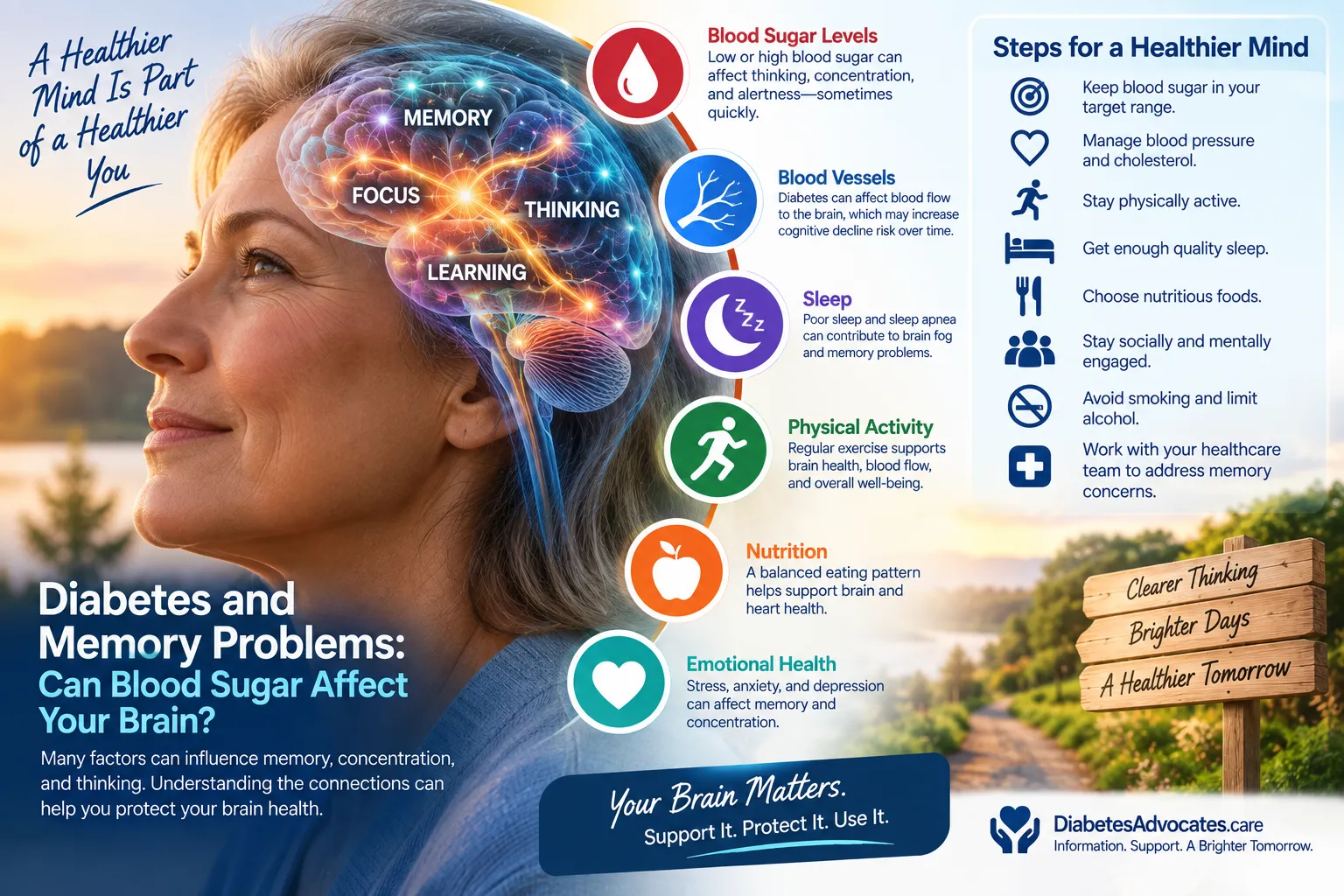
Diabetes and Memory Problems: Can Blood Sugar Affect Your Brain?
Have you ever walked into a room and forgotten why you went there?
Maybe you have struggled to remember a name, lost your train of thought during a conversation, or found it unusually difficult to concentrate.
Occasional forgetfulness happens to almost everyone.
But when you have diabetes, it is understandable to wonder:
Is my blood sugar affecting my brain?
The answer is more complicated than a simple yes or no.
Blood glucose can influence how the brain functions, particularly when glucose becomes too low or extremely high. Over the longer term, diabetes is also associated with a higher risk of cognitive decline and dementia, especially in older adults.
However, diabetes is only one possible contributor to memory or concentration problems.
Sleep disorders, stress, depression, medications, vitamin deficiencies, thyroid disorders, anemia, cardiovascular disease, normal aging, and neurological conditions can produce similar symptoms.
That is why new or worsening memory problems deserve attention rather than automatically being blamed on diabetes.
Your Brain Depends on Glucose
The brain requires a continuous supply of energy to function.
Glucose is one of its primary energy sources.
Unlike some other tissues, the brain is particularly sensitive to significant changes in glucose availability. When glucose falls too low, brain function can deteriorate quickly.
At the other extreme, chronic hyperglycemia can contribute to blood vessel damage and other processes associated with poorer brain health over time.
The goal is not to keep glucose as low as possible.
Instead, diabetes treatment aims to keep glucose within an individualized target range while avoiding both significant hyperglycemia and hypoglycemia.
What Do We Mean by “Memory Problems”?
Not every thinking problem is actually a memory problem.
Cognition includes several abilities, such as:
- Memory
- Attention
- Concentration
- Learning
- Language
- Reasoning
- Processing speed
- Planning
- Decision-making
- Problem-solving
Someone might say, “My memory is terrible,” when the real difficulty is maintaining attention long enough to store the information in the first place.
Another person may remember information normally but have difficulty organizing complicated tasks.
These differences can matter when healthcare professionals evaluate cognitive symptoms.
What Is Brain Fog?
“Brain fog” is not a specific medical diagnosis.
People commonly use the phrase to describe feeling mentally:
- Slow
- Forgetful
- Distracted
- Unfocused
- Confused
- Mentally exhausted
You may have difficulty finding words, following conversations, completing tasks, or remembering what you were about to do.
Brain fog can occur for many reasons.
Possible contributors include:
- Glucose changes
- Poor sleep
- Stress
- Illness
- Dehydration
- Medication effects
- Depression or anxiety
- Nutritional deficiencies
- Hormonal changes
- Other medical conditions
Persistent brain fog should not automatically be assumed to be caused by diabetes.
Low Blood Sugar Can Affect Thinking Quickly
Hypoglycemia is one of the clearest examples of glucose directly interfering with brain function.
The ADA defines clinically important low glucose as below 70 mg/dL (3.9 mmol/L), with glucose below 54 mg/dL (3.0 mmol/L) representing a more serious level at which neuroglycopenic symptoms become increasingly important.
When the brain does not receive enough glucose, someone may experience:
- Difficulty concentrating
- Confusion
- Irritability
- Dizziness
- Weakness
- Difficulty speaking clearly
- Poor coordination
- Unusual behavior
- Severe hypoglycemia can cause seizures or loss of consciousness.
- A Low Can Look Like a Memory Problem
Imagine trying to complete a complicated work task while your glucose is falling.
You may:
- Read the same sentence repeatedly
- Forget what you were doing
- Make unusual mistakes
- Lose your train of thought
- Struggle to make decisions
After treating the low and allowing glucose to recover, your thinking may return to normal.
In this situation, the problem was not necessarily permanent memory loss.
It was temporary impairment caused by insufficient glucose reaching the brain.
Severe Hypoglycemia Is Different
A mild low that is recognized and treated promptly is different from severe hypoglycemia.
The ADA classifies severe, or level 3, hypoglycemia as an event involving altered mental or physical functioning that requires help from another person for recovery, regardless of the measured glucose level.
Severe hypoglycemia is a medical safety issue.
People at risk should have an individualized plan for:
- Recognizing lows
- Treating lows
- Carrying fast-acting carbohydrate
- Using glucagon when prescribed
- Teaching family members or caregivers what to do
- Frequent or severe lows should be discussed with the diabetes care team.
- Hypoglycemia and Cognitive Decline Can Become a Two-Way Problem
The relationship between cognition and hypoglycemia is particularly important in older adults.
Research has found associations between severe hypoglycemia and cognitive decline. At the same time, declining cognitive function can make hypoglycemia more likely because someone may have difficulty managing medications, recognizing symptoms, timing meals, or responding appropriately to falling glucose.
This can create a dangerous cycle:
Cognitive difficulty → diabetes-management mistakes → hypoglycemia → greater cognitive and safety concerns
When cognitive impairment develops, diabetes treatment may need to become simpler rather than more complicated.
The 2026 ADA Standards recommend simplifying treatment plans when cognitive impairment is present and tailoring them to minimize hypoglycemia risk.
Hypoglycemia Unawareness Adds Another Challenge
Some people gradually lose the usual warning signs of low glucose.
This is called impaired hypoglycemia awareness.
Instead of noticing early symptoms such as shakiness, sweating, or hunger, the person may not realize glucose is falling until cognitive symptoms become more significant.
They might suddenly appear:
- Confused
- Disoriented
- Irritable
- Uncoordinated
- Unable to complete familiar tasks
The 2026 ADA Standards recommend screening people at risk for impaired hypoglycemia awareness and note that CGM is beneficial and recommended for individuals at high risk of hypoglycemia.
High Blood Sugar Can Affect How You Feel Mentally
Low glucose tends to cause more immediate neurological symptoms, but significant hyperglycemia can also affect how someone feels.
High glucose may contribute to:
- Fatigue
- Thirst
- Frequent urination
- Dehydration
- Headache
- Difficulty concentrating
- A general feeling of mental sluggishness
- Someone experiencing these symptoms may describe them as “brain fog.”
- Dehydration May Be Part of the Problem
When glucose becomes significantly elevated, the kidneys attempt to remove excess glucose through the urine.
This can increase urination and fluid loss.
As dehydration develops, someone may feel:
- Tired
- Dizzy
- Weak
- Headachy
- Less mentally alert
- Correcting dehydration and hyperglycemia may improve these symptoms.
However, recurrent or persistent confusion should never simply be attributed to dehydration without considering other causes.
Extremely High Glucose Can Cause Severe Confusion
Severe hyperglycemia can progress to life-threatening emergencies.
One example is hyperosmolar hyperglycemic state (HHS), which is more commonly associated with Type 2 diabetes.
Another is diabetic ketoacidosis (DKA), which is more common in Type 1 diabetes but can occur in other situations as well.
Serious warning signs may include:
- Severe dehydration
- Vomiting
- Profound weakness
- Confusion
- Changes in alertness
- Loss of consciousness
- Abnormal breathing
- These conditions require urgent medical treatment.
New severe confusion in someone with diabetes should never automatically be dismissed as ordinary “brain fog.”
Diabetes and Long-Term Cognitive Health
Researchers have studied the relationship between diabetes and cognition for many years.
Current evidence indicates that people with diabetes have a higher risk of cognitive decline and dementia compared with people without diabetes.
The 2026 ADA Standards report increased rates of all-cause dementia, Alzheimer disease, and vascular dementia among people with diabetes.
But this finding needs to be interpreted carefully.
Having diabetes does not mean you will develop dementia.
Risk is not destiny.
Many people live with diabetes into older age without developing dementia.
What Is Mild Cognitive Impairment?
Mild cognitive impairment, often abbreviated MCI, describes measurable cognitive decline that is greater than expected but does not yet substantially interfere with independent daily life.
Someone with MCI might notice increasing difficulty with:
- Remembering appointments
- Following complicated instructions
- Finding words
- Planning activities
- Keeping track of information
- MCI does not always progress to dementia.
Some people remain stable, and symptoms may sometimes have treatable contributors.
Medical evaluation is therefore important.
What Is Dementia?
Dementia is not one specific disease.
It describes cognitive decline severe enough to interfere with independent daily functioning.
Someone may begin having difficulty with activities such as:
- Managing finances
- Taking medications correctly
- Preparing meals
- Navigating familiar places
- Remembering important events
- Making safe decisions
- Alzheimer disease is one cause of dementia, but it is not the only one.
- Other forms include vascular dementia and several neurological disorders.
- Diabetes and Vascular Dementia
One important connection between diabetes and brain health involves blood vessels.
Over time, diabetes can contribute to vascular damage throughout the body.
That includes blood vessels supplying the brain.
Damage to cerebral blood vessels may increase the risk of:
- Stroke
- Small-vessel disease
- Vascular cognitive impairment
- Vascular dementia
This is one reason brain health and cardiovascular health are closely connected.
Blood Pressure Matters to Your Brain Too
Diabetes rarely exists in isolation.
Many people with Type 2 diabetes also have high blood pressure.
Hypertension can damage blood vessels in the brain and increase stroke risk.
Managing blood pressure according to your individualized treatment plan therefore protects more than your heart and kidneys.
It may also help protect brain health.
Cholesterol and Cardiovascular Risk Matter
Abnormal cholesterol levels and atherosclerosis can also affect the blood vessels supplying the brain.
The ADA notes that cardiovascular risk factors are associated with cognitive decline and dementia risk, making blood pressure and lipid management particularly important in older adults with diabetes.
That means a brain-health strategy may include managing:
- Glucose
- Blood pressure
- Cholesterol
- Physical activity
- Smoking
- Overall cardiovascular health
- Rather than focusing only on A1C.
- Tighter Glucose Control Is Not Automatically Better for the Brain
It may seem logical to assume that lowering A1C as much as possible would prevent memory problems.
The evidence is not that simple.
Aggressive glucose lowering can increase hypoglycemia risk in some people, particularly older adults or people using certain medications.
The ADA specifically cautions against recommending intensive glucose management solely for the purpose of improving cognitive function in people with Type 2 diabetes.
The safest target is an individualized target, not necessarily the lowest possible number.
Cognitive Problems Can Make Diabetes Harder to Manage
Diabetes self-management can be surprisingly complicated.
A person may need to remember:
- Medication schedules
- Insulin doses
- Meal timing
- Glucose readings
- Carbohydrate amounts
- Medical appointments
- Prescription refills
- Device changes
- Hypoglycemia treatment
Early cognitive impairment may first become noticeable through mistakes in these tasks.
For example:
- Insulin doses are repeatedly forgotten.
- The same medication is taken twice.
- Meals are skipped.
- CGM alerts become confusing.
- Glucose testing becomes inconsistent.
- Bills or appointments are forgotten.
- These changes deserve attention.
The ADA specifically recommends cognitive evaluation when declining ability begins interfering with diabetes self-care.
Older Adults Deserve Particular Attention
Cognitive changes become more common with age, regardless of diabetes.
Because diabetes adds additional risk, cognitive health becomes an increasingly important part of diabetes care in older adulthood.
The 2026 ADA Standards recommend screening adults with diabetes age 65 and older for early detection of mild cognitive impairment or dementia at the initial visit, annually, and when otherwise appropriate.
Screening does not automatically mean someone has dementia.
It is a way of identifying changes that may deserve further evaluation.
Memory Problems Are Not Always Dementia
This point is especially important.
Forgetfulness can have many potentially reversible or manageable causes.
These may include:
- Poor sleep
- Sleep apnea
- Depression
- Anxiety
- Chronic stress
- Medication side effects
- Vitamin B12 deficiency
- Thyroid disorders
- Anemia
- Dehydration
- Infection
- Hearing impairment
- Vision impairment
- Alcohol or substance use
- Acute illness
A person should not assume that every forgotten name or misplaced object means dementia is developing.
Look at the overall pattern.
Sleep Can Have a Major Effect on Thinking
Poor sleep can make almost anyone feel mentally slower.
After a bad night, you may notice:
- Reduced attention
- Slower reaction time
- Irritability
- Forgetfulness
- Difficulty concentrating
- Chronic sleep problems can make these symptoms more persistent.
People with Type 2 diabetes have an increased likelihood of conditions such as obstructive sleep apnea, particularly when other risk factors are present.
If you regularly experience loud snoring, witnessed pauses in breathing, morning headaches, or excessive daytime sleepiness, discuss the possibility of sleep apnea with your healthcare provider.
Depression Can Look Like Memory Loss
Depression does not always present simply as sadness.
It can affect:
- Concentration
- Motivation
- Processing speed
- Memory
- Decision-making
Someone may believe their memory is failing when depression is interfering with their ability to focus and absorb information.
Diabetes distress can also create mental overload.
Managing medications, food, glucose, appointments, insurance, supplies, and concerns about complications can become exhausting.
Mental health deserves to be considered when cognitive symptoms develop.
Stress Can Overload Attention
When your mind is constantly occupied with worries, there is less attention available for other information.
Chronic stress may make it harder to:
- Concentrate
- Remember details
- Organize tasks
- Make decisions
- This does not mean the symptoms are imaginary.
- Stress can have real effects on cognitive performance.
Persistent memory problems still deserve evaluation, particularly when they are worsening or interfering with daily activities.
Vitamin B12 Deficiency Can Mimic Neurological Problems
Vitamin B12 is essential for healthy blood cells and nervous-system function.
Deficiency may cause:
- Fatigue
- Numbness
- Tingling
- Balance problems
- Neurological symptoms
- Cognitive changes in more significant cases
- Long-term metformin therapy can be associated with vitamin B12 deficiency.
The 2026 ADA Standards recommend considering periodic B12 assessment in people receiving long-term metformin, particularly when anemia or peripheral neuropathy is present.
This is important because B12-related symptoms can overlap with diabetes complications.
Don't Assume Metformin Is Causing Your Memory Problems
The association between metformin and B12 deficiency does not mean that metformin routinely causes dementia or memory loss.
Metformin remains an important and widely used diabetes medication.
If deficiency is suspected, the appropriate response is usually evaluation and testing—not stopping medication without medical guidance.
Your healthcare provider can determine whether B12 testing or supplementation is appropriate.
Thyroid Problems Can Affect Thinking
Thyroid disorders can produce symptoms that overlap with cognitive problems.
Depending on the condition, symptoms may include:
- Fatigue
- Slowed thinking
- Difficulty concentrating
- Mood changes
- Weight changes
- Temperature sensitivity
- Heart-rate changes
A healthcare provider may consider thyroid testing when symptoms and medical history suggest it.
Anemia Can Affect Concentration
Anemia reduces the blood's ability to carry oxygen effectively.
Possible symptoms include:
- Fatigue
- Weakness
- Dizziness
- Shortness of breath
- Reduced exercise tolerance
- Difficulty concentrating
Because kidney disease can contribute to anemia, this can be particularly relevant for some people with longstanding diabetes.
Blood testing can determine whether anemia is present.
Hearing Loss Can Sometimes Look Like Memory Trouble
Imagine someone tells you an appointment time, but you do not hear the entire sentence.
Later, you cannot remember the appointment correctly.
It may appear to be a memory problem even though the information was never clearly heard.
Hearing impairment becomes increasingly common with age and is also more common among people with diabetes.
Hearing evaluation may therefore be an overlooked part of assessing apparent cognitive decline.
Vision Problems Can Increase Cognitive Load
Poor vision can create similar difficulties.
Reading medication labels, interpreting glucose displays, navigating environments, and recognizing people all require more mental effort when vision is impaired.
Maintaining appropriate eye and hearing care can therefore make everyday diabetes management easier.
Medication Review Is Important
Medications used for diabetes are not the only medicines that matter.
Certain medications for:
- Sleep
- Anxiety
- Pain
- Allergies
- Bladder problems
- Other chronic conditions
may sometimes contribute to sedation, confusion, or cognitive symptoms, particularly in older adults.
Do not stop prescription medications on your own.
Instead, bring an updated medication list—including over-the-counter medicines and supplements—to your healthcare provider or pharmacist for review.
Sudden Confusion Is Not the Same as Gradual Forgetfulness
This distinction can be lifesaving.
Gradually becoming more forgetful over months is very different from suddenly becoming confused within minutes or hours.
Sudden confusion requires prompt medical attention.
Possible causes include:
- Severe hypoglycemia
- Severe hyperglycemia
- Stroke
- Infection
- Medication reactions
- Electrolyte abnormalities
- Dehydration
- Other acute medical problems
In older adults especially, infection or other illness may sometimes first appear as an abrupt change in mental status.
Know the Warning Signs of Stroke
Diabetes increases the importance of recognizing stroke symptoms because vascular disease is an important part of long-term brain risk.
Seek emergency medical care for sudden:
- Facial drooping
- Arm or leg weakness
- Numbness, especially on one side
- Difficulty speaking
- Difficulty understanding speech
- Vision changes
- Severe balance problems
- Confusion
- Severe unexplained headache
- Do not assume neurological symptoms are simply caused by glucose.
If possible, glucose can be checked quickly—but emergency care should not be delayed when stroke is suspected.
Pay Attention to Patterns
One forgotten password does not necessarily indicate cognitive decline.
Patterns matter more.
Consider discussing memory or thinking changes with your healthcare provider when you or someone close to you notices:
- Increasing forgetfulness
- Repeating the same questions
- Missing important appointments
- Getting lost in familiar places
- Difficulty managing money
- Medication mistakes
- Incorrect insulin doses
- Increasing difficulty following instructions
- Changes in judgment
- Problems completing familiar tasks
- Declining ability to manage diabetes independently
Sometimes family members notice these changes before the person experiencing them does.
Early evaluation can help identify what is happening and whether there are treatable contributors.
What Happens During Cognitive Screening?
If you tell your healthcare provider that your memory or thinking has changed, they may begin with a brief cognitive screening test.
Screening is not the same as diagnosing dementia.
Instead, it helps identify whether additional evaluation may be useful.
Common screening tools can assess abilities such as:
- Short-term memory
- Attention
- Language
- Orientation
- Planning
- Visual-spatial skills
- Executive function
The 2026 American Diabetes Association Standards of Care recommend screening adults with diabetes age 65 and older for early detection of mild cognitive impairment or dementia at the initial visit, annually, and when otherwise appropriate.
Screening may also be appropriate when someone begins having significant problems with diabetes self-care.
Diabetes Management Problems Can Be Important Clues
Sometimes cognitive decline first becomes noticeable through changes in diabetes management.
A person who previously managed diabetes independently may suddenly begin:
- Missing insulin doses
- Taking insulin twice
- Forgetting medications
- Skipping meals
- Having unexplained glucose fluctuations
- Struggling to count carbohydrates
- Forgetting how to operate a glucose meter
- Becoming confused by CGM alerts
- Having repeated hypoglycemia
- Missing medical appointments
- These problems should not simply be labeled as carelessness.
They may indicate that the treatment plan has become too complicated for the person's current abilities.
A Positive Screening Test Is Only the Beginning
If screening suggests cognitive impairment, further evaluation may be recommended.
Depending on the circumstances, this might include:
- A detailed medical history
- Medication review
- Neurological examination
- Laboratory testing
- Depression screening
- Sleep evaluation
- Hearing or vision assessment
- More detailed neuropsychological testing
Healthcare professionals may also ask someone close to the patient about changes they have noticed.
This can be helpful because cognitive changes are not always obvious to the person experiencing them.
Look for Treatable Contributors
One of the most important reasons to investigate memory problems is that some contributors may be treatable or manageable.
Depending on symptoms, evaluation might identify:
- Vitamin B12 deficiency
- Thyroid disease
- Anemia
- Depression
- Sleep apnea
- Medication side effects
- Hearing loss
- Vision impairment
- Dehydration
- Recurrent hypoglycemia
- Poorly controlled hyperglycemia
Correcting one of these conditions may improve thinking or make everyday functioning easier.
That is why self-diagnosing dementia based on forgetfulness alone is not appropriate.
Protecting Your Brain Means Protecting Your Blood Vessels
Your brain depends on a continuous supply of oxygen-rich blood.
Many of the strategies used to protect the heart also support brain health.
For someone with diabetes, that means paying attention to more than glucose.
Important factors include:
- Blood pressure
- Cholesterol
- Smoking
- Physical activity
- Nutrition
- Sleep
- Cardiovascular disease
- Glucose management
Managing these risk factors can help protect the blood vessels supplying the brain.
Aim for Your Glucose Target—Not Someone Else's
There is no single ideal glucose target for every person with diabetes.
Targets should be individualized based on factors such as:
- Age
- Type of diabetes
- Diabetes duration
- Medications
- Hypoglycemia risk
- Other health conditions
- Functional abilities
- Cognitive status
For some older adults with significant cognitive impairment, avoiding hypoglycemia and symptomatic hyperglycemia may become more important than achieving a very low A1C.
More aggressive treatment is not automatically safer treatment.
Avoid Repeated Hypoglycemia
Preventing severe and recurrent hypoglycemia becomes especially important when memory or cognitive function begins declining.
Cognitive problems may make it more difficult to:
- Recognize a low
- Remember to eat
- Calculate insulin correctly
- Respond to an alarm
- Carry treatment
- Explain symptoms to another person
- At the same time, severe hypoglycemia can itself interfere with brain function.
- If lows are becoming frequent, the treatment plan deserves review.
Do not simply accept repeated hypoglycemia as the price of having “good numbers.”
CGM Can Be Helpful—but It Should Reduce Burden
Continuous glucose monitoring can be valuable for people at risk of hypoglycemia.
CGMs may provide:
- Low-glucose alerts
- High-glucose alerts
- Trend information
- Overnight glucose information
- Reduced need for some fingersticks
- Data that can sometimes be shared with caregivers
For older adults with Type 1 diabetes and those with Type 2 diabetes using insulin, current ADA guidance supports CGM as a way to improve glucose outcomes and reduce hypoglycemia.
However, technology should make care safer—not unnecessarily confusing.
More Technology Is Not Always Better
A sophisticated device is only useful when the person or their support network can manage it reliably.
Someone experiencing cognitive decline may become overwhelmed by:
- Multiple alarms
- Complicated menus
- Frequent device changes
- Smartphone applications
- Insulin calculations
- Passwords and logins
- In some situations, technology can increase independence.
- In others, simplification may be safer.
The best system is not necessarily the newest system. It is the one that can be used correctly and consistently.
Simplifying Diabetes Care Can Improve Safety
When cognitive impairment develops, the diabetes treatment plan may need to change.
Simplification might involve:
- Reducing unnecessary treatment complexity
- Creating a consistent medication schedule
- Using pill organizers
- Setting reminders
- Coordinating medications with regular routines
- Reducing complicated calculations
- Involving a caregiver when appropriate
- Reviewing medications that increase hypoglycemia risk
- These decisions should be made with the healthcare team.
Do not independently stop insulin or other diabetes medications simply because the routine has become difficult.
Use External Memory Instead of Relying on Memory Alone
Even people without cognitive impairment forget things.
Simple systems can reduce the mental burden of diabetes.
Helpful tools may include:
- Written medication schedules
- Smartphone reminders
- Calendars
- Pill organizers
- Checklists
- Labeled storage areas
- Automatic prescription refills
- Appointment reminders
For insulin users, connected pens or pump records may sometimes help identify whether a dose was given.
The goal is to make important information easier to retrieve.
Create Consistent Routines
Memory often works better when tasks occur in predictable patterns.
For example:
- Morning: medication, breakfast, glucose check if needed.
- Evening: medication, device check, prepare supplies for tomorrow.
Keeping diabetes supplies in a consistent location can also reduce missed tasks.
Avoid moving medications and equipment around the house unnecessarily.
Keep Instructions Simple and Visible
Complicated written instructions may become difficult to follow when cognitive problems develop.
A simpler plan may be easier.
For example:
Instead of several pages of instructions, a healthcare team might create a concise schedule showing:
- What medication to take
- How much to take
- When to take it
- What to do for low glucose
- Who to call with questions
Large, readable print can be particularly useful when vision problems are also present.
Caregivers Can Become Important Partners
As cognition changes, family members, friends, or professional caregivers may gradually take a larger role.
Support might include:
- Attending medical appointments
- Organizing medications
- Monitoring glucose information
- Helping with insulin
- Preparing meals
- Reordering supplies
- Watching for hypoglycemia
- Coordinating transportation
Support does not necessarily mean immediately taking away someone's independence.
The goal is to provide the amount of help needed for safe care.
Plan Before a Crisis Happens
If cognitive problems are progressing, it is better to discuss future support early.
Questions may include:
Who knows how the diabetes medications work?
Who can help if insulin becomes confusing?
Who knows how to treat severe hypoglycemia?
Is glucagon available when appropriate?
Who can access glucose information?
Who knows the healthcare team's contact information?
Who can help reorder supplies?
What happens if the primary caregiver becomes unavailable?
Planning early can prevent avoidable emergencies.
Family Members May Notice Changes First
A loved one might notice that someone is:
- Repeating stories
- Forgetting appointments
- Taking medications incorrectly
- Leaving appliances on
- Getting lost
- Struggling with finances
- Becoming unusually confused by familiar tasks
- These observations can be valuable.
If you are concerned about someone you care for, describe specific examples rather than simply saying, “Their memory is bad.”
Specific changes help clinicians understand what is happening.
Physical Activity Supports the Brain and Body
Exercise is one of the most broadly beneficial habits for overall health.
Regular physical activity can support:
- Cardiovascular health
- Glucose management
- Strength
- Balance
- Mood
- Sleep
- Brain health
- You do not need an extreme workout program.
- Depending on health and ability, activity might include:
- Walking
- Cycling
- Swimming
- Dancing
- Resistance training
- Gardening
- Group exercise
- Household activities
- Consistency matters.
- Combine Aerobic and Strength Activity
Aerobic exercise supports cardiovascular fitness, while resistance exercise helps maintain muscle and physical function.
Both can be valuable as people age.
Maintaining physical function may also make diabetes self-care easier.
Someone who can walk confidently, prepare meals, open medication containers, and operate diabetes equipment is better positioned to remain independent.
If you have significant diabetes complications, cardiovascular disease, balance problems, or have been inactive for a long time, ask your healthcare provider what type of activity is appropriate.
Protect Your Brain by Protecting Your Sleep
Sleep is not wasted time.
The brain depends on adequate sleep for normal attention, learning, mood, and memory.
Try to maintain:
- A consistent sleep schedule
- A comfortable sleep environment
- Appropriate evening routines
- Treatment for diagnosed sleep disorders
If poor sleep persists despite reasonable sleep habits, look for the cause rather than simply trying harder to sleep.
Conditions such as sleep apnea may require medical treatment.
Nutrition Supports Both Vascular and Brain Health
There is no single “diabetes brain diet.”
A balanced eating pattern that supports cardiovascular and metabolic health is a reasonable foundation.
Depending on individual needs, this may emphasize:
- Vegetables
- Fruits
- Whole grains
- Beans and legumes
- Nuts and seeds
- Fish
- Appropriate protein sources
- Unsaturated fats
- Fiber-rich foods
Individual dietary needs vary, particularly when kidney disease, gastrointestinal problems, food allergies, or other conditions are present.
Be Careful With “Memory Supplements”
The supplement market contains many products claiming to:
- Reverse memory loss
- Prevent dementia
- Improve brain function
- “Detox” the brain
- Sharpen concentration
- These claims may exceed the evidence.
Supplements can also interact with medications or contain ingredients that are not appropriate for certain medical conditions.
Do not assume a product is safe simply because it is labeled “natural.”
Discuss supplements with your healthcare provider or pharmacist.
Stay Socially and Mentally Engaged
Brain health is not only about medications and laboratory numbers.
Activities that provide mental and social engagement can be valuable parts of healthy aging.
Examples include:
- Reading
- Learning new skills
- Playing games
- Volunteering
- Socializing
- Hobbies
- Music
- Community activities
- Choose activities you genuinely enjoy.
You do not need to spend hours completing specialized “brain training” programs to engage your mind.
Manage Stress Without Expecting Perfection
Chronic stress can make concentration and memory feel worse.
Stress-management strategies might include:
- Physical activity
- Relaxation exercises
- Time outdoors
- Hobbies
- Social connection
- Counseling
- Mindfulness practices
- Better sleep routines
- Managing diabetes itself can also be stressful.
- If diabetes feels mentally exhausting, tell your healthcare team.
- Diabetes distress is real and deserves attention.
- Don't Ignore Depression or Anxiety
- Depression and anxiety can affect:
- Attention
- Motivation
- Memory
- Sleep
- Appetite
- Diabetes self-care
Treating mental health conditions may improve quality of life and make diabetes management easier.
Mental health treatment is part of health care—not separate from it.
Stop Smoking If You Smoke
Smoking damages blood vessels and increases cardiovascular risk.
Because vascular health and brain health are closely connected, avoiding tobacco is another important part of reducing preventable risk.
If quitting has been difficult, ask about evidence-based cessation support rather than assuming you must do it through willpower alone.
Alcohol Can Complicate the Picture
Alcohol can affect judgment and memory directly.
For people using insulin or certain diabetes medications, alcohol may also increase the risk of delayed hypoglycemia.
Heavy alcohol use can contribute to nutritional deficiencies and neurological problems.
Discuss alcohol use honestly with your healthcare provider, particularly if you experience unexplained lows, falls, confusion, or memory changes.
Driving Requires Special Attention
Both hypoglycemia and cognitive impairment can affect driving safety.
Possible warning signs include:
- Getting lost on familiar routes
- Delayed reactions
- Near-misses
- Confusing pedals
- Difficulty interpreting road signs
- Forgetting destinations
- Hypoglycemia while driving
- If these problems occur, discuss driving safety with your healthcare team.
- Avoid driving when you are experiencing hypoglycemia or significant confusion.
- What Should You Do When You Suddenly Feel Mentally Foggy?
If you have diabetes and suddenly feel confused or mentally impaired, first consider immediate safety.
If you are at risk for hypoglycemia, check your glucose when possible.
If glucose is low, follow your hypoglycemia treatment plan.
But do not assume every episode of confusion is caused by glucose.
Sudden confusion may also result from:
- Stroke
- Infection
- Medication effects
- Dehydration
- Electrolyte abnormalities
- Head injury
- Other medical emergencies
- Severe or unexplained acute confusion requires prompt medical evaluation.
- When Should Memory Problems Be Discussed With a Doctor?
- Consider making an appointment when memory or thinking problems:
- Are becoming progressively worse
- Interfere with diabetes management
- Cause medication mistakes
- Lead to missed insulin doses
- Affect finances
- Interfere with cooking or household tasks
- Cause someone to become lost
- Affect work
- Lead to repeated falls
- Are noticed by family or friends
- Interfere with independent living
- Early evaluation does not mean assuming the worst.
- It means looking for the cause.
- When Is It an Emergency?
Seek emergency medical care for a sudden major change in mental status, particularly when accompanied by:
- One-sided weakness
- Facial drooping
- Difficulty speaking
- Severe confusion
- Loss of consciousness
- Seizures
- Severe headache
- Sudden vision changes
- Severe loss of coordination
- Signs of severe hypoglycemia that cannot be safely managed
- Signs of DKA or HHS
Sudden neurological symptoms should never be watched at home simply to see whether they disappear.
Frequently Asked Questions
Can diabetes cause memory problems?
Diabetes is associated with a higher risk of cognitive decline, and both low and high glucose can temporarily affect thinking. However, memory problems have many possible causes, so symptoms should not automatically be attributed to diabetes.
Does high blood sugar cause brain fog?
Significant hyperglycemia may contribute to fatigue, dehydration, headache, and difficulty concentrating. Some people describe this as brain fog. Persistent cognitive problems require evaluation for other possible causes.
Can low blood sugar make you confused?
Yes. Hypoglycemia can interfere with brain function and cause difficulty concentrating, confusion, abnormal behavior, poor coordination, seizures, or loss of consciousness when severe.
Does diabetes cause dementia?
Having diabetes does not mean you will develop dementia. However, diabetes is associated with an increased risk of cognitive decline and several forms of dementia. Cardiovascular risk factors, glucose abnormalities, aging, and other health conditions may all contribute.
Can memory loss from diabetes be reversed?
That depends on the cause. Temporary cognitive symptoms related to hypoglycemia, dehydration, medication effects, sleep problems, depression, or certain deficiencies may improve when the underlying problem is addressed. Progressive neurological diseases require individualized evaluation and management.
Can metformin cause memory loss?
Metformin is not generally considered a direct cause of routine memory loss. Long-term metformin therapy can, however, be associated with vitamin B12 deficiency in some people, and significant B12 deficiency may produce neurological or cognitive symptoms.
Should people taking metformin take vitamin B12 automatically?
Not necessarily. The need for testing or supplementation depends on individual circumstances. Long-term metformin users, especially those with anemia or neuropathy, should discuss B12 assessment with their healthcare provider.
Does a CGM help someone with memory problems?
It can. CGM alerts and glucose-sharing features may help detect hypoglycemia and allow caregivers to provide additional support. However, technology should be matched to the person's ability to use it safely and consistently.
At what age should people with diabetes be screened for cognitive problems?
Current ADA guidance recommends screening adults with diabetes age 65 and older at the initial visit, annually, and when appropriate. Evaluation may also be warranted at younger ages when significant cognitive symptoms or self-management difficulties occur.
Is occasional forgetfulness normal?
Occasionally forgetting a name, appointment, or where you placed an object can happen to anyone. Concern increases when problems become frequent, progressive, or interfere with normal daily activities.
Can better glucose control prevent dementia?
Managing diabetes is important for overall health, but extremely aggressive glucose lowering has not been established as a treatment for preventing cognitive decline and can increase hypoglycemia risk in some people. Glucose targets should be individualized.
What is the best way to protect my brain if I have diabetes?
There is no single strategy. Brain health is supported by managing glucose safely, controlling cardiovascular risk factors, staying physically active, sleeping well, eating nutritiously, avoiding smoking, addressing mental health, and seeking evaluation for new cognitive changes.
Key Takeaways
Blood sugar and brain function are connected, but not every memory problem in someone with diabetes is caused by diabetes.
Low glucose can quickly interfere with concentration, coordination, judgment, and memory. Severe hypoglycemia can cause seizures or unconsciousness.
Significant high glucose may contribute to dehydration, fatigue, and mental sluggishness, while severe hyperglycemic emergencies can cause profound confusion.
Over the longer term, diabetes is associated with an increased risk of cognitive decline and dementia. However, increased risk does not mean dementia is inevitable.
Cardiovascular health matters to brain health. Managing blood pressure, cholesterol, smoking, physical activity, and other vascular risk factors is important alongside glucose management.
Sleep disorders, depression, stress, anemia, thyroid disease, vitamin B12 deficiency, medications, hearing loss, and other conditions can sometimes contribute to apparent memory problems.
For adults with diabetes age 65 and older, current ADA guidance recommends routine screening for cognitive impairment.
When cognitive function declines, diabetes care may need to become simpler and safer.
CGM, reminders, pill organizers, written schedules, caregiver involvement, and simplified treatment plans can reduce the risk of missed medications and hypoglycemia.
Protecting the brain does not require chasing the lowest possible glucose or A1C.
The goal is individualized diabetes management that balances glucose control with safety, function, independence, and quality of life.
Finally, remember the difference between gradual memory change and an emergency.
Sudden confusion, one-sided weakness, facial drooping, speech difficulty, seizures, loss of consciousness, or other abrupt neurological changes require immediate medical attention.
Taking care of your brain is another important part of taking care of diabetes—and noticing changes early can make it easier to get the right support.
DiabetesAdvocates.care does not provide medical advice, diagnosis, or treatment. Please consult with your healthcare provider for questions and personalized medical advice.