
Diabetes and Muscle Weakness: Why You May Be Losing Strength
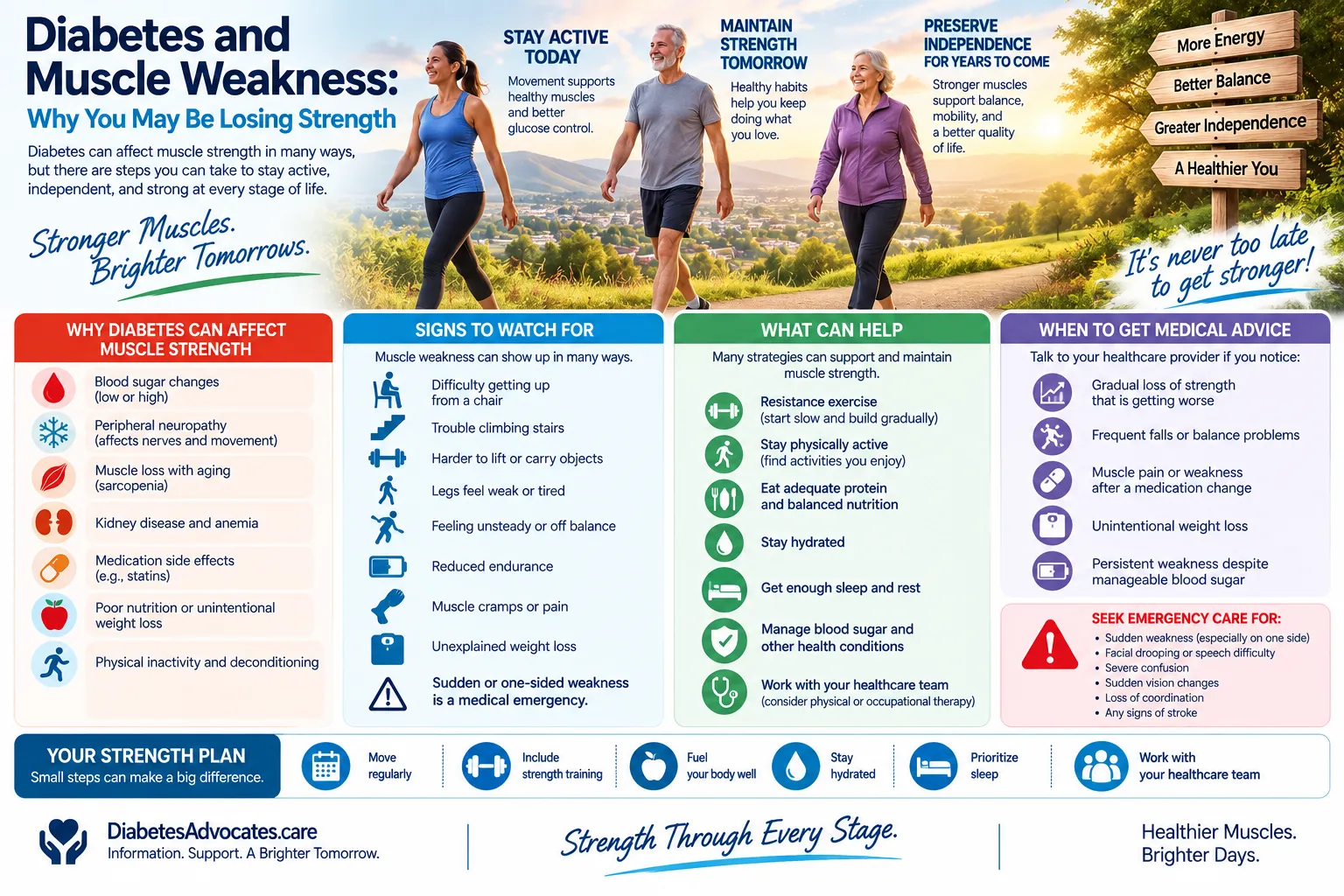
Opening a heavy jar, carrying groceries, climbing stairs, or getting up from a chair may seem like simple everyday activities.
But what happens when they suddenly—or gradually—become more difficult?
Muscle weakness can occur for many reasons. Aging, inactivity, illness, nerve problems, poor nutrition, certain medications, and numerous medical conditions can all affect strength.
For people with diabetes, there may be additional factors to consider.
Diabetes can affect the nerves that control muscles. Glucose problems may temporarily make someone feel weak or exhausted. Diabetes is also associated with conditions that can affect physical function, including cardiovascular disease, kidney disease, and peripheral neuropathy.
At the same time, muscle weakness should not automatically be blamed on diabetes.
New, progressive, severe, or one-sided weakness can have causes that require medical evaluation.
Understanding the difference between muscle weakness, fatigue, and normal changes in physical conditioning can help you determine when lifestyle changes may help—and when it is time to speak with your healthcare provider.
What Does Muscle Weakness Actually Mean?
People use the word weakness to describe several different experiences.
You might say, “My legs feel weak,” when you actually mean:
- You are exhausted
- Your muscles tire quickly
- You feel shaky
- Your balance is poor
- Your legs feel heavy
- You are short of breath
- You have lost muscle strength
- These symptoms can have very different causes.
- True Muscle Weakness
True muscle weakness means the muscles cannot produce the strength they normally should.
For example, you may have increasing difficulty:
- Rising from a chair without using your arms
- Climbing stairs
- Lifting objects
- Carrying groceries
- Getting up from the floor
- Walking your usual distance
- Opening containers
- Fatigue
- Fatigue is different.
You may still have normal muscle strength but feel too exhausted to use it for very long.
Reduced Endurance
You may be able to perform an activity initially but become tired much sooner than you once did.
Balance Problems
Sometimes the legs feel “weak” because a person feels unstable rather than because the muscles themselves have lost significant strength.
Identifying what you mean by weakness is an important first step.
Why Muscle Matters in Diabetes
Skeletal muscle does much more than move your body.
Muscles help you:
- Walk
- Maintain posture
- Protect joints
- Perform daily activities
- Maintain balance
- Remain independent
- Muscle tissue is also important in glucose metabolism.
During physical activity, working muscles use glucose for energy. Regular exercise can improve insulin sensitivity, allowing the body to use insulin more effectively.
Maintaining muscle is therefore important for both physical function and metabolic health.
Diabetes and Loss of Muscle Strength
Diabetes does not affect everyone's muscles in the same way.
Some people remain strong and active for decades.
Others may experience declining strength because of a combination of:
- Aging
- Physical inactivity
- Peripheral neuropathy
- Other diabetes complications
- Cardiovascular disease
- Kidney disease
- Nutritional problems
- Repeated illness or hospitalization
- Often, there is no single cause.
Several small factors can gradually combine until everyday activities become noticeably more difficult.
What Is Sarcopenia?
Sarcopenia refers to an age-related decline in muscle mass, strength, and physical performance.
Everyone loses some muscle with aging, but the amount varies considerably.
Factors that can accelerate muscle loss include:
- Physical inactivity
- Inadequate nutrition
- Chronic illness
- Hospitalization
- Extended bed rest
Research has also found an association between Type 2 diabetes and a greater risk of sarcopenia.
This does not mean that muscle loss is inevitable when you have diabetes.
Physical activity—particularly resistance exercise—along with appropriate nutrition can play an important role in maintaining strength as you age.
Muscle Mass and Muscle Strength Are Not Exactly the Same
A person can lose muscle mass without immediately noticing major weakness.
Likewise, someone can have relatively normal-looking muscles but experience reduced strength because the nerves controlling those muscles are not functioning properly.
That is why appearance alone does not tell the whole story.
Healthcare professionals may consider:
- Muscle strength
- Walking speed
- Ability to rise from a chair
- Balance
- Overall physical performance
- when evaluating declining function.
- Diabetic Neuropathy Can Affect Muscle Function
- Diabetic peripheral neuropathy is commonly associated with:
- Numbness
- Tingling
- Burning
- Pain
- Reduced sensation
- But peripheral nerves also play an important role in movement.
- Motor nerves carry signals from the brain and spinal cord to muscles.
More advanced nerve dysfunction may contribute to muscle weakness or changes in muscle function.
The feet and lower legs can be particularly affected.
Foot and Ankle Weakness Can Change the Way You Walk
If nerves and muscles controlling the feet and ankles do not work normally, walking may become less stable.
Someone may notice:
- Difficulty lifting the front of the foot
- Toes catching on the floor
- Frequent tripping
- Changes in walking pattern
- Difficulty climbing stairs
- Trouble maintaining balance
A significant inability to lift the front of the foot is sometimes called foot drop.
Foot drop has several possible causes and should be medically evaluated.
Do not assume it is automatically caused by diabetic neuropathy.
Neuropathy Can Make Weakness Feel Worse
Even when muscle strength remains reasonably good, reduced sensation can make movement feel less secure.
Your brain relies on sensory information from the feet and legs to understand where your body is in space.
If that information becomes less accurate, you may:
- Walk more cautiously
- Avoid uneven ground
- Depend more heavily on vision
- Feel unstable in darkness
- Reduce physical activity
- Over time, avoiding activity can contribute to actual muscle weakness.
- This creates a cycle that is important to recognize.
- The Inactivity–Weakness Cycle
- Imagine that neuropathy makes walking uncomfortable.
- You begin walking less.
- After several months, your leg muscles become less conditioned.
- Stairs now feel harder, so you avoid them.
- You exercise even less.
- Eventually, weakness and poor endurance become more noticeable.
- The cycle can look like this:
Pain or instability → less activity → loss of strength → greater difficulty moving → even less activity
Breaking this cycle safely is an important part of maintaining independence.
That does not mean exercising through severe pain or ignoring medical limitations.
It means finding appropriate forms of movement with guidance when necessary.
Low Blood Sugar Can Make You Feel Weak
Hypoglycemia can cause temporary weakness.
Possible symptoms include:
- Shakiness
- Sweating
- Hunger
- Dizziness
- Weakness
- Fast heartbeat
- Difficulty concentrating
- Confusion
If you use insulin or another medication that can cause hypoglycemia, sudden weakness may be a reason to check your glucose.
Follow your individualized treatment plan when glucose is low.
Once the hypoglycemia is corrected, the weakness should generally improve.
Persistent muscle weakness despite normal glucose suggests another explanation should be considered.
High Blood Sugar Can Also Make You Feel Drained
Significant hyperglycemia can cause:
- Excessive thirst
- Frequent urination
- Dehydration
- Fatigue
- Reduced energy
Someone may describe this as “muscle weakness,” even when their muscles have not actually lost strength.
If weakness appears mainly during periods of very high glucose, improving glucose management may help.
However, ongoing weakness should not simply be dismissed as high blood sugar without considering other causes.
Severe Hyperglycemia Requires Attention
Very high glucose combined with significant illness can progress to serious emergencies such as diabetic ketoacidosis or hyperosmolar hyperglycemic state.
Warning signs can include:
- Severe dehydration
- Repeated vomiting
- Confusion
- Extreme weakness
- Altered consciousness
- Breathing changes
Follow your diabetes emergency plan and seek urgent medical care when appropriate.
Kidney Disease Can Affect Strength and Energy
Diabetes is a major cause of chronic kidney disease.
As kidney disease progresses, several complications may contribute to weakness or reduced physical performance.
These can include:
- Anemia
- Changes in nutrition
- Fluid problems
- Electrolyte abnormalities
- Reduced exercise capacity
- Muscle loss
- Early kidney disease may cause few obvious symptoms.
This is why routine kidney screening remains important for people with diabetes.
Anemia Can Feel Like Muscle Weakness
Anemia occurs when the blood does not carry oxygen as effectively as it should.
Symptoms may include:
- Fatigue
- Weakness
- Dizziness
- Shortness of breath
- Reduced exercise tolerance
- Pale skin
- Rapid heartbeat
People with chronic kidney disease can develop anemia, but anemia has many other possible causes.
If you become unusually tired or weak during activities you previously tolerated easily, discuss it with your healthcare provider.
A blood test can help determine whether anemia is present.
Electrolytes Are Important for Muscle Function
Muscles depend on carefully regulated levels of electrolytes such as:
- Potassium
- Sodium
- Calcium
- Magnesium
- Abnormal levels can contribute to muscle weakness, cramps, or other symptoms.
- Electrolyte disturbances may occur because of:
- Vomiting
- Diarrhea
- Kidney disease
- Dehydration
- Certain medications
- Other medical conditions
Do not routinely take electrolyte or mineral supplements simply because your muscles feel weak.
Too much of certain electrolytes—especially potassium—can be dangerous.
Testing may be needed to determine whether a deficiency or excess actually exists.
Muscle Cramps Are Not the Same as Muscle Weakness
A muscle cramp is an involuntary tightening of a muscle.
Cramps may occur in the:
- Calves
- Feet
- Thighs
- Hands
Possible contributors include exercise, dehydration, nerve problems, electrolyte disturbances, medications, and other conditions.
Frequent cramps may make someone reluctant to exercise, indirectly contributing to loss of conditioning.
However, cramps alone do not necessarily mean the muscle is becoming weaker.
Persistent or severe cramping deserves evaluation.
Muscle Pain Is Different Too
Muscle pain may make movement difficult even when strength is technically preserved.
Possible causes include:
- Exercise-related soreness
- Injury
- Medication effects
- Infection
- Inflammatory conditions
- Circulation problems
- Other medical disorders
Tell your healthcare provider if muscle pain is persistent, severe, or associated with significant weakness.
Could Your Medication Be Contributing?
When weakness or muscle pain begins, review the timing of medication changes.
Many medications can potentially contribute to fatigue, dizziness, weakness, or muscle symptoms.
One group that often receives attention is statins, which are commonly prescribed to reduce cardiovascular risk.
Some people taking statins report muscle symptoms such as soreness or weakness.
However, muscle symptoms have many possible causes, and statins provide important cardiovascular benefits for many people with diabetes.
Do not stop a statin on your own.
If symptoms develop, discuss them with your healthcare provider so the cause and treatment options can be evaluated appropriately.
Nutrition Matters for Maintaining Muscle
Muscle needs adequate nutrition.
Protein provides amino acids that the body uses to maintain and repair muscle tissue.
Protein-containing foods may include:
- Fish
- Poultry
- Eggs
- Dairy products
- Beans
- Lentils
- Soy foods
- Nuts and seeds
The amount of protein someone needs depends on several factors, including age, overall diet, activity level, and health conditions.
People with chronic kidney disease may need individualized nutritional guidance.
More protein is not automatically better.
Don't Eliminate Too Many Foods
Managing diabetes can sometimes lead people to become overly restrictive with food.
Someone may dramatically reduce:
- Carbohydrates
- Calories
- Fat
- Protein
- Entire food groups
- without professional guidance.
If total energy and nutrient intake becomes inadequate, maintaining muscle may become more difficult.
A diabetes-friendly eating pattern should support both glucose management and overall nutrition.
If you are losing weight unintentionally or struggling to eat enough, speak with your healthcare team.
Unintentional Weight Loss Deserves Attention
Weight loss is sometimes a treatment goal in Type 2 diabetes.
But unintentional weight loss is different.
If you are losing weight without trying—especially while also becoming weaker—it may indicate:
- Poorly controlled diabetes
- Inadequate nutrition
- Gastrointestinal problems
- Thyroid disease
- Chronic illness
- Other medical conditions
Unexpected weight loss combined with progressive weakness should be medically evaluated.
Vitamin B12 and Metformin
Long-term metformin use can be associated with vitamin B12 deficiency in some people.
Vitamin B12 is important for healthy blood cells and nervous-system function.
Deficiency may contribute to symptoms such as:
- Fatigue
- Numbness
- Tingling
- Neurological changes
Because these symptoms can overlap with diabetic neuropathy, identifying a treatable B12 deficiency can be important.
People taking metformin—particularly long term or at higher doses—may be candidates for periodic vitamin B12 assessment based on their individual risk and symptoms.
Do not begin high-dose supplements simply because you take metformin. Discuss appropriate testing with your healthcare provider.
Vitamin D and Muscle Health
Vitamin D is important for bone and muscle health.
Severe deficiency can contribute to muscle weakness.
However, vague symptoms such as fatigue or weakness do not prove that vitamin D is low.
Testing and supplementation should be individualized.
Very large doses of vitamin D can be harmful.
Resistance Training Can Help Preserve Strength
One of the most useful strategies for maintaining muscle is resistance exercise.
Resistance training means working muscles against resistance.
Examples include:
- Weight machines
- Free weights
- Resistance bands
- Body-weight exercises
- Sit-to-stand exercises
- The goal is not necessarily bodybuilding.
- For many adults, the practical goals are being able to:
- Rise from a chair
- Carry groceries
- Climb stairs
- Maintain balance
- Continue living independently
- Strength Training Can Support Diabetes Management
- Resistance exercise provides benefits beyond stronger muscles.
- Regular resistance training can help:
- Improve physical function
- Maintain or increase muscle
- Improve insulin sensitivity
- Support glucose management
- Preserve independence
Combining resistance exercise with aerobic activity can provide broad health benefits.
The appropriate program depends on your health and current fitness level.
Start From Where You Are
If you have not exercised in years, you do not need to begin with heavy weights.
Strength training can start with simple movements such as:
- Standing up from a sturdy chair
- Wall push-ups
- Light resistance bands
- Supported heel raises
- Light household objects used appropriately
Technique and gradual progression matter more than trying to lift as much weight as possible.
Some Diabetes Complications Require Exercise Modifications
Exercise is beneficial for most people with diabetes, but certain complications may affect what is safest.
Examples include:
- Severe peripheral neuropathy
- Active foot ulcers
- Significant balance problems
- Advanced eye disease
- Cardiovascular disease
- Severe kidney disease
- Orthostatic hypotension
- This does not necessarily mean exercise should stop.
- It may mean the type, intensity, or supervision needs to change.
A healthcare professional or physical therapist can help design an appropriate plan.
Check Your Feet When Increasing Activity
If you have reduced foot sensation, increasing walking or exercise can create friction or pressure that you may not immediately feel.
Inspect your feet for:
- Blisters
- Redness
- Cuts
- Swelling
- Pressure areas
- Sores
- Wear properly fitting footwear.
Do not continue weight-bearing exercise on an active foot wound without guidance from your healthcare team.
Strength Is Also About Balance
Strong muscles help stabilize the body.
Leg and core strength can support balance and make everyday movements safer.
This is particularly important for people who also have:
- Neuropathy
- Vision impairment
- Dizziness
- A history of falls
- A well-designed program may therefore combine:
- Strength training
- Balance exercises
- Aerobic activity
- Flexibility or mobility work
- Track Function, Not Just the Scale
Body weight alone does not tell you whether you are becoming stronger or weaker.
Practical measures may be more meaningful.
Ask yourself:
Can I get out of a chair more easily?
Can I climb stairs with less difficulty?
Can I carry groceries more comfortably?
Am I walking farther?
Do I feel steadier?
Can I perform daily activities more independently?
These improvements matter even if the number on the scale barely changes.
When Should Muscle Weakness Be Evaluated?
Talk with your healthcare provider if weakness:
- Is gradually getting worse
- Interferes with walking
- Makes stairs increasingly difficult
- Causes frequent falls
- Is associated with muscle wasting
- Appears after a medication change
- Occurs with significant muscle pain
- Is accompanied by unexplained weight loss
- Persists even when glucose is reasonably managed
- Evaluation may identify a treatable cause.
- Sudden Weakness Is Different
- Gradual loss of strength over months is very different from sudden weakness.
Sudden weakness—especially on one side of the body—can be a sign of a stroke or another neurological emergency.
Seek emergency medical care for sudden weakness accompanied by symptoms such as:
- Facial drooping
- Numbness
- Difficulty speaking
- Confusion
- Sudden vision changes
- Severe loss of coordination
- Sudden severe headache
- Do not wait to see whether the weakness improves.
- Building Strength Safely When You Have Diabetes
If you have noticed declining strength, the solution is not necessarily to exercise as hard as possible.
A safer goal is progressive improvement.
Muscles adapt when they are challenged appropriately and then given time to recover. Over time, resistance training can help maintain or improve strength and physical function.
Your starting point should reflect your:
- Current fitness
- Age
- Mobility
- Balance
- Diabetes treatment
- Cardiovascular health
- Joint health
- Diabetes complications
Someone who has exercised consistently for years will need a different program from someone recovering from illness or struggling to stand from a chair.
Focus on Everyday Movements
Strength training does not have to revolve around a gym.
Some of the most useful exercises imitate movements you perform in daily life.
Examples include:
- Sitting down and standing up
- Stepping onto a low platform
- Carrying appropriately weighted objects
- Pushing
- Pulling
- Reaching
- Raising onto the toes
These movements can help maintain the strength needed for everyday independence.
A physical therapist or qualified exercise professional can modify them when mobility is limited.
Start Slowly and Progress Gradually
Doing too much too quickly can lead to excessive soreness, injury, or discouragement.
If you are new to resistance exercise, begin at a manageable level.
As movements become easier, progression might involve:
- Adding repetitions
- Increasing resistance
- Performing another set
- Improving range of motion
- Trying a slightly more challenging variation
- Progress does not need to happen every workout.
- Consistency over months matters more than rapid increases.
- Exercise and Blood Glucose
- Physical activity can affect glucose differently depending on:
- Exercise intensity
- Duration
- Timing
- Food intake
- Insulin
- Other diabetes medications
- Individual physiology
Moderate activity often lowers glucose because working muscles use glucose for energy.
However, certain intense activities may temporarily raise glucose because stress hormones stimulate the liver to release additional glucose.
Neither response automatically means you are exercising incorrectly.
Learning your individual patterns is more useful.
Check Glucose When Appropriate
People who use insulin or medications that can cause hypoglycemia may need to monitor glucose around exercise.
Depending on your individualized plan, this may involve checking:
- Before activity
- During longer exercise sessions
- After exercise
- Later in the day
CGMs can make exercise patterns easier to observe, although sensor readings can lag behind rapidly changing blood glucose.
Follow your healthcare team's recommendations for monitoring and treatment.
Exercise Can Cause Delayed Hypoglycemia
The glucose-lowering effect of physical activity can continue after the workout ends.
Some people using insulin or other medications associated with hypoglycemia may experience a low several hours later, including overnight.
This is particularly relevant after:
- Longer workouts
- Unusually strenuous exercise
- A major increase in activity
- Evening exercise
- Learning how your body responds can help you plan appropriately.
Do not make major insulin adjustments without understanding the strategy recommended by your diabetes care team.
Always Be Prepared for a Low
If you are at risk of hypoglycemia, keep an appropriate fast-acting carbohydrate source accessible during exercise.
Examples may include:
- Glucose tablets
- Glucose gel
- Juice
- Another fast-acting carbohydrate included in your treatment plan
Do not leave your treatment somewhere inaccessible, such as in a distant locker or vehicle.
People with a significant risk of severe hypoglycemia should also discuss glucagon with their healthcare team.
Very High Glucose May Change Exercise Plans
Exercise is generally beneficial, but significant hyperglycemia—particularly when accompanied by ketones or illness—requires additional caution.
Strenuous activity may not be appropriate in some circumstances.
If you use insulin and have been given instructions about ketone testing or exercise during significant hyperglycemia, follow those instructions.
Seek medical guidance when glucose is extremely elevated or you have symptoms of a diabetes emergency.
Strength Training and Neuropathy
Peripheral neuropathy does not necessarily mean resistance exercise is off limits.
In fact, maintaining strength and mobility can be particularly valuable.
However, reduced sensation can make certain injuries harder to detect.
Consider:
- Proper footwear
- Stable exercise surfaces
- Foot inspections
- Controlled movements
- Balance support when needed
- Avoiding exercises that place excessive pressure on an injured foot
An active foot ulcer or significant foot injury may require temporary changes to weight-bearing activity.
Balance Support Can Make Exercise Safer
If you feel unstable, use a secure support when performing standing exercises.
A sturdy counter, railing, or appropriately designed exercise equipment may help.
Do not rely on:
- Rolling chairs
- Lightweight furniture
- Unstable tables
A physical therapist can help determine whether you need an assistive device or modified exercise program.
Physical Therapy Can Help Identify the Problem
Physical therapists evaluate much more than muscle strength.
They can assess:
- Walking
- Balance
- Joint movement
- Muscle strength
- Endurance
- Functional mobility
- Fall risk
A therapist can also identify which movements are most difficult and create a progressive program designed around your abilities.
Physical therapy may be especially useful after:
- A fall
- Hospitalization
- Surgery
- Prolonged illness
- Significant loss of mobility
- New neurological symptoms
- Occupational Therapy May Help With Daily Tasks
Occupational therapists focus on helping people perform everyday activities safely and independently.
If weakness makes it difficult to:
- Dress
- Bathe
- Prepare meals
- Work
- Carry household items
- Perform other daily activities
an occupational therapist may recommend techniques or equipment that reduce strain while you rebuild function.
When Might a Cane or Walker Help?
Using an assistive device is not a sign of failure.
For someone with significant weakness or balance problems, an appropriately fitted cane or walker may:
- Improve stability
- Reduce fall risk
- Increase confidence
- Allow more independent activity
- The key word is appropriately.
Using a cane at the wrong height or on the wrong side can reduce its effectiveness.
A physical therapist can help determine which device, if any, is appropriate and teach you how to use it safely.
Recovery Is Part of Strength Training
Muscle improvement does not happen only while you exercise.
Recovery matters too.
Muscles need time to repair and adapt after resistance training.
A sustainable routine includes:
- Appropriate rest
- Adequate nutrition
- Sleep
- Hydration
- Gradual progression
Training intensely every day is not necessary for most people and may increase injury risk.
Sleep Supports Physical Function
Poor sleep can affect:
- Energy
- Motivation
- Exercise performance
- Glucose management
- Recovery
Sleep disorders such as obstructive sleep apnea are also common among people with Type 2 diabetes.
If you regularly wake unrefreshed, snore loudly, experience witnessed breathing pauses, or have excessive daytime sleepiness, discuss your sleep with a healthcare provider.
Improving sleep may make physical activity and strength-building easier.
Hydration Matters During Exercise
Dehydration can contribute to:
- Fatigue
- Dizziness
- Reduced exercise performance
- Muscle cramps
Fluid needs vary with climate, activity, body size, medications, and health conditions.
People with kidney disease or heart failure may have specific fluid recommendations.
Follow individualized guidance rather than assuming everyone needs the same amount of water.
Protein Should Be Part of an Overall Eating Pattern
Adequate protein supports muscle maintenance and repair, but focusing on protein alone misses the bigger picture.
The body also needs sufficient:
- Energy
- Vitamins
- Minerals
- Healthy fats
- Carbohydrates appropriate for the individual's diabetes plan
- Food quality and total nutritional intake matter.
If you have unintentionally lost significant weight or muscle, a registered dietitian can help evaluate whether you are eating enough to support your needs.
Older Adults Should Pay Particular Attention to Strength
Strength becomes increasingly important with age.
Loss of muscle can make it harder to:
- Rise from a chair
- Climb stairs
- Recover from a stumble
- Carry groceries
- Get out of a vehicle
- Remain independent
For many older adults, maintaining muscle is therefore not primarily about appearance.
It is about preserving function.
Appropriately designed resistance and balance training can be valuable even when someone begins later in life.
Illness and Hospitalization Can Cause Rapid Deconditioning
A noticeable decline in strength can occur after relatively short periods of inactivity.
Hospitalization, surgery, infection, or extended bed rest may cause someone to lose conditioning surprisingly quickly.
After illness, activities that were previously easy may suddenly feel exhausting.
Recovery may require a gradual rebuilding period.
If you have experienced substantial functional decline after hospitalization, ask whether rehabilitation or physical therapy would be appropriate.
Avoid the “I'm Too Weak to Exercise” Trap
When movement becomes difficult, avoiding activity can feel safer.
But complete inactivity can make muscles even weaker.
The goal is to find a level of activity you can perform safely.
For one person, that might mean walking and weight training.
For another, it might begin with:
- Seated exercises
- Sit-to-stand practice
- Supervised therapy
- Gentle resistance bands
- Progress begins from your current ability, not someone else's.
- Falls Are an Important Warning Sign
- A fall may result from several factors occurring together.
- Possible contributors include:
- Muscle weakness
- Neuropathy
- Dizziness
- Low blood pressure
- Vision impairment
- Hypoglycemia
- Medication side effects
- Unsafe footwear
- Environmental hazards
- Repeated falls should not simply be accepted as part of aging.
- A fall-risk assessment can identify problems that may be treatable.
- Make Your Home Support Your Strength
- Simple environmental changes can make everyday movement safer.
- Consider:
- Clear walking paths
- Good lighting
- Secure stair handrails
- Non-slip bathroom surfaces
- Frequently used items within easy reach
- Removal of loose rugs when they create a hazard
These strategies are particularly helpful while someone is rebuilding strength or balance.
How Do Healthcare Professionals Evaluate Muscle Weakness?
The evaluation depends on the pattern and severity of symptoms.
A healthcare professional may ask:
When did the weakness begin?
Is it getting worse?
Is one side weaker?
Are the arms, legs, or both affected?
Is there numbness or pain?
Have you lost weight?
Did symptoms begin after a medication change?
Have you recently been ill or hospitalized?
Are daily activities becoming harder?
The pattern often provides important clues.
A Strength and Neurological Examination Can Help
A physical examination may include assessment of:
- Muscle strength
- Reflexes
- Sensation
- Walking
- Balance
- Coordination
- Muscle size
- Joint movement
If nerve disease is suspected, additional neurological testing may sometimes be appropriate.
The goal is to determine whether the problem comes primarily from muscle, nerves, general conditioning, or another system.
Blood Tests May Identify Treatable Causes
Depending on symptoms, laboratory testing may evaluate:
- Anemia
- Kidney function
- Electrolytes
- Thyroid function
- Vitamin B12
- Vitamin D when appropriate
- Other possible abnormalities
- Not every person with weakness needs every test.
- Testing should be based on medical history and examination.
- Muscle Enzyme Testing May Sometimes Be Needed
If someone has significant muscle pain or weakness—particularly after a medication change or another concerning event—a healthcare professional may sometimes measure creatine kinase (CK).
CK can rise when muscle tissue is injured.
However, CK testing is not required for every mild ache or episode of fatigue.
Your clinician can determine whether it is appropriate.
Weakness on One Side Is a Red Flag
Gradual symmetrical weakness can occur with deconditioning or other chronic conditions.
Sudden weakness on one side of the body is different.
Possible stroke warning signs include sudden:
- Facial drooping
- Arm or leg weakness
- Numbness
- Speech difficulty
- Confusion
- Vision changes
- Loss of coordination
- Call emergency services immediately if stroke is suspected.
- Do not wait to see whether glucose correction makes the symptoms disappear.
- Severe Hypoglycemia Can Also Cause Neurological Symptoms
- Severe hypoglycemia may cause:
- Confusion
- Poor coordination
- Abnormal behavior
- Difficulty speaking
- Seizures
- Loss of consciousness
- Check glucose if this can be done without delaying emergency care.
If severe hypoglycemia is known or strongly suspected, follow the person's emergency treatment plan, including glucagon when prescribed and appropriate.
An unconscious person should not be given food or liquid by mouth.
When Does Muscle Weakness Need Urgent Medical Attention?
Seek prompt or emergency medical care for weakness that is:
- Sudden
- Severe
- Rapidly worsening
- Mainly on one side
- Associated with difficulty speaking
- Associated with facial drooping
- Accompanied by severe breathing difficulty
- Associated with chest pain
- Accompanied by loss of consciousness
- Associated with severe confusion
- Preventing you from standing or walking unexpectedly
- New severe weakness should not be diagnosed at home.
- Create a Personal Strength Plan
- Maintaining muscle does not require perfection.
- A practical plan might include:
- Move regularly. Avoid long periods of unnecessary inactivity.
Include resistance exercise. Use an appropriate level of resistance for your ability.
Build gradually. Increase difficulty as your strength improves.
Eat adequately. Support muscle with an overall nutritious eating pattern.
Monitor glucose appropriately. Learn how exercise affects your individual glucose patterns.
Protect your feet. This is especially important if you have neuropathy.
Prioritize recovery. Sleep and rest are part of training.
Address medical causes. Persistent weakness deserves evaluation.
Track function. Notice whether daily activities are becoming easier.
Frequently Asked Questions
Can diabetes cause muscle weakness?
Diabetes may contribute to weakness through several pathways, including peripheral neuropathy, glucose abnormalities, complications such as kidney disease, and reduced physical activity. However, muscle weakness has many possible causes unrelated to diabetes.
Can high blood sugar make your muscles feel weak?
Significant hyperglycemia can cause dehydration, fatigue, and low energy, which may feel like weakness. Persistent loss of actual muscle strength should still be evaluated.
Can low blood sugar cause weakness?
Yes. Hypoglycemia can cause sudden weakness along with symptoms such as shakiness, sweating, hunger, dizziness, and confusion.
Can diabetic neuropathy cause weak legs?
Advanced peripheral nerve dysfunction can affect muscle function, while loss of sensation may also make walking feel unstable. New or progressive leg weakness deserves medical evaluation because other neurological conditions can produce similar symptoms.
Does Type 2 diabetes cause muscle loss?
Type 2 diabetes has been associated with a greater risk of reduced muscle health and sarcopenia, particularly with aging. However, muscle loss is not inevitable. Physical activity, resistance exercise, nutrition, and management of other health conditions can help preserve function.
Can metformin cause muscle weakness?
Metformin is not generally considered a direct cause of routine muscle weakness, but long-term use can be associated with vitamin B12 deficiency in some people. B12 deficiency may cause neurological symptoms and fatigue. Appropriate testing can identify whether deficiency is present.
Can statins cause muscle weakness?
Some people taking statins experience muscle symptoms. Because statins can provide important cardiovascular protection, particularly for many people with diabetes, do not stop treatment on your own. Discuss symptoms with your healthcare provider.
Should I take protein supplements to build muscle?
Not necessarily. Many people can obtain adequate protein through food. Protein needs vary, and people with kidney disease may require individualized advice. A dietitian can help determine whether supplementation is appropriate.
Is strength training safe with diabetes?
Resistance training is beneficial for many people with diabetes. Certain complications may require modifications, so people with significant cardiovascular disease, advanced neuropathy, active foot problems, severe eye disease, or other major conditions should discuss safe exercise options with their healthcare team.
Can I build muscle after age 60 if I have diabetes?
Many older adults can improve strength and physical function with appropriately designed resistance training and adequate nutrition. Programs should be matched to current health, mobility, and fitness.
Why do my legs feel weak after being sick?
Illness and inactivity can cause deconditioning. Even relatively short periods of reduced activity may affect strength and endurance, particularly in older adults or people with chronic illness.
When should muscle weakness worry me?
Progressive weakness, repeated falls, unexplained weight loss, muscle wasting, or weakness interfering with normal activities should be evaluated. Sudden one-sided weakness or weakness accompanied by neurological symptoms requires emergency care.
Key Takeaways
Muscle weakness in someone with diabetes can have many different causes.
Diabetes-related peripheral neuropathy may affect movement and stability, while reduced sensation can cause people to become less active and gradually lose conditioning.
Low glucose can cause temporary weakness, and significant high glucose may cause dehydration and fatigue that feel like weakness.
Kidney disease, anemia, electrolyte abnormalities, nutritional deficiencies, medication effects, thyroid disorders, and many other conditions can also affect strength.
Aging increases the risk of sarcopenia, but losing functional strength is not something people simply have to accept without trying to address it.
Resistance exercise is one of the most useful tools for preserving muscle and independence. It can begin at almost any fitness level and does not require bodybuilding or heavy weights.
Nutrition, sleep, recovery, balance training, and regular movement also matter.
People with neuropathy or other diabetes complications may need exercise modifications rather than complete exercise avoidance.
Pay attention to function, not just body weight. Being able to rise from a chair, climb stairs, walk confidently, and carry everyday objects can be meaningful measures of progress.
Persistent or progressive weakness deserves medical evaluation because treatable causes may be present.
Most importantly, recognize the difference between gradual weakness and an emergency.
Sudden one-sided weakness, facial drooping, difficulty speaking, or other new neurological symptoms can indicate a stroke and require immediate medical attention.
Maintaining muscle is not simply about being stronger. It is about protecting mobility, confidence, metabolic health, and independence throughout life with diabetes.
DiabetesAdvocates.care does not provide medical advice, diagnosis, or treatment. Please consult with your healthcare provider for questions and personalized medical advice.