
Diabetes and Shortness of Breath: Why You May Feel Breathless
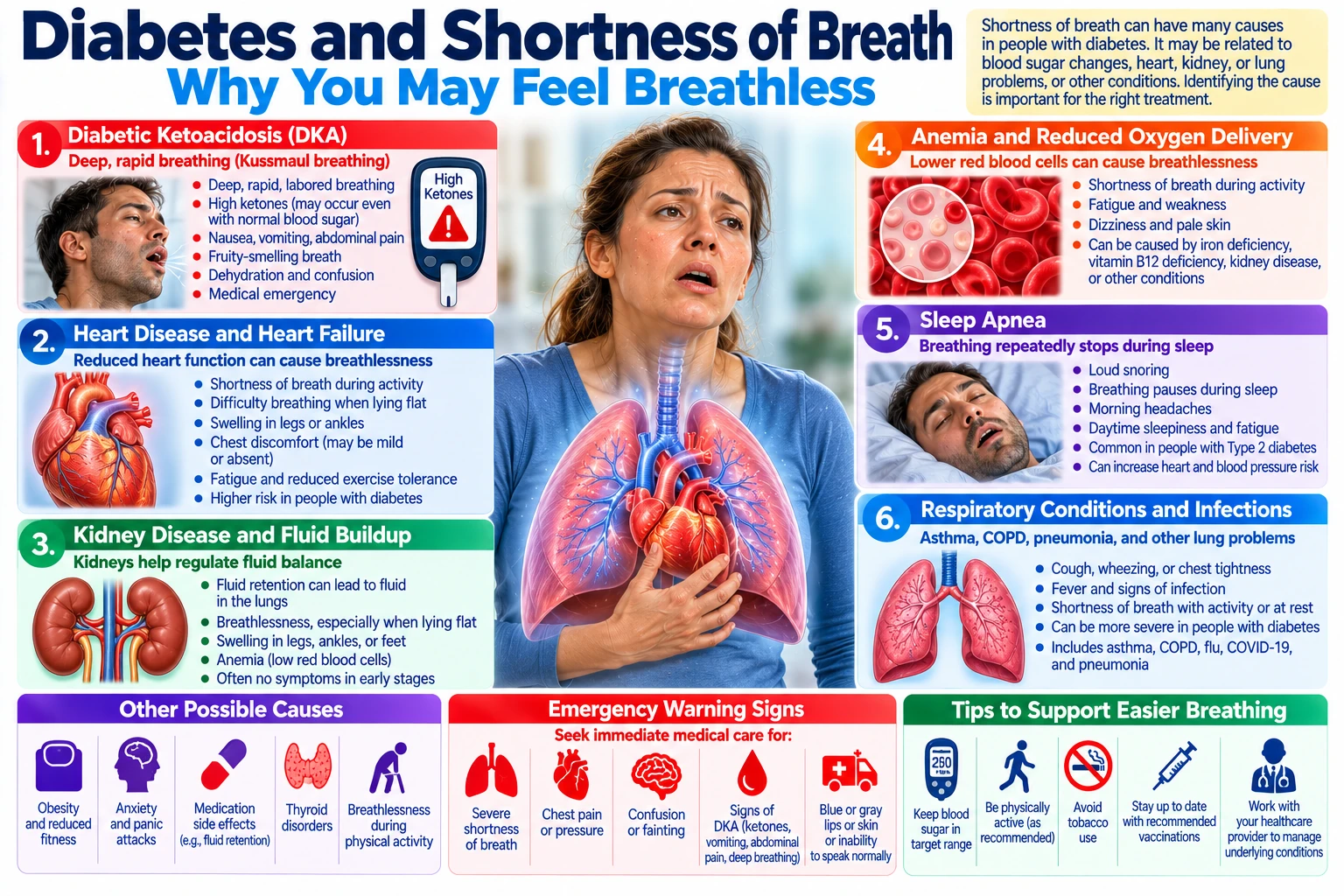
Have you ever felt unusually breathless after climbing a flight of stairs, walking a short distance, or completing an activity that normally feels easy?
Perhaps you have noticed that you need to stop and catch your breath more often. Maybe you feel uncomfortable breathing while lying flat, or you occasionally experience a sensation that you cannot get enough air.
If you have diabetes, these symptoms may raise an important question:
“Can diabetes cause shortness of breath?”
The answer is yes, although diabetes does not always affect breathing directly.
Certain diabetes-related complications can interfere with how the heart, lungs, kidneys, and other organs function. In some situations, abnormal breathing can also be a warning sign of a serious metabolic emergency.
However, shortness of breath can have many causes unrelated to diabetes, including asthma, respiratory infections, anemia, anxiety, and chronic lung conditions.
Understanding the possible causes can help you recognize important symptoms, communicate with your healthcare provider, and know when immediate medical attention is necessary.
Important: Sudden, severe, or unexplained shortness of breath can be a medical emergency. Seek emergency care immediately if breathing difficulty is severe or occurs with chest pain, fainting, confusion, blue or gray lips, or other alarming symptoms. Do not wait to check your blood sugar before getting help.
What Is Shortness of Breath?
Shortness of breath is medically known as dyspnea.
It describes the uncomfortable sensation of not being able to breathe normally or get enough air.
People experience dyspnea differently.
Some describe it as:
- Feeling unable to take a deep breath
- Breathing faster than usual
- Feeling as though they are not getting enough oxygen
- Becoming unusually winded during activity
- Experiencing tightness in the chest
- Needing to sit upright to breathe comfortably
- Feeling breathless while resting
Shortness of breath can develop suddenly or gradually.
It may last only a few minutes or become a persistent problem.
The timing, severity, and associated symptoms provide important clues about the possible cause.
Can Diabetes Directly Affect Your Breathing?
Diabetes primarily affects the body's ability to regulate blood glucose.
However, over time, diabetes can also affect multiple organs and body systems.
These include:
- The cardiovascular system
- The kidneys
- The nervous system
- Blood vessels
- Metabolic processes
When these systems are affected, breathing difficulties may develop.
For example, diabetes increases the risk of cardiovascular disease, which can contribute to shortness of breath during physical activity.
Diabetes-related kidney disease may contribute to fluid retention, which can sometimes affect the lungs.
And diabetic ketoacidosis can produce a distinctive pattern of deep, rapid breathing as the body attempts to compensate for excess acidity in the blood.
Nevertheless, not every episode of breathlessness in someone with diabetes is caused by diabetes.
Other medical explanations must also be considered.
1. Diabetic Ketoacidosis and Abnormal Breathing
One of the most important diabetes-related causes of abnormal breathing is diabetic ketoacidosis (DKA).
DKA is a potentially life-threatening complication that develops when the body does not have enough effective insulin.
Without sufficient insulin, the body cannot use glucose normally and begins breaking down fat for energy.
This process produces substances called ketones.
When ketones accumulate excessively, the blood becomes too acidic.
This condition requires emergency medical treatment.
Why DKA Changes Breathing
When the blood becomes too acidic, the body attempts to compensate by removing more carbon dioxide through the lungs.
This can produce unusually deep and rapid breathing, known as Kussmaul breathing.
Unlike ordinary breathlessness after exercise, Kussmaul breathing may appear:
- Deep
- Rapid
- Labored
- Persistent
- Unusual for the person's activity level
The person may appear to be breathing heavily even while resting.
Other Warning Signs of DKA
DKA may also cause:
- Excessive thirst
- Frequent urination
- Nausea
- Vomiting
- Abdominal pain
- Severe weakness
- Fruity-smelling breath
- Dehydration
- Confusion
- Unusual drowsiness
DKA is more common in people with Type 1 diabetes, but it can also occur in people with Type 2 diabetes.
Can DKA Happen Without Extremely High Blood Sugar?
Yes.
A condition called euglycemic diabetic ketoacidosis can occur when ketones and blood acidity become dangerously elevated despite glucose levels that are not dramatically high.
This is particularly important for people taking certain diabetes medications called SGLT2 inhibitors.
Examples include medications containing:
- Empagliflozin
- Dapagliflozin
- Canagliflozin
These medications provide important benefits for many people, but ketoacidosis is a recognized, uncommon risk.
A person taking an SGLT2 inhibitor who develops vomiting, abdominal pain, unusual breathing, or severe illness needs urgent medical evaluation even if their glucose is not extremely elevated.
DKA is an emergency. Do not attempt to manage suspected DKA at home without emergency medical guidance.
2. Heart Disease and Shortness of Breath
People with diabetes have an increased risk of cardiovascular disease.
Persistently elevated glucose, high blood pressure, abnormal cholesterol levels, and other risk factors can contribute to blood vessel damage over time.
Coronary artery disease develops when arteries supplying blood to the heart become narrowed by plaque buildup.
When the heart muscle does not receive enough oxygen-rich blood, symptoms may occur.
One possible symptom is shortness of breath.
Why Heart Disease Can Cause Breathlessness
The heart and lungs work together to deliver oxygen throughout the body.
When the heart cannot pump effectively or receives insufficient blood flow, a person may experience reduced exercise tolerance.
Activities that previously felt comfortable may become difficult.
Possible symptoms include:
- Breathlessness while walking
- Unusual fatigue
- Chest pressure
- Reduced stamina
- Dizziness
- Discomfort in the arms, neck, jaw, back, or upper abdomen
Some people experience breathlessness without obvious chest pain.
Diabetes and Silent Heart Symptoms
People with diabetes may experience atypical or less noticeable symptoms of coronary artery disease or a heart attack.
Autonomic neuropathy may sometimes affect how cardiac pain is perceived.
As a result, a serious cardiovascular event may not always produce the classic crushing chest pain commonly associated with a heart attack.
Possible warning signs include:
- Sudden shortness of breath
- Unexplained sweating
- Nausea
- Lightheadedness
- Unusual weakness
- Chest discomfort that is mild or absent
New or unexplained shortness of breath can be a heart attack warning sign, even without chest pain.
Seek emergency medical attention when symptoms suggest a possible heart attack.
3. Heart Failure and Fluid Buildup
Heart failure does not mean that the heart has completely stopped working.
It means the heart cannot pump blood or fill effectively enough to meet the body's needs without abnormal pressures or other consequences.
Heart failure can develop for several reasons, including:
- Coronary artery disease
- High blood pressure
- Heart muscle disorders
- Heart valve disease
- Other cardiovascular conditions
Diabetes increases the risk of developing heart failure.
Why Heart Failure Can Affect Breathing
When the heart does not function effectively, pressure can increase in blood vessels supplying the lungs.
Fluid may accumulate in or around lung tissues.
This can interfere with normal breathing.
A person may notice:
- Shortness of breath during activity
- Difficulty breathing while lying flat
- Waking suddenly at night feeling breathless
- Swelling in the feet or ankles
- Rapid weight gain from fluid retention
- Persistent fatigue
- Reduced exercise tolerance
Why Is Breathing Worse When Lying Down?
Some people with heart failure experience orthopnea, which means shortness of breath when lying flat.
They may need to sleep with extra pillows or sit upright to feel comfortable.
Another symptom is paroxysmal nocturnal dyspnea, which involves waking suddenly from sleep with significant breathlessness.
These symptoms are important because they can suggest fluid congestion or another serious condition.
When Swelling and Breathlessness Occur Together
If you have diabetes and notice new swelling in your legs along with increasing shortness of breath, contact a healthcare professional promptly.
These symptoms may indicate fluid retention or cardiovascular problems.
Severe breathlessness at rest, especially with chest discomfort, fainting, or marked distress, requires emergency care.
4. Diabetic Kidney Disease and Breathing Problems
The kidneys help regulate:
- Fluid balance
- Electrolytes
- Blood pressure
- Waste removal
- Red blood cell production
Diabetes is a major cause of chronic kidney disease.
When kidney function becomes significantly impaired, the body may have difficulty maintaining normal fluid balance.
How Kidney Disease Can Cause Breathlessness
Advanced kidney dysfunction can contribute to fluid retention.
If excess fluid accumulates in the lungs, breathing may become difficult.
This is sometimes associated with pulmonary edema.
Symptoms may include:
- Increasing shortness of breath
- Difficulty lying flat
- Swelling in the legs
- Rapid weight gain
- Reduced exercise tolerance
However, kidney disease is not the only cause of these symptoms.
Heart disease and other conditions may produce similar findings.
Kidney Disease Can Also Cause Anemia
Healthy kidneys produce erythropoietin, a hormone that helps stimulate red blood cell production.
When kidney function declines, erythropoietin production may decrease.
This can contribute to anemia.
Anemia reduces the blood's ability to carry oxygen effectively and may cause breathlessness, particularly during physical activity.
Early Kidney Disease May Have No Symptoms
It is important to remember that early diabetic kidney disease often causes no noticeable symptoms.
Breathlessness generally should not be treated as an early screening sign of kidney disease.
Routine testing is more reliable.
Common tests include:
- Estimated glomerular filtration rate (eGFR)
- Urine albumin-to-creatinine ratio (UACR)
These tests help healthcare professionals assess kidney health.
5. Anemia and Reduced Oxygen Delivery
Anemia occurs when the blood does not contain enough healthy red blood cells or hemoglobin to carry oxygen effectively.
Oxygen is essential for normal tissue function.
When oxygen delivery is reduced, the body may respond with increased heart rate or breathing effort, especially during exertion.
Common Symptoms of Anemia
Symptoms may include:
- Shortness of breath during activity
- Persistent fatigue
- Weakness
- Dizziness
- Pale skin
- Rapid heartbeat
- Reduced exercise tolerance
Anemia can develop for many reasons.
Possible causes include:
- Iron deficiency
- Vitamin B12 deficiency
- Chronic kidney disease
- Blood loss
- Chronic inflammatory conditions
Metformin and Vitamin B12 Deficiency
Long-term metformin use can contribute to reduced vitamin B12 levels in some people.
Vitamin B12 deficiency may cause anemia and neurological symptoms.
Possible signs include:
- Fatigue
- Weakness
- Tingling
- Numbness
- Balance difficulties
If anemia develops, breathlessness may become more noticeable.
However, not everyone taking metformin develops vitamin B12 deficiency.
Testing should be guided by symptoms and clinical circumstances.
6. Obesity and Breathing Difficulties
Excess body weight can sometimes make breathing more difficult, particularly during physical activity.
Several mechanisms may contribute.
These include:
- Increased effort required for movement
- Reduced chest wall flexibility
- Changes in respiratory mechanics
- Reduced physical fitness
- Increased risk of sleep apnea
Obesity is common among people with Type 2 diabetes, but body weight alone does not explain every breathing complaint.
Why Physical Activity May Feel Harder
Walking, climbing stairs, or carrying groceries requires the heart and lungs to deliver additional oxygen to working muscles.
When a person has reduced cardiovascular fitness, these activities may produce breathlessness sooner.
However, it is important not to assume that breathlessness is simply due to being overweight or out of shape.
New, worsening, or unexplained symptoms deserve medical evaluation.
7. Obstructive Sleep Apnea
Obstructive sleep apnea occurs when the upper airway repeatedly narrows or closes during sleep.
These episodes temporarily interrupt normal airflow.
Sleep apnea is common among people with Type 2 diabetes.
Symptoms of Sleep Apnea
Possible signs include:
- Loud snoring
- Gasping during sleep
- Witnessed breathing pauses
- Morning headaches
- Dry mouth upon waking
- Excessive daytime sleepiness
- Difficulty concentrating
- Unrefreshing sleep
Sleep apnea can contribute to cardiovascular strain and poor sleep quality.
However, sleep apnea does not necessarily explain daytime breathlessness while walking or sitting.
If you experience both sleep-related breathing problems and daytime shortness of breath, additional evaluation may be needed.
8. Respiratory Infections
Respiratory infections can cause breathing difficulties in anyone, including people with diabetes.
Examples include:
- Influenza
- COVID-19
- Pneumonia
- Bronchitis
- Other respiratory infections
Infections can cause inflammation in the airways or lungs, making breathing more difficult.
Signs of a Respiratory Infection
Symptoms may include:
- Cough
- Fever
- Chills
- Fatigue
- Chest discomfort
- Shortness of breath
- Increased mucus production
Some infections can become serious, particularly in older adults and people with underlying medical conditions.
Why Illness Can Complicate Diabetes Management
Illness can increase stress hormone levels.
These hormones may raise glucose and increase insulin requirements in some people.
Meanwhile, poor appetite, vomiting, or changes in food intake can increase hypoglycemia risk depending on treatment.
Dehydration can also develop.
This combination makes sick-day planning especially important.
When Infection-Related Breathlessness Is Concerning
Seek prompt medical attention if respiratory symptoms are worsening or accompanied by significant breathlessness.
Severe breathing difficulty, confusion, blue or gray lips, or inability to speak normally because of breathlessness requires emergency care.
9. Asthma and Chronic Lung Disease
Not every breathing problem in someone with diabetes is a diabetes complication.
Asthma and chronic obstructive pulmonary disease (COPD) are important alternative explanations.
Asthma
Asthma causes airway inflammation and variable narrowing.
Symptoms may include:
- Wheezing
- Cough
- Chest tightness
- Shortness of breath
Symptoms may be triggered by exercise, allergens, respiratory infections, or other exposures.
Chronic Obstructive Pulmonary Disease
COPD is a chronic lung condition commonly associated with smoking or prolonged exposure to harmful airborne substances.
Possible symptoms include:
- Persistent cough
- Mucus production
- Wheezing
- Progressive breathlessness
- Reduced exercise tolerance
Both asthma and COPD require appropriate medical evaluation and management.
Can Diabetes and Lung Disease Occur Together?
Yes.
A person may have diabetes and an unrelated respiratory condition at the same time.
This is why persistent breathlessness should not automatically be attributed to glucose levels.
10. Anxiety, Stress, and Panic Attacks
Anxiety can affect breathing patterns.
During periods of intense stress or panic, a person may begin breathing rapidly or feel unable to take a satisfying breath.
Possible symptoms include:
- Rapid breathing
- Chest tightness
- Racing heartbeat
- Trembling
- Sweating
- Dizziness
- Tingling in the hands or around the mouth
These symptoms can resemble hypoglycemia or cardiovascular problems.
Why Anxiety and Hypoglycemia Can Be Confusing
Both anxiety and low glucose can cause:
- Shakiness
- Sweating
- Palpitations
- Nervousness
- Difficulty concentrating
Checking glucose when appropriate can help distinguish hypoglycemia from other causes.
However, never assume new or severe breathlessness is caused by anxiety without considering medical causes.
Heart attacks, pulmonary embolism, asthma attacks, and other emergencies may produce similar sensations.
11. Medication-Related Breathing Problems
Some medications can contribute to symptoms involving breathing.
The mechanisms vary.
For example, certain medications may cause:
- Fluid retention
- Allergic reactions
- Cough
- Changes in respiratory function
- Worsening of an existing condition
Pioglitazone and Fluid Retention
Pioglitazone, a medication used for Type 2 diabetes, can cause fluid retention and may worsen or contribute to heart failure in susceptible individuals.
Symptoms that deserve medical attention include:
- New swelling
- Rapid weight gain
- Increasing breathlessness
- Difficulty breathing while lying flat
Do not stop prescribed medication without guidance unless emergency clinicians direct you to do so.
Severe Allergic Reactions
A serious allergic reaction can cause:
- Sudden breathing difficulty
- Wheezing
- Swelling of the tongue or throat
- Hives
- Dizziness
- Fainting
These may indicate anaphylaxis, which is a medical emergency.
Use prescribed epinephrine immediately if available and indicated, and seek emergency medical assistance.
12. Pulmonary Embolism: A Dangerous Cause of Sudden Breathlessness
A pulmonary embolism occurs when a blood clot blocks blood flow in part of the lungs.
This is a potentially life-threatening condition.
Possible symptoms include:
- Sudden shortness of breath
- Sharp chest pain, sometimes worse with breathing
- Rapid heartbeat
- Coughing up blood
- Lightheadedness
- Fainting
Some people also have leg swelling or pain caused by a deep vein thrombosis.
A pulmonary embolism can occur in people with or without diabetes.
Sudden unexplained breathlessness, particularly with chest pain, fainting, or coughing blood, requires emergency evaluation.
13. High Blood Sugar Without DKA
Can high glucose cause shortness of breath even when DKA is not present?
High glucose alone is not a typical direct cause of severe breathlessness.
However, significant hyperglycemia can contribute to:
- Dehydration
- Weakness
- Illness-related stress
- Metabolic disturbances
If someone with high glucose develops unusual breathing, the possibility of DKA, HHS, infection, cardiovascular disease, or another serious condition must be considered.
Do not assume that simply lowering glucose at home will resolve unexplained breathing difficulty.
14. Hyperosmolar Hyperglycemic State
Hyperosmolar hyperglycemic state, or HHS, is another serious diabetes emergency.
It generally involves:
- Very high glucose
- Severe dehydration
- Increased blood concentration
- Possible neurological changes
Symptoms may include:
- Extreme thirst
- Frequent urination
- Profound weakness
- Confusion
- Drowsiness
- Seizures
- Altered consciousness
Unlike DKA, HHS typically does not produce the same degree of ketoacidosis.
Deep Kussmaul breathing is therefore not a defining feature of HHS.
However, someone with HHS may still have abnormal breathing because of dehydration, infection, heart disease, or another accompanying problem.
HHS requires emergency treatment.
15. Shortness of Breath During Exercise
Breathing faster during exercise is normal.
Your muscles require more oxygen during physical activity.
Your heart rate and breathing rate increase to meet that demand.
However, the degree of breathlessness matters.
When Exercise-Related Breathlessness May Be Expected
Mild breathlessness may occur during:
- Brisk walking
- Climbing stairs
- Cycling
- Strength training
- Other physical activities
You should generally recover after reducing or stopping the activity.
When Exercise-Related Breathlessness Is Concerning
Medical evaluation is important when:
- Breathlessness is new
- It occurs with minimal exertion
- It is getting progressively worse
- It is accompanied by chest discomfort
- You feel faint
- You cannot perform activities that were previously easy
These symptoms may suggest cardiovascular, pulmonary, hematologic, or other medical conditions.
16. Shortness of Breath While Resting
Breathlessness at rest is particularly concerning when it is new, unexplained, or severe.
Potential causes include:
- Heart failure
- Asthma exacerbation
- Pneumonia
- Pulmonary embolism
- DKA
- Other serious medical conditions
Sudden or severe breathlessness at rest requires emergency medical assessment.
Do not wait for a scheduled appointment if you are struggling to breathe.
17. Shortness of Breath When Lying Down
Breathing difficulty that worsens when lying flat may suggest:
- Heart failure
- Fluid congestion
- Certain lung conditions
- Obesity-related respiratory problems
- Other medical conditions
If you suddenly need several pillows to breathe comfortably or begin sleeping upright because of breathlessness, seek prompt medical evaluation.
Severe symptoms require emergency care.
18. Sudden Versus Gradual Breathlessness
The speed at which symptoms develop can provide useful information.
Sudden Shortness of Breath
Possible causes include:
- Pulmonary embolism
- Heart attack
- Severe asthma attack
- Pneumothorax
- Anaphylaxis
- Acute heart failure
- Other emergencies
Sudden unexplained breathlessness should be treated as potentially serious.
Gradually Developing Shortness of Breath
Possible causes include:
- Heart failure
- Anemia
- Chronic lung disease
- Reduced physical fitness
- Obesity-related breathing limitations
- Other chronic conditions
Gradual onset does not necessarily mean the cause is harmless.
Progressive symptoms deserve medical evaluation.
19. What Other Symptoms Should You Watch For?
When discussing breathlessness with your healthcare provider, pay attention to accompanying symptoms.
Chest Pain or Pressure
May suggest cardiovascular disease or another serious condition.
Swollen Legs
May indicate fluid retention or, particularly when one-sided, a possible blood clot.
Fever and Cough
May suggest respiratory infection.
Wheezing
May occur with asthma or other airway disorders.
Severe Thirst and Vomiting
May raise concern for a diabetes-related metabolic emergency.
Pale Skin and Fatigue
May suggest anemia, although testing is needed.
Snoring and Daytime Sleepiness
May suggest sleep apnea.
Difficulty Breathing While Lying Flat
May indicate fluid congestion or another cardiopulmonary problem.
No single symptom confirms a diagnosis.
The combination of symptoms, medical history, examination, and appropriate testing helps determine the cause.
20. How to Describe Breathlessness to Your Healthcare Provider
Clear information can make evaluation more effective.
Consider recording:
When did it begin?
Was the onset sudden or gradual?
What triggers it?
Does it happen during walking, exercise, meals, sleep, or rest?
How severe is it?
Can you speak normally? Can you complete your usual activities?
Does position matter?
Is breathing worse when lying down?
What other symptoms occur?
For example, chest discomfort, fever, cough, swelling, dizziness, or palpitations.
What are your glucose readings?
Note relevant glucose and ketone results when available, but do not delay urgent care to collect them.
Have medications changed?
Include recently started or adjusted prescriptions.
A symptom diary may help with nonemergency, recurring breathlessness. It should never delay care for sudden or severe symptoms.
21. When Should You Seek Emergency Medical Attention?
Call emergency services immediately if shortness of breath:
- Begins suddenly and is severe
- Occurs with chest pain or pressure
- Makes speaking difficult
- Is accompanied by fainting or loss of consciousness
- Occurs with new confusion
- Is associated with blue or gray lips or skin
- Occurs with signs of stroke
- Develops with swelling of the tongue or throat
- Is accompanied by signs of DKA
- Occurs with coughing up blood or suspected pulmonary embolism
Severe breathing difficulty is not something to monitor at home while waiting for glucose readings to improve.
The Most Important Lesson From Part 1
Diabetes can contribute to shortness of breath, but the relationship is often indirect.
Breathing difficulties may occur because of:
- Diabetic ketoacidosis
- Cardiovascular disease
- Heart failure
- Advanced kidney disease
- Anemia
- Sleep apnea
- Respiratory infections
- Medication effects
- Other medical conditions
Some causes develop gradually.
Others can become life-threatening within minutes or hours.
The most important questions are:
Did the breathlessness begin suddenly?
Is it getting worse?
Does it occur during activity, while resting, or when lying down?
Are there other symptoms such as chest pain, swelling, fever, vomiting, or confusion?
And most importantly:
Could this be a medical emergency?
Never dismiss unexplained shortness of breath simply because you have diabetes.
Identifying the underlying cause is essential for receiving the right treatment.
Can Shortness of Breath in People With Diabetes Be Treated?
In many cases, yes.
However, treatment depends on what is causing the breathing difficulty.
Someone experiencing shortness of breath because of diabetic ketoacidosis requires emergency hospital treatment.
Someone with heart failure may need medications and treatment to manage fluid buildup and improve heart function.
A person with anemia may need treatment for iron deficiency, vitamin B12 deficiency, kidney disease, or another underlying cause.
And someone with asthma or sleep apnea may benefit from respiratory-specific treatment.
There is no single treatment for every type of shortness of breath.
The first step is identifying the cause and determining whether immediate medical attention is necessary.
How Doctors Evaluate Shortness of Breath
When you visit a healthcare professional because of breathing difficulties, the evaluation typically begins with your symptoms and medical history.
Your clinician may ask:
- When did the breathlessness begin?
- Did it develop suddenly or gradually?
- Does it happen during activity or at rest?
- Is it worse when lying down?
- Do you experience chest discomfort?
- Have you noticed swelling in your legs?
- Do you have a cough or fever?
- Have your glucose levels changed?
- Have you recently started a medication?
- Do you have a history of heart, kidney, or lung disease?
These questions help determine which medical conditions are most likely.
They also help identify symptoms that require urgent evaluation.
Physical Examination
A healthcare professional may assess:
- Breathing rate
- Heart rate
- Blood pressure
- Body temperature
- Oxygen saturation
- Heart and lung sounds
- Swelling in the legs
- Signs of dehydration
- General appearance and mental status
The examination can provide important clues, but additional testing may be necessary.
For example, normal oxygen saturation does not rule out every serious cause of shortness of breath.
Oxygen Saturation Testing
A pulse oximeter is a small device commonly placed on a fingertip.
It estimates the percentage of hemoglobin carrying oxygen in the blood.
This measurement is called oxygen saturation, or SpO₂.
For many healthy adults at sea level, oxygen saturation is approximately 95% to 100%.
However, normal values can vary with altitude and certain medical conditions.
Can a Pulse Oximeter Diagnose the Cause?
No.
A pulse oximeter does not identify whether breathlessness is caused by:
- Heart disease
- Asthma
- Anemia
- Anxiety
- DKA
- Pulmonary embolism
- Other conditions
Some serious problems can occur even when oxygen saturation appears normal.
Pulse oximeters can also be inaccurate under certain circumstances, including poor circulation, movement, and other measurement limitations.
Do not delay emergency care because a home pulse oximeter displays a reassuring number.
Blood Glucose Testing
Glucose testing is particularly important when breathlessness occurs alongside symptoms such as:
- Excessive thirst
- Frequent urination
- Vomiting
- Abdominal pain
- Confusion
- Unusual weakness
A healthcare professional may review fingerstick glucose measurements, continuous glucose monitoring data, or laboratory glucose results.
However, a glucose reading alone cannot determine whether someone has DKA or HHS.
Additional testing may be necessary.
Ketone Testing and Diabetic Ketoacidosis
Ketones are substances produced when the body breaks down fat for energy.
Small amounts of ketones can occur in certain circumstances, including fasting.
However, excessive ketone production combined with metabolic acidosis can indicate diabetic ketoacidosis.
When DKA is suspected, clinicians may evaluate:
- Blood glucose
- Blood ketones, especially beta-hydroxybutyrate
- Blood acidity
- Bicarbonate
- Electrolytes
- Kidney function
These results help determine whether DKA is present and how severe it is.
When Should Someone With Diabetes Check Ketones?
Ketone testing may be recommended during illness, significant hyperglycemia, or symptoms suggestive of DKA.
The appropriate circumstances depend on diabetes type, medications, and the individual's sick-day plan.
People with Type 1 diabetes and those taking SGLT2 inhibitors should understand their healthcare team's ketone-testing recommendations.
If you develop deep or unusual breathing, vomiting, confusion, or other symptoms suggesting DKA, seek emergency care rather than waiting for home testing.
Electrocardiogram (ECG)
An electrocardiogram records the electrical activity of the heart.
It may help identify:
- Abnormal heart rhythms
- Signs of reduced blood flow to the heart
- Evidence of certain cardiac abnormalities
An ECG is often part of the evaluation when breathlessness occurs with chest discomfort, palpitations, fainting, or other concerning symptoms.
However, a normal ECG does not rule out every cardiovascular problem.
Echocardiogram
An echocardiogram uses ultrasound to examine the heart's structure and function.
It can help assess:
- Heart pumping function
- Heart valve abnormalities
- Heart chamber size
- Certain causes of heart failure
A clinician may recommend this test when symptoms suggest heart failure or another structural heart condition.
Chest X-Ray
A chest X-ray may help identify abnormalities such as:
- Pneumonia
- Fluid in the lungs
- Certain heart or lung changes
- Some other chest conditions
Not every cause of breathlessness is visible on a chest X-ray.
Additional imaging may be necessary depending on the suspected diagnosis.
Blood Tests for Heart Problems
When heart disease or heart failure is suspected, clinicians may order specific blood tests.
Examples include:
Troponin: Used to help evaluate possible heart muscle injury, including heart attacks.
BNP or NT-proBNP: May help assess possible heart failure.
Results must be interpreted alongside symptoms, examination findings, and other tests.
Complete Blood Count and Anemia Testing
A complete blood count can help identify anemia.
If anemia is present, additional tests may be needed to determine the cause.
These might include:
- Iron studies
- Vitamin B12 testing
- Folate testing
- Kidney function testing
- Other evaluations based on medical history
Treating anemia effectively requires identifying the underlying reason.
Kidney Function Testing
Kidney evaluation may include:
- Serum creatinine
- Estimated glomerular filtration rate (eGFR)
- Electrolytes
- Urine albumin-to-creatinine ratio (UACR)
These tests can help assess kidney function and detect diabetic kidney disease.
If kidney disease is contributing to fluid overload or anemia, treatment may improve symptoms.
Lung Function Testing
If asthma, COPD, or another chronic respiratory condition is suspected, a healthcare professional may recommend pulmonary function testing.
One common test is spirometry.
Spirometry measures how much air a person can exhale and how quickly.
It can help identify certain patterns of airflow limitation.
The test is not appropriate during every acute illness or emergency, and its use depends on clinical circumstances.
Testing for Pulmonary Embolism
A pulmonary embolism is a potentially life-threatening blood clot in the lungs.
When this condition is suspected, emergency clinicians assess symptoms and risk factors.
Depending on the situation, testing may include:
- D-dimer blood testing
- CT pulmonary angiography
- Ventilation-perfusion scanning
- Leg ultrasound
Not everyone with breathlessness needs these tests.
They are selected according to the likelihood of pulmonary embolism and other clinical considerations.
Treating Shortness of Breath Caused by DKA
Diabetic ketoacidosis requires emergency hospital treatment.
Treatment generally includes:
- Intravenous fluids
- Insulin
- Electrolyte monitoring and replacement
- Identification and treatment of the triggering cause
Potassium management is particularly important because insulin treatment and correction of acidosis can affect potassium levels.
Why Home Treatment Is Unsafe
DKA can involve severe dehydration, electrolyte disturbances, and dangerous changes in blood acidity.
Attempting to manage suspected DKA at home can delay essential treatment.
If you have symptoms suggesting DKA, seek emergency medical care.
Treating Breathlessness Related to Heart Failure
When heart failure contributes to breathlessness, treatment may involve medications that improve heart function, manage fluid balance, or reduce cardiovascular risk.
Depending on the type of heart failure and the patient's condition, clinicians may prescribe:
- Diuretics
- SGLT2 inhibitors
- Certain beta blockers
- ACE inhibitors, ARBs, or ARNIs
- Mineralocorticoid receptor antagonists
- Other therapies
Not every medication is appropriate for every person.
Treatment depends on heart function, kidney function, blood pressure, electrolytes, and other factors.
Why Diuretics May Help
Diuretics help the body eliminate excess salt and water.
When fluid overload is contributing to breathlessness, removing excess fluid may improve symptoms.
However, diuretics can also affect:
- Blood pressure
- Kidney function
- Electrolytes
- Hydration
They should be used according to medical guidance.
Monitor Changes in Weight and Swelling
For people diagnosed with heart failure, a healthcare team may recommend monitoring daily weight.
Sudden weight increases can sometimes indicate fluid retention.
Other changes to report include:
- Increased ankle swelling
- Greater difficulty breathing
- Needing more pillows at night
- Reduced exercise tolerance
Follow the specific reporting thresholds provided by your heart failure care team.
Managing Kidney-Related Fluid Retention
When kidney disease contributes to excess fluid accumulation, treatment depends on the severity and underlying cause.
A healthcare professional may recommend:
- Medication adjustments
- Blood pressure management
- Sodium intake changes
- Individualized fluid recommendations
- Diuretics when appropriate
- Dialysis in advanced cases when medically necessary
Do not independently begin severe fluid restriction or take additional diuretics.
Both dehydration and excess fluid can be harmful.
Treating Anemia
Anemia treatment depends on its cause.
For example:
- Iron deficiency may require iron replacement and investigation of the cause.
- Vitamin B12 deficiency may require supplementation.
- Kidney-related anemia may require specialized treatment.
- Blood loss may require investigation and management.
Simply taking a multivitamin may not correct clinically significant anemia.
Managing Asthma and COPD
If breathlessness is caused by asthma or COPD, treatment may include inhaled medications and other respiratory therapies.
Asthma treatment often focuses on controlling airway inflammation and preventing exacerbations.
COPD management may include bronchodilators, smoking cessation, pulmonary rehabilitation, and other treatments.
Use inhalers exactly as prescribed.
Severe asthma attacks and significant COPD exacerbations may require emergency care.
Treating Obstructive Sleep Apnea
Sleep apnea treatment may improve nighttime breathing and daytime symptoms.
Depending on the patient's condition, options may include:
- Continuous positive airway pressure (CPAP)
- Other positive airway pressure devices
- Oral appliances
- Positional therapy
- Weight management when appropriate
- Other specialist-directed treatments
Sleep apnea should be diagnosed and managed with appropriate medical evaluation.
Can Weight Management Improve Breathing?
For some people, gradual weight management may improve respiratory mechanics, physical fitness, and sleep apnea symptoms.
However, weight is only one possible factor.
Shortness of breath should not automatically be blamed on body size.
A person with obesity may also have heart disease, anemia, pulmonary embolism, or another serious condition.
The underlying cause must still be evaluated.
Physical Activity and Breathlessness
Regular physical activity can support:
- Cardiovascular health
- Glucose management
- Muscle strength
- Exercise tolerance
- Mental well-being
However, exercising through unexplained or worsening breathlessness can be unsafe.
When Should You Avoid Exercise?
Stop exercising and seek appropriate medical evaluation if you develop:
- Chest pain
- Severe breathlessness
- Dizziness or near-fainting
- New palpitations with concerning symptoms
- Sudden weakness
- Unusual difficulty breathing
Severe symptoms require emergency medical attention.
Begin With an Appropriate Activity Level
Once a healthcare professional has determined that exercise is safe, some people may benefit from gradual activity increases.
Possible activities include:
- Short walks
- Gentle cycling
- Chair-based exercises
- Light resistance training
- Supervised rehabilitation
The appropriate starting point depends on physical fitness, cardiovascular health, respiratory function, and diabetes-related complications.
Cardiac Rehabilitation
People recovering from certain heart conditions may benefit from cardiac rehabilitation.
This is a medically supervised program that can include:
- Exercise training
- Cardiovascular education
- Risk-factor management
- Lifestyle counseling
Cardiac rehabilitation may help improve functional capacity and quality of life in eligible patients.
Pulmonary Rehabilitation
Pulmonary rehabilitation is designed for selected people with chronic respiratory conditions.
It may include:
- Supervised exercise
- Breathing techniques
- Education
- Symptom-management strategies
A respiratory specialist can determine whether pulmonary rehabilitation is appropriate.
Can Breathing Exercises Help?
Breathing exercises may help some people manage certain forms of chronic breathlessness.
For example, pursed-lip breathing is sometimes taught to people with COPD.
However, breathing exercises do not treat:
- DKA
- Heart attacks
- Pulmonary embolism
- Acute pulmonary edema
- Severe asthma attacks
They should never replace urgent medical care when serious symptoms are present.
Managing Anxiety-Related Breathlessness
If a healthcare professional determines that anxiety contributes to breathing discomfort, treatment may include:
- Counseling
- Cognitive behavioral therapy
- Stress-management strategies
- Appropriate medication
- Breathing techniques
However, new or severe breathlessness should not be assumed to be anxiety without appropriate evaluation.
Reduce Cardiovascular Risk
Cardiovascular prevention is especially important for people with diabetes.
Depending on individual needs, this may include:
- Managing blood glucose
- Controlling blood pressure
- Managing cholesterol
- Avoiding tobacco
- Eating a balanced diet
- Participating in appropriate physical activity
- Taking prescribed medications
- Attending regular medical appointments
These measures can reduce long-term cardiovascular risk.
They cannot guarantee that heart disease will never develop.
Protect Kidney Health
Kidney health is another important part of diabetes care.
Strategies may include:
- Maintaining individualized glucose targets
- Managing blood pressure
- Completing recommended kidney screening
- Taking kidney-protective medications when indicated
- Avoiding unnecessary use of potentially kidney-harming medications
- Following individualized nutrition guidance
Routine testing matters because early kidney disease may not cause noticeable symptoms.
Stay Up to Date With Recommended Vaccinations
Respiratory infections can be particularly challenging for people with chronic medical conditions.
Recommended vaccinations may include influenza, COVID-19, pneumococcal, and other vaccines depending on age, health conditions, and current guidance.
Ask your healthcare professional which vaccinations are appropriate for you.
Avoid Smoking and Secondhand Smoke
Smoking damages the lungs and blood vessels.
It also increases the risk of cardiovascular disease.
For people with diabetes, avoiding tobacco is an important way to reduce long-term health risks.
If you smoke, ask your healthcare provider about evidence-based cessation support.
Know Your Diabetes Sick-Day Plan
Illness can affect glucose, hydration, appetite, and medication needs.
A diabetes sick-day plan may include instructions for:
- Monitoring glucose
- Checking ketones when appropriate
- Managing medications
- Maintaining hydration
- Recognizing warning signs
- Knowing when to contact a clinician
Medication instructions should be individualized.
For example, certain medications may need temporary adjustment during significant illness or dehydration.
Do not assume that all diabetes medications should be continued or stopped in the same way.
When Should You Contact Your Healthcare Provider?
Arrange prompt medical evaluation if you experience:
- New breathlessness during ordinary activity
- Gradually worsening exercise tolerance
- Persistent unexplained shortness of breath
- New swelling in the feet or ankles
- Difficulty breathing when lying flat
- Repeated nighttime breathing problems
- Persistent cough or wheezing
- Unexplained fatigue with breathlessness
The appropriate urgency depends on symptom severity and associated findings.
New breathlessness should not be ignored simply because it develops gradually.
When Is Shortness of Breath an Emergency?
Call emergency services immediately for:
- Sudden, severe breathing difficulty
- Chest pain or pressure with breathlessness
- Fainting or loss of consciousness
- Blue or gray lips or skin
- Severe confusion
- Inability to speak normally because of breathlessness
- Signs of anaphylaxis
- Sudden breathlessness with coughing up blood
- Suspected DKA with abnormal breathing
- Severe respiratory distress
Do not drive yourself if you are experiencing severe symptoms.
A Practical Breathing Symptom Checklist
If you have recurring, nonemergency breathlessness, consider recording:
1. Timing: When does it happen?
2. Activity: Does it occur during exercise, walking, or rest?
3. Position: Is it worse when lying flat?
4. Duration: How long does it last?
5. Associated symptoms: Is there chest discomfort, swelling, fever, cough, or dizziness?
6. Glucose: Are glucose changes occurring at the same time?
7. Medications: Have any medications recently changed?
8. Progression: Is the symptom becoming more frequent or severe?
Bring this information to your healthcare appointment.
However, do not delay urgent care to complete a symptom diary.
Frequently Asked Questions
Can diabetes cause shortness of breath?
Yes. Diabetes can contribute indirectly through complications such as heart disease, heart failure, advanced kidney disease, and anemia. DKA can also cause abnormal deep, rapid breathing.
Can high blood sugar make it hard to breathe?
High glucose alone is not a typical direct cause of severe breathlessness. However, significant hyperglycemia may occur with DKA, HHS, dehydration, infection, or other conditions that affect breathing.
What does DKA breathing look like?
DKA may cause deep, rapid, labored breathing known as Kussmaul breathing. It can occur with vomiting, abdominal pain, excessive thirst, dehydration, and confusion. Suspected DKA requires emergency medical treatment.
Can DKA happen with normal blood sugar?
Yes. Euglycemic DKA can occur without extremely elevated glucose, particularly in certain circumstances involving SGLT2 inhibitors.
Can low blood sugar cause shortness of breath?
Hypoglycemia can cause anxiety-like symptoms, palpitations, sweating, and a sensation of breathing discomfort in some people. However, significant shortness of breath should not automatically be attributed to low glucose.
Can diabetes cause fluid in the lungs?
Diabetes can increase the risk of heart failure and kidney disease, which may contribute to fluid accumulation in the lungs. This requires medical evaluation.
Why do I get breathless when walking?
Possible causes include reduced physical fitness, anemia, heart disease, lung disease, obesity-related breathing limitations, and other conditions. New or worsening breathlessness during walking deserves medical attention.
Why is breathing harder when I lie down?
Breathlessness that worsens while lying flat can occur with heart failure, fluid congestion, and other medical conditions. New symptoms should be evaluated promptly.
Can diabetic kidney disease cause breathing problems?
Advanced kidney disease can contribute to breathlessness through fluid retention, anemia, and other complications. Early kidney disease often causes no symptoms.
Can metformin cause breathing problems?
Metformin does not ordinarily cause breathlessness. However, a rare but serious complication called lactic acidosis can occur, particularly in certain high-risk situations. Symptoms may include unusual weakness, abdominal discomfort, and abnormal breathing. Seek emergency care for symptoms suggesting a serious metabolic problem.
Can anxiety cause shortness of breath in someone with diabetes?
Yes. Anxiety and panic attacks can affect breathing. However, symptoms may overlap with serious cardiovascular, pulmonary, or metabolic conditions, so new or severe breathlessness needs appropriate evaluation.
Can sleep apnea cause daytime breathing problems?
Sleep apnea causes repeated breathing interruptions during sleep and may lead to daytime sleepiness and fatigue. Persistent daytime breathlessness may have another cause and should be evaluated.
Does weight loss improve breathing?
Weight management may improve exercise tolerance and certain breathing-related conditions in some people. However, unexplained breathlessness should not automatically be attributed to weight.
Can exercise help with breathlessness?
Appropriate physical activity may improve fitness and exercise tolerance. However, unexplained or worsening breathlessness should be evaluated before starting or intensifying an exercise program.
Should I check my blood sugar when I feel breathless?
Checking glucose may provide useful information, particularly if other diabetes-related symptoms are present. However, severe or sudden breathing difficulty requires emergency attention regardless of glucose readings.
Can a normal oxygen reading rule out a serious problem?
No. Some serious conditions, including certain cardiovascular problems and early pulmonary embolism, may occur without markedly low oxygen saturation.
When should I go to the emergency room?
Seek emergency care for sudden severe breathlessness, chest pain, fainting, confusion, blue or gray lips, suspected DKA, or other severe symptoms.
Key Takeaways
Shortness of breath is not a symptom that should automatically be blamed on diabetes.
However, diabetes can increase the risk of several conditions that affect breathing.
These include:
- Cardiovascular disease
- Heart failure
- Advanced kidney disease
- Anemia
- Diabetic ketoacidosis
- Other metabolic complications
Respiratory infections, asthma, COPD, sleep apnea, anxiety, and medication effects can also contribute.
DKA is especially important because it may cause deep, rapid breathing and requires emergency treatment.
Heart failure may cause breathlessness during activity, difficulty breathing while lying flat, and swelling caused by fluid retention.
Kidney disease may contribute through fluid overload or anemia.
The cause of breathlessness may be investigated using glucose and ketone testing, blood tests, ECG, echocardiography, chest imaging, or lung function testing.
Treatment depends on the underlying condition.
Managing glucose, blood pressure, cholesterol, kidney health, and cardiovascular risk can help protect long-term health.
Appropriate physical activity and respiratory care may also improve exercise tolerance in selected patients.
However, never attempt to exercise through severe or unexplained breathing difficulty.
Seek emergency medical attention if breathlessness is sudden or severe, or accompanied by chest pain, fainting, confusion, or other dangerous symptoms.
The most important message is simple:
Shortness of breath is a symptom that deserves attention—not something to automatically accept as part of living with diabetes.
Recognizing changes early and obtaining appropriate medical care can make a meaningful difference.
DiabetesAdvocates.care does not provide medical advice, diagnosis, or treatment. Please consult with your healthcare provider for questions and personalized medical advice.