
Diabetes and Skin Problems: What Your Skin May Be Telling You
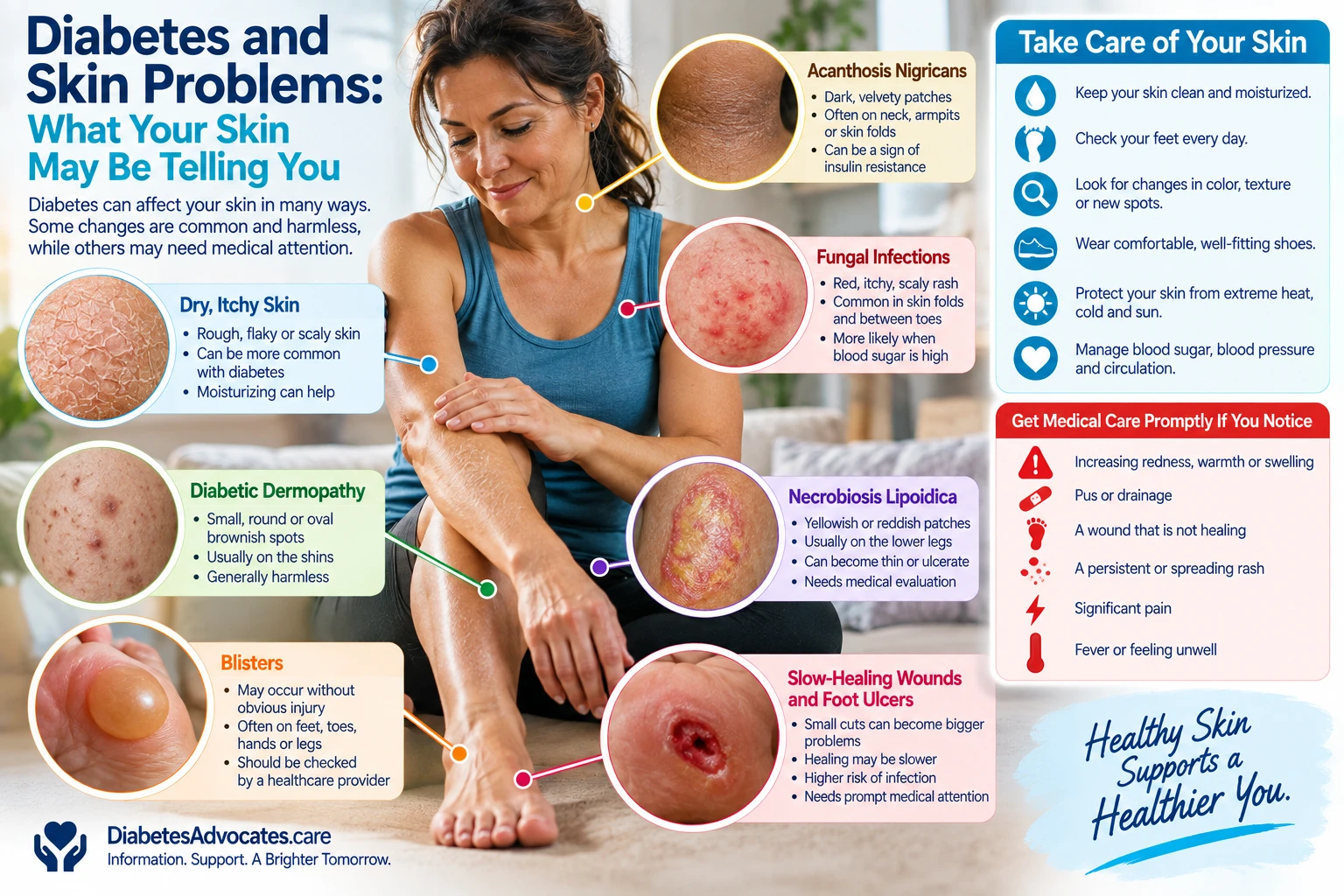
Your skin can reveal more about your health than you might realize.
A patch of unusually dry skin may simply be caused by weather. An itchy rash could come from irritation or an allergy. A small cut may be nothing more than an everyday injury.
But for people with diabetes, certain skin changes deserve additional attention.
Diabetes can affect the nerves and blood vessels that support healthy skin. High glucose can also contribute to dehydration and increase susceptibility to certain infections. In some cases, a skin change may even be one of the first noticeable signs of insulin resistance, prediabetes, or diabetes.
This does not mean every rash, dark spot, or itchy area is caused by diabetes.
People with diabetes can develop all the same skin conditions as anyone else.
The important thing is to notice changes, care for your skin consistently, and know which symptoms deserve medical attention.
How Can Diabetes Affect the Skin?
Healthy skin depends on several systems working together.
It needs:
- Adequate circulation
- Healthy nerves
- Sufficient hydration
- A functioning immune system
- Protection from injury
- Proper wound healing
Diabetes can affect several of these areas.
Over time, persistently elevated glucose may contribute to blood-vessel and nerve damage. Neuropathy can make an injury harder to feel, while poor circulation can interfere with healing.
The result is that something as minor as a blister or cracked area of skin can sometimes become more important than it initially appears.
This is particularly true on the feet.
The 2026 American Diabetes Association Standards of Care identify peripheral neuropathy, peripheral artery disease, foot deformities, chronic hyperglycemia, calluses, and previous ulcers among the factors that increase the risk of diabetic foot ulceration.
Dry Skin Is Common
Dry skin is extremely common—with or without diabetes.
But diabetes can sometimes contribute.
When glucose is significantly elevated, the body may lose additional fluid through increased urination. This can contribute to dehydration and dry skin.
Poor circulation may also be associated with dry, itchy skin, particularly on the lower legs and feet.
Dry skin may feel:
- Rough
- Tight
- Flaky
- Scaly
- Itchy
The problem is not simply cosmetic.
Very dry skin can crack.
Those cracks can create openings through which bacteria or fungi may enter.
Moisturizing Helps Protect the Skin Barrier
Regular moisturizing helps keep dry skin flexible and reduces cracking.
A moisturizer is often most useful when applied shortly after bathing, while the skin still retains some moisture.
For many people, thicker creams or ointments provide more moisture than thin lotions.
Fragrance-free products may be preferable when skin is sensitive.
The American Academy of Dermatology recommends daily moisturizing for people with diabetes because preventing dryness and cracking may help reduce opportunities for infection.
Be Careful Between the Toes
Moisturizing the feet can be helpful when the skin is dry.
However, avoid leaving excess moisturizer between the toes unless a healthcare professional recommends otherwise.
These spaces tend to retain moisture naturally.
Keeping them excessively damp can create an environment that encourages fungal growth.
Dry carefully between the toes after bathing.
Hot Water Can Make Dryness Worse
A long, steaming shower may feel relaxing, but very hot water can remove natural oils from the skin.
If dryness is a problem, consider:
- Warm rather than very hot water
- Shorter showers
- Mild cleansers
- Moisturizer after bathing
Aggressive scrubbing is usually unnecessary and can further irritate fragile skin.
Why Can Diabetes Make Skin Itch?
Itching has many possible causes.
In someone with diabetes, possibilities include:
- Dry skin
- Fungal infection
- Irritation
- Allergic reactions
- Poor circulation
- Other dermatological conditions
Generalized or persistent itching should not automatically be blamed on glucose.
Kidney disease, liver disease, medications, eczema, and numerous other conditions can also cause itching.
If itching is persistent, severe, widespread, or accompanied by a rash or skin damage, medical evaluation may help identify the cause.
Scratching Can Create Another Problem
Repeated scratching can break the skin.
Once the skin barrier is damaged, infection becomes easier.
Instead of repeatedly scratching an itchy area, focus on identifying the reason for the itching.
Moisturizing may help when dryness is responsible, but an infection or inflammatory skin disorder may require specific treatment.
Diabetes and Bacterial Skin Infections
People with diabetes can develop bacterial skin infections such as infections involving:
- Hair follicles
- Eyelids
- Nails
- Cuts or wounds
- Deeper skin tissues
According to the CDC, bacterial infections are more common among people with diabetes, particularly when glucose is elevated.
Signs of a bacterial skin infection may include:
- Redness
- Warmth
- Swelling
- Tenderness
- Pain
- Drainage
- Pus
The appearance of redness can vary with skin tone, so warmth, swelling, pain, and changes from your normal skin appearance are also important clues.
What Is Cellulitis?
Cellulitis is an infection of the deeper layers of skin and underlying tissue.
It can cause an area to become:
- Swollen
- Warm
- Tender
- Painful
- Discolored
The affected area may expand.
Some people also develop fever, chills, or feel generally unwell.
Cellulitis usually requires medical treatment.
If you have diabetes and notice rapidly spreading redness or discoloration, significant warmth, swelling, pain, fever, or worsening symptoms around a wound, seek prompt medical care.
Fungal Infections Are Also Common
Fungi prefer warm, moist environments.
Common fungal infections include:
- Athlete's foot
- Ringworm
- Jock itch
- Yeast infections
People with diabetes may be more susceptible to fungal infections, particularly when glucose is elevated.
A fungal rash may appear:
- Itchy
- Scaly
- Irritated
- Moist
- Cracked
Depending on the type and location, there may also be small surrounding bumps or blisters.
Skin Folds Need Special Attention
Warm, moist skin folds can encourage fungal growth.
Areas that may be affected include:
- Under the breasts
- Armpits
- Groin
- Abdominal folds
- Between the toes
After bathing, dry these areas gently and thoroughly.
Breathable clothing may also help reduce excessive moisture.
Persistent rashes in skin folds should be evaluated rather than repeatedly treated with random creams.
Don't Assume Every Rash Is Fungal
An important mistake is treating every red or itchy rash as a fungal infection.
Eczema, contact dermatitis, psoriasis, bacterial infections, medication reactions, and many other conditions can resemble fungal rashes.
Using the wrong treatment may delay proper diagnosis.
If a rash persists, spreads, repeatedly returns, becomes painful, or does not respond to appropriate treatment, talk with a healthcare professional.
Acanthosis Nigricans: Dark, Velvety Skin
One of the better-known skin findings associated with insulin resistance is acanthosis nigricans.
It usually appears as darker, thicker, velvety skin.
Common locations include:
- The back or sides of the neck
- Armpits
- Groin
- Other skin folds
It may also occur around the elbows, knees, knuckles, or other areas.
Acanthosis nigricans is strongly associated with insulin resistance and may occur in people with prediabetes or Type 2 diabetes, although diabetes is not its only possible cause.
Acanthosis Nigricans Is Not “Dirty Skin”
Because acanthosis nigricans can look like discoloration or buildup, some people try to scrub it away.
That generally does not solve the problem.
The pigmentation and texture change occur within the skin.
Aggressive scrubbing can cause irritation.
When insulin resistance is contributing, addressing the underlying metabolic problem may help improve the appearance over time.
New Acanthosis Nigricans Should Be Evaluated
If you do not have diagnosed diabetes or prediabetes and develop dark, velvety patches, discuss them with a healthcare professional.
Testing for diabetes or insulin resistance may be appropriate.
There are also other possible causes of acanthosis nigricans, including certain medications and less common medical conditions. A sudden, extensive onset deserves medical evaluation rather than assuming it is diabetes-related.
What Is Diabetic Dermopathy?
Diabetic dermopathy is a relatively common skin finding in people with diabetes.
It is sometimes called shin spots.
These spots are usually:
- Round or oval
- Brown, reddish-brown, or otherwise darker than surrounding skin
- Located on the shins
- Flat or slightly indented
- Usually painless
- Usually not itchy
Because they can resemble age spots, people may not realize they are related to diabetes.
Are Shin Spots Dangerous?
Diabetic dermopathy itself is generally harmless and usually does not require specific treatment.
However, the spots should still be mentioned to a healthcare provider, particularly if you are not sure what they are.
Not every brown spot on the leg is diabetic dermopathy.
Skin cancer, vascular conditions, inflammation, bruising, and other disorders can also change skin color.
If a spot changes rapidly, bleeds, becomes painful, forms an open wound, or looks unusual, have it evaluated.
What Is Necrobiosis Lipoidica?
Necrobiosis lipoidica is a less common inflammatory skin disorder associated with diabetes.
It often develops on the lower legs.
It may begin as small bumps or spots that gradually expand into larger patches.
Depending on skin tone and the stage of the condition, patches may appear:
- Yellowish
- Red
- Brown
- Purple
The center can become thin or waxy, and small blood vessels may become visible.
Necrobiosis Lipoidica Needs Professional Evaluation
Unlike ordinary dry skin or harmless shin spots, suspected necrobiosis lipoidica should be evaluated by a dermatologist.
The affected skin may become fragile and can sometimes ulcerate.
Avoid repeatedly scratching or traumatizing the area.
Do not try to diagnose it from photographs alone because several other skin disorders can resemble it.
What Is Digital Sclerosis?
Some people with longstanding diabetes develop digital sclerosis.
This condition can cause the skin on the fingers to become:
- Thick
- Tight
- Waxy
- Stiff
Finger joints may become harder to move.
The CDC notes that digital sclerosis is more common in people with Type 1 diabetes with high glucose levels and may extend beyond the fingers when glucose remains elevated.
If hand stiffness or skin thickening is affecting movement, mention it to your healthcare provider.
Other joint, tendon, or connective-tissue conditions can also occur in people with diabetes.
Diabetes Can Affect Skin in Less Common Ways
Several other skin findings have associations with diabetes.
These include conditions such as:
- Diabetic blisters
- Eruptive xanthomatosis
- Scleredema diabeticorum
- Certain thickened or waxy skin changes
These conditions are far less common than ordinary dry skin or infections.
The key point is not to memorize every possible diabetes-related rash.
Instead, recognize that a persistent or unusual skin change deserves proper diagnosis.
Blisters Deserve Attention
Some people with diabetes can develop spontaneous blisters, sometimes called bullosis diabeticorum or diabetic blisters.
They may occur on areas such as the:
- Feet
- Toes
- Hands
- Fingers
- Legs
These blisters may develop without an obvious burn or injury.
Do not deliberately pop an unexplained blister.
The intact skin can help protect the tissue underneath from infection.
A new unexplained blister—particularly on a foot—should be discussed with a healthcare professional.
Neuropathy Can Make Skin Injuries Easy to Miss
Peripheral neuropathy may reduce the ability to feel:
- Pain
- Heat
- Cold
- Pressure
- Friction
This means a person might not notice:
- A blister from a shoe
- A small cut
- A burn
- A pebble inside a shoe
- Excessive pressure on one area of the foot
The 2026 ADA Standards note that diabetic peripheral neuropathy can be asymptomatic and that loss of protective sensation substantially contributes to foot-ulcer risk.
This is why looking at the feet is so important.
Don't Rely on Pain to Tell You Something Is Wrong
Pain is normally an important warning signal.
With neuropathy, that warning system may be reduced.
A serious foot wound can sometimes cause surprisingly little discomfort.
Therefore:
“It doesn't hurt” does not necessarily mean “it isn't serious.”
Visual inspection becomes especially important when sensation is reduced.
Check Your Feet Regularly
People with diabetes—particularly those with neuropathy—should become familiar with how their feet normally look.
Look for:
- Cuts
- Blisters
- Cracks
- Redness or discoloration
- Swelling
- Calluses
- Drainage
- Open sores
- Nail problems
- Areas that feel unusually warm
If you cannot easily see the bottoms of your feet, a mirror or help from another person may be useful.
Current ADA guidance recommends at least an annual comprehensive foot evaluation for everyone with diabetes, with more frequent inspection for people with sensory loss or a history of ulceration or amputation.
Calluses Are Not Always Harmless
Calluses form where the skin experiences repeated pressure or friction.
For someone with neuropathy, a thick callus can hide tissue damage underneath.
Do not cut calluses yourself with:
- Razor blades
- Knives
- Scissors
- Other sharp instruments
The ADA advises people at increased foot risk to avoid self-treatment of calluses and ingrown nails.
A podiatrist or other qualified foot-care professional can manage them more safely.
Be Careful With Corn and Callus Removers
Over-the-counter chemical corn removers often contain acids that intentionally destroy thickened skin.
If sensation is reduced, these products can damage healthy tissue without causing enough pain to warn you.
Ask your healthcare provider or podiatrist before using chemical products on your feet.
Small Wounds Can Become Bigger Problems
Most minor cuts heal normally.
But healing can become more difficult when several diabetes-related factors occur together.
For example:
Neuropathy may prevent you from feeling an injury.
Poor circulation may reduce blood supply.
Continued pressure may repeatedly traumatize the area.
Infection may develop.
This combination can contribute to a diabetic foot ulcer.
What Is a Diabetic Foot Ulcer?
A diabetic foot ulcer is an open wound below the ankle in a person with diabetes.
Ulcers commonly develop in areas exposed to repeated pressure.
They can lead to:
- Infection
- Hospitalization
- Reduced mobility
- Amputation in severe cases
The good news is that many serious complications can be prevented through early identification, pressure relief, appropriate wound care, infection treatment, and management of circulation problems.
Never Ignore an Open Foot Wound
If you have diabetes and develop an open wound on your foot, particularly if you also have neuropathy or circulation problems, contact your healthcare team.
Do not wait until it becomes painful.
The ADA recommends urgent specialist evaluation for people with open ulceration or unexplained foot swelling, redness/discoloration, or increased skin temperature.
Poor Circulation Can Change the Skin
Peripheral artery disease, or PAD, occurs when narrowed arteries reduce blood flow to the legs and feet.
Possible signs can include:
- Leg discomfort during walking
- Slow-healing wounds
- Changes in skin color
- Cooler feet
- Reduced pulses
- Pain at rest in more advanced disease
Not everyone with PAD has obvious symptoms.
That is one reason vascular assessment is part of a comprehensive diabetic foot examination.
Don't Use Direct Heat on Numb Skin
Cold feet may tempt someone to use:
- Heating pads
- Hot water bottles
- Space heaters
- Very hot baths
If neuropathy has reduced temperature sensation, burns can occur without being noticed immediately.
Use safer methods such as comfortable socks and appropriate room temperature.
Check bath water carefully before getting in.
Your Daily Skin Routine Does Not Need to Be Complicated
A simple routine can provide meaningful protection.
Clean gently.Use warm water and a mild cleanser when appropriate.
Dry carefully.Pay particular attention to skin folds and between the toes.
Moisturize dry skin.This can reduce cracking.
Look at your skin.Notice wounds, blisters, rashes, discoloration, and other changes.
Protect your feet.Wear appropriate footwear and avoid walking barefoot when injury is a concern.
Address problems early.Small skin problems are usually easier to manage before they become complicated.
When Should a Skin Problem Be Checked?
Contact a healthcare professional when you notice:
- A wound that is not healing normally
- A foot blister or open sore
- Increasing redness or discoloration
- Warmth or swelling
- Pus or drainage
- Significant pain
- A persistent rash
- Recurrent fungal infections
- Unexplained skin thickening
- A new dark, velvety patch
- An unusual lower-leg lesion
- A rapidly changing skin growth
Seek more urgent care when symptoms suggest a rapidly progressing infection or serious foot complication.
Skin problems are often easier to treat when they are addressed early.
Why Can Wounds Heal More Slowly With Diabetes?
A small cut usually triggers an organized healing process.
Blood vessels deliver oxygen and nutrients. Immune cells help protect against infection. New tissue forms, and the skin gradually repairs itself.
Diabetes can interfere with several parts of this process.
Factors that may contribute to delayed wound healing include:
- Persistently elevated glucose
- Reduced circulation
- Peripheral neuropathy
- Infection
- Repeated pressure or friction
- Smoking
- Poor nutrition
- Other medical conditions
Not everyone with diabetes experiences slow wound healing. But when a wound is not improving as expected, it deserves attention—especially if it is on the foot.
Blood Sugar and Wound Healing
Persistently high glucose can interfere with normal immune function and may make infections more difficult to control.
This does not mean that one high glucose reading will prevent a cut from healing.
The concern is more often ongoing hyperglycemia, particularly when combined with neuropathy, circulation problems, or infection.
Managing glucose within your individualized target range is therefore one part of supporting healthy wound healing.
Circulation Matters
Healing tissue requires oxygen and nutrients delivered through the bloodstream.
Peripheral artery disease, or PAD, can reduce blood flow to the legs and feet.
When circulation is impaired, wounds may take longer to heal.
Possible signs of circulation problems include:
- Leg discomfort while walking
- Foot or toe wounds that heal slowly
- Changes in skin temperature
- Changes in skin color
- Pain in the feet while resting
- Reduced pulses in the feet
Some people with PAD have few obvious symptoms, particularly when neuropathy is also present.
Infection Can Delay Healing Further
A wound that becomes infected may deteriorate quickly.
Watch for:
- Increasing warmth
- Swelling
- Expanding redness or discoloration
- Increasing tenderness
- Drainage
- Pus
- Unpleasant odor
- Fever
- Chills
- Feeling unusually unwell
For someone with neuropathy, pain may be surprisingly mild even when an infection is significant.
That is another reason appearance, temperature, swelling, and drainage matter.
Don't Wait for a Foot Wound to Hurt
A common misconception is:
“If it were serious, it would hurt.”
That may not be true when diabetic neuropathy is present.
Loss of protective sensation can allow a blister, ulcer, burn, or infection to progress without producing the pain you would normally expect.
An open wound on a diabetic foot deserves prompt attention even when it is painless.
Pressure Relief Is an Important Part of Wound Care
A wound on the bottom of the foot may be exposed to pressure every time you stand or walk.
That repeated pressure can interfere with healing.
Healthcare professionals may recommend specialized methods of offloading, meaning reducing pressure on the injured area.
Depending on the wound, this might involve:
- Special footwear
- A removable walking device
- A cast or other offloading device
- Activity modification
Simply putting a bandage over a pressure-related ulcer may not address the underlying cause.
Avoid DIY Surgery on Your Feet
When you see a callus, corn, ingrown nail, blister, or thickened area of skin, it can be tempting to remove it yourself.
Avoid cutting or digging into foot skin with sharp tools.
This is especially important if you have:
- Neuropathy
- Poor circulation
- Previous foot ulcers
- Foot deformities
- Difficulty seeing or reaching your feet
A small accidental cut can become a much larger problem.
Professional foot care may be safer.
Nail Care Matters Too
Toenails should generally be kept clean and appropriately trimmed.
If you can safely trim them yourself, avoid cutting excessively short or digging deeply into the corners.
Seek professional assistance if you have:
- Thick or distorted nails
- Ingrown toenails
- Poor circulation
- Significant neuropathy
- Difficulty seeing your feet
- Difficulty reaching your toes
A podiatrist can help determine the safest approach.
Choose Shoes Carefully
Shoes protect the skin from pressure, friction, temperature, and environmental injuries.
Poorly fitting shoes can create:
- Blisters
- Calluses
- Pressure points
- Skin breakdown
Check the inside of your shoes before putting them on, especially if you have reduced sensation.
A small stone, folded sock, damaged insole, or other object may cause injury without being immediately noticeable.
Footwear should generally fit comfortably without excessive rubbing or pressure.
Breaking in New Shoes
New shoes can create unexpected pressure points.
Instead of wearing a new pair for an entire day immediately, gradually increase wear time when appropriate.
After wearing them, inspect your feet for:
- Red marks
- Blisters
- Irritation
- Tender areas
Persistent redness after removing footwear may indicate excessive pressure.
Walking Barefoot Can Be Risky
When sensation is reduced, walking barefoot can expose the feet to injuries that may not be felt.
Potential hazards include:
- Sharp objects
- Hot pavement
- Rough surfaces
- Splinters
- Broken glass
Protective footwear may be appropriate even indoors for people at high risk of foot injury.
Diabetes Devices Can Affect the Skin Too
Modern diabetes care often involves equipment attached directly to the skin.
Examples include:
- Continuous glucose monitors
- Insulin pumps
- Infusion sets
- Patch pumps
These devices can make diabetes management easier, but the adhesive or insertion site may occasionally cause skin problems.
Possible issues include:
- Redness
- Itching
- Irritation
- Adhesive reactions
- Skin breakdown
- Infection
Rotate Device Sites
Repeatedly placing a sensor or infusion set in exactly the same location may irritate the skin.
Follow the manufacturer's recommendations for approved placement and site rotation.
Before applying a device:
- Start with clean skin.
- Allow the skin to dry completely.
- Avoid obviously irritated or infected areas.
- Inspect the old site after removal.
If significant irritation repeatedly occurs, discuss it with your diabetes care team.
Adhesive Reactions Are Not the Same as Infection
A red patch underneath a CGM or pump adhesive may be caused by irritation or contact dermatitis rather than infection.
Signs that deserve medical attention include:
- Increasing warmth
- Significant swelling
- Pus
- Worsening pain
- Spreading redness or discoloration
- Fever
Persistent adhesive reactions may require changes in skin preparation, barrier products, adhesives, or device placement.
A dermatologist or diabetes care professional can help when the problem keeps returning.
Insulin Injection Sites Need Attention
People who inject insulin should rotate injection sites rather than repeatedly injecting into exactly the same spot.
Repeated injections into the same area can contribute to lipohypertrophy, where fatty tissue becomes thickened or lumpy.
The area may feel:
- Firm
- Rubbery
- Thickened
- Lumpy
Injecting insulin into abnormal tissue can make insulin absorption less predictable.
Check commonly used injection areas periodically and discuss lumps or persistent skin changes with your healthcare team.
Avoid Injecting Through Damaged Skin
Do not intentionally inject insulin through areas that are:
- Infected
- Inflamed
- Scarred
- Bruised
- Open
- Significantly irritated
Use recommended injection areas and rotate sites systematically.
If you are unsure how to rotate sites, a diabetes educator can demonstrate a simple pattern.
Medication Can Sometimes Cause Skin Reactions
Not every skin change in someone with diabetes comes from diabetes itself.
Medications can occasionally cause:
- Rash
- Hives
- Itching
- Injection-site reactions
- Other skin changes
Many medication rashes are mild, but some allergic reactions can become serious.
Do not automatically stop an important medication because a rash appears.
Contact your healthcare provider or pharmacist for guidance unless symptoms indicate an emergency.
Know the Signs of a Severe Allergic Reaction
Seek emergency medical care if a suspected allergic reaction causes symptoms such as:
- Difficulty breathing
- Swelling of the lips, tongue, mouth, or throat
- Severe wheezing
- Fainting
- Rapidly worsening widespread symptoms
These can indicate a serious allergic reaction.
SGLT2 Inhibitors and Genital Infections
SGLT2 inhibitors are medications used for diabetes and, in some cases, heart or kidney disease.
Because these medications increase glucose excretion through urine, they can increase the likelihood of genital fungal infections in some people.
Symptoms may include:
- Itching
- Irritation
- Redness
- Discomfort
- Abnormal discharge
These infections are generally treatable, but recurring or severe symptoms should be discussed with a healthcare provider.
A Rare but Serious Warning
A very rare but serious infection called Fournier's gangrene has been reported in people taking SGLT2 inhibitors.
Seek urgent medical care for severe pain, tenderness, redness, or swelling around the genital or perineal area, particularly when accompanied by fever or feeling very unwell.
This condition is uncommon, but it requires immediate treatment.
Skin Care in Hot Weather
Heat creates several potential challenges.
Sweating can increase moisture in skin folds, while dehydration may worsen dry skin.
Hot surfaces can also cause burns—particularly when neuropathy reduces temperature sensation.
During hot weather:
- Stay adequately hydrated according to your medical needs.
- Change out of damp clothing.
- Keep skin folds clean and dry.
- Protect your skin from sunburn.
- Avoid walking barefoot on hot pavement.
- Check feet after outdoor activities.
Remember that sand, pavement, pool decks, and car interiors can become extremely hot.
Sun Protection Still Matters
Diabetes does not replace the usual need for sun protection.
Sunburn damages the skin barrier and can cause significant discomfort and dehydration.
Consider:
- Shade
- Protective clothing
- Hats
- Appropriate sunscreen
- Limiting excessive sun exposure
Some medications can also increase sensitivity to sunlight.
Ask your pharmacist if you are uncertain about your medications.
Skin Care in Cold Weather
Cold air and indoor heating can make skin particularly dry.
During colder months:
- Moisturize regularly.
- Avoid extremely hot showers.
- Protect exposed skin.
- Wear warm socks and appropriate footwear.
- Avoid placing numb feet directly against heating devices.
Neuropathy may make it difficult to judge whether something is dangerously hot or cold.
Don't Put a Heating Pad Directly on Numb Feet
Heating pads and hot water bottles can cause burns.
A person with reduced sensation may not recognize excessive heat until significant skin damage has occurred.
If your feet frequently feel cold, mention it to your healthcare provider.
Cold feet can have several causes, including circulation problems.
What About Cuts From Shaving?
Small shaving cuts are usually minor.
However, anyone with fragile skin, reduced sensation, or poor healing should take care to avoid unnecessary skin injury.
Use clean equipment and avoid shaving directly over irritated, infected, or ulcerated skin.
If a shaving cut becomes increasingly red, swollen, painful, or begins draining, have it evaluated.
Tattoos and Piercings Require Extra Consideration
Having diabetes does not automatically mean tattoos or piercings are prohibited.
However, they intentionally break the skin barrier and therefore create an opportunity for infection.
Before proceeding, consider:
- How well your diabetes is currently managed
- Whether you have healing problems
- Whether circulation is impaired
- Whether the facility follows proper infection-control practices
- Whether the area has existing skin disease
Follow aftercare instructions carefully and seek medical attention if infection develops.
When Should You See a Dermatologist?
A dermatologist specializes in diseases of the skin, hair, and nails.
Consider dermatological evaluation for:
- Persistent unexplained rashes
- Recurrent skin infections
- Suspected necrobiosis lipoidica
- Severe itching
- Unusual skin thickening
- Persistent discoloration
- Reactions to diabetes-device adhesives
- Changing moles or growths
- Skin conditions that do not respond to initial treatment
Having diabetes does not mean every skin problem belongs solely to your diabetes clinician.
When Should You See a Podiatrist?
A podiatrist specializes in foot and ankle care.
Podiatric care may be particularly valuable if you have:
- Peripheral neuropathy
- Poor circulation
- Foot deformities
- Previous ulcers
- Calluses
- Difficult-to-trim nails
- Recurrent foot problems
People at higher risk for diabetic foot complications may need professional foot examinations more often than once per year.
Your Skin Can Provide Useful Clues
Skin changes sometimes provide information about what is happening elsewhere in the body.
For example:
Dark, velvety skin may suggest insulin resistance.
Dry, cracked skin may increase infection risk.
A painless foot injury may reveal neuropathy.
A wound that heals slowly may raise concern about circulation or other healing problems.
Recurrent infections may prompt a review of glucose management or other health factors.
But skin findings are clues—not diagnoses.
Proper evaluation matters.
Don't Judge Glucose Control by Your Skin Alone
Skin changes cannot tell you your A1C or exact glucose level.
Someone with excellent glucose management can still develop eczema, fungal infections, psoriasis, skin cancer, or other dermatological conditions.
Likewise, someone with elevated glucose may have no obvious skin symptoms.
Use appropriate glucose monitoring and laboratory testing rather than trying to read glucose levels from your skin.
A Simple Daily Skin and Foot Check
You do not need a complicated routine.
Take a moment to look for anything new.
Look
Check for:
- Cuts
- Blisters
- Cracks
- Rashes
- Discoloration
- Swelling
- Drainage
- Open wounds
Feel
When sensation is intact, notice:
- Unusual warmth
- Tenderness
- New pain
If you have neuropathy, remember that lack of pain does not rule out a problem.
Protect
Keep skin appropriately clean and moisturized, wear suitable footwear, and avoid unnecessary injuries.
Act
Do not wait weeks to address a concerning wound or infection.
Early treatment can make a major difference.
When Should You Seek Prompt Medical Care?
Contact your healthcare team promptly if you notice:
- A new foot ulcer
- A wound that is getting larger
- A wound that is not healing
- Pus or drainage
- Increasing warmth
- Increasing swelling
- Spreading redness or discoloration
- New unexplained foot swelling
- A blister on a high-risk foot
- Significant skin breakdown
- Recurrent infections
Prompt assessment is especially important if you have neuropathy, PAD, or a history of foot ulcers.
When Is It an Emergency?
Seek urgent or emergency medical care when a skin or foot problem is accompanied by signs such as:
- Rapidly spreading infection
- Severe swelling
- Black or dying-looking tissue
- Fever with a worsening wound
- Chills or severe illness
- Confusion
- Severe weakness
- Rapid deterioration
- Severe pain that seems out of proportion to the visible injury
Do not attempt to manage a rapidly worsening diabetic foot infection entirely at home.
Frequently Asked Questions
Does diabetes cause dry skin?
Diabetes can contribute to dry skin, particularly when glucose is elevated or circulation is impaired. However, dry skin is extremely common and can also result from weather, bathing habits, aging, eczema, and many other factors.
Why does diabetes cause itchy skin?
Possible contributors include dry skin, fungal infections, irritation, and circulation problems. Persistent itching may also have causes unrelated to diabetes and should be evaluated when severe or ongoing.
What are diabetic shin spots?
Diabetic dermopathy can cause small brownish, round or oval patches, most commonly on the shins. They are generally harmless and usually do not require treatment.
What are the dark patches associated with diabetes?
Acanthosis nigricans causes darker, thicker, velvety skin, often on the neck, armpits, or other folds. It is strongly associated with insulin resistance but can have other causes.
Can skin problems be an early sign of diabetes?
Sometimes. Acanthosis nigricans, recurrent infections, slow wound healing, and other changes may prompt testing for diabetes or insulin resistance. None of these findings alone can diagnose diabetes.
Why do people with diabetes get fungal infections?
Elevated glucose and warm, moist environments may make fungal growth more likely. Some diabetes medications, particularly SGLT2 inhibitors, can also increase the risk of genital fungal infections.
Why are foot wounds so concerning?
Neuropathy may prevent a person from feeling an injury, while poor circulation, pressure, and infection can interfere with healing. Together, these factors can allow a small injury to progress into a foot ulcer.
Can a diabetic foot ulcer be painless?
Yes. Significant neuropathy can reduce pain sensation, so even a serious wound may cause little discomfort.
Should I pop a blister on my foot?
Generally, avoid deliberately popping unexplained blisters, particularly if you have diabetes and neuropathy. The skin covering the blister helps protect the tissue underneath. A concerning foot blister should be evaluated by a healthcare professional.
Can I use lotion on my feet?
Moisturizer can help prevent dry, cracked skin. Avoid leaving excess lotion between the toes because excessive moisture there may encourage fungal growth.
Can I remove my own calluses?
People with neuropathy, poor circulation, or high-risk feet should generally avoid cutting calluses themselves or using sharp tools. Professional foot care is safer.
Can diabetes affect CGM or insulin-pump sites?
Yes. Adhesives and repeated device placement can cause irritation or contact dermatitis, and insertion sites can occasionally become infected. Rotating sites and inspecting the skin can help.
Why do insulin injection sites become lumpy?
Repeatedly injecting into the same area can cause lipohypertrophy, a thickening or lumpiness of fatty tissue. Rotating injection sites helps reduce this problem and may make insulin absorption more predictable.
Does better blood sugar management improve skin problems?
It can help with some diabetes-related problems, particularly recurrent infections and wound healing. However, not every skin disorder will disappear when glucose improves because many have additional causes.
Should I see a dermatologist or my diabetes doctor?
Either can be an appropriate starting point. Dermatologists are particularly helpful for persistent or unusual skin disorders, while diabetes clinicians can evaluate glucose-related factors. Foot wounds may also require a podiatrist, wound specialist, or vascular specialist.
Key Takeaways
Diabetes can affect the skin in several ways, but not every rash, dry patch, or discoloration is caused by diabetes.
Persistently elevated glucose may contribute to dehydration, infection risk, and impaired wound healing.
Peripheral neuropathy can make skin injuries difficult to feel. A painless foot wound can still be serious.
Reduced circulation can interfere with wound healing, particularly in the legs and feet.
Common diabetes-associated skin findings include dry skin, bacterial and fungal infections, diabetic dermopathy, and acanthosis nigricans.
Less common conditions include necrobiosis lipoidica, diabetic blisters, digital sclerosis, and other specialized skin disorders.
Acanthosis nigricans can be a clue to insulin resistance and should not be treated as dirty skin that needs to be scrubbed away.
Daily foot inspection becomes especially important when neuropathy is present.
Avoid cutting calluses yourself, walking barefoot when injury risk is high, or using direct heat on numb feet.
CGMs, insulin pumps, and injections can also affect the skin. Rotate sites and pay attention to persistent irritation, lumps, or signs of infection.
A wound that is worsening, draining, unusually warm, swollen, discolored, or slow to heal deserves medical attention.
And remember:
Pain is not a reliable measure of seriousness when neuropathy is present.
A few minutes of regular skin and foot care can help identify small problems before they become larger ones.
DiabetesAdvocates.care does not provide medical advice, diagnosis, or treatment. Please consult with your healthcare provider for questions and personalized medical advice.