
Diabetes and Swollen Feet: Why Your Feet, Ankles, or Legs May Swell
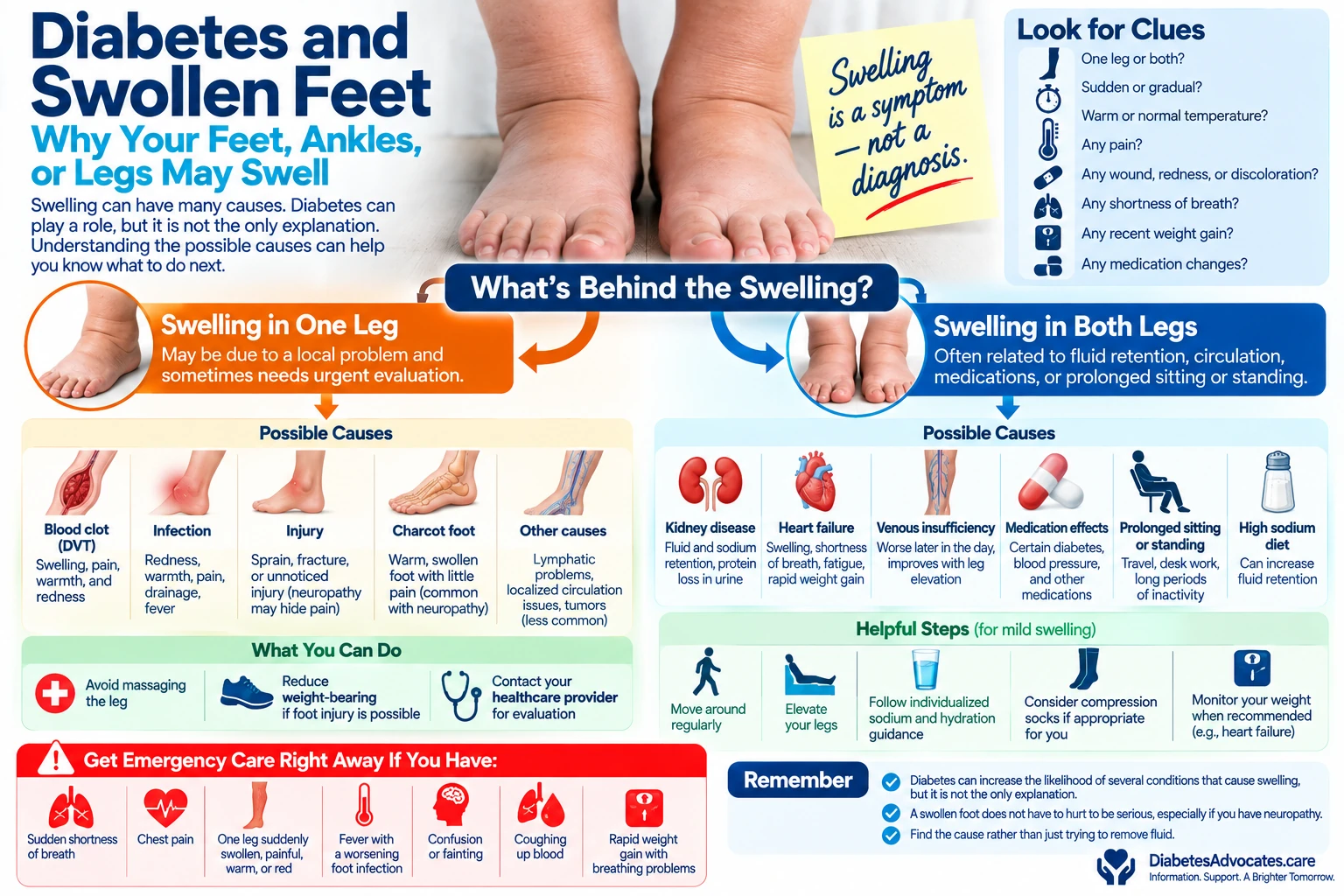
You take off your shoes at the end of the day and notice something different.
Your socks have left deep marks around your ankles.
Your feet look puffy.
Maybe one shoe suddenly feels tighter than the other.
If you have diabetes, you might immediately wonder:
Is diabetes causing my swollen feet?
The answer is not always straightforward.
Diabetes itself is not the only explanation for swollen feet or ankles. However, some conditions that are more common among people with diabetes—including kidney disease, cardiovascular disease, circulation problems, foot complications, and certain medication effects—can contribute to swelling.
Sometimes swelling is temporary and relatively harmless.
Other times, particularly when it appears suddenly or occurs with shortness of breath, pain, redness, warmth, or an open foot wound, it can signal a problem that needs prompt medical attention.
Understanding the pattern can help you know what to do next.
What Is Edema?
The medical term for swelling caused by fluid accumulating in tissues is edema.
Edema commonly affects the:
- Feet
- Ankles
- Lower legs
But fluid can also accumulate elsewhere in the body.
Depending on the cause, swelling may affect:
- One foot or leg
- Both feet and legs
- The hands
- The face
- The abdomen
The pattern can provide useful clues.
What Does Edema Look Like?
Swollen skin may appear:
- Puffy
- Stretched
- Shiny
- Enlarged
- Different in color from surrounding skin
Shoes may feel unusually tight.
Socks may leave deeper marks than usual.
The ankles may look normal in the morning but become noticeably swollen later in the day.
Some swelling is soft, while other swelling may feel firmer.
What Is Pitting Edema?
With some types of edema, pressing a finger firmly against the swollen area for several seconds leaves a temporary indentation.
This is known as pitting edema.
Healthcare professionals sometimes assess whether swelling pits and how extensive it is.
But whether swelling pits does not identify the cause by itself.
Heart, kidney, venous, medication-related, and other conditions may produce swelling, so a broader evaluation may still be necessary.
Does Diabetes Directly Cause Swollen Feet?
Diabetes does not automatically cause edema.
Instead, swelling may result from a condition associated with diabetes or from something completely unrelated.
Possible causes include:
- Kidney disease
- Heart failure
- Venous insufficiency
- Blood clots
- Infection
- Foot injury
- Certain medications
- Prolonged sitting or standing
- High sodium intake
- Pregnancy
- Liver disease
- Lymphatic problems
This is why simply saying, “My feet are swollen because I have diabetes,” may overlook the real cause.
Start With One Important Question: One Leg or Both?
When evaluating swelling, one of the most useful observations is whether it affects one side or both sides.
Swelling in both legs
Bilateral swelling may occur with conditions involving:
- Fluid retention
- Heart problems
- Kidney disease
- Venous insufficiency
- Certain medications
- Prolonged sitting or standing
Swelling in one leg
One-sided swelling may raise different concerns, including:
- Injury
- Infection
- A blood clot
- Local circulation problems
- Lymphatic obstruction
- A diabetic foot complication
This distinction does not provide a diagnosis, but it can help determine how urgently the swelling should be evaluated.
Kidney Disease Can Cause Swelling
The kidneys help regulate fluid and sodium levels in the body.
When kidney function becomes significantly impaired, excess fluid and sodium may accumulate.
That can produce edema.
NIDDK notes that kidney-related edema may affect the:
- Legs
- Feet
- Ankles
- Hands
- Face
Swelling tends to become more common as chronic kidney disease becomes advanced or when substantial protein is being lost in the urine.
Why Kidney Health Matters in Diabetes
Diabetes is a major cause of chronic kidney disease.
Over time, high glucose can damage the small blood vessels involved in kidney filtration. High blood pressure—which commonly occurs alongside diabetes—can cause additional kidney damage.
This is why kidney screening is an important part of routine diabetes care.
But there is an important point:
Do not wait for swollen ankles before thinking about your kidneys.
Early Kidney Disease Often Has No Symptoms
Chronic kidney disease can develop quietly.
According to NIDDK, many people with early CKD have no symptoms at all. Blood and urine testing may identify kidney disease before noticeable symptoms appear.
By the time obvious fluid retention develops, kidney disease may be more advanced or significant protein loss may be occurring.
That means normal-looking ankles do not guarantee normal kidney function.
Other Clues That May Accompany Kidney Problems
Depending on severity, kidney disease may eventually cause symptoms such as:
- Swelling
- Fatigue
- Changes in urination
- Foamy urine
- Poor appetite
- Nausea
- Itching
- Muscle cramps
- Difficulty concentrating
- Shortness of breath
None of these symptoms is specific to kidney disease.
Testing is required to understand what is happening.
How Are Kidneys Checked?
For people with diabetes, kidney assessment commonly includes two important types of tests.
eGFR
The estimated glomerular filtration rate, or eGFR, is calculated from a blood test and helps estimate how well the kidneys are filtering.
UACR
The urine albumin-to-creatinine ratio, or UACR, looks for albumin leaking into the urine.
Albumin is a protein normally found in the blood.
Damaged kidneys may allow more albumin to pass into urine.
These tests provide much more useful information about kidney health than looking for swelling alone.
Protein Loss Can Contribute to Edema
When substantial amounts of protein leak into urine, blood protein levels can fall.
This can alter the balance of fluid between blood vessels and surrounding tissues.
Fluid may then accumulate in areas such as the:
- Feet
- Ankles
- Legs
- Hands
- Face
NIDDK notes that protein loss from kidney disease can contribute to fluid buildup and swelling.
If swelling occurs along with very foamy urine, discuss both symptoms with your healthcare provider.
Heart Problems Can Also Cause Leg Swelling
The heart and kidneys work closely together to regulate circulation and fluid balance.
When the heart cannot pump blood effectively, pressure can build up in the circulation.
Fluid may then accumulate in the lower body.
Heart failure can cause swelling in the:
- Feet
- Ankles
- Legs
- Abdomen
It can also lead to fluid accumulation affecting the lungs and breathing.
Diabetes and Heart Failure
People with diabetes have an increased risk of cardiovascular disease, including heart failure.
The CDC notes that heart failure can cause swelling in the legs as well as fluid buildup in the lungs that makes breathing difficult.
That does not mean swollen ankles automatically indicate heart failure.
But new swelling deserves greater attention when it occurs alongside breathing symptoms or rapid weight gain.
Watch for Swelling Plus Shortness of Breath
Possible heart-failure symptoms can include:
- Swollen feet or ankles
- Shortness of breath with activity
- Difficulty breathing while lying flat
- Fatigue
- Weakness
- Abdominal swelling
- Rapid fluid-related weight gain
NHLBI advises people with heart failure to watch for worsening ankle swelling, weight gain, and increasing shortness of breath because these can indicate fluid buildup.
New or worsening breathing difficulty requires medical attention.
Daily Weight Can Reveal Fluid Changes
For people already diagnosed with heart failure, healthcare professionals may recommend regular weight monitoring.
A sudden increase in weight can sometimes represent fluid accumulation rather than body-fat gain.
Your healthcare provider should tell you:
- How often to weigh yourself
- What amount of weight change is concerning
- When to call the care team
Do not use someone else's heart-failure instructions as your own.
What About Poor Circulation?
“Poor circulation” is often used as a general explanation for swollen feet, but the phrase can refer to different problems.
Two important conditions are:
Peripheral artery disease (PAD) — reduced arterial blood flow toward the legs and feet.
Chronic venous insufficiency — difficulty returning blood from the legs toward the heart.
These are not the same condition.
Peripheral Artery Disease and Diabetes
Peripheral artery disease develops when arteries supplying the legs become narrowed.
Diabetes is an important risk factor.
Possible symptoms include:
- Leg fatigue
- Cramping or discomfort while walking
- Slow-healing wounds
- Rest pain in more advanced disease
- Changes in skin appearance or temperature
However, some people with PAD have few noticeable symptoms.
The 2026 ADA Standards recommend vascular assessment as part of comprehensive diabetic foot care and additional PAD evaluation for appropriate higher-risk individuals.
Swelling Is Not the Classic Sign of PAD
PAD is primarily an arterial blood-flow problem.
Swelling by itself is not its classic defining symptom.
This matters because people sometimes assume:
“Swollen feet means poor arterial circulation.”
The cause may instead involve the veins, heart, kidneys, medication, inflammation, infection, or another condition.
Proper evaluation helps distinguish these possibilities.
Venous Insufficiency Can Cause Ankle and Leg Swelling
Veins carry blood back toward the heart.
Inside the leg veins are valves that help prevent blood from flowing backward.
When these valves do not function effectively, blood can pool in the lower legs.
This is called chronic venous insufficiency.
Swelling may:
- Become worse after prolonged standing
- Increase later in the day
- Improve after resting or elevating the legs
- Affect the ankles and lower legs
Some people also develop varicose veins or skin changes around the ankles.
Sitting for Long Periods Can Cause Temporary Swelling
Not all swelling indicates disease.
Sitting in the same position for many hours can allow fluid to accumulate in the lower legs.
This may happen during:
- Long flights
- Road trips
- Desk work
- Extended periods of inactivity
Standing for long periods can have a similar effect.
Movement helps the leg muscles assist blood flow back toward the heart.
Travel Creates an Important Exception
Mild swelling in both ankles after a long flight can occur from prolonged sitting.
But sudden swelling in one leg, particularly with pain, tenderness, warmth, or discoloration, requires more attention because prolonged immobility can increase the risk of a blood clot.
Do not assume all post-flight swelling is harmless.
Could It Be a Blood Clot?
A blood clot in a deep vein is called deep vein thrombosis, or DVT.
It most commonly affects a leg.
Possible symptoms include:
- Swelling in one leg
- Pain or tenderness
- Warmth
- Skin discoloration
Some DVTs produce few symptoms.
A clot can become dangerous if part of it travels to the lungs.
Pulmonary Embolism Is an Emergency
When a blood clot travels to the lungs, it can cause a pulmonary embolism.
Possible warning signs include:
- Sudden shortness of breath
- Chest pain
- Rapid heartbeat
- Lightheadedness or fainting
- Coughing up blood
These symptoms require emergency medical care.
Do not massage a suddenly swollen, painful leg while waiting to see whether it improves.
Diabetes Does Not Explain Away One-Sided Swelling
This is an important safety point.
If one foot or leg suddenly becomes significantly more swollen than the other, avoid simply saying:
“My feet swell because I have diabetes.”
One-sided swelling may require evaluation for:
- DVT
- Infection
- Injury
- Charcot neuroarthropathy
- Other local problems
The timing and associated symptoms matter.
Infection Can Cause Localized Swelling
A bacterial infection can produce:
- Swelling
- Warmth
- Redness or discoloration
- Tenderness
- Drainage
- Fever
People with diabetes, particularly those with neuropathy or peripheral artery disease, need to take foot infections seriously.
The ADA notes that infection can progress rapidly in a neuroischemic foot and that the visible symptoms may not always reflect the severity of the infection.
Neuropathy Can Hide the Injury
Diabetic peripheral neuropathy can reduce the ability to feel:
- Pain
- Pressure
- Heat
- Cold
- Injury
A person might therefore develop a swollen foot after an injury without remembering anything happening.
NIDDK notes that loss of sensation can allow blisters, cuts, and sores to go unnoticed and become infected.
That means swelling should be taken seriously even when the foot does not hurt.
A Warm, Swollen Foot Can Signal Charcot Foot
One particularly important complication is Charcot neuroarthropathy, often called Charcot foot.
It can occur in people with significant neuropathy.
The foot may become:
- Warm
- Swollen
- Red or discolored
Pain may be surprisingly mild or even absent because of nerve damage.
Sometimes there has been a minor injury. Other times, the person does not remember an injury at all.
Why Charcot Foot Is Easy to Miss
Without normal pain sensation, a person may continue walking on an injured foot.
Repeated pressure can worsen damage to bones and joints.
Over time, this may lead to:
- Fractures
- Joint instability
- Foot deformity
- Ulceration
- Increased risk of infection
Early diagnosis is extremely important.
Current ADA Guidance on an Unexplained Swollen Foot
The 2026 ADA Standards specifically advise urgent specialist evaluation for people with diabetes who have open ulceration or unexplained swelling, redness/discoloration, or increased skin temperature of the foot.
For a person with neuropathy, a warm, swollen, red foot should prompt evaluation for possible Charcot neuroarthropathy.
The ADA recommends prompt imaging and urgent foot-specialist involvement when Charcot foot is suspected.
Do not continue walking normally on a newly swollen, warm foot until a significant injury has been ruled out.
Check the Skin Carefully
When swelling develops, inspect the entire foot.
Look for:
- Blisters
- Cuts
- Cracks
- Ulcers
- Drainage
- Redness or discoloration
- Calluses
- Nail problems
- Areas of unusual warmth
- Objects embedded in the skin
Also inspect between the toes and the bottom of the foot.
A mirror can help if reaching or seeing the sole is difficult.
Compare Both Feet
Looking at both feet side by side can make subtle changes easier to notice.
Ask:
- Is one foot larger?
- Is one warmer?
- Is the color different?
- Is there a wound?
- Is the swelling localized or widespread?
- Does one shoe suddenly fit differently?
These observations can be useful information for your healthcare provider.
Medications Can Cause Swelling
Medication is another commonly overlooked cause of edema.
Certain medicines may contribute to ankle or leg swelling.
One well-known example is pioglitazone, a diabetes medication in the thiazolidinedione class.
Other medications used for conditions such as high blood pressure, pain, or hormonal treatment may also contribute to edema.
If swelling began after starting or increasing a medication, tell your healthcare provider.
Don't Stop Medication on Your Own
Even when a medication may be contributing to swelling, do not automatically discontinue it.
Some medications have important benefits, and suddenly stopping them may create other problems.
Instead, ask:
- Could this medication contribute to my swelling?
- Is the swelling expected?
- Should the dose change?
- Is another medication more appropriate?
- Could another medical condition be causing it?
A medication review is often useful when edema develops.
Sodium Can Influence Fluid Retention
Sodium helps regulate fluid balance.
Some people retain more fluid when sodium intake is high, particularly when heart or kidney disease is present.
Major sources of sodium can include:
- Processed meats
- Canned soups
- Fast food
- Salty snacks
- Restaurant meals
- Packaged sauces
- Frozen prepared foods
But extremely restrictive sodium diets are not appropriate for everyone.
Follow individualized dietary guidance when you have heart disease, kidney disease, or another condition requiring sodium management.
Don't Treat Swelling With “Detox” Products
Products marketed as:
- Water-loss teas
- Detox drinks
- Natural diuretics
- Cleanses
may sound like easy solutions to edema.
But fluid retention can have important medical causes.
Some products may also interact with medications or alter fluid and electrolyte balance.
Treat the cause rather than trying to force fluid out of the body without knowing why it accumulated.
Diuretics Are Not a Universal Solution
Prescription diuretics—sometimes called “water pills”—help the body remove sodium and fluid.
They can be extremely useful for certain conditions, including some cases of heart failure.
But they are not appropriate for every swollen ankle.
Taking diuretics unnecessarily can contribute to:
- Dehydration
- Low blood pressure
- Kidney problems
- Sodium abnormalities
- Potassium abnormalities
Use them only as prescribed.
Elevating the Legs May Help Some Types of Swelling
For mild swelling related to prolonged sitting, standing, or venous pooling, elevating the legs may provide relief.
Movement can also help the calf muscles pump blood upward.
However, elevation does not treat every cause of edema.
If swelling is new, significant, one-sided, painful, associated with an injury, or accompanied by breathing problems, investigate the cause instead of relying only on home measures.
Compression Socks Are Not Automatically Safe for Everyone
Compression stockings can be useful for certain types of venous swelling.
But they should not automatically be used by everyone with diabetes.
People with significant peripheral artery disease, certain foot wounds, severe neuropathy, or other circulation problems may require professional assessment before using compression.
The important question is not:
“Do compression socks help swelling?”
It is:
“What is causing my swelling, and is compression appropriate for me?”
Pay Attention to Timing
When swelling occurs can provide useful clues.
For example:
Worse at the end of the day:Prolonged standing or venous pooling may contribute.
After a long flight:Immobility may explain mild bilateral swelling, but one-sided symptoms require closer attention.
Suddenly in one leg:A clot, infection, injury, or another localized problem needs consideration.
With rapid weight gain and breathlessness:Fluid retention related to heart problems may be possible.
With kidney abnormalities or foamy urine:Kidney disease may need evaluation.
Patterns help—but they do not replace diagnosis.
Keep Track of New Swelling
If swelling is recurring, consider noting:
- When it begins
- Whether one or both legs are involved
- Whether it improves overnight
- Whether elevation helps
- Recent travel
- Activity level
- Medication changes
- Weight changes
- Shortness of breath
- Skin changes
- Pain or warmth
- Glucose patterns
- Blood pressure when appropriate
This information can make a medical evaluation more productive.
When Should You Contact Your Healthcare Provider?
New or recurring swelling deserves medical review when:
- The cause is unclear
- It persists
- It is getting worse
- One leg is more swollen than the other
- The skin is warm or discolored
- A wound is present
- You have known kidney or heart disease
- You recently started a new medication
- Your weight is increasing rapidly
- Walking becomes difficult
If you have diabetes and neuropathy, unexplained swelling of a foot deserves particular attention.
When Should You Seek Urgent Care?
Seek prompt medical attention for swelling associated with:
- A warm, red or discolored diabetic foot
- An open foot ulcer
- Rapidly worsening swelling
- Signs of infection
- Significant new one-sided swelling
- Severe pain
- Fever
- A suspected Charcot foot
Seek emergency care for symptoms such as:
- Sudden shortness of breath
- Chest pain
- Fainting
- Coughing up blood
- Severe breathing difficulty
These can indicate a serious cardiovascular or clot-related emergency.
The Most Important Lesson: Find the Cause
Swollen feet are a symptom.
They are not a diagnosis.
Diabetes can increase the likelihood of several conditions that cause swelling, but treating every swollen ankle as a routine diabetes symptom can delay the identification of something important.
Instead, think about the pattern:
One leg or both?
Sudden or gradual?
Painful or painless?
Warm or normal temperature?
Any wound?
Any shortness of breath?
Any rapid weight gain?
Those details can help determine what should happen next.
What Can You Do About Mild Swelling?
The right treatment depends on why the swelling is happening.
For mild swelling related to prolonged sitting or standing, simple measures may help.
Depending on your health and the cause, these might include:
- Changing position regularly
- Walking periodically
- Elevating the legs
- Avoiding long periods of inactivity
- Wearing properly fitting shoes
- Following individualized sodium recommendations
- Staying appropriately hydrated
However, home treatment should not replace medical evaluation when swelling is new, unexplained, persistent, or accompanied by concerning symptoms.
Movement Helps the Calf Muscles Pump Blood
Your calf muscles do more than help you walk.
When they contract, they help push blood through the veins of the legs toward the heart.
Sitting motionless for long periods reduces this pumping action.
Simple activities may include:
- Short walks
- Ankle circles
- Ankle flexion and extension
- Changing position regularly
The type and amount of movement should match your physical abilities.
If you have an open foot wound, suspected Charcot foot, severe PAD, or another condition requiring reduced weight-bearing, follow your healthcare provider's instructions instead.
Elevating Your Legs
For some types of dependent or venous swelling, elevating the legs may help fluid move away from the lower extremities.
You might notice that your ankles become more swollen during the day but look better after sleeping.
That pattern can provide useful information.
However, elevation does not fix kidney disease, heart failure, a blood clot, infection, or a serious diabetic foot problem.
If swelling keeps returning, identify the underlying cause.
Compression Socks: Helpful for Some, Not for Everyone
Compression stockings apply controlled pressure to the legs.
They are commonly used for certain venous conditions and may help reduce swelling in appropriate patients.
But compression is not automatically appropriate simply because your ankles are swollen.
Extra caution is needed when someone has:
- Peripheral artery disease
- Foot ulcers
- Significant neuropathy
- Severe leg ischemia
- Certain skin conditions
- Unexplained acute swelling
If circulation to the foot is already significantly reduced, inappropriate compression may create additional problems.
Ask a healthcare professional whether compression is appropriate and what level is suitable for you.
Don't Borrow Someone Else's Compression Socks
Compression garments come in different strengths and sizes.
A stocking that is appropriate for one person's venous disease may not be appropriate for another person's circulation.
Poorly fitted compression can also:
- Roll down
- Dig into the skin
- Create pressure points
- Cause irritation
This matters particularly when neuropathy reduces the ability to feel excessive pressure.
Check Your Skin When Using Compression
If your healthcare professional recommends compression, inspect your legs and feet regularly.
Look for:
- New discoloration
- Blisters
- Pressure marks
- Skin breakdown
- Increasing pain
- Numbness
- Unusual coldness
If a compression garment causes concerning symptoms, remove it and seek appropriate guidance.
Sodium May Be Part of the Picture
Sodium encourages the body to retain water.
For people with certain heart or kidney conditions, reducing excess sodium can be an important part of controlling fluid retention.
Much of the sodium in a typical diet may come from packaged or restaurant foods rather than the salt shaker.
Common sources include:
- Processed meats
- Pizza
- Soups
- Sauces
- Fast food
- Frozen meals
- Salty snacks
- Canned foods
- Some breads and baked goods
Reading nutrition labels can reveal surprisingly large differences between similar products.
Don't Assume Everyone Needs the Same Sodium Limit
The appropriate sodium intake depends on your overall health.
Someone with heart failure or advanced kidney disease may receive specific recommendations.
Another person may not need the same restriction.
The goal is not to eliminate sodium completely.
Follow the dietary plan recommended by your healthcare team, particularly if you have heart or kidney disease.
Hydration and Swelling Can Seem Confusing
It may seem logical that if your legs contain too much fluid, you should drink less water.
That is not necessarily true.
Edema involves abnormal fluid distribution and retention—not simply drinking too much water.
Dehydrating yourself can cause additional problems, including:
- Dizziness
- Low blood pressure
- Kidney stress
- Glucose-management difficulties
On the other hand, some people with advanced heart or kidney disease may be given a fluid restriction.
Follow individualized guidance rather than dramatically changing your fluid intake on your own.
Don't Use Water Pills Without Medical Guidance
Diuretics can be valuable when edema is caused by certain medical conditions.
But they alter fluid and electrolyte balance.
Incorrect use may contribute to:
- Dehydration
- Low blood pressure
- Kidney injury
- Low sodium
- Abnormal potassium levels
Even over-the-counter or herbal products advertised as “natural water pills” can have effects and interactions.
Swelling should be treated according to its cause.
What About Massage?
Gentle massage may feel relaxing for some forms of ordinary leg discomfort, but massage is not appropriate for every swollen leg.
Do not vigorously massage a leg when a blood clot is suspected.
Likewise, avoid massaging:
- Infected tissue
- Open wounds
- A suspected Charcot foot
- Acutely injured areas
Unexplained one-sided swelling should be evaluated rather than aggressively massaged.
Swelling During Long Trips
Long flights and road trips can lead to temporary ankle swelling because the legs remain dependent and relatively inactive for hours.
When medically appropriate, useful strategies may include:
- Getting up periodically
- Walking when possible
- Moving the ankles while seated
- Avoiding extremely restrictive clothing
- Maintaining appropriate hydration
If you already have an elevated risk of blood clots, ask your healthcare provider about individualized travel precautions.
Don't Self-Prescribe Aspirin for a Flight
Some travelers assume taking aspirin before a long flight will prevent DVT.
Do not start aspirin or another blood-thinning medication for travel without medical guidance.
Blood-clot prevention depends on individual risk, and medications used for prevention can cause bleeding.
One Swollen Leg After Travel Is Different
Mild swelling in both ankles after hours of sitting can happen.
But one-sided swelling accompanied by:
- Pain
- Tenderness
- Warmth
- Discoloration
may require prompt evaluation for DVT.
If chest pain or sudden shortness of breath develops, seek emergency care.
Pregnancy Can Cause Swelling
Mild swelling of the feet and ankles is common during pregnancy.
The growing uterus, hormonal changes, and increased blood volume can all contribute.
Pregnancy also changes diabetes management and increases the importance of monitoring blood pressure and other health indicators.
Pregnancy Swelling Has Important Warning Signs
Sudden or severe swelling during pregnancy deserves attention, particularly when accompanied by:
- Severe headache
- Vision changes
- Upper abdominal pain
- Shortness of breath
- High blood pressure
- Sudden swelling of the face or hands
These symptoms can occur with serious pregnancy complications such as preeclampsia.
Contact the obstetric care team promptly.
Swelling After Delivery Also Deserves Attention
Some swelling can persist temporarily after childbirth as the body shifts and eliminates excess fluid.
However, the postpartum period also carries risks for:
- High blood pressure complications
- Blood clots
- Cardiovascular problems
Sudden one-sided leg swelling, chest pain, severe shortness of breath, severe headache, or significant neurological symptoms require urgent medical evaluation.
Protect Swollen Skin
Edema can stretch the skin.
Stretched skin may become:
- Dry
- Fragile
- Itchy
- More vulnerable to injury
Keep the skin appropriately moisturized and inspect it regularly.
Avoid scratching aggressively because broken skin can create an entry point for infection.
Shoes May Fit Differently When Feet Swell
Shoes that fit comfortably in the morning may become tight later in the day.
Excessive pressure can cause:
- Blisters
- Red marks
- Calluses
- Skin breakdown
This is particularly concerning when neuropathy reduces sensation.
Inspect your feet after removing your shoes.
Do not assume tight shoes are harmless simply because they do not hurt.
Daily Foot Checks Become Even More Important
When swelling is present, look at your feet every day.
Check:
- Tops of the feet
- Soles
- Heels
- Toes
- Between the toes
- Around the nails
Look for:
- Blisters
- Cuts
- Cracks
- Ulcers
- Drainage
- Redness or discoloration
- Calluses
- Unusual warmth
If you cannot see the bottoms of your feet, use a mirror or ask someone for help.
Compare Temperature When One Foot Looks Different
A foot that is noticeably warmer than the other—especially when it is swollen and red or discolored—deserves prompt attention in someone with neuropathy.
This pattern can occur with:
- Infection
- Charcot neuroarthropathy
- Inflammation
- Injury
Do not continue normal weight-bearing on a suspicious foot simply because there is little pain.
What Tests Might Be Needed?
There is no single test for “swollen feet.”
Testing depends on the suspected cause.
A healthcare professional may begin with:
- Medical history
- Medication review
- Physical examination
- Foot examination
- Heart and lung examination
- Blood pressure
- Weight assessment
Additional testing may be needed depending on the findings.
Kidney Testing
When kidney disease is a concern, testing may include:
- Serum creatinine
- eGFR
- Urine albumin-to-creatinine ratio
- Electrolytes
Additional blood or urine tests may be ordered depending on the situation.
For people with diabetes, routine kidney screening can identify disease before obvious swelling develops.
Heart Evaluation
When symptoms suggest heart failure, evaluation may involve:
- Physical examination
- Blood tests
- Electrocardiogram
- Chest imaging
- Echocardiography
- Other cardiovascular testing
Shortness of breath, difficulty lying flat, rapid weight gain, and bilateral leg swelling are particularly useful symptoms to report.
Testing for a Blood Clot
When DVT is suspected, clinicians may use tests such as an ultrasound of the leg veins.
Blood testing may also be used in selected situations.
Do not try to determine whether a clot is present based solely on how the leg looks.
Medical assessment is required.
Evaluating Circulation
If peripheral artery disease is suspected, healthcare professionals may assess:
- Pulses
- Skin appearance
- Temperature
- Wounds
- Walking symptoms
Additional vascular testing may include ankle-brachial index measurements or other studies.
People with diabetes can sometimes require specialized vascular testing because arterial calcification may affect certain measurements.
Foot Imaging May Be Necessary
When Charcot neuroarthropathy, fracture, bone infection, or another structural foot problem is suspected, imaging may be needed.
This can include:
- X-rays
- MRI
- Other imaging studies
A warm, swollen neuropathic foot may need urgent evaluation even when an initial injury seems minor.
When Should You See a Podiatrist?
A podiatrist can be particularly helpful when swelling occurs alongside:
- Neuropathy
- Foot deformity
- Calluses
- Ulcers
- Previous amputations
- Recurrent foot problems
- Suspected Charcot changes
High-risk feet may require more frequent professional examinations.
When Might a Vascular Specialist Be Needed?
A vascular specialist may become involved when there is concern about:
- Peripheral artery disease
- Severe circulation impairment
- Nonhealing wounds
- Venous disease
- Blood clots
Restoring or improving blood flow can sometimes be critical for wound healing.
Heart and Kidney Specialists May Also Be Involved
Swelling can cross several areas of medicine.
Depending on the cause, care may involve:
- Primary care
- Diabetes specialists
- Cardiology
- Nephrology
- Podiatry
- Vascular medicine
- Wound care
This does not necessarily mean the swelling is severe.
It reflects the many systems involved in regulating circulation and fluid balance.
Keep a Simple Swelling Record
If edema comes and goes, consider tracking it for several days.
Record:
- Morning appearance
- Evening appearance
- One leg or both
- Body weight when relevant
- Blood pressure when appropriate
- Activity
- Recent travel
- Sodium-heavy meals
- Medication changes
- Shortness of breath
- Pain
- Skin temperature
- Wounds
Photographs may also help document visible changes for your healthcare team.
Don't Become Obsessed With Ankle Size
Tracking should provide useful information, not create anxiety.
Normal day-to-day variation can occur.
The goal is to identify meaningful patterns such as:
- Progressive swelling
- New asymmetry
- Increasing warmth
- Rapid weight change
- New breathing problems
These patterns are more useful than repeatedly measuring minor fluctuations.
When Can Mild Swelling Be Monitored?
Temporary mild swelling may sometimes improve after:
- Moving around
- Changing position
- Elevating the legs
- Resting overnight
For example, mild bilateral ankle swelling after a long day of standing may not require emergency care.
However, recurring swelling still deserves discussion if the cause is unknown.
When Should You Call Your Healthcare Provider?
Contact your healthcare provider when swelling:
- Is new and unexplained
- Persists or repeatedly returns
- Is gradually worsening
- Interferes with walking or footwear
- Occurs after a medication change
- Is associated with rapid weight gain
- Occurs with kidney or heart symptoms
- Is associated with a foot wound
- Is significantly worse on one side
People with diabetic neuropathy should have a lower threshold for reporting unexplained foot swelling.
When Is Swelling an Emergency?
Seek urgent or emergency medical attention when swelling occurs with:
- Sudden shortness of breath
- Chest pain
- Coughing up blood
- Fainting
- Severe breathing difficulty
- Sudden major one-sided leg swelling
- A rapidly worsening foot infection
- Fever with a worsening wound
- Black or dying-looking tissue
A newly warm, swollen, red or discolored foot in someone with significant diabetic neuropathy also requires prompt evaluation because Charcot neuroarthropathy or infection may be present.
A Simple Way to Think About Swelling
When you notice swollen feet or legs, ask four questions.
1. Where?
Is it one foot or leg, or both?
2. When?
Did it develop suddenly or gradually?
3. What Else?
Is there pain, warmth, discoloration, a wound, rapid weight gain, or shortness of breath?
4. What Changed?
Consider:
- Travel
- Activity
- Medication changes
- Injury
- Diet
- Pregnancy
- Recent illness
These questions cannot diagnose the cause, but they can help you recognize when swelling needs more attention.
Frequently Asked Questions
Does diabetes cause swollen feet?
Diabetes does not automatically cause foot swelling. However, conditions associated with diabetes—including kidney disease, heart disease, neuropathy, foot complications, and certain medications—can contribute to edema.
Why are both of my ankles swollen?
Possible causes include prolonged sitting or standing, venous insufficiency, medication effects, kidney disease, heart problems, and other conditions. Persistent or unexplained bilateral swelling should be discussed with a healthcare professional.
Why is only one foot swollen?
One-sided swelling can occur with an injury, infection, DVT, Charcot neuroarthropathy, or another localized problem. Sudden or unexplained one-sided swelling deserves medical evaluation.
Can diabetic neuropathy cause swelling?
Neuropathy does not simply mean that fluid automatically accumulates. However, it can allow injuries or Charcot neuroarthropathy to progress without normal pain signals, and these conditions can produce swelling.
Why is my diabetic foot swollen but not painful?
Reduced sensation from neuropathy can hide significant injuries. A warm, swollen, red or discolored foot with little pain can occur with Charcot neuroarthropathy and needs prompt evaluation.
Can kidney disease cause swollen ankles?
Yes. Advanced kidney dysfunction or substantial protein loss in the urine can contribute to fluid accumulation in the feet, ankles, legs, hands, or face.
Can heart problems cause swollen feet?
Yes. Heart failure can cause fluid to accumulate in the lower body. Swelling accompanied by shortness of breath, rapid weight gain, or difficulty breathing while lying flat deserves medical attention.
Does high blood sugar directly make your feet swell?
High glucose alone is not the usual explanation for edema. Chronic diabetes can contribute to kidney, cardiovascular, vascular, and neurological complications that may indirectly lead to swelling.
Should I drink less water if my feet are swollen?
Not automatically. Restricting fluids without medical guidance can cause dehydration. Some people with advanced heart or kidney disease do need individualized fluid restrictions, but these should come from the healthcare team.
Should I reduce salt?
Reducing excessive sodium may help some people who retain fluid, particularly those with certain heart or kidney conditions. The appropriate sodium target should be individualized.
Are compression socks safe for people with diabetes?
They can be appropriate for some people, particularly with venous problems, but they are not suitable for everyone. Peripheral artery disease, neuropathy, wounds, and other conditions may require assessment before compression is used.
Can I take a water pill for swollen ankles?
Diuretics should only be used when medically appropriate and as prescribed. They can affect blood pressure, kidney function, sodium, potassium, and hydration.
Does elevating the feet help?
Elevation may help swelling related to prolonged standing or venous pooling. It will not correct every cause of edema, such as DVT, infection, significant kidney disease, or heart failure.
Is swelling after a long flight normal?
Mild swelling in both ankles can occur after prolonged sitting. One-sided swelling with pain, warmth, or discoloration may indicate a blood clot and needs prompt evaluation.
Should I worry if my swollen foot doesn't hurt?
If you have neuropathy, yes—lack of pain does not guarantee that the foot is healthy. Significant injuries, ulcers, infection, and Charcot neuroarthropathy can sometimes cause surprisingly little pain.
Key Takeaways
Swollen feet, ankles, or legs are symptoms—not a diagnosis.
Diabetes does not automatically cause edema, but diabetes is associated with several conditions that can contribute to swelling.
Kidney disease can lead to fluid retention, but early diabetic kidney disease often produces no obvious symptoms. Routine blood and urine testing remains important.
Heart failure can cause swelling in both legs, particularly when fluid accumulation is also producing shortness of breath or rapid weight gain.
Venous insufficiency commonly causes lower-leg swelling that becomes worse after prolonged standing or later in the day.
Peripheral artery disease is different from venous insufficiency and requires appropriate circulation assessment.
A sudden swollen leg—especially one that is painful, warm, or discolored—may indicate DVT.
A warm, swollen, red or discolored foot in someone with diabetic neuropathy may indicate Charcot neuroarthropathy or infection even when there is little pain.
Medication can also contribute to edema. If swelling begins after a medication change, discuss it with your healthcare provider rather than stopping medication on your own.
Compression socks can help some forms of swelling, but they are not appropriate for everyone with diabetes.
Do not self-treat unexplained swelling with diuretics, detox teas, severe fluid restriction, or aggressive massage.
Instead, pay attention to the pattern:
One leg or both? Sudden or gradual? Painful or painless? Warm or cool? Is there a wound? Are you short of breath?
Those clues can help your healthcare team determine what is happening.
Most importantly, seek urgent care for swelling associated with chest pain, sudden shortness of breath, coughing up blood, fainting, a rapidly worsening infection, or other severe symptoms.
For people with diabetes and neuropathy, remember:
A swollen foot does not have to hurt to be serious.
DiabetesAdvocates.care does not provide medical advice, diagnosis, or treatment. Please consult with your healthcare provider for questions and personalized medical advice.