
Diabetes and Temperature Sensitivity: Why You May Feel Too Hot or Too Cold
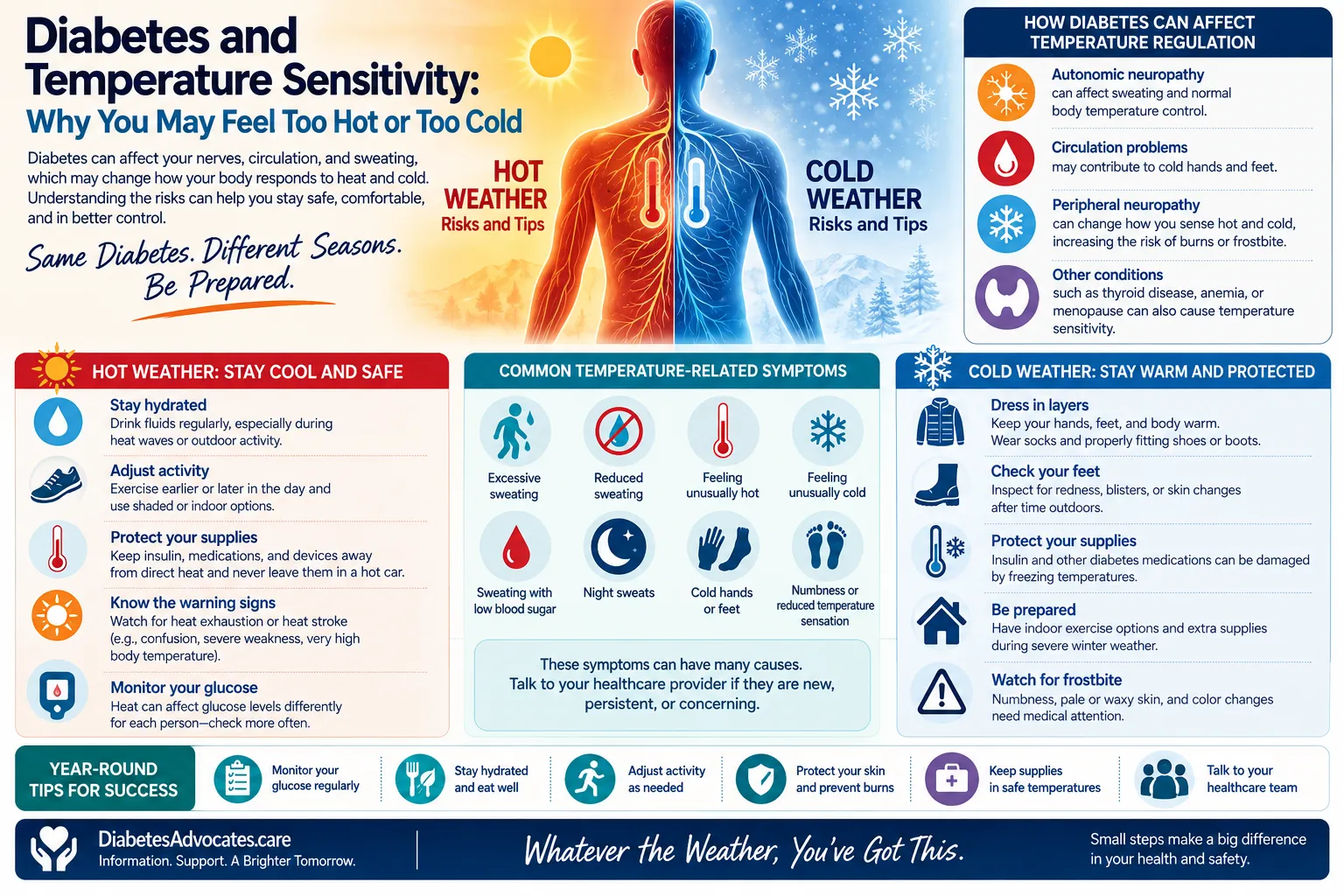
Have you ever felt unusually hot when everyone else seems comfortable—or found yourself reaching for a sweater when no one else is cold?
Temperature sensitivity can happen for many reasons, and diabetes may sometimes play a role.
The human body constantly works to maintain a relatively stable internal temperature. Blood vessels expand and narrow, sweat glands become more or less active, and the nervous system coordinates responses to changing conditions.
Diabetes can potentially interfere with some of these processes.
Long-term diabetes may damage the autonomic nerves involved in sweating and temperature regulation. Circulation problems can contribute to cold feet or hands, while peripheral neuropathy may make it harder to accurately sense temperature.
Blood glucose can also be affected by extreme weather. Heat may increase the risk of dehydration, while both hot and cold conditions can change daily routines, activity levels, food intake, and diabetes-management needs.
However, an important principle applies:
Feeling unusually hot or cold does not automatically mean diabetes is responsible.
Thyroid disease, anemia, infections, menopause, medications, circulation disorders, and many other conditions can affect temperature tolerance.
Understanding the possibilities can help you recognize patterns and know when to speak with your healthcare provider.
How Does the Body Control Temperature?
Your body uses several systems to keep its internal temperature within a safe range.
A region of the brain called the hypothalamus plays a central role in temperature regulation.
When your body becomes too warm, it can respond by:
- Increasing blood flow near the skin
- Producing sweat
- Encouraging behaviors such as seeking shade or drinking fluids
- When you become cold, your body may:
- Narrow blood vessels near the skin
- Reduce heat loss
- Trigger shivering
- Encourage you to seek warmth
The autonomic nervous system helps coordinate many of these responses automatically.
Because diabetes can damage autonomic nerves over time, some people may experience changes in normal temperature regulation.
Diabetes and Autonomic Neuropathy
Autonomic neuropathy occurs when nerves controlling automatic body functions become damaged.
Diabetes is one possible cause.
Autonomic nerves help regulate:
- Heart rate
- Blood pressure
- Digestion
- Bladder function
- Sexual function
- Sweating
Damage to nerves controlling sweat glands and blood vessels can change how the body responds to heat.
Some people may sweat too much in certain areas.
Others may sweat less than expected.
These changes can interfere with the body's ability to cool itself effectively.
Diabetes Can Change Sweating Patterns
Sweating is one of the body's main cooling mechanisms.
As sweat evaporates from the skin, heat is released.
Diabetes-related autonomic nerve damage may sometimes cause abnormal sweating patterns.
A person might notice:
- Excessive sweating
- Reduced sweating
- Sweating mainly on certain parts of the body
- Unusual sweating while eating
- Dry feet or legs combined with sweating elsewhere
- These symptoms vary widely.
Not everyone with diabetes develops sweating problems, and abnormal sweating can have many causes unrelated to diabetes.
Why Reduced Sweating Can Be a Problem
If sweat glands do not work normally, the body may have greater difficulty releasing heat.
This can become particularly important during:
- Hot weather
- Exercise
- Outdoor work
- Travel in warm climates
- Poorly ventilated environments
Someone who does not sweat much may mistakenly assume they are handling the heat well.
But a lack of sweating does not necessarily mean the body is staying cool.
If you have autonomic neuropathy or noticeably reduced sweating, discuss heat safety with your healthcare provider.
Excessive Sweating Can Occur Too
Some people with diabetes experience the opposite problem: excessive sweating.
Sweating may occur on the:
- Face
- Scalp
- Neck
- Upper body
Some people experience sweating while eating, sometimes called gustatory sweating.
Excessive sweating is not always caused by diabetic neuropathy. Hormonal changes, medications, anxiety, infections, thyroid problems, and other medical conditions can also cause increased sweating.
Persistent unexplained sweating deserves medical evaluation.
Sweating Can Be a Sign of Hypoglycemia
One of the most important connections between sweating and diabetes is low blood glucose, or hypoglycemia.
Possible symptoms of hypoglycemia include:
- Sweating
- Shakiness
- Hunger
- Fast heartbeat
- Dizziness
- Irritability
- Weakness
- Difficulty concentrating
- Confusion
- Symptoms vary from person to person.
If you use insulin or medications that can cause hypoglycemia, unexplained sudden sweating may be a reason to check your glucose.
Follow your individualized hypoglycemia treatment plan when glucose is low.
Severe hypoglycemia that causes seizures, loss of consciousness, or inability to safely self-treat is an emergency.
What About Night Sweats?
Waking with damp clothing or sheets can have many possible causes.
In someone taking insulin or certain glucose-lowering medications, overnight hypoglycemia is one possibility.
However, night sweats can also occur because of:
- A warm bedroom
- Heavy bedding
- Menopause or perimenopause
- Infections
- Medications
- Alcohol
- Hormonal disorders
- Other medical conditions
Do not automatically assume every episode of night sweating is a glucose problem.
If episodes happen repeatedly, glucose monitoring—particularly CGM data when available—may help determine whether lows are occurring at the same time.
Persistent unexplained night sweats should be discussed with a healthcare professional.
Why Might Someone With Diabetes Feel Cold?
Some people with diabetes report feeling unusually cold, particularly in their hands or feet.
There are several possible explanations.
One is reduced circulation.
Peripheral artery disease, or PAD, occurs when narrowed arteries reduce blood flow to the limbs, most commonly the legs.
Diabetes is an important risk factor for PAD.
Reduced blood flow may contribute to feet that feel cold, but PAD can cause other symptoms as well.
Warning Signs of Peripheral Artery Disease
Possible symptoms of PAD include:
- Leg pain or cramping during walking
- Foot or leg pain at rest in more advanced disease
- One foot feeling colder than the other
- Slow-healing sores
- Changes in skin color
- Reduced hair growth on the legs or feet
- Weak pulses in the feet
Some people with diabetes have few symptoms because neuropathy can reduce pain sensation.
Cold feet alone do not diagnose PAD.
If one foot is noticeably colder, paler, or more discolored than the other—or if you have wounds that are not healing—seek medical evaluation.
Neuropathy Can Alter Temperature Sensation
Peripheral neuropathy can change how the nerves in the feet and hands communicate with the brain.
Symptoms may include:
- Numbness
- Tingling
- Burning
- Shooting pain
- Increased sensitivity
- Reduced ability to sense temperature
- This means a person's feet may feel cold even when they are not actually cold.
The opposite can also occur: someone may not realize that an object or surface is dangerously hot.
This loss of temperature sensation creates an important safety issue.
Be Careful With Heating Pads
When feet feel cold, using a heating pad may seem like an obvious solution.
For someone with reduced sensation from diabetic neuropathy, however, direct heat can cause burns before the person realizes the skin is becoming injured.
Be cautious with:
- Heating pads
- Electric blankets
- Hot-water bottles
- Space heaters
- Fireplaces
- Heated foot warmers
- Avoid placing very hot objects directly against numb areas.
Warm socks and appropriate footwear are generally safer ways to keep feet comfortable.
Test Bath Water Carefully
Neuropathy can also make it difficult to judge bath or shower temperature accurately with the feet.
Water that feels merely warm to a numb foot may actually be hot enough to cause injury.
Check water temperature carefully before stepping in.
Using an unaffected body part or a thermometer may be safer if your temperature sensation is significantly reduced.
Burn prevention is an important but sometimes overlooked part of diabetic foot care.
Anemia Can Make You Feel Cold
Not every temperature problem is neurological or circulatory.
Anemia occurs when the blood does not have enough healthy red blood cells or hemoglobin to adequately carry oxygen.
Symptoms may include:
- Feeling cold
- Fatigue
- Weakness
- Dizziness
- Shortness of breath
- Pale skin
People with chronic kidney disease can sometimes develop anemia because damaged kidneys may produce less of a hormone needed for red blood cell production.
However, anemia has many possible causes.
Blood testing is needed for diagnosis.
If you are persistently cold and unusually tired, discuss these symptoms with your healthcare provider rather than assuming diabetes itself is the explanation.
Thyroid Disease Can Affect Temperature Tolerance
Thyroid disorders are another important consideration.
An underactive thyroid, or hypothyroidism, can cause symptoms such as:
- Feeling unusually cold
- Fatigue
- Dry skin
- Constipation
- Weight changes
- Slower heart rate
- An overactive thyroid, or hyperthyroidism, may cause:
- Heat intolerance
- Increased sweating
- Fast heartbeat
- Tremor
- Weight loss
- Anxiety or restlessness
Autoimmune thyroid disease is particularly relevant for people with Type 1 diabetes because autoimmune conditions can occur together.
Temperature intolerance accompanied by other thyroid symptoms deserves evaluation.
Menopause and Hot Flashes
For women in midlife, episodes of feeling suddenly hot or sweaty may be related to perimenopause or menopause rather than diabetes.
Hot flashes can cause:
- Sudden warmth
- Facial flushing
- Sweating
- Chills afterward
- Night sweats
Hormonal changes may also influence sleep, appetite, activity, and sometimes glucose patterns.
If you are experiencing new hot flashes or night sweats, discussing both menopause and diabetes management with your healthcare team may help identify appropriate strategies.
How Hot Weather Can Affect Diabetes
Hot weather can make diabetes management more complicated.
High temperatures can increase fluid loss through sweating.
If that fluid is not replaced appropriately, dehydration can develop.
Dehydration can make glucose more difficult to manage and may become particularly concerning when combined with illness or prolonged heat exposure.
People with diabetes should pay extra attention to hydration during:
- Heat waves
- Outdoor exercise
- Yard work
- Beach trips
- Outdoor events
- Travel to hot climates
Individual fluid needs vary, especially for people with kidney disease or heart failure.
Follow any fluid recommendations provided by your healthcare team.
Heat May Change Glucose Patterns
There is no single glucose response to hot weather.
Some people notice their glucose runs higher during extreme heat.
Others may experience lower glucose, particularly if heat changes insulin absorption, appetite, or activity.
The safest approach is to avoid assuming what heat will do to your glucose.
Instead:
- Monitor more closely when conditions change
- Pay attention to CGM trends if you use one
- Carry fast-acting carbohydrate if you are at risk of hypoglycemia
- Stay hydrated appropriately
Adjust treatment only according to your established diabetes plan or healthcare team's guidance
Patterns are more useful than assumptions.
Heat Exhaustion Can Resemble Glucose Problems
Heat-related illness and glucose abnormalities can sometimes cause similar symptoms.
Heat exhaustion may cause:
- Heavy sweating
- Weakness
- Dizziness
- Headache
- Nausea
- Fast heartbeat
- Muscle cramps
- Hypoglycemia can also cause sweating, weakness, dizziness, and confusion.
- Hyperglycemia and dehydration may cause thirst, fatigue, and weakness.
When symptoms occur in hot weather, checking glucose can provide useful information—but do not ignore signs of heat illness simply because your glucose is normal.
Know the Warning Signs of Heat Stroke
Heat stroke is a medical emergency.
Possible warning signs include:
- Very high body temperature
- Confusion
- Altered behavior
- Fainting
- Seizures
- Severe weakness
- Hot skin
- Sweating may be present or absent.
- Call emergency services if heat stroke is suspected.
Move the person to a cooler location and begin appropriate cooling while waiting for medical help.
Diabetes Supplies Need Protection From Heat Too
Your body is not the only thing affected by temperature.
Diabetes medications and devices can also be sensitive to extreme heat.
Insulin can lose effectiveness if exposed to inappropriate temperatures.
Do not leave insulin:
- In a hot parked car
- On a sunny windowsill
- Directly in sunlight
- Beside a heater
Follow the storage instructions supplied with your specific insulin or medication.
Don't Freeze Insulin
Keeping insulin cool does not mean freezing it.
Insulin that has been frozen should generally not be used, even after it thaws.
When traveling, avoid placing insulin directly against ice or frozen gel packs unless the storage system is specifically designed to prevent freezing.
The manufacturer's instructions for your exact insulin product should guide storage.
CGMs, Pumps, and Heat
Continuous glucose monitors, insulin pumps, and other diabetes devices also have recommended operating and storage temperatures.
Extreme heat can potentially affect:
- Adhesive performance
- Sensors
- Pump components
- Insulin stored inside a pump
- Sweat may also make adhesives loosen more quickly.
Before traveling or spending prolonged time outdoors, check the manufacturer's recommendations for your particular device.
Sunburn Can Affect Glucose
A significant sunburn is an injury to the body.
Like other physical stressors, it may affect glucose levels in some people.
Sunburn can also increase fluid needs and make hot-weather activities more uncomfortable.
Use appropriate sun protection, including:
- Shade
- Protective clothing
- Sunscreen
- Limiting prolonged exposure during intense sunlight
Protecting your skin is part of overall health, whether or not you have diabetes.
Create a Hot-Weather Diabetes Kit
During hot weather, consider keeping essential supplies together.
Depending on your treatment, this might include:
- Glucose meter and test strips
- CGM supplies
- Insulin or other medication
- Appropriate insulated medication storage
- Fast-acting carbohydrate
- Water
- Medical identification
- Backup diabetes supplies
- If you are traveling, carry more supplies than you expect to need.
Avoid leaving the kit inside a parked vehicle where temperatures can rise rapidly.
Don't Assume Temperature Sensitivity Is “Just Diabetes”
Feeling too hot or too cold can provide useful information about your health.
Possible causes range from relatively simple environmental factors to:
- Hypoglycemia
- Autonomic neuropathy
- Peripheral neuropathy
- Circulation problems
- Thyroid disease
- Anemia
- Menopause
- Infection
- Medication effects
- New, persistent, severe, or one-sided symptoms deserve medical attention.
Identifying the cause is more useful than simply trying to tolerate the discomfort.
How Cold Weather Can Affect Diabetes Management
Hot weather is not the only temperature challenge for people with diabetes.
Cold weather can also change everyday diabetes management.
During winter, people may:
- Spend less time exercising outdoors
- Eat differently
- Experience changes in routine
- Become sick more frequently
- Have difficulty keeping hands warm enough for glucose testing
- Expose medications or devices to freezing temperatures
These factors can influence glucose patterns even when cold itself is not directly responsible.
Instead of expecting a particular glucose response, monitor your individual patterns when the weather changes.
Does Cold Weather Raise Blood Sugar?
There is no universal response.
Some people notice higher glucose during colder months. This may be related to reduced physical activity, illness, stress, seasonal food choices, or other changes.
Other people may not notice a meaningful difference.
If your glucose consistently changes with the seasons, review the pattern with your diabetes care team rather than automatically changing medication on your own.
A CGM or glucose log can help identify whether the change is temporary or persistent.
Cold Hands Can Make Finger-Stick Testing Difficult
Cold temperatures reduce blood flow near the skin, which can make obtaining a blood sample from a fingertip more difficult.
If your hands are cold:
- Move indoors when possible
- Warm your hands gradually
- Wash them with comfortably warm water
- Dry them completely
- Gently move or massage your hands
Avoid using dangerously hot water or placing numb hands directly against intense heat.
Always follow the instructions for your glucose meter.
Winter Foot Protection Is Especially Important
Cold weather deserves extra attention when you have diabetic neuropathy or circulation problems.
Numbness can make it harder to recognize that your feet are becoming excessively cold.
At the same time, reduced circulation may make it more difficult for the feet to stay warm.
Wear properly fitting:
- Socks
- Shoes
- Boots
Footwear should provide warmth without being so tight that it causes pressure or restricts circulation.
After spending time outdoors, inspect your feet for:
- Redness
- Blisters
- Skin changes
- Cracks
- Swelling
- Sores
- Unusual discoloration
If you have reduced sensation, visual inspection becomes particularly important.
Frostbite Is a Serious Risk
Frostbite occurs when skin and underlying tissues freeze.
The fingers, toes, nose, and ears are particularly vulnerable.
Possible warning signs include:
- Numbness
- Pale or waxy skin
- Unusual firmness
- Loss of sensation
- Skin color changes
- Neuropathy may make frostbite more difficult to recognize early.
If frostbite is suspected, seek medical care. Do not rub the affected tissue or use intense direct heat to warm it.
Avoid Warming Numb Feet Too Quickly
Coming indoors with freezing feet may create an urge to place them immediately beside a heater.
That can be dangerous if sensation is reduced.
Avoid warming numb feet directly with:
- Heating pads
- Radiators
- Space heaters
- Fireplaces
- Very hot water
- Gradual warming in a safe indoor environment is preferable.
If the skin remains unusually pale, blue, painful, numb, blistered, or otherwise abnormal, seek medical evaluation.
Protect Insulin From Freezing Temperatures
Insulin is sensitive to temperature extremes.
Just as excessive heat can damage insulin, freezing can also make it unusable.
During winter, avoid leaving insulin:
- In a parked vehicle
- In checked luggage where temperatures may be extreme
- Outdoors
- Directly against frozen cooling packs
- In an unheated location for prolonged periods
If you believe insulin has frozen, follow the manufacturer's instructions and obtain replacement insulin when appropriate.
Do not assume it becomes safe again simply because it has thawed.
Other Diabetes Medications Need Proper Storage Too
Insulin is not the only medication with storage requirements.
Injectable diabetes medications and other products may have specific temperature ranges.
Some medications require refrigeration before use, while others can remain at room temperature for a defined period.
Always check the prescribing information for your specific product.
When traveling, a pharmacist can also help explain appropriate storage.
Protect Glucose Meters and Test Strips
Glucose meters and test strips can also be affected by temperatures outside their recommended range.
Very hot or very cold conditions may interfere with reliable operation.
Keep supplies:
- Dry
- Protected from direct sunlight
- Within the manufacturer's recommended temperature range
- Away from extreme heat or cold
If a meter has been exposed to an extreme temperature, allow it to return to an appropriate operating environment according to its instructions before testing.
Keep CGMs and Pumps Within Their Recommended Ranges
CGMs and insulin pumps have manufacturer-specific operating and storage recommendations.
Extreme weather may affect:
- Sensors
- Transmitters
- Pump components
- Batteries
- Adhesives
- Insulin inside pump tubing or reservoirs
In winter, wearing a pump underneath clothing may help protect it from extreme outdoor temperatures.
In hot weather, sweat may loosen sensor or infusion-set adhesive.
Consult the manufacturer's guidance for your specific device rather than relying on a general temperature rule.
Exercise Safely in Extreme Temperatures
Physical activity remains important throughout the year, but extreme temperatures may require adjustments.
During hot weather, consider:
- Exercising earlier or later in the day
- Choosing shaded areas
- Moving workouts indoors
- Drinking fluids appropriately
- Monitoring glucose more closely
- During very cold weather, consider:
- Indoor walking
- Home exercise
- A gym or community center
- Dressing in appropriate layers
- Protecting hands and feet
People using insulin or medications that can cause hypoglycemia should carry an appropriate source of fast-acting carbohydrate.
Temperature Can Change Your Exercise Routine—and Your Glucose
Sometimes the weather affects glucose indirectly.
For example, a person who normally walks for 30 minutes every afternoon may stop exercising during a heat wave or snowstorm.
Glucose may then rise because activity has decreased.
Another person may spend several hours shoveling snow and experience lower glucose because of increased physical activity.
When glucose changes during extreme weather, consider what else changed that day.
Weather is often only one part of the explanation.
Shoveling Snow Can Be Strenuous
Snow removal can involve surprisingly intense physical exertion.
Cold temperatures also place additional demands on the cardiovascular system.
People with diabetes have an increased risk of cardiovascular disease, so those with known heart disease, significant risk factors, or exercise restrictions should follow their healthcare provider's advice regarding strenuous activities such as snow shoveling.
Pay attention to warning signs including:
- Chest pressure
- Shortness of breath
- Dizziness
- Unusual weakness
- Pain spreading to the arm, jaw, back, or neck
Stop the activity and seek urgent medical help for possible heart attack symptoms.
Dehydration Is Not Only a Summer Problem
People often associate dehydration with hot weather, but dehydration can occur during winter too.
Cold air can be dry, and people may not feel as thirsty as they do in summer.
Indoor heating can also contribute to a dry environment.
Signs of dehydration may include:
- Thirst
- Dry mouth
- Dark urine
- Reduced urination
- Dizziness
- Weakness
- Fluid needs differ from person to person.
People with kidney disease, heart failure, or other conditions may have individualized fluid recommendations.
Illness Can Complicate Temperature and Glucose
Fever is one of the body's responses to infection.
Illness may also raise stress hormones and make glucose harder to manage.
People with diabetes should have a sick-day plan that explains:
- How frequently to monitor glucose
- When ketone testing is appropriate
- How to manage medications
- How to stay hydrated
- When to call the healthcare team
- When to seek urgent care
A fever accompanied by significant illness should not simply be considered another form of “temperature sensitivity.”
It may signal an infection requiring medical evaluation.
Chills Can Be Important Too
Feeling suddenly cold or experiencing shaking chills can occur with infection even when the room is warm.
Other causes are possible as well.
Seek medical advice for significant chills accompanied by symptoms such as:
- Fever
- Confusion
- Severe weakness
- Difficulty breathing
- Persistent vomiting
- Painful urination
- New wounds or skin infections
People with diabetes should be particularly attentive to infections because some can progress quickly.
Medication Side Effects Can Affect Temperature Sensation
Not every episode of sweating, flushing, or feeling cold is directly caused by diabetes.
Medications used for diabetes and unrelated conditions may contribute to symptoms such as:
- Sweating
- Flushing
- Dizziness
- Changes in circulation
- Hypoglycemia
If temperature-related symptoms began after starting or changing a medication, mention the timing to your healthcare provider or pharmacist.
Do not stop prescribed medication without appropriate medical guidance.
Check Glucose When Symptoms Could Be a Low
If you suddenly become:
- Sweaty
- Shaky
- Weak
- Dizzy
- Confused
- Anxious
- Very hungry
and you use insulin or another medication capable of causing hypoglycemia, check your glucose when possible.
CGM users should also be aware that symptoms and sensor readings do not always perfectly match. Follow your diabetes care plan regarding confirmatory finger-stick testing when appropriate.
Treat confirmed or suspected hypoglycemia according to your individualized plan.
Hypoglycemia and Cold Environments Can Be a Dangerous Combination
Severe hypoglycemia can impair thinking and judgment.
Extreme cold can do the same.
Together, they can make it harder for someone to recognize danger, seek shelter, or treat themselves appropriately.
When participating in outdoor winter activities:
- Carry glucose supplies
- Keep them accessible
- Tell companions about your diabetes when appropriate
- Carry medical identification
- Keep communication available
Preparation becomes particularly important when hiking, skiing, camping, or traveling far from immediate medical help.
Hot Cars Are Dangerous for People and Diabetes Supplies
A parked vehicle can heat up quickly.
Never leave a child, older adult, pet, or anyone unable to safely exit a vehicle unattended in hot conditions.
Likewise, avoid storing insulin, meters, test strips, or other temperature-sensitive diabetes supplies in a hot vehicle.
A car's glove compartment or trunk is not a reliable long-term medication storage environment.
Travel Requires Temperature Planning
If you are traveling somewhere much hotter or colder than home, plan for the destination before leaving.
Consider:
- Expected temperatures
- Medication storage
- Backup diabetes supplies
- Hydration
- Appropriate clothing
- Foot protection
- Access to food
- Hypoglycemia treatment
- Charging supplies for devices
Carry essential diabetes medication and supplies with you rather than relying entirely on checked luggage.
Create a Heat-Wave Plan
During unusually hot weather:
- Spend time in air-conditioned or cooler environments when possible
- Avoid strenuous activity during the hottest part of the day
- Monitor glucose more frequently if your usual patterns change
- Stay appropriately hydrated
- Protect insulin and devices from heat
- Carry hypoglycemia treatment
- Know the symptoms of heat exhaustion and heat stroke
People who live alone, have mobility problems, or have autonomic neuropathy may benefit from additional planning during severe heat.
Create a Cold-Weather Plan
During freezing weather:
- Wear layers
- Protect your hands, feet, ears, and face
- Keep diabetes medications from freezing
- Carry glucose supplies close to your body when appropriate
- Avoid prolonged exposure
- Inspect numb feet carefully afterward
- Have an indoor exercise alternative
- Keep emergency supplies available during severe storms
- Preparation can prevent small inconveniences from becoming medical problems.
- When Feeling Cold Needs Medical Evaluation
- Occasionally feeling cold is common.
Persistent or unusual cold intolerance deserves more attention, particularly when accompanied by:
- Significant fatigue
- Shortness of breath
- Pale skin
- Unexplained weight changes
- Constipation
- Slow-healing wounds
- One unusually cold foot
- Skin color changes
- Leg pain with walking
These symptoms may point toward anemia, thyroid disease, circulation problems, or another condition requiring evaluation.
When Feeling Hot Needs Medical Evaluation
Persistent heat intolerance or unexplained sweating should also be discussed with a healthcare professional, especially when accompanied by:
- Racing heartbeat
- Tremor
- Unexplained weight loss
- Persistent night sweats
- Fever
- Severe weakness
- Recurrent hypoglycemia
- Major changes in sweating patterns
- The goal is to determine the cause rather than simply blaming diabetes.
- When Is Temperature Exposure an Emergency?
Seek emergency medical attention for symptoms suggesting serious heat- or cold-related illness.
Possible Heat Stroke
Warning signs may include:
- Confusion
- Fainting
- Seizures
- Very high body temperature
- Severe weakness
- Altered behavior
- Possible Severe Hypothermia
- Warning signs may include:
- Intense or eventually absent shivering
- Confusion
- Slurred speech
- Extreme drowsiness
- Poor coordination
- Slow breathing
- Loss of consciousness
- Possible Frostbite
- Seek prompt care for skin that becomes:
- Numb
- Hard
- Waxy
- Very pale
- Blue or unusually discolored
- Blistered after cold exposure
Extreme-temperature emergencies require medical treatment regardless of whether diabetes is present.
A Practical Year-Round Temperature Safety Checklist
Managing diabetes through changing seasons does not need to be complicated.
Remember these basics:
Know your glucose patterns. Monitor more closely when weather, activity, eating, or routines change.
Protect your medications. Avoid exposing insulin and other temperature-sensitive products to excessive heat or freezing.
Protect your devices. Follow manufacturer temperature recommendations for pumps, CGMs, meters, and test strips.
Protect your feet. Neuropathy can make dangerous temperatures harder to detect.
Stay appropriately hydrated. Heat increases fluid loss, but dehydration can happen in winter too.
Prepare for hypoglycemia. Carry treatment if you use medications that can cause lows.
Dress for the environment. Use breathable clothing in heat and protective layers in cold.
Know emergency symptoms. Heat stroke, hypothermia, frostbite, and severe hypoglycemia require prompt action.
Discuss persistent temperature intolerance. Feeling unusually hot or cold may have a treatable cause.
Frequently Asked Questions
Can diabetes make you feel cold all the time?
Diabetes itself does not necessarily cause constant coldness. However, neuropathy, circulation problems, kidney-related anemia, and other conditions associated with diabetes may contribute. Thyroid disease and many unrelated conditions can also cause cold intolerance.
Why are my feet always cold with diabetes?
Cold-feeling feet may result from altered nerve sensation or reduced circulation. Sometimes the feet only feel cold because neuropathy changes temperature perception. A foot that is truly much colder, paler, or more discolored than the other should be medically evaluated.
Can diabetes make you feel unusually hot?
Diabetic autonomic neuropathy can interfere with sweating and normal temperature regulation. Hypoglycemia can also cause sudden sweating. However, menopause, thyroid disease, medications, infection, and many other conditions can cause heat intolerance.
Why do I sweat when my blood sugar is low?
Hypoglycemia activates the body's counter-regulatory response, which can cause symptoms such as sweating, shakiness, hunger, and a rapid heartbeat.
Are night sweats a sign of low blood sugar?
They can be, particularly in someone using insulin or medications that can cause hypoglycemia. But night sweats have many other possible causes. Recurrent episodes should be investigated rather than automatically attributed to glucose.
Can hot weather raise blood sugar?
Glucose responses to heat vary. Dehydration, changes in activity, food intake, illness, and medication absorption can all influence glucose. Some people experience higher readings, while others may experience lower readings.
Can heat cause low blood sugar?
Heat may contribute indirectly in some situations, particularly when combined with exercise, reduced food intake, or insulin use. People at risk for hypoglycemia should monitor their individual response and carry treatment.
Can I use a heating pad if I have diabetic neuropathy?
Direct heating devices can cause burns when sensation is reduced. People with neuropathy should be especially cautious with heating pads, electric blankets, hot-water bottles, and other concentrated heat sources.
What happens if insulin freezes?
Insulin exposed to freezing temperatures can be damaged and should generally not be used. Follow the storage instructions for your specific insulin and contact a pharmacist or manufacturer if you are unsure whether it remains usable.
Should I drink more water during hot weather?
Hot conditions can increase fluid needs, but the appropriate amount varies. People with kidney disease, heart failure, or fluid restrictions should follow individualized medical guidance.
When should temperature sensitivity concern me?
Talk with your healthcare provider if temperature intolerance is new, persistent, severe, one-sided, or accompanied by symptoms such as unexplained weight change, extreme fatigue, abnormal sweating, wounds, circulation changes, fever, or recurrent hypoglycemia.
Key Takeaways
Diabetes can influence temperature regulation in several ways, but feeling too hot or too cold should not automatically be blamed on diabetes.
Autonomic neuropathy may alter sweating and the body's response to heat.
Peripheral neuropathy can change temperature sensation, making it harder to recognize dangerously hot or cold surfaces.
Circulation problems may contribute to cold feet and can become particularly important when one limb is noticeably colder or discolored.
Hypoglycemia can cause sudden sweating and may sometimes contribute to night sweats.
Hot weather increases the risk of dehydration and heat-related illness, while cold weather creates concerns such as frostbite and difficulty protecting numb feet.
Insulin, injectable medications, glucose meters, test strips, CGMs, and pumps also need protection from temperature extremes.
People with reduced sensation should avoid concentrated heat sources such as heating pads or very hot water because burns can occur without being immediately noticed.
Persistent temperature intolerance may have other causes, including thyroid disease, anemia, menopause, infection, medications, or cardiovascular and circulation problems.
Most importantly, prepare for the environment rather than letting extreme weather catch you—and your diabetes supplies—unprepared.
Staying safe in the heat and cold is another practical part of whole-person diabetes management.
DiabetesAdvocates.care does not provide medical advice, diagnosis, or treatment. Please consult with your healthcare provider for questions and personalized medical advice.