
Diabetes and Tingling Hands: Why Your Fingers May Feel Numb or Tingly
You wake up and your fingers feel like they have fallen asleep.
Maybe there is a prickling sensation in your fingertips. Perhaps your hands burn at night, feel unusually numb, or become uncomfortable when you hold your phone.
If you have diabetes, it is easy to assume:
“This must be diabetic neuropathy.”
Sometimes it is.
Diabetes can damage nerves and cause burning, tingling, numbness, pain, or weakness. Peripheral neuropathy usually affects the feet and legs first but can eventually involve the hands and arms as well.
But diabetes is not the only possible explanation.
Carpal tunnel syndrome, compression of the ulnar nerve, neck problems, vitamin deficiencies, thyroid disease, kidney disease, medications, injuries, and other neurological conditions can produce similar symptoms.
In fact, current American Diabetes Association guidance emphasizes an important point:
Diabetic neuropathy is a diagnosis of exclusion.
In other words, having diabetes should not prevent healthcare professionals from considering other potentially treatable causes of nerve symptoms.
What Does Nerve Tingling Feel Like?
People describe abnormal nerve sensations in many different ways.
You might experience:
- Pins and needles
- Tingling
- Burning
- Numbness
- Electrical sensations
- Shooting pain
- Prickling
- Increased sensitivity
- Reduced ability to feel touch
- Difficulty distinguishing hot from cold
Some people experience pain when something lightly touches the skin.
Others experience the opposite problem: they barely feel anything.
Weakness can also occur when nerves controlling muscles are affected.
Can Diabetes Cause Tingling in Your Hands?
Yes.
Over time, elevated glucose and other metabolic factors associated with diabetes can damage nerves and the small blood vessels that supply them.
This is known as diabetic neuropathy.
Several types of neuropathy can occur with diabetes, including:
- Peripheral neuropathy
- Autonomic neuropathy
- Focal neuropathy
- Proximal neuropathy
For tingling in the hands, peripheral neuropathy and focal nerve problems are particularly relevant.
Diabetic Peripheral Neuropathy Usually Starts in the Feet
One important clue is where symptoms begin.
The most common form of diabetic peripheral neuropathy is generally length-dependent.
That means the longest nerves tend to become affected first.
Because the nerves traveling to your feet are longer than those traveling to your hands, symptoms commonly begin in the:
Toes → feet → lower legs
As neuropathy progresses, symptoms may eventually involve the:
Fingers → hands → arms
This pattern is sometimes described as a stocking-and-glove distribution.
Hand Tingling Without Foot Symptoms Deserves a Closer Look
If your fingers suddenly begin tingling but your feet have no neuropathy symptoms, diabetes should not automatically receive the blame.
Other explanations may be more likely.
For example:
- Carpal tunnel syndrome
- Ulnar nerve compression
- Cervical radiculopathy
- Vitamin B12 deficiency
- Injury
This does not mean diabetic neuropathy is impossible.
It means the pattern deserves evaluation.
The ADA specifically recommends considering alternative causes when neuropathy is acute, asymmetric, involves significant motor weakness, or otherwise does not follow the expected pattern.
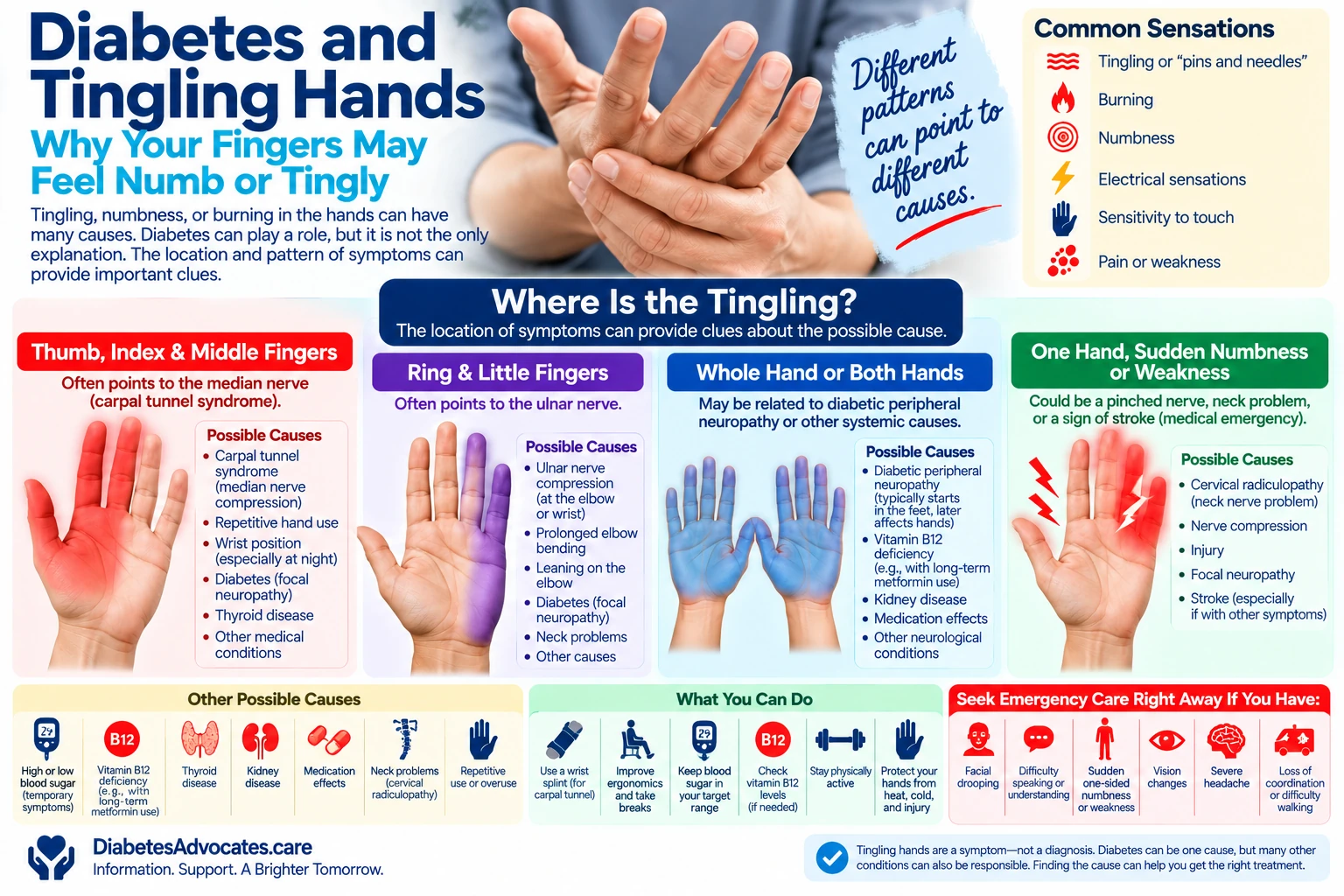
The Location of Tingling Can Provide Clues
Not every nerve supplies every finger.
That means which fingers are tingling can sometimes help healthcare professionals determine which nerve may be involved.
A simple hand map can be useful.
Thumb, Index, and Middle Fingers
Tingling involving the:
- Thumb
- Index finger
- Middle finger
- Part of the ring finger
may suggest compression of the median nerve, particularly at the wrist.
This is the nerve involved in carpal tunnel syndrome.
Ring and Little Fingers
Tingling involving mainly the:
- Little finger
- Ring finger
may suggest irritation or compression of the ulnar nerve.
Both Hands More Symmetrically
More symmetrical symptoms affecting both hands—especially when neuropathy is already present in the feet—may be more consistent with a generalized peripheral neuropathy.
These patterns are clues, not home diagnostic tests.
Diabetes and Carpal Tunnel Syndrome
Carpal tunnel syndrome occurs when the median nerve becomes compressed as it passes through a narrow space in the wrist called the carpal tunnel.
Possible symptoms include:
- Tingling
- Numbness
- Pain
- Burning
- Hand weakness
- Reduced grip strength
Symptoms commonly involve the thumb, index finger, and middle finger.
NIDDK identifies carpal tunnel syndrome as the most common nerve-entrapment syndrome occurring as a focal neuropathy in people with diabetes.
Carpal Tunnel May Be More Common Than You Realize
Diabetes can increase susceptibility to nerve compression.
NIDDK reports that while fewer than 10% of people with diabetes experience symptoms of carpal tunnel syndrome, approximately 25% have some degree of nerve compression at the wrist.
That means hand tingling in someone with diabetes may involve both metabolic nerve damage and mechanical nerve compression.
Carpal Tunnel Often Feels Worse at Night
People with carpal tunnel frequently notice symptoms while sleeping or after waking.
They may:
- Wake with numb fingers
- Shake the hand for relief
- Feel tingling while holding a phone
- Experience symptoms while driving
- Have trouble gripping objects
As the condition progresses, weakness may become more noticeable.
Someone may start dropping:
- Cups
- Keys
- Utensils
- Phones
Repeatedly dropping objects deserves attention.
Why Does Position Matter?
Wrist position can influence pressure on the median nerve.
Keeping the wrist bent for long periods may aggravate symptoms.
This can happen while:
- Sleeping
- Typing
- Holding a phone
- Driving
- Using tools
If symptoms clearly change with wrist position, mention this during your medical evaluation.
It can be an important clue.
Tingling in the Pinky and Ring Finger May Be Different
The ulnar nerve travels from the neck through the arm and passes near the inside of the elbow—the area commonly called the “funny bone.”
Compression or irritation of this nerve can cause:
- Tingling in the little finger
- Tingling in the ring finger
- Numbness
- Hand weakness
NIDDK lists ulnar entrapment among focal neuropathies that can occur in people with diabetes.
Your Elbow Position May Matter
Keeping the elbow bent for long periods can sometimes aggravate ulnar nerve symptoms.
Examples include:
- Sleeping with the elbow tightly bent
- Holding a phone for extended periods
- Resting the elbow on a hard desk
- Leaning on an armrest
Again, the pattern can provide clues.
Could the Problem Actually Be in Your Neck?
Sometimes hand tingling begins farther upstream.
Nerves that travel into your hands originate from the spinal cord in the neck.
A problem involving the cervical spine can irritate or compress a nerve root.
This is sometimes called cervical radiculopathy.
Symptoms may include:
- Neck pain
- Shoulder pain
- Arm pain
- Tingling
- Numbness
- Weakness
Symptoms may follow a particular path down one arm into certain fingers.
One-Sided Symptoms Deserve Attention
Typical diabetic peripheral neuropathy is often relatively symmetrical.
That means symptoms frequently occur on both sides.
If one hand is significantly more affected than the other, healthcare professionals may consider:
- Nerve entrapment
- Cervical radiculopathy
- Injury
- Focal neuropathy
- Other neurological conditions
The ADA specifically identifies asymmetry as one feature that can justify further neurological evaluation.
Sudden Numbness Is Different From Gradual Tingling
Diabetic peripheral neuropathy generally develops gradually.
Symptoms often evolve over months or years.
Sudden numbness—especially when it affects one side of the body—requires a different level of attention.
Sudden neurological symptoms can occur with stroke or another acute neurological condition.
Know the Stroke Warning Signs
Seek emergency medical help for sudden:
- Facial drooping
- Arm weakness
- One-sided numbness
- Difficulty speaking
- Difficulty understanding speech
- Severe loss of coordination
- Major vision changes
Do not wait to see whether glucose improves the symptoms.
And do not assume sudden numbness is simply diabetic neuropathy.
Can Low Blood Sugar Cause Tingling?
Hypoglycemia can produce neurological and adrenergic symptoms.
Some people describe unusual sensations, including tingling—particularly around the lips or mouth—during a low.
But recurring numbness confined to particular fingers is more suggestive of a nerve problem than ordinary hypoglycemia.
If tingling occurs while glucose is low, treat the hypoglycemia according to your established plan.
If the tingling continues when glucose has returned to normal, another explanation may need investigation.
What About High Blood Sugar?
Chronically elevated glucose can contribute to nerve damage over time.
But a single high glucose reading does not usually explain a persistent numb finger.
Think about the difference between:
Long-term nerve damage associated with diabetes
and
temporary symptoms happening during one glucose excursion.
If hand numbness or tingling continues regardless of your current glucose reading, it deserves evaluation as a neurological symptom.
Vitamin B12 Deficiency Can Mimic Neuropathy
Vitamin B12 is important for healthy nerve function and blood-cell production.
Deficiency can cause neurological symptoms such as:
- Tingling
- Numbness
- Weakness
- Balance problems
This matters particularly in diabetes because long-term metformin use can be associated with vitamin B12 deficiency.
The 2026 ADA Standards recommend considering periodic B12 assessment in people receiving long-term metformin, especially when anemia or peripheral neuropathy is present.
Don't Assume Metformin Must Be Stopped
Learning about the B12 connection can lead people to think:
“My metformin is damaging my nerves.”
That conclusion is too simplistic.
Metformin is an important and widely used diabetes medication.
If B12 deficiency is suspected, the appropriate response is generally to test and address the deficiency, not automatically stop metformin.
Discuss the results and treatment options with your healthcare provider.
Should Everyone Taking Metformin Take B12 Supplements?
Not necessarily.
Supplement needs depend on factors such as:
- B12 level
- Diet
- Duration of metformin treatment
- Anemia
- Neurological symptoms
- Other medical conditions
Taking large amounts of supplements without knowing whether you are deficient may not address the actual cause of your symptoms.
Testing can help.
Other Nutritional Deficiencies Can Affect Nerves
Vitamin B12 is not the only nutritional factor associated with neuropathy.
The ADA notes that clinicians may need to consider other nutritional deficiencies, including copper deficiency in certain situations such as after metabolic surgery.
This is another reason unexplained neuropathy deserves proper evaluation rather than automatically being labeled “diabetic.”
Thyroid Disease Can Also Be Part of the Evaluation
Hypothyroidism can sometimes contribute to neuropathic symptoms or increase susceptibility to nerve compression.
A clinician evaluating unexplained numbness or tingling may therefore consider thyroid testing.
NIDDK lists thyroid disease among the alternative causes clinicians may investigate when evaluating peripheral neuropathy.
Kidney Disease and Neuropathy
Advanced kidney disease can also contribute to peripheral nerve problems.
Because diabetes is a major risk factor for chronic kidney disease, kidney function may be considered during the evaluation of neuropathy.
This does not mean tingling hands automatically indicate kidney failure.
It means kidney health is one part of the broader picture.
Alcohol Can Affect Peripheral Nerves
Heavy alcohol use can damage nerves and may contribute to nutritional deficiencies.
When evaluating neuropathy, healthcare professionals may ask about alcohol intake.
This information is medically relevant and helps distinguish among possible causes.
Some Medications Can Affect Nerves
Certain medications can cause peripheral neuropathy.
One well-known group includes some chemotherapy drugs.
Other medications may occasionally contribute as well.
If tingling began after a new medication or treatment, mention the timing to your healthcare provider.
Do not stop prescribed medication without appropriate guidance.
What About Anxiety and Hyperventilation?
Anxiety does not explain every tingling sensation.
However, rapid breathing during anxiety or panic can sometimes cause temporary tingling around the:
- Mouth
- Fingers
- Hands
This often occurs with other symptoms such as:
- Rapid breathing
- Chest tightness
- Lightheadedness
- A feeling of panic
Persistent or localized numbness should not automatically be attributed to anxiety.
Hand Weakness Is More Than Tingling
Pay attention when sensory symptoms are accompanied by weakness.
Possible clues include:
- Dropping objects
- Difficulty opening jars
- Trouble turning keys
- Difficulty buttoning clothing
- Weak grip
- Difficulty writing
- Trouble pinching objects between the fingers
Weakness can indicate more significant nerve involvement or another neurological problem.
The ADA notes that prominent motor involvement is one reason further evaluation may be needed rather than simply assuming typical diabetic peripheral neuropathy.
Numbness Can Be Dangerous Even When It Doesn't Hurt
Pain often motivates people to protect an injured body part.
Numbness removes that warning system.
If sensation in your hands is reduced, you may not immediately notice:
- Burns
- Cuts
- Blisters
- Splinters
- Pressure injuries
- Extremely hot objects
That makes prevention particularly important.
Be Careful Around Heat
If your temperature sensation is reduced, test water temperature carefully before:
- Washing dishes
- Bathing
- Showering
- Using a hot tub
Be cautious with:
- Heating pads
- Hot cookware
- Space heaters
- Hot-water bottles
A numb hand can be burned before the person realizes something is too hot.
Protect Your Hands During Everyday Tasks
Depending on the severity of sensation loss, useful precautions may include:
- Wearing appropriate gloves for gardening
- Using protection while handling sharp objects
- Checking your hands after manual work
- Treating small cuts promptly
- Avoiding prolonged pressure on numb areas
The goal is not to stop using your hands.
It is to compensate for reduced warning sensation.
Look at Your Hands, Not Just Feel Them
If sensation is reduced, visual inspection becomes more important.
Check for:
- Cuts
- Blisters
- Burns
- Swelling
- Redness or discoloration
- Cracked skin
- Signs of infection
A painless injury can still be significant.
When Should Tingling Be Evaluated?
Consider discussing hand tingling with your healthcare provider when it:
- Persists
- Repeatedly returns
- Is getting worse
- Interferes with sleep
- Causes pain
- Produces numbness
- Is associated with weakness
- Makes you drop objects
- Occurs primarily in one hand
- Affects particular fingers repeatedly
- Develops despite otherwise stable glucose management
Do not wait for symptoms to become severe before mentioning them.
How Do Doctors Begin Evaluating Tingling Hands?
The first step is usually not an advanced scan.
A clinician may ask:
- Which fingers are affected?
- Is one hand or both involved?
- Do your feet also have symptoms?
- When did the symptoms begin?
- Are they worse at night?
- Does wrist or elbow position affect them?
- Do you have neck pain?
- Is there weakness?
- What medications do you take?
- Do you take metformin?
- Have you had bariatric or metabolic surgery?
- Do you drink alcohol?
- Are symptoms progressing?
The answers can narrow the possibilities considerably.
Physical Examination Provides More Clues
The clinician may examine:
- Strength
- Reflexes
- Sensation
- Wrist movement
- Hand muscles
- Neck movement
- Coordination
Different patterns point toward different nerves or neurological conditions.
Blood Tests May Look for Treatable Causes
Depending on the situation, testing may include evaluation for:
- Vitamin B12 deficiency
- Thyroid disease
- Kidney dysfunction
- Other metabolic or nutritional abnormalities
NIDDK specifically notes that clinicians may use blood testing to look for thyroid problems, kidney disease, and low B12 when investigating peripheral neuropathy.
Finding a treatable contributor can significantly change management.
Nerve Conduction Studies and EMG
If the diagnosis remains unclear—or a specific nerve entrapment is suspected—nerve testing may be recommended.
Nerve conduction study
This measures how electrical signals travel through a nerve.
Electromyography, or EMG
This evaluates how muscles respond to nerve signals.
These tests can help identify conditions such as carpal tunnel syndrome and other focal neuropathies.
Not Everyone Needs Extensive Testing
Typical diabetic peripheral neuropathy can often be identified through:
- Medical history
- Symptom pattern
- Neurological examination
- Routine clinical testing
The 2026 ADA Standards note that specialized electrophysiological testing, spinal MRI, or neurology referral is generally reserved for atypical presentations or situations where the diagnosis remains unclear.
Diabetes Is One Possibility—Not the Final Answer
When you have diabetes, it is understandable to connect a new symptom to the condition.
But tingling hands illustrate why that can sometimes be misleading.
The symptom could represent:
Diabetic peripheral neuropathy.
Or:
Carpal tunnel syndrome.
Or:
Ulnar nerve compression.
Or:
A neck problem.
Or:
Vitamin B12 deficiency.
Or another neurological or medical condition.
The pattern matters.
A Simple Hand-Tingling Checklist
When symptoms appear, notice:
Where?Which fingers are affected?
Which side?One hand or both?
When?Nighttime, morning, constant, or intermittent?
What position?Does bending the wrist or elbow make it worse?
What else?Any weakness, neck pain, burning, or foot numbness?
How quickly?Gradual over months—or suddenly within minutes?
These details can make your healthcare visit much more useful.
The Most Important Lesson
Diabetes can absolutely affect the nerves in your hands.
But having diabetes does not make every numb or tingling finger diabetic neuropathy.
Current ADA guidance specifically emphasizes considering other causes because some are treatable.
And the pattern often provides valuable clues.
Tingling in both hands after years of neuropathy beginning in the feet tells a different story from numbness in three fingers every night.
Likewise, gradual tingling is very different from suddenly losing sensation and strength in one arm.
Understanding those differences can help you know when to monitor symptoms—and when to seek medical attention.
Can Tingling Hands Be Treated?
Treatment depends on the cause.
That is why identifying the pattern is so important.
Treatment for diabetic peripheral neuropathy may look very different from treatment for:
- Carpal tunnel syndrome
- Ulnar nerve compression
- Vitamin B12 deficiency
- Cervical radiculopathy
- Thyroid disease
- Medication-related neuropathy
Simply treating the discomfort without understanding the cause may miss an opportunity to address a reversible problem.
Glucose Management Still Matters
For people with diabetes, glucose management remains an important part of protecting nerve health.
Long-term exposure to elevated glucose contributes to nerve damage, particularly in diabetes-related peripheral neuropathy.
However, improving glucose management does not necessarily make established neuropathy disappear immediately.
Think of glucose management as part of a broader strategy to:
- Reduce future nerve injury
- Slow progression
- Support overall vascular health
- Reduce the risk of additional diabetes complications
Your glucose goals should be individualized with your healthcare team.
Don't Try to Normalize Glucose Overnight
When someone learns that high glucose may be contributing to neuropathy, it can be tempting to pursue dramatically lower glucose levels immediately.
More aggressive treatment can increase hypoglycemia risk in some people.
Diabetes management should balance:
- Glucose goals
- Hypoglycemia risk
- Medications
- Age
- Other health conditions
- Individual priorities
Steady, sustainable management is generally more useful than chasing perfect numbers.
Can Diabetic Neuropathy Be Reversed?
This is one of the most common questions.
Some nerve symptoms may improve when an underlying reversible cause is identified and treated.
For example, symptoms related to a vitamin deficiency or nerve compression may improve when the problem is addressed.
Established diabetic peripheral neuropathy can be more difficult to reverse completely.
Treatment therefore often focuses on:
- Preventing progression
- Managing pain
- Maintaining function
- Protecting areas with reduced sensation
- Addressing other contributing conditions
This makes early recognition valuable.
Cardiovascular Health Supports Nerve Health Too
Glucose is not the only factor associated with diabetes complications.
Blood vessels help supply nerves with oxygen and nutrients.
Your broader health plan may therefore include attention to:
- Blood pressure
- Cholesterol
- Physical activity
- Smoking
- Nutrition
- Kidney health
These factors also affect cardiovascular and overall diabetes health.
Smoking Can Make Circulation Problems Worse
Smoking damages blood vessels and increases cardiovascular risk.
For someone who already has diabetes and nerve problems, smoking may compound vascular concerns.
If you smoke, quitting can benefit far more than your nerves.
It can reduce risks involving the:
- Heart
- Brain
- Kidneys
- Blood vessels
- Feet
Ask for help if quitting has been difficult. Effective support and medications are available.
Treatment for Carpal Tunnel Syndrome
When hand tingling is caused by carpal tunnel syndrome, treatment targets compression of the median nerve.
Depending on severity, options may include:
- Activity modification
- Wrist splinting
- Medication for symptoms
- Corticosteroid injection in selected cases
- Surgery for significant or persistent nerve compression
The best approach depends on symptoms, examination findings, nerve testing when needed, and whether weakness or muscle loss has developed.
Wrist Splints May Help Nighttime Symptoms
A wrist splint can help keep the wrist in a more neutral position during sleep.
This may reduce pressure on the median nerve.
Nighttime splinting may be particularly useful when symptoms:
- Wake you from sleep
- Are worse in the morning
- Improve after shaking the hand
A splint should support the wrist without being excessively tight.
Tighter Is Not Better
If you have neuropathy, you may not feel excessive pressure from a brace or splint.
A poorly fitted device can cause:
- Skin irritation
- Pressure marks
- Swelling
- Increased numbness
Check the skin regularly.
If symptoms worsen while wearing the device, discuss the fit with a healthcare professional.
When Carpal Tunnel Surgery May Be Considered
Some cases of carpal tunnel syndrome do not improve adequately with conservative treatment.
Surgery may be considered when there is:
- Persistent numbness
- Significant nerve compression
- Weakness
- Muscle wasting
- Progressive symptoms
The procedure creates more room for the median nerve by releasing the ligament forming part of the carpal tunnel.
Diabetes does not automatically rule out carpal tunnel surgery.
Individual risks and expected benefits should be discussed with the treating specialist.
Ulnar Nerve Compression Requires Different Strategies
If the ulnar nerve is being compressed around the elbow, treatment may focus on reducing prolonged pressure and extreme elbow bending.
Depending on medical advice, strategies may include:
- Avoiding leaning directly on the elbow
- Changing workstation position
- Avoiding prolonged elbow flexion
- Adjusting sleep position
Persistent weakness or numbness may require specialist evaluation.
Don't Ignore Muscle Wasting
Look at both hands occasionally.
If muscles appear noticeably smaller in one hand—particularly around the base of the thumb or between the fingers—mention it promptly to your healthcare provider.
Muscle wasting can indicate prolonged or significant nerve dysfunction.
Earlier treatment may help prevent additional loss of function.
Ergonomics Can Reduce Nerve Irritation
Workstation setup may contribute to symptoms in some people.
Try to avoid prolonged positions that place unnecessary pressure on the:
- Wrists
- Elbows
- Neck
- Shoulders
Useful changes may include:
- Keeping wrists relatively neutral while typing
- Positioning the keyboard comfortably
- Avoiding resting wrists on hard edges
- Taking movement breaks
- Changing position frequently
- Avoiding prolonged elbow pressure
Ergonomics cannot cure diabetic neuropathy, but it may reduce additional mechanical nerve irritation.
Your Phone Can Affect Hand Position Too
Computers are not the only devices that matter.
Long periods holding a phone can involve:
- Bent wrists
- Bent elbows
- Sustained gripping
- Neck flexion
If symptoms consistently appear while using your phone, change positions and take breaks.
This pattern is worth mentioning during evaluation.
What If the Problem Comes From the Neck?
When cervical radiculopathy is responsible, treatment may involve:
- Physical therapy
- Activity modification
- Medication
- Evaluation of posture and movement
- Other interventions when needed
Severe or progressive weakness, problems with walking, or other significant neurological symptoms may require more urgent evaluation.
Do not repeatedly treat a neck-related nerve problem as wrist pain simply because symptoms are felt in the hand.
Physical Therapy and Occupational Therapy
Physical or occupational therapy may help some people maintain function and learn strategies for managing nerve symptoms.
Therapists may assist with:
- Strength
- Mobility
- Hand function
- Ergonomics
- Adaptive equipment
- Joint protection
- Workplace modifications
Occupational therapists can be particularly useful when numbness or weakness interferes with daily activities.
What About Painful Diabetic Neuropathy?
Some people experience neuropathy primarily as numbness.
Others develop significant pain.
Neuropathic pain may feel like:
- Burning
- Electrical shocks
- Stabbing
- Shooting pain
- Extreme sensitivity to touch
Ordinary pain relievers may not work particularly well for nerve pain.
Different medications are often used.
Medications for Neuropathic Pain
Several medication classes may be used to treat painful diabetic neuropathy.
Depending on the individual, clinicians may consider certain:
- Anticonvulsant medications
- Serotonin-norepinephrine reuptake inhibitors
- Tricyclic antidepressants
- Sodium-channel blockers
- Topical treatments
Medication selection should consider:
- Kidney function
- Age
- Fall risk
- Other medications
- Sleep
- Mental health
- Cardiovascular health
- Side effects
- Cost
The goal is usually to reduce pain and improve function rather than completely eliminate every sensation.
A Medication's Original Purpose Doesn't Tell the Whole Story
People are sometimes surprised when a healthcare professional prescribes an antidepressant or antiseizure medication for neuropathy.
That does not necessarily mean the clinician believes the pain is psychological or that the patient has seizures.
Some of these medications affect nerve-signaling pathways involved in neuropathic pain.
They can therefore have uses beyond the conditions for which they were originally developed.
Kidney Function Matters When Choosing Medication
Some medications used for neuropathic pain are eliminated through the kidneys.
If kidney function is reduced, doses may need adjustment.
This is particularly relevant because chronic kidney disease is more common among people with diabetes.
Make sure healthcare professionals prescribing pain medications know your kidney history and current medication list.
Be Careful With Sedating Medications
Some neuropathic pain treatments may cause:
- Sleepiness
- Dizziness
- Balance problems
- Difficulty concentrating
These effects can be particularly important for older adults or people who already have fall risk.
If medication makes you excessively sleepy or unsteady, tell your healthcare provider.
Opioids Are Generally Not the First Choice
Long-term opioid treatment can create significant risks, including:
- Dependence
- Sedation
- Constipation
- Falls
- Overdose
For chronic neuropathic pain, other approaches are generally preferred before opioids.
Pain treatment should focus on improving function and quality of life while minimizing harm.
What About Topical Treatments?
Certain topical products may be considered for localized neuropathic pain.
These treatments act primarily where they are applied.
However, numb skin still needs careful inspection.
Do not assume a topical treatment is harmless simply because it is applied externally.
Avoid placing products on:
- Open wounds
- Broken skin
- Infected areas
unless specifically instructed.
Supplements Are Not Automatically a Neuropathy Treatment
Many supplements are marketed for “nerve health.”
Products may contain ingredients such as:
- B vitamins
- Alpha-lipoic acid
- Herbal extracts
- Multiple antioxidants
Evidence varies considerably.
Supplements can also interact with medications or contain doses that are inappropriate for some people.
More Vitamin B6 Is Not Always Better
Vitamin B6 illustrates an important problem with supplement use.
Although vitamin deficiencies can contribute to neurological problems, excessive vitamin B6 itself can cause peripheral neuropathy.
Taking large amounts of “nerve support” vitamins without knowing the dose can therefore be counterproductive.
Review supplements with a healthcare professional.
Treat B12 Deficiency When It Is Present
Vitamin B12 deficiency is different.
When testing confirms deficiency, appropriate replacement can prevent continued neurological and blood-related consequences.
The amount and route of supplementation depend on:
- Severity
- Cause of deficiency
- Absorption
- Symptoms
People using metformin long term may be candidates for periodic B12 assessment, particularly when neuropathy or anemia is present.
Don't Expect Supplements to Repair Every Damaged Nerve
Marketing sometimes suggests that a supplement can “reverse diabetic nerve damage.”
Be cautious with such claims.
Neuropathy has many possible causes, and established nerve damage may not be completely reversible.
A supplement cannot substitute for:
- Proper diagnosis
- Diabetes management
- Treatment of nerve compression
- Correction of true deficiencies
- Appropriate pain treatment
Exercise Can Support Overall Health
Regular physical activity can improve:
- Glucose management
- Cardiovascular fitness
- Strength
- Mobility
- Mood
- Sleep
Exercise may therefore support overall health in people with neuropathy.
But exercise should be adapted to your abilities and medical conditions.
Hand symptoms caused by repetitive strain may require modifications to specific activities rather than simply “exercising more.”
Hand Exercises Are Not a Universal Cure
Stretching and strengthening may be helpful in some conditions, particularly when recommended by a therapist.
But aggressive exercises can aggravate certain nerve-compression problems.
If you have persistent numbness, weakness, or pain, identify the cause before beginning an intensive hand exercise program.
Protect Numb Hands From Burns
Reduced temperature sensation creates a practical safety issue.
You may not recognize excessive heat quickly enough.
Use extra caution when:
- Cooking
- Washing dishes
- Handling hot beverages
- Using hair tools
- Using heating pads
- Working near heaters
Test temperatures carefully and use protective equipment when appropriate.
Be Careful With Cold Too
Reduced sensation can also make cold injury harder to recognize.
Wear appropriate gloves in cold environments.
If you work with frozen products or cold equipment, inspect your hands afterward.
Numbness can hide both heat and cold injury.
Gloves Can Help—But Check the Fit
Protective gloves may be useful for:
- Gardening
- Cleaning
- Manual work
- Handling rough materials
But gloves that are too tight can create pressure.
If sensation is reduced, inspect your hands after removing them.
Look for:
- Red marks
- Blisters
- Cuts
- Swelling
- Discoloration
Take Small Hand Injuries Seriously
A tiny cut may not seem important.
But reduced sensation can make it easier to overlook worsening irritation or infection.
Clean minor wounds appropriately and monitor them.
Seek medical attention for signs such as:
- Increasing redness
- Swelling
- Warmth
- Drainage
- Pus
- Fever
- Worsening pain
A wound that is not healing deserves evaluation.
Track Your Symptoms
A short symptom diary can help reveal patterns.
Record:
- Which fingers are affected
- Which hand
- Time of day
- Duration
- Pain versus numbness
- Wrist position
- Elbow position
- Neck symptoms
- Weakness
- Glucose level when relevant
- Activities that trigger symptoms
After several episodes, you may notice a pattern that was not obvious before.
A Pattern Can Point Toward the Cause
For example:
Thumb + index + middle finger, worse at night
may suggest median nerve compression.
Ring + little finger, worse after leaning on the elbow
may suggest ulnar nerve irritation.
Both feet affected first, followed later by both hands
may fit a length-dependent peripheral neuropathy pattern.
Neck pain followed by tingling down one arm
may suggest a cervical nerve problem.
Sudden numbness and weakness on one side
requires urgent neurological evaluation.
Patterns are clues—not diagnoses—but they can be very helpful.
When Should You See a Neurologist?
A neurology referral may be considered when symptoms are:
- Atypical
- Rapidly progressing
- Strongly asymmetric
- Associated with significant weakness
- Difficult to diagnose
- Not following the usual pattern of diabetic neuropathy
Neurologists may perform or order specialized neurological testing.
When Might You See a Hand Specialist?
A hand or orthopedic specialist may become involved when there is:
- Significant carpal tunnel syndrome
- Ulnar nerve entrapment
- Progressive weakness
- Persistent symptoms despite conservative treatment
- Possible need for surgery
The goal is to prevent prolonged nerve compression from causing additional functional loss.
When Should You Contact Your Regular Healthcare Provider?
Make an appointment if tingling:
- Persists for days or weeks
- Keeps returning
- Is becoming more frequent
- Wakes you repeatedly
- Is painful
- Is accompanied by numbness
- Causes you to drop objects
- Affects your grip
- Is mostly on one side
- Occurs with neck pain
- Has no obvious explanation
Mentioning symptoms early gives your healthcare team more opportunity to identify treatable causes.
When Is Hand Numbness an Emergency?
Sudden neurological symptoms require a different response from chronic tingling.
Seek emergency medical attention for sudden:
- Numbness or weakness on one side
- Facial drooping
- Difficulty speaking
- Difficulty understanding speech
- Severe confusion
- Major vision changes
- Loss of coordination
- Difficulty walking
- Severe sudden headache
These may indicate stroke or another neurological emergency.
Don't Wait for Pain
A serious neurological problem does not have to hurt.
Likewise, significant nerve compression can eventually become less painful as sensation deteriorates.
The absence of pain does not guarantee that the nerve is healthy.
Weakness and loss of sensation can be particularly important warning signs.
Frequently Asked Questions
Can diabetes make your hands tingle?
Yes. Diabetic peripheral neuropathy can eventually affect the hands and cause tingling, burning, numbness, or pain. However, neuropathy commonly begins in the feet first.
Why are my fingers tingling if I have diabetes?
Possible causes include diabetic neuropathy, carpal tunnel syndrome, ulnar nerve compression, vitamin B12 deficiency, cervical nerve problems, and other conditions. The location and pattern of symptoms can provide useful clues.
Does diabetic neuropathy start in the hands?
Typical diabetic peripheral neuropathy usually begins in the toes and feet because the longest nerves tend to be affected first. Hand symptoms without foot involvement may warrant evaluation for other causes.
Which fingers are affected by carpal tunnel syndrome?
Carpal tunnel commonly affects the thumb, index finger, middle finger, and part of the ring finger because these areas receive sensation from the median nerve.
Why are my pinky and ring finger numb?
This pattern may occur with irritation or compression of the ulnar nerve, often around the elbow or wrist.
Why do my hands go numb at night?
Nighttime numbness may occur with carpal tunnel syndrome because wrist position during sleep can increase median nerve pressure. Other nerve conditions can also cause nighttime symptoms.
Is carpal tunnel more common in people with diabetes?
People with diabetes can be more susceptible to nerve entrapment, including carpal tunnel syndrome. Hand symptoms should therefore not automatically be labeled generalized diabetic neuropathy.
Can metformin cause tingling hands?
Metformin itself does not simply “damage the nerves,” but long-term use can be associated with vitamin B12 deficiency in some people. B12 deficiency can cause neuropathic symptoms, which is why periodic assessment may be appropriate in selected patients.
Should I stop metformin if my B12 is low?
Do not stop metformin on your own. B12 deficiency can often be treated while diabetes therapy is appropriately continued or adjusted under medical guidance.
Can low blood sugar cause tingling?
Hypoglycemia can sometimes produce tingling or unusual sensations, including around the mouth. Persistent tingling in specific fingers is more suggestive of a nerve problem and should be evaluated if it continues.
Can high blood sugar cause my fingers to suddenly go numb?
Chronically elevated glucose can contribute to neuropathy over time. Sudden isolated numbness should not automatically be attributed to a single high glucose reading.
Can diabetic neuropathy be cured?
Some contributing causes of neuropathy may be reversible or treatable. Established diabetic peripheral neuropathy may not completely disappear, but glucose management, treatment of contributing conditions, symptom control, and injury prevention can help.
Do wrist splints help tingling?
They may help when symptoms are caused by carpal tunnel syndrome, particularly at night. They are not a universal treatment for all hand tingling.
What doctor should I see for numb hands?
Primary care or your diabetes clinician can often begin the evaluation. Depending on the findings, you may be referred to a neurologist, hand specialist, physical therapist, occupational therapist, or another specialist.
When should numbness worry me?
Persistent, progressive, asymmetric, or weakness-associated numbness deserves medical evaluation. Sudden one-sided numbness or weakness, especially with facial or speech changes, requires emergency care.
Key Takeaways
Diabetes can cause nerve damage that eventually produces tingling, burning, numbness, pain, or weakness in the hands.
But diabetic peripheral neuropathy usually begins in the feet before progressing to the hands.
That makes the pattern important.
Thumb, index, and middle-finger symptoms may point toward median nerve compression and carpal tunnel syndrome.
Ring- and little-finger symptoms may suggest ulnar nerve involvement.
Tingling that travels from the neck down one arm may indicate a cervical nerve problem.
Symmetrical symptoms that began in the feet and later reached the hands may fit generalized peripheral neuropathy.
Vitamin B12 deficiency is another important consideration, particularly in people using metformin long term.
Do not automatically stop metformin or begin large doses of supplements. Testing can help identify whether a deficiency actually exists.
Treatment depends on the cause and may involve:
- Better overall diabetes management
- Treating nutritional deficiencies
- Wrist splinting
- Ergonomic changes
- Physical or occupational therapy
- Neuropathic pain medication
- Treatment of nerve compression
- Surgery in selected cases
If sensation is reduced, protect your hands from burns, cuts, extreme temperatures, and pressure injuries.
Most importantly:
Gradual tingling is very different from sudden numbness.
Sudden one-sided numbness or weakness—especially with facial drooping, speech difficulty, confusion, major vision changes, or loss of coordination—requires emergency medical attention.
Having diabetes should never cause a new neurological symptom to be automatically dismissed as “just neuropathy.”
DiabetesAdvocates.care does not provide medical advice, diagnosis, or treatment. Please consult with your healthcare provider for questions and personalized medical advice.