
Diabetes and Urinary Problems: How Blood Sugar Can Affect Your Bladder
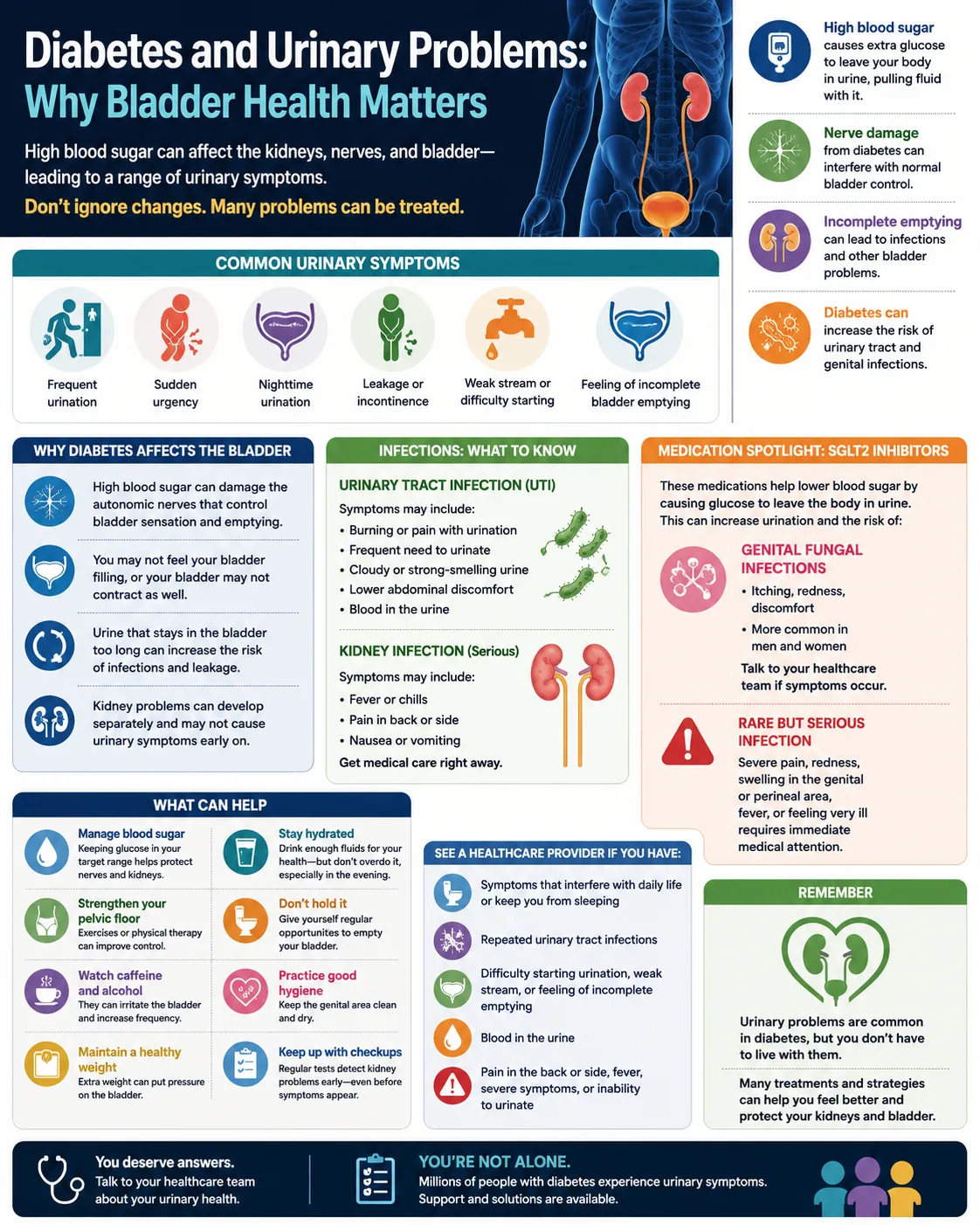
Needing to urinate more often is one of the best-known symptoms of high blood sugar.
But the relationship between diabetes and urinary health goes much further than frequent trips to the bathroom.
Over time, diabetes can affect the nerves that control the bladder. Some people develop urinary urgency or leakage, while others have the opposite problem—their bladder does not empty completely.
Diabetes can also be associated with urinary tract infections and other urinary problems.
These symptoms can be uncomfortable and sometimes embarrassing, but they should not simply be accepted as a normal part of diabetes or aging.
Urinary symptoms can have many causes, including medications, infections, prostate problems, pelvic floor conditions, pregnancy, menopause, kidney stones, and other medical conditions.
Understanding how diabetes may affect the urinary system can help you recognize changes, seek appropriate treatment, and know when a urinary symptom requires prompt medical attention.
How Does the Urinary System Work?
Your urinary system removes waste and excess fluid from the body.
Its major structures include the:
- Kidneys
- Ureters
- Bladder
- Urethra
- The kidneys continuously filter the blood and produce urine.
Urine travels from the kidneys through tubes called ureters and collects inside the bladder.
As the bladder fills, nerves send signals to the brain letting you know that you need to urinate.
When it is an appropriate time to use the bathroom, coordinated nerve and muscle activity allows the bladder to contract while the urinary sphincter relaxes.
This process seems simple, but it depends on healthy nerves, muscles, and urinary structures working together.
Diabetes can sometimes disrupt that coordination.
Why Does High Blood Sugar Make You Urinate More?
Frequent urination can occur when blood glucose becomes significantly elevated.
Normally, the kidneys filter glucose and return it to the bloodstream.
When glucose becomes sufficiently high, the kidneys may not be able to reabsorb all of it.
Some glucose then passes into the urine.
Water follows the glucose, increasing urine production.
You may notice that you:
- Urinate more frequently
- Produce larger amounts of urine
- Wake repeatedly during the night to urinate
- Feel unusually thirsty
Frequent urination combined with excessive thirst can be an important sign of hyperglycemia.
For someone who has not been diagnosed with diabetes, these symptoms deserve medical evaluation.
For someone already living with diabetes, they may indicate that glucose is running significantly above the individual's usual target.
Frequent Urination Is Not Always a Bladder Problem
There is an important difference between producing too much urine and having a bladder that makes you feel like you need to urinate frequently.
High glucose can cause the body to produce larger amounts of urine.
Other urinary conditions may cause frequent bathroom trips even when the total amount of urine produced is not unusually high.
For example, someone with an overactive bladder may feel a sudden need to urinate even when the bladder is not completely full.
This distinction can help healthcare professionals identify the underlying cause.
Diabetes Can Affect the Nerves That Control the Bladder
Long-term diabetes can damage nerves, a complication known as diabetic neuropathy.
Many people think of diabetic neuropathy primarily as burning, tingling, or numbness in the feet.
However, diabetes can also damage the autonomic nerves.
These nerves control functions that happen largely automatically, including:
- Digestion
- Heart rate
- Blood pressure
- Sweating
- Sexual function
- Bladder function
When autonomic neuropathy affects the urinary system, communication between the bladder, nerves, and brain may become disrupted.
This can produce several different bladder symptoms.
What Is Diabetic Bladder Dysfunction?
Diabetic bladder dysfunction is a broad term describing bladder problems associated with diabetes.
Not everyone experiences the same symptoms.
Some people develop:
- Frequent urination
- Sudden urinary urgency
- Nighttime urination
- Urinary leakage
- Others may experience:
- Reduced sensation of bladder fullness
- Difficulty starting urination
- A weak urine stream
- Difficulty emptying the bladder completely
- Urinary retention
- The symptoms can even change over time.
Current diabetes guidance recognizes urinary retention, urinary incontinence, frequent urination, urgency, nocturia, and weak urinary stream among the lower urinary tract symptoms that may occur with diabetic autonomic neuropathy.
What Is an Overactive Bladder?
Overactive bladder describes a group of symptoms involving a sudden, difficult-to-control urge to urinate.
Someone may experience:
- Urinary urgency
- Frequent bathroom trips
- Nighttime urination
- Leakage before reaching the toilet
- Overactive bladder can occur with or without diabetes.
- It can affect both men and women.
If you regularly plan your entire day around finding the nearest bathroom, wake several times every night to urinate, or frequently struggle to reach the bathroom in time, tell your healthcare provider.
Treatment may be available.
What Is Urinary Incontinence?
Urinary incontinence means involuntary leakage of urine.
There are several different types.
Urgency Incontinence
This occurs when a strong, sudden urge to urinate is followed by leakage before you can reach the bathroom.
Stress Incontinence
This occurs when activities that increase abdominal pressure cause urine leakage.
Examples include:
- Coughing
- Sneezing
- Laughing
- Exercising
- Lifting
- Overflow Incontinence
This may occur when the bladder does not empty properly and becomes overly full, leading to leakage.
A person can sometimes experience more than one type.
Because treatment differs depending on the cause, determining the type of incontinence is important.
Diabetes Is Not the Only Cause of Incontinence
Urinary leakage is common and can have many causes.
Possible contributors include:
- Pregnancy and childbirth
- Menopause
- Prostate conditions
- Pelvic floor weakness
- Urinary tract infections
- Constipation
- Neurological disorders
- Certain medications
- Excess body weight
- Aging-related changes
Diabetes can increase the risk or worsen some bladder problems, but it should not automatically receive the blame.
An evaluation can help identify what is actually happening.
What Happens When You Cannot Feel Your Bladder Filling?
Normally, the bladder sends increasingly strong signals as it fills.
Diabetes-related autonomic nerve damage can sometimes weaken these signals.
Someone may not realize how full the bladder has become.
As a result, they may wait too long to urinate.
Over time, an overly stretched bladder may have difficulty contracting effectively.
Urine may remain behind even after someone uses the bathroom.
This is called incomplete bladder emptying.
What Is Urinary Retention?
Urinary retention occurs when the bladder cannot empty properly.
Symptoms may include:
- Difficulty starting urination
- Weak urine stream
- Stopping and starting during urination
- Feeling that the bladder is still full afterward
- Frequent small amounts of urine
- Lower abdominal discomfort
- Leakage caused by an overly full bladder
- Some people with chronic retention have surprisingly few symptoms.
That is one reason bladder dysfunction associated with nerve damage can be difficult to recognize.
Urinary retention deserves medical evaluation because retained urine can contribute to complications.
Why Incomplete Emptying Can Increase Infection Risk
Urine that remains inside the bladder for long periods can create an environment in which bacteria may grow.
This can contribute to urinary tract infections.
Incomplete bladder emptying can also cause:
- Persistent urinary symptoms
- Leakage
- Bladder problems
- In severe situations, effects on the upper urinary tract
If you repeatedly develop UTIs or frequently feel that your bladder does not empty, tell your healthcare provider.
Current ADA guidance recommends bladder evaluation in people with diabetes who have problems such as recurrent UTIs, kidney infections, incontinence, or evidence of an overly full bladder.
Diabetes and Urinary Tract Infections
A urinary tract infection, or UTI, occurs when microorganisms infect part of the urinary system.
Most commonly, infection involves the bladder.
Typical symptoms may include:
- Burning or pain during urination
- Frequent need to urinate
- Sudden urgency
- Lower abdominal discomfort
- Cloudy urine
- Blood in the urine
- Not everyone experiences every symptom.
People with diabetes may have an increased susceptibility to certain infections, and recurrent urinary infections deserve attention.
High glucose, immune-system changes, and incomplete bladder emptying may all contribute in some individuals.
Frequent Urination Does Not Automatically Mean You Have a UTI
High glucose itself can cause frequent urination.
So can:
- Overactive bladder
- Diuretic medications
- Large fluid intake
- Pregnancy
- Prostate enlargement
- Bladder irritation
- Other medical conditions
A UTI is more likely when urinary frequency occurs with symptoms such as burning, pain, urgency, or other signs of infection.
Healthcare professionals may use urine testing to determine whether an infection is present.
Avoid assuming that every urinary symptom requires antibiotics.
Why Recurrent UTIs Need Evaluation
Having an occasional UTI does not necessarily indicate serious bladder dysfunction.
Repeated infections are different.
Recurrent UTIs may prompt healthcare professionals to investigate whether there is an underlying issue such as:
- Incomplete bladder emptying
- Urinary obstruction
- Kidney or bladder stones
- Structural urinary problems
- Other medical conditions
Repeatedly treating infections without considering why they keep returning may miss an underlying problem.
Can a Bladder Infection Spread to the Kidneys?
Yes.
A urinary infection can sometimes move upward and affect one or both kidneys.
This is called pyelonephritis, or a kidney infection.
Symptoms may include:
- Fever
- Chills
- Pain in the back or side
- Nausea
- Vomiting
- Urinary symptoms
- Kidney infections can become serious and require prompt medical treatment.
If you have diabetes and develop fever, flank or back pain, vomiting, or other symptoms suggesting a kidney infection, seek medical attention promptly.
Nighttime Urination and Diabetes
Waking during the night to urinate is called nocturia.
Occasionally waking once may not be unusual, particularly as people get older.
Repeated nighttime urination can have several possible causes, including:
- High blood glucose
- Overactive bladder
- Sleep disorders
- Certain medications
- Drinking large amounts of fluid near bedtime
- Heart or kidney conditions
- Prostate enlargement
- Bladder dysfunction
- Nocturia can also disrupt sleep.
Poor sleep may then affect energy, appetite, mood, and diabetes management the following day.
If you regularly wake several times every night to urinate, mention it to your healthcare provider.
Don't Solve Nocturia by Becoming Dehydrated
Someone frustrated by nighttime urination may decide to dramatically reduce fluid intake.
That is not always a safe solution.
Dehydration can cause other health problems and may make urine more concentrated.
Instead, determine why nocturia is occurring.
If evening fluid timing is contributing, your healthcare provider may suggest adjustments.
But if high glucose, medication, sleep apnea, bladder dysfunction, heart disease, or another condition is responsible, simply drinking less water will not address the underlying cause.
People with kidney or heart conditions should follow their individualized fluid recommendations.
Men Should Consider Prostate Problems Too
Urinary symptoms in men with diabetes are not automatically caused by diabetic neuropathy.
As men age, benign prostatic hyperplasia (BPH) becomes increasingly common.
An enlarged prostate can contribute to:
- Weak urine stream
- Difficulty starting urination
- Frequent urination
- Nighttime urination
- Incomplete emptying
- Diabetes and prostate-related urinary symptoms can occur at the same time.
- A healthcare professional can help distinguish between possible causes.
- Women May Have Several Contributing Factors
- Women with diabetes can also experience urinary symptoms for multiple reasons.
- Possible contributors may include:
- Diabetes-related nerve dysfunction
- Pregnancy or childbirth history
- Pelvic floor changes
- Menopause
- Urinary tract infections
- Overactive bladder
Urinary leakage should not automatically be dismissed as something every woman must tolerate after childbirth or with aging.
Evaluation and treatment can significantly improve quality of life.
Pelvic Floor Health Matters
The pelvic floor is a group of muscles supporting organs including the bladder.
Weakness or dysfunction of these muscles can contribute to urinary leakage.
For some people, pelvic floor muscle training may help improve bladder control.
However, simply doing large numbers of exercises without understanding the problem is not always the best approach.
Some people have pelvic floor muscles that are overly tense rather than weak.
A healthcare professional or pelvic floor physical therapist can help determine the appropriate strategy.
Keep a Bladder Diary
If urinary symptoms are difficult to explain, a bladder diary can provide useful information.
For several days, you might record:
- When you drink fluids
- Approximately how much you drink
- When you urinate
- How often you experience urgency
- Episodes of leakage
- Nighttime bathroom trips
- Glucose readings when relevant
- Medication timing
- This information can help reveal patterns.
For example, frequent urination occurring mainly during periods of high glucose may suggest something different from urgency occurring throughout the day despite glucose being within your usual range.
Don't Be Embarrassed to Discuss Bladder Symptoms
Urinary symptoms can significantly affect daily life.
People may stop:
- Exercising
- Traveling
- Attending social events
- Sleeping away from home
- Having intimate relationships
- because they are afraid of leakage or not finding a bathroom quickly enough.
- Others silently tolerate symptoms for years because they feel embarrassed.
- Healthcare professionals regularly treat urinary problems.
Bladder health is a legitimate part of diabetes care, not something you need to hide.
When Should You Talk to Your Healthcare Provider?
Consider discussing urinary symptoms if you experience:
- Persistent frequent urination
- Sudden urinary urgency
- Repeated nighttime urination
- Urinary leakage
- Weak urine stream
- Difficulty starting urination
- Feeling that your bladder does not empty
- Recurrent urinary tract infections
- Pain or burning with urination
- New or unexplained changes in bladder habits
A proper evaluation can help determine whether the problem is related to glucose, diabetic neuropathy, infection, medications, prostate or pelvic floor conditions, or another cause.
SGLT2 Inhibitors and Urinary Health
Some diabetes medications directly affect the amount of glucose that leaves the body through urine.
SGLT2 inhibitors are a class of medications used to treat Type 2 diabetes and, depending on the specific medication and patient, may also provide important benefits for heart failure and chronic kidney disease.
These medications work partly by preventing the kidneys from reabsorbing some glucose. The extra glucose then leaves the body through urine.
Examples of SGLT2 inhibitors include:
- Empagliflozin
- Dapagliflozin
- Canagliflozin
- Ertugliflozin
Because more glucose and fluid leave through urine, people may notice increased urination, particularly after beginning treatment.
This effect is different from uncontrolled diabetes causing frequent urination, although the symptoms may feel similar.
SGLT2 Inhibitors and Genital Infections
One important consideration with SGLT2 inhibitors is an increased risk of genital fungal infections.
These infections can occur in both men and women.
Possible symptoms include:
- Itching
- Redness
- Irritation
- Burning
- Unusual discharge
- Tenderness or discomfort
These symptoms should be discussed with a healthcare professional, especially if they are new, severe, or recurrent.
It is also important to distinguish genital fungal infections from urinary tract infections. They affect different areas and may require different treatment.
Do not stop an SGLT2 inhibitor on your own because of urinary or genital symptoms. Contact the clinician who prescribed it for individualized guidance.
A Rare but Serious Infection to Know About
SGLT2 inhibitors have also been associated with a rare but serious infection of the genital and surrounding area called Fournier gangrene, or necrotizing fasciitis of the perineum.
This complication is uncommon, but it requires urgent medical treatment.
Seek immediate medical attention for severe pain, tenderness, redness, or swelling around the genitals or the area between the genitals and rectum, particularly when accompanied by fever or feeling very unwell.
The purpose of knowing about rare complications is not to create unnecessary fear.
It is to recognize when symptoms should not be ignored.
Kidney Problems and Bladder Problems Are Not the Same
The kidneys and bladder are both part of the urinary system, but they perform very different jobs.
The kidneys filter the blood, remove waste, regulate fluid and electrolytes, and perform several other essential functions.
The bladder stores urine until you are ready to urinate.
Diabetes can affect both, but in different ways.
Diabetic kidney disease may develop without obvious urinary symptoms, particularly in its early stages.
Someone can have kidney damage without experiencing:
- Burning with urination
- Urgency
- Incontinence
- Bladder pain
That is why kidney screening is important even when urination feels completely normal.
How Is Diabetic Kidney Disease Detected?
Healthcare professionals generally use blood and urine testing to evaluate kidney health.
Two important measurements are:
Estimated glomerular filtration rate (eGFR): A blood-test-based estimate of how well the kidneys are filtering.
Urine albumin-to-creatinine ratio (UACR): A urine test that looks for albumin, a protein that can appear in the urine when kidney filtering structures are damaged.
These tests provide different information from a routine evaluation for a bladder infection.
Keeping up with recommended diabetes kidney screening is important because early kidney disease may be silent.
Foamy Urine Does Not Provide a Diagnosis
People sometimes become concerned after noticing bubbles or foam in the toilet.
Persistent foamy urine can sometimes occur when protein is present in urine, but appearance alone cannot diagnose kidney disease.
Urine can look bubbly for harmless reasons as well.
If you are concerned about kidney health, appropriate laboratory testing is much more useful than trying to judge kidney function from the appearance of your urine.
What About Blood in the Urine?
Blood in the urine is called hematuria.
Sometimes it is obvious, causing urine to look pink, red, or brown.
Other times, microscopic amounts of blood are discovered during urine testing.
Possible causes include:
- Urinary tract infections
- Kidney or bladder stones
- Prostate conditions
- Kidney disease
- Urinary tract injuries
- Other urinary conditions
- Blood in the urine should not simply be attributed to diabetes.
If you notice unexplained blood in your urine, contact a healthcare professional for evaluation.
What Tests Are Used for Urinary Symptoms?
The appropriate evaluation depends on the symptoms.
Your healthcare provider may begin by asking about:
- How often you urinate
- Whether you experience urgency
- Whether you leak urine
- Whether urination is painful
- Whether you have difficulty starting
- The strength of your urine stream
- Whether your bladder feels empty afterward
- How often you wake at night
- Your fluid intake
- Your medications
- Your glucose patterns
Testing may include a urinalysis, which can provide information about glucose, blood, protein, and possible signs of infection.
If infection is suspected, a urine culture may sometimes be used to identify bacteria and help guide treatment.
Measuring Urine Left in the Bladder
If your healthcare provider suspects incomplete bladder emptying, they may measure the amount of urine remaining after you urinate.
This is known as the post-void residual.
It can often be measured using a bladder ultrasound or another appropriate method.
A significant amount of urine remaining in the bladder may help explain:
- Recurrent UTIs
- Overflow leakage
- Weak urine stream
- Frequent urination
- Difficulty emptying
- Additional evaluation may be necessary depending on the results.
- Bladder Training May Help Some People
For certain types of urgency and overactive bladder, healthcare professionals may recommend bladder training.
This usually involves gradually increasing the time between bathroom visits rather than urinating at every mild sensation of urgency.
The goal is to improve bladder control and reduce unnecessary frequency.
However, bladder training is not appropriate for every urinary problem.
Someone who cannot empty the bladder properly requires a different approach from someone with an overactive bladder.
That is why identifying the underlying problem comes first.
Avoid Going “Just in Case” Constantly
Some people begin urinating every time they see a bathroom because they are afraid they may need one later.
Occasionally doing this before a long drive or meeting is understandable.
But repeatedly emptying the bladder at very short intervals may reinforce frequent bathroom habits in some people.
If urgency is a major problem, ask your healthcare provider whether scheduled voiding or bladder training is appropriate.
Timed Voiding Can Be Useful for Reduced Bladder Sensation
The opposite problem can occur when diabetes-related nerve damage makes it difficult to sense that the bladder is full.
In certain situations, a healthcare professional may recommend timed voiding.
Instead of waiting until a strong urge appears, the person uses the bathroom at planned intervals.
This may help prevent the bladder from becoming excessively full.
The schedule should be individualized.
What If the Bladder Cannot Empty Properly?
Treatment for urinary retention depends on the cause and severity.
Some people may need changes in medications or treatment of an underlying obstruction.
Others with significant bladder-emptying problems may require catheterization.
Intermittent catheterization involves inserting a catheter at scheduled times to drain the bladder and then removing it.
This may sound intimidating, but for people who genuinely need it, proper bladder drainage can help protect urinary health and improve quality of life.
A healthcare professional should provide individualized instruction.
Treating Urinary Incontinence
Treatment depends on the type of incontinence.
Options may include:
- Pelvic floor therapy
- Bladder training
- Timed bathroom visits
- Lifestyle changes
- Medications
- Medical devices
- Procedures
- Surgery in selected cases
- There is no single treatment that works for every person.
Someone with stress incontinence after childbirth needs a different strategy from someone experiencing overflow leakage because the bladder does not empty.
Pelvic Floor Physical Therapy
Pelvic floor physical therapy can be helpful for some people with urinary symptoms.
A trained therapist can assess:
- Pelvic floor strength
- Coordination
- Muscle tension
- Bladder habits
- Breathing and pressure management
- Treatment may involve exercises, behavioral strategies, and education.
- Pelvic floor therapy is not limited to women.
- Men may also benefit, depending on the condition.
- Constipation Can Affect the Bladder
- The bowel and bladder occupy the same general area of the pelvis.
Significant constipation can sometimes worsen urinary symptoms by increasing pressure or interfering with normal bladder function.
If you experience both constipation and urinary urgency or leakage, tell your healthcare provider.
Managing bowel health may be one part of improving urinary symptoms.
Should You Drink More Water to Prevent UTIs?
Adequate hydration supports normal health, but there is no universal amount of water that every person with diabetes should drink.
Fluid needs vary according to:
- Body size
- Activity
- Climate
- Diet
- Medications
- Kidney function
- Heart health
- Pregnancy and other medical circumstances
Drinking enormous amounts of water does not guarantee that you will prevent urinary infections.
Excessive fluid intake can also worsen urinary frequency and, in extreme cases, disturb electrolyte balance.
Aim for an appropriate fluid intake based on your individual health needs.
If your healthcare team has given you a fluid restriction, follow that recommendation.
Caffeine May Worsen Urgency for Some People
Coffee, tea, energy drinks, and some soft drinks contain caffeine.
Caffeine may increase urine production and can worsen bladder urgency or frequency in some individuals.
That does not mean everyone with diabetes must eliminate coffee.
If urinary urgency is a problem, consider tracking whether symptoms consistently become worse after caffeinated drinks.
You can then discuss appropriate changes with your healthcare provider.
Alcohol Can Affect Urination Too
Alcohol can increase urine production and may contribute to dehydration.
It can also affect glucose levels and interact with diabetes medications.
For someone already struggling with nighttime urination or urinary urgency, alcohol may worsen symptoms.
If you drink alcohol, follow your healthcare provider's guidance regarding whether and how much is appropriate for you.
Don't Hold Your Urine for Extremely Long Periods
Regularly ignoring the need to urinate for very long periods is generally not a good bladder habit.
This can be particularly important if diabetes-related nerve damage already makes bladder sensation less reliable.
Try to allow reasonable opportunities to use the bathroom during:
- Workdays
- Travel
- Long meetings
- Road trips
If you consistently cannot tell when your bladder is full, discuss the issue with your healthcare provider.
Personal Hygiene and Urinary Health
Good personal hygiene can support comfort and may help reduce some infection risks.
Simple habits include:
- Keeping the genital area clean and dry
- Changing out of wet clothing promptly
- Avoiding irritating products if they trigger symptoms
- Following appropriate toileting hygiene
However, recurrent urinary infections are not necessarily caused by poor hygiene.
People should not be made to feel ashamed or blamed for developing UTIs.
Repeated infections deserve medical evaluation.
Blood Sugar Management Remains Important
Good glucose management supports many areas of health.
Persistently high glucose can contribute to:
- Increased urine production
- Dehydration
- Nerve damage
- Greater susceptibility to some infections
Keeping glucose within an individualized target range may help reduce some urinary problems and lowers the risk of multiple long-term diabetes complications.
Perfect glucose numbers are not required.
The goal is sustainable management developed with your diabetes care team.
Don't Ignore a Sudden Change in Urination
A noticeable change from your normal urinary pattern can provide important health information.
Examples include:
- Suddenly urinating much more than usual
- New inability to urinate
- New urinary leakage
- New burning or pain
- Visible blood in urine
- New severe urgency
- Dramatically reduced urine output
The cause may be simple and treatable, but significant changes deserve attention.
When Is Inability to Urinate an Emergency?
Sudden inability to urinate despite feeling that the bladder is full can be acute urinary retention.
The lower abdomen may become painful or swollen.
Acute urinary retention requires prompt medical attention.
Do not repeatedly drink more water hoping that it will force the bladder to empty.
The problem may require immediate bladder drainage and evaluation of the cause.
When Should You Seek Urgent Medical Care?
Seek prompt or urgent medical evaluation for symptoms such as:
- Inability to urinate
- Severe lower abdominal pain with a full bladder
- Fever with back or flank pain
- Repeated vomiting with urinary symptoms
- Visible blood in the urine
- Severe weakness or confusion
- Symptoms of significant dehydration
- Rapidly worsening urinary symptoms
Severe genital or perineal pain, redness, or swelling, especially with fever or feeling very ill
People taking an SGLT2 inhibitor should be particularly aware of severe genital or perineal symptoms because of the rare risk of serious infection.
Build a Bladder-Friendly Daily Routine
There is no perfect routine for everyone, but useful habits may include:
Manage glucose. Work toward the glucose targets established with your healthcare team.
Stay appropriately hydrated. Avoid both significant dehydration and unnecessary excessive fluid intake.
Notice caffeine and alcohol patterns. Determine whether either worsens your symptoms.
Don't routinely ignore bladder signals. Give yourself reasonable bathroom opportunities.
Manage constipation. Bowel problems can sometimes worsen urinary symptoms.
Take medications as prescribed. Discuss urinary side effects rather than stopping medications independently.
Keep up with diabetes screening. Kidney disease may be silent, so recommended laboratory testing matters even when you feel well.
Speak up about urinary symptoms. Treatment may be available.
Questions to Ask Your Healthcare Provider
If you are experiencing bladder problems, consider asking:
Could high glucose be contributing to my frequent urination?
Could this be diabetic autonomic neuropathy?
Do I need to be tested for a UTI?
Is my bladder emptying completely?
Could one of my medications be affecting urination?
Should I keep a bladder diary?
Would pelvic floor physical therapy help?
Is bladder training appropriate for me?
Am I drinking an appropriate amount of fluid?
Do I need a urology referral?
Are my kidney screening tests up to date?
Writing down your questions before an appointment can make the conversation easier.
Frequently Asked Questions
Can diabetes cause frequent urination?
Yes. When blood glucose becomes sufficiently elevated, excess glucose enters the urine and pulls additional water with it. This can cause increased urine production and frequent urination. Bladder dysfunction can also contribute to urinary frequency.
Can diabetes damage the bladder?
Long-term diabetes can damage autonomic nerves that help control bladder sensation and emptying. Some people develop urgency or incontinence, while others have reduced bladder sensation or difficulty emptying completely.
Why am I urinating so much at night?
Possible causes include high glucose, overactive bladder, large evening fluid intake, certain medications, prostate problems, sleep disorders, and heart or kidney conditions. Persistent nocturia deserves evaluation.
Does diabetes increase the risk of UTIs?
People with diabetes may have an increased risk of certain infections, including urinary infections. High glucose and incomplete bladder emptying may contribute in some individuals.
Do SGLT2 medications cause UTIs?
SGLT2 inhibitors increase glucose in the urine. They are clearly associated with a higher risk of genital fungal infections. Urinary symptoms should still be evaluated rather than automatically assumed to be caused by the medication.
Can diabetes cause urinary incontinence?
Diabetes-related nerve dysfunction may contribute to some forms of urinary incontinence, but incontinence has many other possible causes, including pelvic floor problems, pregnancy and childbirth, prostate conditions, medications, and aging-related changes.
What does it mean if I cannot empty my bladder completely?
Incomplete emptying may occur when the bladder muscles or nerves do not work properly or when something obstructs urine flow. It can increase the amount of urine remaining in the bladder and may contribute to infection or overflow leakage.
How can a doctor tell if my bladder is emptying?
A healthcare professional can measure the amount of urine remaining after you urinate. This is called a post-void residual and is commonly measured using bladder ultrasound or another appropriate technique.
Is foamy urine a sign of diabetic kidney disease?
Persistent foamy urine can sometimes occur with protein in the urine, but appearance alone cannot diagnose kidney disease. Blood and urine laboratory tests such as eGFR and UACR provide much more useful information.
When should urinary symptoms be considered an emergency?
Sudden inability to urinate, severe lower abdominal pain with a full bladder, fever with flank pain, severe illness with urinary symptoms, or significant blood in the urine requires prompt medical evaluation.
Key Takeaways
Diabetes can affect urinary health in several different ways.
High blood glucose can increase urine production, causing frequent urination and excessive thirst.
Long-term diabetes can also damage the autonomic nerves that control bladder sensation and function. This may contribute to urgency, incontinence, weak urine flow, reduced bladder sensation, or incomplete emptying.
Urine remaining in the bladder may increase the risk of complications, including recurrent urinary infections.
However, not every urinary symptom in someone with diabetes is caused by diabetes. Prostate conditions, pelvic floor disorders, medications, infections, pregnancy, menopause, kidney stones, and other medical problems can produce similar symptoms.
SGLT2 inhibitors increase glucose excretion through urine and can increase urination. They are also associated with genital fungal infections, while rare but severe genital or perineal infections require immediate medical attention.
Kidney disease and bladder disease are not the same thing. Diabetic kidney disease can develop silently, which is why recommended blood and urine screening remains important even when urination seems normal.
Urinary incontinence is not something you simply have to tolerate. Depending on the cause, bladder training, pelvic floor therapy, medication, timed voiding, procedures, or other treatments may help.
Most importantly, do not let embarrassment prevent you from discussing urinary symptoms with your healthcare team.
Changes in bladder function can provide valuable information about your health, and many urinary problems can be treated or managed once the underlying cause is identified.
DiabetesAdvocates.care does not provide medical advice, diagnosis, or treatment. Please consult with your healthcare provider for questions and personalized medical advice.