
Diabetes and Vision Changes: What Your Eyes Can Tell You About Your Blood Sugar
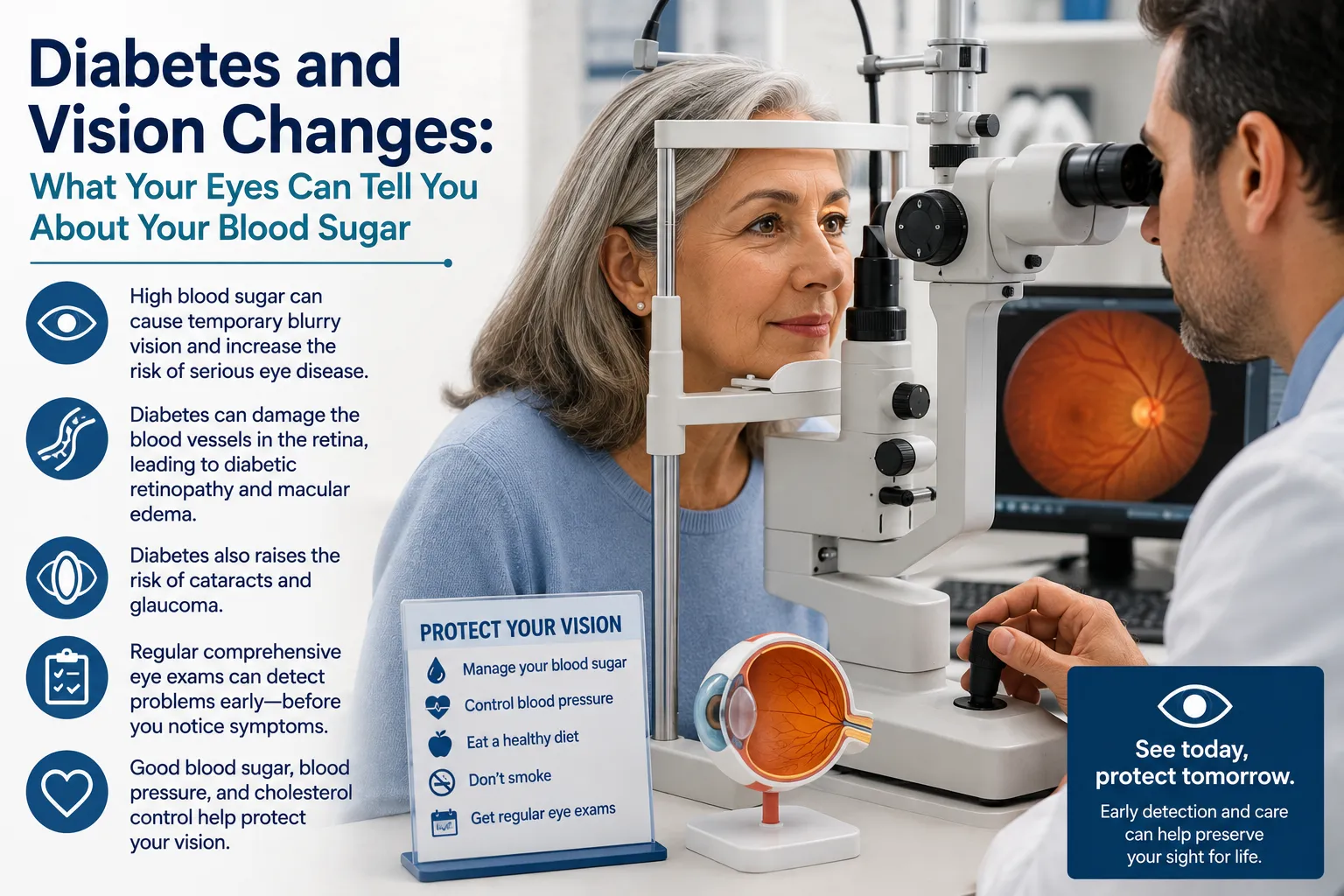
Vision changes can be unsettling.
You may wake up one morning and notice that words look slightly blurry. Your glasses may suddenly seem less effective. It may become harder to focus on your phone, computer screen, or objects across the room.
For someone living with diabetes, changes in vision deserve attention.
Blood glucose can affect the eyes in several ways. Some vision changes are temporary and may improve as glucose stabilizes. Others can be signs of diabetes-related eye disease that requires professional treatment.
One of the challenges is that serious diabetic eye disease may develop without obvious symptoms during its early stages.
That means you cannot rely on your eyesight alone to tell you whether your eyes are healthy.
Regular comprehensive eye examinations, appropriate glucose management, and early treatment of eye disease can help protect vision.
Understanding what diabetes can do to your eyes—and which symptoms should never be ignored—is an important part of long-term diabetes care.
How Does Diabetes Affect the Eyes?
Your eyes depend on extremely small and delicate blood vessels.
Over time, persistently elevated blood glucose can damage blood vessels throughout the body, including those that supply the retina.
The retina is the light-sensitive tissue at the back of the eye. It converts light into signals that travel through the optic nerve to the brain, allowing you to see.
Diabetes can affect the retina and other structures within the eye.
Diabetes is associated with eye conditions including:
- Diabetic retinopathy
- Diabetic macular edema
- Cataracts
- Glaucoma
Some people also experience temporary changes in vision when their glucose levels change significantly.
Not every vision problem in a person with diabetes is caused by diabetes, however.
Nearsightedness, farsightedness, dry eye, age-related eye conditions, medications, migraines, and many other health problems can also affect vision.
A professional eye examination is the best way to determine the cause.
Can High Blood Sugar Cause Blurry Vision?
Yes.
Significant changes in blood glucose can temporarily affect your ability to focus.
When glucose is elevated, changes in fluid levels within tissues of the eye can alter focusing ability.
You may notice that:
- Objects look blurry.
- Your usual glasses do not seem as effective.
- Reading becomes more difficult.
- Your vision seems different from one day to another.
Temporary blurry vision related to glucose changes is different from permanent vision loss caused by damage to the retina.
However, you cannot reliably distinguish the cause of blurry vision yourself.
If you develop new, persistent, or worsening vision changes, have them evaluated.
Don't Rush to Buy New Glasses During Major Glucose Changes
If your glucose levels have recently changed substantially, your vision prescription may temporarily change as well.
For example, someone who has recently been diagnosed with diabetes and begins treatment may notice fluctuations in eyesight while glucose levels stabilize.
If you immediately obtain a new eyeglass prescription during a period of significant glucose fluctuation, the prescription may no longer be appropriate once glucose becomes more stable.
Tell your eye doctor about recent changes in your diabetes management and glucose levels.
Your eye professional can determine whether your prescription should be changed immediately or whether it would be better to wait.
What Is Diabetic Retinopathy?
Diabetic retinopathy is a diabetes-related eye disease caused by damage to blood vessels in the retina.
It can affect people with Type 1 or Type 2 diabetes.
The risk generally increases with the duration of diabetes and is influenced by factors such as glucose management and blood pressure.
Diabetic retinopathy can progress through different stages.
The two broad categories are:
- Nonproliferative diabetic retinopathy
- Proliferative diabetic retinopathy
- Understanding the difference helps explain why screening is so important.
- Nonproliferative Diabetic Retinopathy
- Nonproliferative diabetic retinopathy, or NPDR, is the earlier stage.
- Small blood vessels in the retina become damaged.
- Depending on severity, eye professionals may observe changes such as:
- Tiny areas of blood-vessel swelling
- Small retinal hemorrhages
- Fluid leakage
- Changes in retinal blood vessels
- Early diabetic retinopathy may cause no noticeable vision symptoms.
You may be able to read, drive, work, and watch television normally while changes are already occurring inside your eyes.
This is one of the most important facts about diabetic eye disease:
- Good vision does not necessarily mean there is no retinopathy.
An eye examination can detect changes long before you would notice them yourself.
Proliferative Diabetic Retinopathy
More advanced disease is called proliferative diabetic retinopathy, or PDR.
At this stage, abnormal new blood vessels can grow on the retina or elsewhere inside the eye.
These new vessels are fragile.
They may bleed into the vitreous—the gel-like substance filling the inside of the eye.
Bleeding can cause symptoms such as:
- New floaters
- Dark spots
- Cobweb-like shapes
- Hazy vision
- Significant loss of vision
- Scar tissue may also develop.
In severe cases, scar tissue can pull on the retina and contribute to retinal detachment, which can threaten vision.
Advanced diabetic retinopathy requires prompt specialist care.
What Is Diabetic Macular Edema?
Another important complication is diabetic macular edema, often abbreviated DME.
The macula is the central part of the retina responsible for sharp, detailed vision.
You depend on your macula for activities such as:
- Reading
- Recognizing faces
- Driving
- Using a computer
- Seeing fine details
When damaged retinal blood vessels leak fluid, swelling can develop in the macula.
This is diabetic macular edema.
Symptoms may include:
- Blurry central vision
- Distorted vision
- Difficulty reading
- Colors appearing different
- Trouble seeing fine details
- DME can occur at different stages of diabetic retinopathy.
Because central vision is so important for daily activities, early diagnosis and treatment are essential.
What Are Floaters?
Floaters are small shapes that appear to move through your field of vision.
People describe them as:
- Dots
- Specks
- Threads
- Lines
- Cobwebs
- Some floaters are common and harmless, particularly with aging.
However, a sudden increase in floaters can indicate bleeding inside the eye or a retinal tear or detachment.
For someone with diabetes, sudden new floaters should not automatically be dismissed as normal aging.
Contact an eye professional promptly for guidance.
Flashes of Light Can Be a Warning Sign
Sudden flashes of light may occur when the retina is being pulled or irritated.
When flashes occur together with a sudden increase in floaters, they may signal a retinal tear or retinal detachment.
A retinal detachment is an emergency because delaying treatment can result in permanent vision loss.
Seek urgent eye care if you suddenly experience:
- Many new floaters
- Flashes of light
- A dark curtain or shadow across your vision
- Sudden loss of part of your visual field
- Do not wait for the symptoms to disappear on their own.
- Why Diabetic Retinopathy Can Be Easy to Miss
Diabetic retinopathy is sometimes called a silent complication because the early stages may produce no symptoms.
This creates a dangerous misconception:
- “My eyesight is fine, so my eyes must be healthy.”
- You can have retinal changes while still seeing normally.
By the time significant visual symptoms appear, disease may already be advanced.
This is why regular dilated or otherwise comprehensive retinal examinations are a central part of diabetes care.
The purpose is not simply to test whether you need glasses.
The goal is to examine the health of the retina and other structures inside the eye.
Diabetes and Cataracts
Diabetes is also associated with an increased risk of cataracts.
A cataract occurs when the normally clear lens of the eye becomes cloudy.
Think of the lens like the lens of a camera.
When it is clear, light can pass through effectively.
As a cataract develops, vision may become increasingly cloudy or hazy.
Possible symptoms include:
- Blurred vision
- Cloudy vision
- Difficulty seeing at night
- Increased sensitivity to glare
- Halos around lights
- Colors appearing faded
- Frequent changes in eyeglass prescription
Cataracts become more common with age, even among people who do not have diabetes.
However, people with diabetes may develop cataracts earlier or experience them more frequently.
Can Cataracts Be Treated?
Yes.
When cataracts begin interfering significantly with daily life, surgery may be recommended.
During cataract surgery, the cloudy natural lens is removed and replaced with an artificial lens.
Cataract surgery is one of the most commonly performed surgical procedures.
Having diabetes does not automatically prevent someone from having cataract surgery.
However, diabetes and existing retinal disease can affect surgical planning and visual outcomes.
Your ophthalmologist may evaluate the retina carefully before surgery and discuss any additional considerations related to your diabetes.
Diabetes and Glaucoma
People with diabetes also have an increased risk of certain forms of glaucoma.
Glaucoma refers to a group of eye diseases that damage the optic nerve.
The optic nerve carries visual information from the eye to the brain.
Some forms of glaucoma progress gradually without noticeable symptoms.
Peripheral vision may be affected first, making early disease difficult to recognize without an examination.
If glaucoma progresses untreated, it can cause permanent vision loss.
Treatment may involve:
- Prescription eye drops
- Laser procedures
- Surgery
- depending on the type and severity.
- Eye Pressure Is Only Part of a Complete Eye Examination
- Many people associate glaucoma exclusively with high eye pressure.
- Eye pressure is important, but glaucoma evaluation can involve much more.
- Your eye professional may assess:
- Eye pressure
- Optic nerve appearance
- Peripheral vision
- Corneal thickness
- Other structural changes
This is another reason a quick vision screening is not the same as a comprehensive eye examination.
Being able to read the smallest line on an eye chart does not provide all the information needed to assess diabetic eye health.
How Often Should People with Diabetes Have Eye Exams?
The appropriate schedule depends on the type of diabetes, age, pregnancy status, previous examination findings, and individual risk.
In general, people with diabetes should receive comprehensive eye examinations according to recommendations from their diabetes and eye-care professionals.
For many adults with Type 2 diabetes, an initial dilated and comprehensive eye examination is recommended around the time of diagnosis because diabetes may have been present before it was detected.
People with Type 1 diabetes typically begin regular screening within several years after diabetes begins, with timing based on age and professional guidelines.
If retinopathy is present, examinations may need to occur more frequently.
Your eye doctor should determine your individual follow-up schedule.
What Happens During a Diabetic Eye Exam?
A diabetes-related eye examination may include several components.
Your eye professional may check:
- Visual acuity
- Eyeglass prescription
- Eye pressure
- The lens
- The optic nerve
- The retina
- The macula
- Retinal blood vessels
Dilating drops may be used to widen the pupils so the doctor can examine the inside of the eye more thoroughly.
Some practices also use retinal photography or imaging technologies such as optical coherence tomography.
These tools can help document retinal changes and identify swelling or other abnormalities.
The examination should not be viewed simply as a test for glasses.
It is a preventive health examination.
Who Should Perform a Diabetes Eye Examination?
Depending on your situation, your eye care may involve an optometrist or ophthalmologist experienced in diabetic eye disease.
An ophthalmologist is a medical doctor specializing in eye disease and surgery.
People with significant diabetic retinopathy or diabetic macular edema may be referred to a retina specialist, an ophthalmologist with additional expertise in diseases of the retina.
The important point is to receive appropriate retinal evaluation and follow-up—not simply a basic vision screening.
Keep Your Eye Doctor Informed About Your Diabetes
Your eye-care professional should know:
- Which type of diabetes you have
- Approximately how long you have had diabetes
- Your recent A1C when available
- Whether your glucose has changed significantly
- Whether you have high blood pressure
- Which medications you take
- Whether you have kidney disease or other diabetes complications
- Whether you are pregnant or planning pregnancy
This information helps your eye doctor assess risk and interpret changes appropriately.
Blood Pressure Matters for Your Eyes Too
Glucose is not the only factor affecting diabetic eye disease.
High blood pressure can place additional stress on blood vessels.
Managing blood pressure according to your healthcare team's recommendations is therefore an important part of protecting your eyes as well as your heart, brain, and kidneys.
If you have both diabetes and hypertension, take both conditions seriously.
Eye protection is another reason to follow your overall cardiovascular health plan.
Cholesterol and Overall Vascular Health Matter
Your eyes are supplied by blood vessels, which means overall vascular health matters.
Diabetes care should include appropriate attention to:
- Blood glucose
- Blood pressure
- Cholesterol
- Kidney health
- Smoking
- Physical activity
- Nutrition
- You do not protect your eyes with one specific food or supplement.
You protect them through comprehensive diabetes and cardiovascular risk management combined with appropriate eye screening.
Smoking and Diabetic Eye Health
Smoking damages blood vessels and substantially increases cardiovascular risk.
For someone with diabetes, avoiding tobacco is one of the most important steps for protecting overall health.
If you smoke, ask your healthcare provider about evidence-based support for quitting.
Do not be discouraged if you have tried before.
Many people require multiple attempts before quitting permanently.
Good Blood Sugar Management Helps Protect Vision
Maintaining glucose within your individualized target range can reduce the risk of developing or worsening diabetic microvascular complications.
This does not mean glucose must be “perfect” every day.
Diabetes management is about long-term patterns and individualized goals.
Work with your healthcare team to determine appropriate targets based on factors such as:
- Age
- Type of diabetes
- Medications
- Hypoglycemia risk
- Pregnancy
- Other medical conditions
Avoid making extreme changes to glucose management solely because you are worried about your eyes.
Safe, sustainable management is the goal.
Don't Wait for Symptoms to Schedule an Eye Exam
One of the strongest steps you can take to protect your vision is also one of the simplest:
- Keep your recommended eye appointments even when you can see perfectly well.
- Diabetic retinopathy can be present without obvious symptoms.
Finding it early gives you and your healthcare team more opportunities to monitor it, manage risk factors, and provide treatment when necessary.
Protecting your eyes begins before vision loss occurs.
Can Diabetic Retinopathy Be Treated?
Yes.
A diagnosis of diabetic retinopathy does not automatically mean that you will lose your vision.
Treatment has advanced considerably, and early detection gives eye specialists more opportunities to protect sight.
The appropriate approach depends on factors such as:
- The stage of retinopathy
- Whether diabetic macular edema is present
- Whether abnormal blood vessels have developed
- Whether bleeding has occurred inside the eye
- Your current vision
- Your overall health
During earlier stages, an eye specialist may recommend careful monitoring combined with management of glucose, blood pressure, cholesterol, and other risk factors.
More advanced disease may require treatment.
Anti-VEGF Injections for Diabetic Eye Disease
One of the major advances in treating diabetic eye disease has been the development of medications known as anti-VEGF therapies.
VEGF stands for vascular endothelial growth factor.
In diabetic eye disease, excess VEGF can contribute to abnormal blood-vessel growth and leakage.
Anti-VEGF medications are injected directly into the eye by an eye specialist.
Although the idea of an eye injection can sound frightening, numbing medication is used to minimize discomfort.
These medications are commonly used to treat diabetic macular edema and certain cases of diabetic retinopathy.
Depending on the condition and medication, repeated treatments may be necessary.
Keeping follow-up appointments is extremely important because treatment often works best when performed according to the recommended schedule.
Laser Treatment for Diabetic Retinopathy
Laser therapy has been used for decades to treat certain forms of diabetic eye disease.
One type of treatment, known as panretinal photocoagulation, may be used for proliferative diabetic retinopathy.
The laser treats areas of the retina to reduce signals that encourage abnormal blood vessels to grow.
Other laser approaches may sometimes be used for specific patterns of retinal swelling or leakage.
Laser treatment cannot necessarily restore vision that has already been permanently lost.
Its purpose is often to reduce the risk of further serious vision loss.
What Is a Vitrectomy?
Advanced diabetic retinopathy can sometimes cause substantial bleeding into the vitreous, the gel-like substance filling the eye.
Scar tissue may also pull on the retina.
In these situations, an eye surgeon may recommend a procedure called a vitrectomy.
During a vitrectomy, the surgeon removes some or all of the vitreous gel and may address bleeding, scar tissue, or retinal problems.
This is generally reserved for more serious complications.
If surgery is recommended, your ophthalmologist will explain the expected benefits, risks, recovery process, and how your diabetes should be managed around the procedure.
Early Treatment Is One Reason Screening Matters
Modern treatments can be highly effective at reducing the risk of severe vision loss from diabetic eye disease.
But treatment cannot help a problem that has not been detected.
This is why regular retinal examinations remain important even in an era of advanced treatments.
The ideal goal is not to wait until you cannot see.
It is to identify disease early enough to protect the vision you already have.
Pregnancy Can Affect Diabetic Retinopathy
Pregnancy deserves special attention in people who already have Type 1 or Type 2 diabetes.
Diabetic retinopathy can develop or progress during pregnancy, particularly in people who already have retinal disease.
If you have diabetes and are planning pregnancy, discuss eye health with your diabetes and eye-care teams.
A comprehensive eye examination may be recommended before pregnancy or early in pregnancy, followed by additional monitoring depending on your retinal findings.
Pregnancy planning for someone with preexisting diabetes should include more than glucose management.
It should also include evaluation of complications that pregnancy may influence.
Gestational Diabetes Is Different
Gestational diabetes refers to diabetes first diagnosed during pregnancy in someone without previously known diabetes.
The eye-screening recommendations for gestational diabetes are not necessarily the same as those for people who entered pregnancy with Type 1 or Type 2 diabetes.
If you have gestational diabetes, follow the recommendations of your obstetric and diabetes healthcare teams.
Do not assume that advice for preexisting diabetes automatically applies to gestational diabetes.
Rapid Improvement in Blood Sugar and Retinopathy
Improving glucose management is important for reducing long-term diabetes complications.
However, in some people who already have significant diabetic retinopathy, a rapid and substantial improvement in glucose can temporarily worsen retinopathy.
This phenomenon has been recognized for many years.
It does not mean that people should intentionally keep their glucose high.
Instead, people with existing retinopathy—particularly those making major changes to diabetes treatment—may need appropriate eye monitoring.
If your A1C is expected to decrease substantially after starting or intensifying treatment, make sure your healthcare team knows about any history of diabetic retinopathy.
Can GLP-1 Medications Affect Diabetic Retinopathy?
This question has received increased attention as GLP-1 receptor agonists and related therapies have become more widely used.
Some studies have identified worsening of diabetic retinopathy in certain high-risk individuals experiencing rapid improvements in glucose, particularly those with preexisting retinopathy.
Researchers continue to study the relationship between individual medications, rapid glucose improvement, and eye outcomes.
The practical lesson is not to avoid an otherwise appropriate medication automatically.
Instead:
- Tell your prescriber if you have diabetic retinopathy.
- Keep your recommended eye examinations.
- Report significant vision changes promptly.
- Follow your healthcare team's monitoring recommendations.
Do not stop a prescribed diabetes medication because of concerns about your eyes without speaking with your healthcare provider.
Can Diabetes Cause Permanent Blindness?
Severe diabetic eye disease can cause permanent vision loss.
However, vision loss is not inevitable.
Modern screening and treatment have made it possible to identify and treat many problems before they cause severe impairment.
The greatest opportunities for prevention include:
- Appropriate glucose management
- Blood pressure management
- Regular eye examinations
- Early treatment when indicated
- Avoiding tobacco
- Keeping follow-up appointments
- Fear of receiving bad news should not keep you away from an eye examination.
- Early diagnosis generally provides more options—not fewer.
- What If You Already Have Vision Loss?
- Some people develop permanent visual impairment despite treatment.
If this happens, there are still many ways to improve independence and quality of life.
Low-vision rehabilitation can help people make better use of their remaining vision.
Resources may include:
- Magnification devices
- Large-print materials
- High-contrast displays
- Screen-reading software
- Voice-controlled technology
- Improved home lighting
- Orientation and mobility training
- Occupational therapy
- Accessible glucose monitoring technology
- Vision rehabilitation is not the same as giving up on treatment.
It is an additional form of care designed to help people function safely and independently.
Diabetes Technology Can Help People with Vision Impairment
Accessibility features have improved across many consumer and diabetes technologies.
Depending on the device, features may include:
- Spoken glucose readings
- Smartphone screen readers
- Larger text
- High-contrast displays
- Voice assistants
- Audible alarms
- Vibration alerts
If vision makes it difficult to use your glucose meter, continuous glucose monitor, insulin delivery device, or medication labels safely, tell your diabetes care team.
Do not struggle silently with equipment that has become difficult to see.
Your team may be able to recommend more accessible devices or strategies.
Vision Changes and Driving
Safe driving requires adequate vision.
Diabetes can affect driving through both eye complications and glucose-related problems such as hypoglycemia.
If you experience:
- Blurred vision
- Reduced peripheral vision
- Difficulty seeing at night
- Significant glare
- Double vision
- Sudden visual changes
- avoid driving until you understand whether it is safe to do so.
Your eye-care professional can assess your visual function and discuss whether treatment, corrective lenses, or driving restrictions are appropriate.
Local licensing requirements for vision vary.
Night Driving May Become Difficult First
Some eye conditions can make night driving especially challenging.
Cataracts, for example, may increase:
- Glare
- Halos
- Difficulty seeing in low light
Diabetic retinal disease may also affect visual function in ways that make driving more difficult.
If headlights suddenly seem unusually bright or you are struggling to see pedestrians, road markings, or signs at night, schedule an eye examination.
Do not assume these changes are simply an unavoidable part of getting older.
Protect Your Eyes from the Sun
UV protection is important for general eye health.
When outdoors, consider sunglasses that provide appropriate ultraviolet protection.
A wide-brimmed hat can provide additional protection.
Sunglasses cannot prevent diabetic retinopathy, however.
They protect the eyes from ultraviolet exposure; they do not replace glucose management or retinal screening.
Be cautious of products claiming that special glasses can “reverse” diabetic eye disease.
Do Eye Vitamins Prevent Diabetic Retinopathy?
There is no vitamin or supplement proven to replace established diabetes management and professional eye care for preventing diabetic retinopathy.
Certain nutritional supplements are used for specific stages of age-related macular degeneration, which is a different eye disease.
Those recommendations should not automatically be applied to diabetic retinopathy.
Before taking supplements marketed for “diabetic eye health,” discuss them with your healthcare provider.
Supplements can interact with medications, and marketing claims may exceed the available scientific evidence.
Food Still Matters—Just Not as a Miracle Cure
A balanced eating pattern supports cardiovascular health, glucose management, and overall well-being.
Foods containing vitamins, minerals, healthy fats, and other nutrients contribute to normal eye health.
But no individual food can erase retinal damage.
You do not need a special “diabetic eye diet.”
Instead, follow an eating pattern appropriate for your overall diabetes and cardiovascular health goals.
Know Your Numbers
Protecting your eyes involves more than an annual appointment.
Work with your healthcare team to understand your individualized targets for:
- A1C or other glucose measures
- Blood pressure
- Cholesterol
- Kidney health
- These factors are interconnected.
The small blood vessels affected by diabetes in the eyes can also be affected elsewhere in the body.
Comprehensive diabetes care provides benefits far beyond vision.
Never Ignore Sudden Vision Loss
Gradual blurry vision should be evaluated.
Sudden vision loss is different.
A sudden major change in vision may represent an emergency.
Seek urgent medical or eye care for symptoms such as:
- Sudden loss of vision
- A curtain or shadow across your visual field
- Sudden appearance of many floaters
- Flashes of light with new floaters
- Sudden severe eye pain
- Sudden vision changes accompanied by neurological symptoms
Vision changes occurring with facial drooping, weakness, difficulty speaking, severe dizziness, or other possible stroke symptoms require emergency medical attention.
Do not wait for an ordinary eye appointment.
Eye Pain Should Not Be Ignored
Diabetic retinopathy itself often does not cause eye pain.
Therefore, significant eye pain should not automatically be attributed to diabetes.
Severe pain, redness, nausea, halos around lights, or sudden vision changes may indicate other urgent eye conditions.
Contact an eye professional promptly or seek emergency care depending on symptom severity.
Create an Eye-Care Routine
Protecting your vision becomes easier when eye care is part of your normal diabetes routine.
Consider these habits:
- Schedule recommended eye exams.
- Do not wait for symptoms.
- Know your glucose patterns.
- Work toward individualized targets with your diabetes team.
- Manage blood pressure and cholesterol.
- These are important for vascular health.
- Avoid tobacco.
- Smoking adds additional vascular risk.
- Report vision changes.
- Do not wait months to mention a new symptom.
- Keep follow-up appointments.
If an eye specialist wants to see you again in several months, that follow-up is part of your treatment.
Questions to Ask Your Eye Doctor
Being prepared can help you get more from your appointment.
Consider asking:
Do I have diabetic retinopathy?
If so, what stage is it?
Is my macula affected?
Do I need treatment now?
How often should I return?
Are there changes since my last examination?
Is my blurry vision likely related to glucose or another problem?
Do I have cataracts or glaucoma?
Are there symptoms that should make me call you immediately?
Should my diabetes healthcare team receive a copy of this examination?
Understanding your results can make eye care feel less intimidating.
Frequently Asked Questions
Can high blood sugar make your vision blurry?
Yes. Significant glucose changes can temporarily affect the eye's focusing ability and cause blurry vision. Persistent or new blurry vision should still be evaluated because diabetes can also cause retinal disease and other eye problems.
Will blurry vision go away when blood sugar improves?
If the blurriness is caused by temporary changes related to glucose, it may improve as glucose stabilizes. However, blurry vision caused by cataracts, diabetic macular edema, retinal damage, or another eye condition may require treatment.
Can you have diabetic retinopathy without knowing it?
Yes. Early diabetic retinopathy may cause no noticeable symptoms. This is why recommended retinal examinations are important even when your vision seems normal.
Can diabetic retinopathy be reversed?
Some retinal changes may improve with appropriate treatment and risk-factor management, but established damage is not always reversible. Treatment is often aimed at preventing or reducing further vision loss.
Does diabetic retinopathy always cause blindness?
No. Many people with diabetic retinopathy do not become blind, especially when the condition is identified and managed appropriately. Early detection and treatment are important.
What do diabetic eye floaters look like?
Floaters may look like dots, strings, specks, or cobwebs moving across your vision. Floaters are not unique to diabetes, but a sudden increase—especially with flashes or a curtain-like shadow—requires prompt evaluation.
Can diabetes cause cataracts?
Diabetes is associated with a higher risk of cataracts and may contribute to their development at a younger age.
Can people with diabetes have cataract surgery?
Yes. Many people with diabetes undergo cataract surgery successfully. Existing retinal disease and overall diabetes health may affect surgical planning and expected results.
Does diabetes cause glaucoma?
Diabetes is associated with increased risk of certain forms of glaucoma, but having diabetes does not mean you will develop glaucoma.
Should I get an eye exam even if I have perfect vision?
Yes. Diabetic retinopathy may begin without affecting your ability to see. Preventive eye examinations are designed to identify these changes before symptoms appear.
Key Takeaways
Diabetes can affect vision in several different ways.
Temporary changes in glucose may cause blurry vision, while long-term damage to retinal blood vessels can lead to diabetic retinopathy and diabetic macular edema.
Diabetes is also associated with an increased risk of cataracts and glaucoma.
One of the most important things to understand about diabetic eye disease is that early stages may cause no symptoms at all.
Being able to see clearly does not guarantee that your retina is healthy.
Keep comprehensive eye examinations on the schedule recommended by your healthcare professionals, even when your vision seems normal.
Managing glucose, blood pressure, cholesterol, and other cardiovascular risk factors can help protect the small blood vessels throughout your body, including those in your eyes.
If diabetic retinopathy develops, modern treatments such as anti-VEGF injections, laser therapy, and surgery can help manage serious disease in appropriate patients.
Pregnancy requires additional attention for people who already have Type 1 or Type 2 diabetes because retinopathy may progress during pregnancy.
Never ignore sudden visual symptoms.
A sudden increase in floaters, flashes of light, a curtain or shadow across your vision, or sudden vision loss requires urgent professional evaluation.
Most importantly, do not wait until your eyesight deteriorates before thinking about your eyes.
Protecting your vision is a preventive part of diabetes care—and the best time to begin is while you can still see well.
DiabetesAdvocates.care does not provide medical advice, diagnosis, or treatment. Please consult with your healthcare provider or qualified eye-care professional for questions and personalized advice.