
Diabetes Myths That Still Persist Today: Separating Fact from Fiction
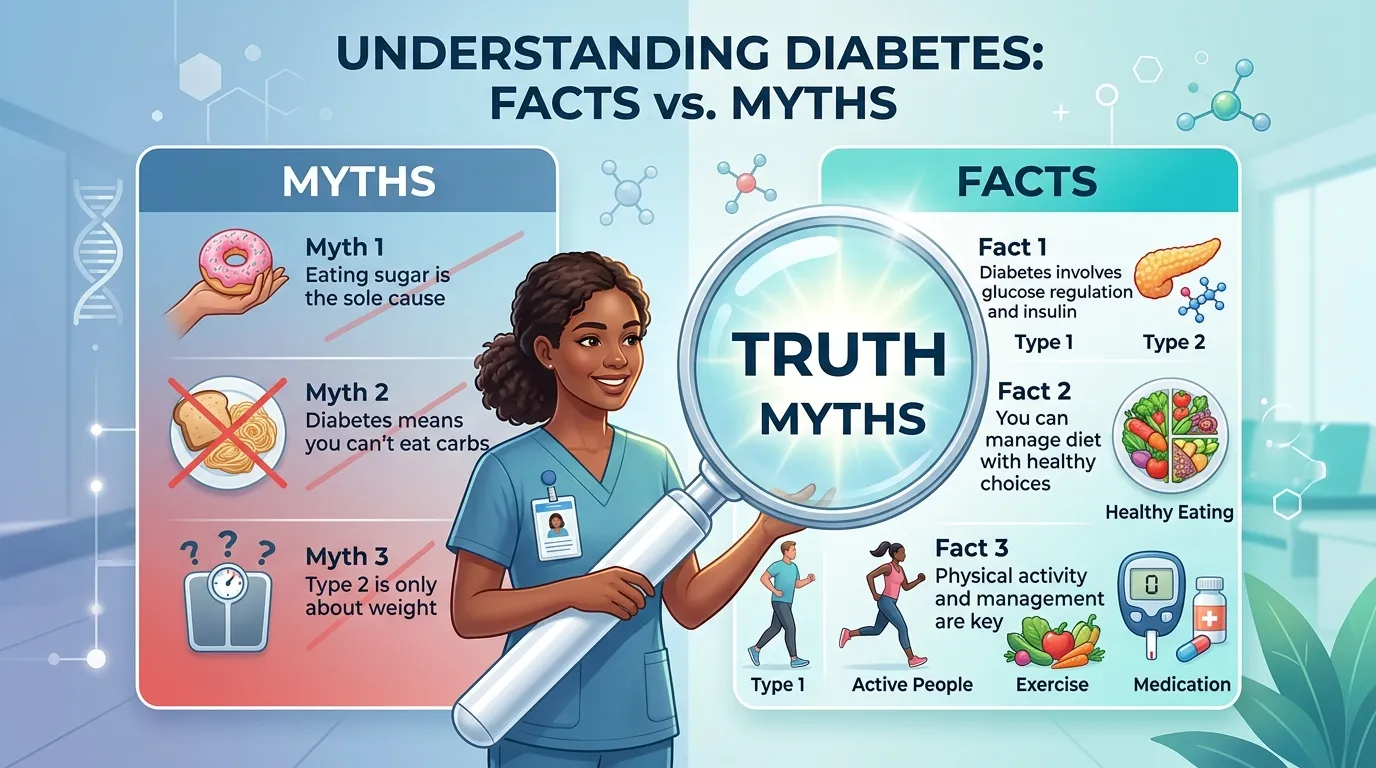
Diabetes affects millions of people, yet misinformation about the condition remains surprisingly common.
Some myths are relatively harmless, but others can create stigma, cause unnecessary fear, or encourage people to make decisions that interfere with effective diabetes management. Someone newly diagnosed with diabetes may hear conflicting advice from friends, relatives, social media, advertisements, and online communities—all while trying to understand information from their healthcare team.
Statements such as “eating too much sugar causes diabetes,” “people with diabetes can never eat carbohydrates,” or “needing insulin means you failed” oversimplify a complex group of conditions.
Diabetes management is highly individualized. Type 1 diabetes, Type 2 diabetes, gestational diabetes, and other forms of diabetes have different causes and treatment needs. Even two people with the same type of diabetes may require very different approaches.
Understanding the facts can make diabetes less confusing and help people make informed decisions with their healthcare professionals.
Here are some of the most persistent diabetes myths—and what you should know instead.
Myth #1: Eating Too Much Sugar Directly Causes Diabetes
Fact: The relationship between diet and diabetes is more complicated.
Type 1 diabetes is an autoimmune condition in which the immune system attacks insulin-producing beta cells in the pancreas. Eating sugar does not cause Type 1 diabetes.
Type 2 diabetes develops through a combination of factors that can include genetics, insulin resistance, age, physical activity, body composition, sleep, environmental influences, and other health factors.
Frequently consuming foods and beverages high in added sugars can contribute to excess calorie intake and weight gain, which may increase Type 2 diabetes risk for some people. Sugar-sweetened beverages in particular have been associated with increased risk.
However, saying someone developed diabetes simply because they “ate too much sugar” is inaccurate.
Diabetes is a complex metabolic disease, not a punishment for eating dessert.
Myth #2: People with Diabetes Can Never Eat Sugar
Fact: Having diabetes does not necessarily mean eliminating every food containing sugar.
Foods containing added sugars can raise blood glucose quickly and may provide relatively little nutritional value, so portion size and frequency matter.
However, diabetes meal planning focuses on the overall eating pattern rather than declaring one ingredient completely forbidden.
Depending on an individual's treatment plan, a small serving of dessert may sometimes fit into a balanced meal.
The important considerations include:
- Portion size
- Total carbohydrate
- Medication or insulin plan
- Frequency
- Overall nutritional quality
- Individual glucose response
A registered dietitian nutritionist or diabetes care and education specialist can help develop an approach that is both realistic and nutritionally balanced.
Myth #3: People with Diabetes Must Avoid All Carbohydrates
Fact: Carbohydrates are not automatically unhealthy, and many nutritious foods contain them.
Carbohydrate-containing foods include:
- Fruits
- Vegetables
- Beans
- Lentils
- Whole grains
- Milk
- Yogurt
These foods can provide fiber, vitamins, minerals, protein, and other important nutrients.
Carbohydrates do affect blood glucose, so quantity, quality, and timing may matter.
For some people, carbohydrate counting can help coordinate food intake with insulin. Others may use the plate method or another meal-planning approach.
There is no single carbohydrate intake that is appropriate for everyone with diabetes.
The goal is generally to choose nutrient-dense carbohydrate sources more often and develop an eating pattern that supports individualized glucose and health goals.
Myth #4: Fruit Is Bad for Diabetes
Fact: Whole fruit can be part of a healthy diabetes eating plan.
Fruit contains natural sugars, but it also provides:
- Fiber
- Vitamins
- Minerals
- Water
- Antioxidants and other plant compounds
Whole fruit generally affects the body differently from sugar-sweetened beverages or candy because its fiber and structure can slow digestion.
Portion size still matters because fruit contains carbohydrates.
Some people find that pairing fruit with protein or healthy fat—such as berries with unsweetened yogurt—helps create a satisfying snack.
Fruit juice can raise glucose more quickly because much of the fiber found in whole fruit has been removed.
Unless your healthcare team has advised otherwise, diabetes does not require avoiding fruit completely.
Myth #5: If You Have Type 2 Diabetes, You Caused It
Fact: Type 2 diabetes develops through a complex interaction of biological, genetic, environmental, and lifestyle factors.
Some risk factors can be modified, while others cannot.
Factors associated with Type 2 diabetes may include:
- Family history
- Age
- Genetics
- Insulin resistance
- Physical inactivity
- Excess body weight in some individuals
- Certain medical conditions
- History of gestational diabetes
- Social and environmental factors
Lifestyle changes can play an important role in preventing or managing Type 2 diabetes for many people, but blaming individuals oversimplifies the condition and can create harmful stigma.
Effective diabetes care focuses on what can be done now—not assigning blame for why the condition developed.
Myth #6: Only People Who Are Overweight Develop Type 2 Diabetes
Fact: People at many different body sizes can develop Type 2 diabetes.
Higher body weight can increase risk, particularly when associated with insulin resistance, but it is only one factor.
Some people with obesity never develop diabetes, while some people who are lean do.
Family history, genetics, age, body-fat distribution, physical activity, and other metabolic factors also influence risk.
Body weight alone cannot determine whether someone has diabetes.
Diagnosis requires appropriate medical testing.
Myth #7: Type 1 Diabetes Is the “Bad” Type
Fact: There is no useful “good” or “bad” type of diabetes.
Type 1 and Type 2 diabetes have different underlying mechanisms, but both require appropriate management and can lead to complications when glucose remains outside target ranges over time.
People with Type 1 diabetes require insulin because their bodies produce little or no insulin.
People with Type 2 diabetes may manage their condition using combinations of:
- Nutrition
- Physical activity
- Oral medications
- Injectable medications
- Insulin
The seriousness of diabetes depends on many individual factors rather than simply the type.
Myth #8: Needing Insulin Means You Failed
Fact: Insulin is a treatment, not a judgment.
People with Type 1 diabetes need insulin to survive.
For people with Type 2 diabetes, insulin may become appropriate because the condition can change over time. The pancreas may gradually produce less insulin, and other treatments may no longer be sufficient.
Insulin may also be used temporarily during:
- Serious illness
- Surgery
- Pregnancy
- Hospitalization
- Certain medication treatments
- Starting insulin does not mean someone has failed at managing diabetes.
When insulin is medically appropriate, using it can improve glucose management and reduce the risk of complications.
Myth #9: Insulin Causes Diabetes Complications
Fact: Insulin is used to treat elevated blood glucose, not cause complications such as kidney disease, nerve damage, or diabetic retinopathy.
This misconception may arise because some people begin insulin after having diabetes for many years, sometimes around the same time complications are discovered.
The timing can make it appear that insulin caused the problem.
In reality, chronic exposure to elevated glucose and other risk factors contributes to many diabetes complications.
Insulin treatment may help reduce these risks by improving glucose management when it is appropriately prescribed and used.
Myth #10: If You Feel Fine, Your Diabetes Must Be Under Control
Fact: Diabetes can affect the body without producing obvious symptoms.
Elevated blood glucose may not make someone feel sick every day.
Similarly, early complications such as:
- Kidney disease
- Diabetic retinopathy
- Peripheral neuropathy
- Cardiovascular disease
- may develop before noticeable symptoms appear.
This is why routine monitoring and preventive screening are important even when you feel well.
Depending on your situation, your healthcare team may monitor:
- A1C
- Blood pressure
- Cholesterol
- Kidney function
- Urine albumin
- Eye health
- Foot health
Feeling healthy is valuable, but it cannot replace objective medical monitoring.
Myth #11: Diabetes Medication Means Diet and Exercise Don't Matter
Fact: Medication and lifestyle habits work together.
Medication may be essential for controlling glucose and reducing health risks, but healthy daily habits remain important.
These may include:
- Eating a balanced diet
- Staying physically active
- Getting adequate sleep
- Avoiding tobacco
- Managing blood pressure
- Managing cholesterol
- Attending preventive healthcare appointments
At the same time, lifestyle changes should not be viewed as a substitute for medication when medication is needed.
The best approach is the one that safely combines appropriate treatment strategies for the individual.
Myth #12: Exercise Is Dangerous for People with Diabetes
Fact: Physical activity is beneficial for most people with diabetes.
Regular exercise can support:
- Insulin sensitivity
- Cardiovascular health
- Blood pressure
- Strength
- Mobility
- Mood
- Sleep
- Weight management
However, exercise can affect glucose differently depending on the activity, medications, insulin use, and individual response.
People taking insulin or medications that can cause hypoglycemia may need to monitor glucose and plan for low blood glucose around exercise.
Certain diabetes complications may also require modifications to an exercise program.
Rather than avoiding activity, discuss appropriate exercise and safety precautions with your healthcare team.
Myth #13: You Can Tell Whether Someone Has Diabetes by Looking at Them
Fact: Diabetes does not have a particular appearance.
People with diabetes can be:
- Young or old
- Thin or heavy
- Athletic or inactive
- Newly diagnosed or living with diabetes for decades
- Many people with diabetes have no visible symptoms.
- Assumptions based on someone's appearance can reinforce stereotypes and stigma.
Diabetes is diagnosed through medical evaluation and laboratory testing—not appearance.
Myth #14: Prediabetes Is Just “Borderline Diabetes” and Isn't Serious
Fact: Prediabetes means blood glucose is higher than normal but not yet in the diabetes range.
The term “borderline diabetes” can make the condition sound insignificant. Prediabetes is important because it indicates an increased risk of developing Type 2 diabetes and cardiovascular disease.
The encouraging news is that progression is not inevitable.
Depending on the individual, strategies such as increased physical activity, nutritious eating, weight management when appropriate, adequate sleep, and regular medical monitoring may significantly reduce the risk of developing Type 2 diabetes.
Some people at higher risk may also benefit from medication.
If you've been diagnosed with prediabetes, ask your healthcare provider how often your glucose should be tested and what changes could have the greatest impact on your health.
Myth #15: Natural Remedies Can Cure Diabetes
Fact: Be cautious of any supplement, tea, herb, diet, or product advertised as a diabetes “cure.”
There is currently no established natural product that cures Type 1 or Type 2 diabetes.
Some supplements may affect blood glucose, but that does not mean they can safely replace prescribed treatment.
“Natural” also does not automatically mean safe.
Supplements may:
- Interact with medications
- Cause side effects
- Affect the liver or kidneys
- Contain inconsistent ingredients
- Lower glucose unexpectedly
- Delay effective medical treatment
Tell your healthcare provider or pharmacist about any vitamins, herbs, or supplements you're considering.
Never stop prescribed diabetes medication because a product claims to cure diabetes.
Myth #16: “Diabetes-Friendly” Foods Are Always Better
Fact: Marketing terms do not automatically make a product healthier.
Foods labeled:
- Sugar-free
- Low-carb
- Keto
- Diabetic-friendly
- No added sugar
can still contain significant amounts of carbohydrates, calories, saturated fat, sodium, or sugar alcohols.
“Sugar-free,” for example, does not necessarily mean carbohydrate-free.
Instead of relying on marketing claims, check the Nutrition Facts label and ingredient list.
Consider:
- Serving size
- Total carbohydrate
- Fiber
- Added sugars
- Saturated fat
- Sodium
Regular foods in appropriate portions may sometimes be just as suitable—or more nutritious—than specialty products marketed specifically to people with diabetes.
Myth #17: People with Diabetes Need Special Meals
Fact: A nutritious eating pattern for someone with diabetes often looks similar to a healthy eating pattern recommended for many other adults.
Meals can include:
- Non-starchy vegetables
- Whole grains
- Beans and legumes
- Lean proteins
- Fish
- Nuts and seeds
- Healthy fats
- Fruit
- Appropriate portions of dairy or alternatives
- Families generally do not need to prepare an entirely separate “diabetic meal.”
Instead, focus on balanced portions, carbohydrate awareness, fiber-rich foods, and overall nutritional quality.
Individual needs still vary, especially for people taking insulin or managing conditions such as kidney disease.
Myth #18: People with Diabetes Can Never Eat at Restaurants
Fact: Restaurant meals can fit into a diabetes management plan.
Eating away from home may require more planning because portions can be larger and carbohydrate, sodium, and calorie content may be difficult to estimate.
Helpful strategies include:
- Reviewing menus beforehand
- Choosing vegetables as a side when available
- Paying attention to portion sizes
- Asking for sauces or dressings separately
- Choosing water or unsweetened beverages
- Sharing large portions or saving part for later
If you use mealtime insulin, follow the carbohydrate-counting and dosing plan provided by your healthcare team.
Diabetes management should be sustainable enough to accommodate normal social activities.
Myth #19: Low Blood Glucose Is Only a Minor Inconvenience
Fact: Hypoglycemia can become dangerous.
Low blood glucose may cause:
- Shaking
- Sweating
- Hunger
- Dizziness
- Irritability
- Confusion
- Weakness
- Difficulty concentrating
- Severe hypoglycemia may lead to:
- Seizures
- Loss of consciousness
- Inability to safely swallow
- Serious injury
People taking insulin or certain glucose-lowering medications should know how to recognize and treat hypoglycemia.
If glucagon has been prescribed, family members or caregivers should know where it is and how to use it.
Frequent low glucose readings should be discussed with your healthcare provider because medication or other aspects of your treatment plan may need adjustment.
Myth #20: Diabetes Complications Are Inevitable
Fact: Having diabetes increases the risk of certain complications, but developing them is not guaranteed.
Long-term diabetes management can significantly reduce risk.
Important areas include:
- Blood glucose management
- Blood pressure control
- Cholesterol management
- Not smoking
- Regular physical activity
- Kidney screening
- Comprehensive eye examinations
- Foot care
- Dental care
- Taking medications as prescribed
- Early detection also matters.
Some complications can be treated or slowed significantly when discovered before advanced symptoms develop.
Rather than viewing complications as inevitable, focus on the risk factors you and your healthcare team can address.
Myth #21: If Diabetes Runs in Your Family, There's Nothing You Can Do
Fact: Genetics can increase diabetes risk, but genetics are not the entire story.
A family history of Type 2 diabetes may mean that preventive habits and routine screening are particularly important.
Depending on your individual risk, maintaining regular physical activity, following a nutritious eating pattern, managing weight when appropriate, avoiding tobacco, and attending recommended screenings may help reduce your risk or delay the development of Type 2 diabetes.
Knowing your family history can help you take preventive action earlier.
Myth #22: Type 2 Diabetes Can Never Improve
Fact: Type 2 diabetes can improve substantially in some people.
Lifestyle changes, medications, metabolic surgery, and weight loss when appropriate can sometimes bring glucose levels below the diabetes threshold.
Some people may achieve Type 2 diabetes remission, generally meaning glucose remains below the diabetes diagnostic range for a sustained period without glucose-lowering medication.
However, remission is not the same as a permanent cure.
Blood glucose can rise again, particularly with weight regain, illness, aging, or other metabolic changes.
People in remission should continue appropriate medical monitoring because their history of diabetes remains clinically important.
Myth #23: Once Your A1C Is Good, You Don't Need to Worry About Diabetes
Fact: A healthy A1C result is encouraging, but diabetes management involves more than one number.
A1C does not fully describe:
- Glucose variability
- Hypoglycemia
- Blood pressure
- Cholesterol
- Kidney function
- Eye health
- Nerve health
- Foot health
- Cardiovascular risk
People using CGM may also benefit from reviewing measurements such as Time in Range and Time Below Range.
Continue preventive appointments and screenings even when your glucose results are meeting your goals.
Myth #24: Diabetes Always Gets Worse No Matter What You Do
Fact: Diabetes can change over time, but its course is not identical for everyone.
Type 2 diabetes can be progressive for some individuals, meaning medication needs may increase as insulin production changes.
That does not mean healthy habits and treatment are ineffective.
Effective management can:
- Improve glucose levels
- Reduce symptoms
- Lower complication risk
- Protect cardiovascular health
- Improve quality of life
Needing additional treatment later does not mean earlier efforts were wasted or that someone failed.
Treatment should change when the body's needs change.
Myth #25: There Is One Perfect Diabetes Diet
Fact: No single eating plan works best for every person with diabetes.
Healthy eating patterns may vary according to:
- Culture
- Food preferences
- Budget
- Medications
- Activity level
- Weight goals
- Kidney function
- Cardiovascular health
- Individual glucose responses
Some people successfully use Mediterranean-style eating patterns. Others may use lower-carbohydrate approaches, vegetarian diets, the plate method, carbohydrate counting, or other evidence-based strategies.
A registered dietitian nutritionist can help develop an approach that is nutritionally adequate, realistic, and compatible with your diabetes treatment.
The best eating plan is not necessarily the most restrictive one. It is one that supports your health and can be maintained safely over time.
Why Diabetes Misinformation Can Be Harmful
Diabetes myths are more than simple misunderstandings.
Misinformation can cause people to:
- Avoid nutritious foods unnecessarily
- Feel ashamed about their diagnosis
- Stop medications
- Fear insulin
- Purchase ineffective supplements
- Ignore prediabetes
- Delay medical treatment
- Believe complications cannot be prevented
- Follow unnecessarily restrictive diets
Social media can spread health claims extremely quickly, and popularity does not guarantee accuracy.
Be especially cautious when someone claims that a product or diet:
- “Cures” diabetes
- Works for everyone
- Makes medication unnecessary
- Produces guaranteed results
- Is being hidden by doctors
- Requires purchasing a particular supplement
Discuss major changes to your diabetes treatment with qualified healthcare professionals.
How to Evaluate Diabetes Information Online
Before trusting health information, consider the source.
Ask:
Who published the information?
Are qualified healthcare professionals involved?
Does the claim cite credible evidence?
Is the information current?
Is someone trying to sell a product?
Does the claim promise unrealistic results?
Does it encourage stopping prescribed treatment?
Reliable sources generally acknowledge that diabetes management must be individualized and that treatment decisions should involve qualified healthcare professionals.
When uncertain, bring the information to your doctor, pharmacist, registered dietitian, or diabetes care and education specialist.
Frequently Asked Questions
Did eating sugar give me diabetes?
Not by itself. Type 1 diabetes is an autoimmune condition, while Type 2 diabetes develops through a combination of genetic, metabolic, environmental, and lifestyle factors. Diet can influence Type 2 diabetes risk, but blaming one food oversimplifies the condition.
Can people with diabetes eat dessert?
Many people can include occasional desserts within an individualized eating plan. Portion size, carbohydrate content, medication, glucose response, and overall dietary pattern should be considered.
Does starting insulin mean my diabetes is severe?
Not necessarily. Everyone with Type 1 diabetes needs insulin, and many people with Type 2 diabetes eventually benefit from it. Insulin is simply one of several effective treatments.
Can Type 2 diabetes go into remission?
Yes, some people can achieve remission. However, remission is not considered a permanent cure, and continued medical monitoring remains important.
Are herbal diabetes supplements safe?
Not automatically. Supplements can cause side effects, interact with medications, or contain inconsistent ingredients. Discuss them with your healthcare provider or pharmacist before use.
Can diabetes complications be prevented?
Risk can often be significantly reduced through glucose, blood pressure, and cholesterol management, avoiding tobacco, healthy lifestyle habits, appropriate medication, and recommended preventive screenings.
Do people with diabetes need special foods?
Usually not. Many nutritious foods appropriate for the general population are also appropriate for people with diabetes. Individual meal planning should account for carbohydrate intake, medications, personal preferences, and other health conditions.
Key Takeaways
Diabetes misinformation remains common, even though our understanding of the condition has improved significantly.
Eating sugar alone does not cause diabetes, and people with diabetes do not necessarily need to eliminate sugar, carbohydrates, or fruit completely.
Type 2 diabetes can affect people at many different body sizes, and developing the condition is not simply a matter of personal failure.
Insulin is an essential and effective treatment—not evidence that someone has failed to manage their diabetes.
People with diabetes generally do not need expensive specialty foods. Balanced meals built around nutrient-dense foods can often be shared with the entire family.
Prediabetes deserves attention because early intervention may help prevent or delay Type 2 diabetes.
Diabetes complications are not inevitable. Managing glucose, blood pressure, cholesterol, and other risk factors while keeping up with preventive screenings can substantially improve long-term health.
Type 2 diabetes can sometimes enter remission, but remission is not the same as a permanent cure and continued monitoring remains important.
Finally, be skeptical of anyone promising a quick diabetes cure. Good diabetes management is based on reliable evidence, individualized treatment, and ongoing collaboration with qualified healthcare professionals.
Understanding the difference between diabetes myths and facts can reduce stigma, prevent unnecessary restrictions, and help people make safer, better-informed decisions about their health.
This article provides general educational information and is not a substitute for personalized medical advice.