
Preparing for Emergency Situations When You Have Diabetes: A Practical Guide
Emergencies are unpredictable. A severe storm, power outage, wildfire, flood, illness, evacuation, or unexpected travel disruption can quickly interfere with the routines people rely on to manage diabetes.
Pharmacies may close. Electricity may be unavailable. Refrigeration can become difficult. Normal meals may not be available, and access to healthcare may be limited.
Diabetes adds another layer of preparation because medications, glucose monitoring supplies, food, hydration, and emergency treatments may be needed even when normal services are disrupted.
Preparing ahead of time can make these situations safer and less stressful.
A good diabetes emergency plan should address several possibilities: low blood glucose, very high glucose, illness, loss of power, evacuation, and temporary difficulty obtaining medications or supplies.
This guide explains practical steps you can take before an emergency happens and how to recognize situations that require immediate medical assistance.
Why Emergency Planning Matters When You Have Diabetes
Managing diabetes often depends on a routine.
You may rely on:
- Prescription medications
- Insulin
- Glucose meters
- Continuous glucose monitors (CGMs)
- Insulin pumps
- Regular meals
- Refrigeration
- Electricity
- Pharmacies
- Medical appointments
- An emergency can disrupt several of these at once.
Stress hormones released during an emergency or illness can also affect blood glucose. Some people experience higher readings, while changes in eating, activity, or medication may increase the risk of hypoglycemia.
Planning ahead reduces the number of decisions you have to make during an already stressful situation.
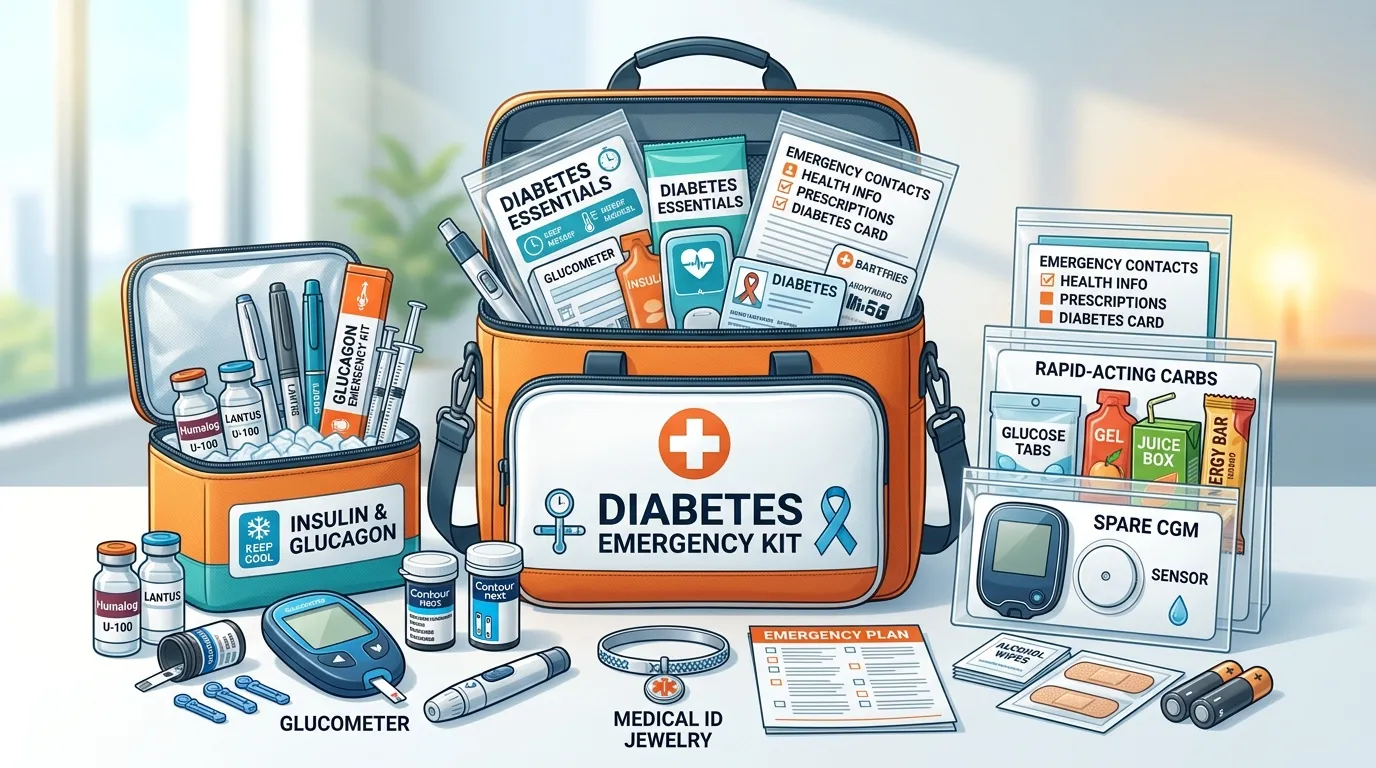
Build a Diabetes Emergency Kit
A diabetes emergency kit should contain enough supplies to help you manage your condition if normal resources temporarily become unavailable.
Depending on your treatment plan, consider including:
- Diabetes medications
- Insulin and injection supplies
- Glucose meter
- Extra meter batteries
- Test strips
- Lancets
- CGM sensors and related supplies
- Insulin pump supplies
- Fast-acting glucose
- Glucagon if prescribed
- Ketone testing supplies if recommended
- Alcohol wipes
- Sharps container or safe temporary disposal container
- Bottled water
- Nonperishable foods
- Medical identification
- Copies of prescriptions
- Medication list
- Healthcare provider contact information
- Pharmacy information
- The exact contents should reflect your individual diabetes treatment.
- Ask your healthcare team which supplies are essential for you.
- Keep Extra Diabetes Supplies When Possible
During major emergencies, pharmacies and medical offices may be closed or difficult to reach.
Having additional medication and testing supplies available can provide an important buffer.
Talk with your healthcare provider, pharmacist, and insurance company about whether you can maintain an emergency supply of essential medications.
Do not allow emergency medications or supplies to sit forgotten for years.
Periodically check:
- Expiration dates
- Battery condition
- Medication quantities
- Glucose test strip dates
- CGM and pump supply dates
- Glucagon expiration dates
- Food and water supplies
Rotate older items into normal use and replace them with newer supplies when appropriate.
Keep an Updated Medication List
During an emergency, you may receive care from healthcare professionals who do not have access to your usual medical records.
Keep a written medication list that includes:
- Medication names
- Dosages
- When you take each medication
- Insulin type and usual doses, if applicable
- Medication allergies
- Important medical conditions
- Emergency contact information
- Healthcare provider information
- Keep one copy in your emergency kit and another in a secure location.
A digital copy on your phone can also be helpful, but it should not be your only copy because batteries can fail.
Wear Medical Identification
Medical identification can communicate important information when you are unable to speak for yourself.
A medical ID bracelet, necklace, wallet card, or phone emergency profile may indicate that you have diabetes and whether you use insulin.
This can be particularly useful during:
- Severe hypoglycemia
- Loss of consciousness
- Accidents
- Evacuations
- Other medical emergencies
Family members and caregivers should also know where your emergency medical information is stored.
Prepare for Low Blood Glucose
Hypoglycemia can develop quickly, especially in people taking insulin or certain glucose-lowering medications.
Possible symptoms include:
- Shaking
- Sweating
- Hunger
- Dizziness
- Weakness
- Irritability
- Confusion
- Rapid heartbeat
- Difficulty concentrating
Keep fast-acting carbohydrates available in several convenient locations, such as:
- Your emergency kit
- Purse or backpack
- Vehicle
- Workplace
- Bedside table
Examples may include glucose tablets or glucose gel. Other carbohydrate sources may be appropriate according to your personal treatment plan.
Follow the hypoglycemia treatment instructions provided by your healthcare team.
Severe Hypoglycemia Requires Immediate Help
Severe hypoglycemia can cause:
- Seizures
- Loss of consciousness
- Inability to safely swallow
- Severe confusion
A person who is unconscious or unable to swallow safely should not be given food or liquid by mouth because of the risk of choking.
If glucagon has been prescribed, family members, caregivers, coworkers, or others close to you should know:
- Where it is stored
- How to administer it
- When it should be used
- When emergency medical assistance is required
- Review instructions periodically rather than waiting until an emergency occurs.
- Prepare for Very High Blood Glucose
Emergencies, infections, missed medication, dehydration, and problems with insulin delivery can cause glucose to rise significantly.
Symptoms of severe hyperglycemia may include:
- Increased thirst
- Frequent urination
- Fatigue
- Blurred vision
- Dry mouth
- Weakness
People at risk of diabetic ketoacidosis (DKA) should know when their healthcare provider recommends checking ketones.
Warning signs that may accompany DKA include:
- Nausea or vomiting
- Abdominal pain
- Rapid or deep breathing
- Fruity-smelling breath
- Severe dehydration
- Confusion
- DKA is a medical emergency and requires prompt treatment.
People with Type 2 diabetes may also develop hyperosmolar hyperglycemic state (HHS), another potentially life-threatening emergency involving extremely high glucose and severe dehydration.
Know your healthcare provider's instructions for when to call the clinic and when to seek emergency care.
Create a Sick-Day Plan Before You Need It
Illness can significantly affect blood glucose.
Ask your healthcare provider for written instructions explaining:
- How frequently to monitor glucose
- When to check ketones
- Which medications to continue
- Whether any medications should temporarily be held
- How to manage insulin
- What fluids to drink
- What to eat if normal meals are difficult
- When to contact your healthcare team
- When to seek emergency care
Do not wait until you are vomiting, dehydrated, or seriously ill to figure out your sick-day plan.
Keep the instructions with your emergency supplies.
Prevent Dehydration
Vomiting, diarrhea, fever, heat exposure, and very high glucose can all contribute to dehydration.
Keep safe drinking water available as part of your emergency supplies.
During illness, your healthcare provider may recommend frequent small amounts of fluid when drinking larger amounts is difficult.
People with kidney disease, heart failure, or other conditions that require fluid restrictions should follow individualized medical advice.
Signs of significant dehydration may include:
- Very dry mouth
- Dizziness
- Weakness
- Reduced urination
- Confusion
- Rapid heartbeat
- Severe dehydration requires medical evaluation.
- Plan for Power Outages
- Power outages can affect diabetes management in several ways.
- You may lose access to:
- Refrigeration
- Device charging
- Internet or cellular service
- Electronic medical information
- Pharmacies
- Normal cooking equipment
Keep portable charging options available for devices you depend on, when practical.
If you use insulin, understand its storage requirements before an emergency occurs.
Different insulin products have specific temperature and storage instructions. Extreme heat and freezing temperatures can damage insulin.
Follow the manufacturer's storage guidance for your specific insulin, and ask your pharmacist what to do when refrigeration is unavailable.
Do not place insulin directly against ice or allow it to freeze.
Have a Backup Plan for Diabetes Technology
CGMs, insulin pumps, automated insulin delivery systems, and smartphone apps can make diabetes management easier, but technology can fail.
Your emergency plan should account for:
- Sensor failure
- Pump failure
- Lost or damaged phones
- Dead batteries
- Lost charging cables
- Lack of internet service
If you use an insulin pump, ask your healthcare team what you should do if the pump stops working.
Your backup plan may include glucose testing equipment and an alternative insulin delivery method prescribed by your healthcare provider.
Know the plan before the device fails.
Keep Important Information on Paper
Phones are useful, but emergency planning should not depend entirely on them.
Keep printed copies of:
- Medication lists
- Prescriptions when available
- Healthcare provider contacts
- Pharmacy information
- Emergency contacts
- Insurance information
- Sick-day instructions
- Pump backup instructions
Store these documents in a waterproof bag or container with your diabetes supplies.
Preparing for Emergency Situations When You Have Diabetes: A Practical Guide — Part 2
Prepare for Evacuation
Some emergencies require leaving home with very little notice.
Wildfires, hurricanes, floods, earthquakes, chemical emergencies, and other disasters can lead to mandatory evacuations. Having diabetes supplies organized and ready to go can save valuable time.
Keep your emergency diabetes kit somewhere that is:
- Easy to reach
- Clearly labeled
- Protected from children and pets
- Known to family members or caregivers
When possible, store important medications and supplies together so you don't have to search for them during an evacuation.
Before leaving, take:
- Diabetes medications
- Insulin and administration supplies
- Glucose meter and test strips
- CGM supplies
- Pump supplies
- Fast-acting carbohydrates
- Glucagon if prescribed
- Ketone testing supplies if recommended
- Food and water
- Medication and prescription information
- Medical identification
- Charging equipment
- Emergency contact information
If authorities tell you to evacuate immediately, personal safety comes first. Follow local emergency instructions.
Keep Emergency Food Available
A disaster may temporarily limit access to grocery stores, restaurants, or normal cooking facilities.
Keep a supply of nonperishable foods that fit reasonably well with your diabetes management plan.
Options might include:
- Shelf-stable nut or seed butters
- Whole-grain crackers
- Canned tuna, chicken, or beans
- Nuts and seeds
- Shelf-stable milk when appropriate
- Low-sodium canned foods
- Individually packaged snacks
Choose foods you will actually eat and can prepare without complicated equipment.
If canned foods are part of your kit, include a manual can opener.
Also keep fast-acting carbohydrates separate from regular emergency food so they're easy to locate during hypoglycemia.
Don't Forget Water
Clean drinking water is essential during emergencies.
Natural disasters may interrupt municipal water systems or contaminate local water supplies.
Store water according to emergency preparedness recommendations for your household, and periodically replace stored supplies as appropriate.
People with diabetes may be especially vulnerable to dehydration when glucose is very high.
However, people who have kidney disease, heart failure, or another condition requiring fluid restrictions should follow their healthcare provider's individualized instructions.
Protect Insulin from Extreme Temperatures
Insulin requires appropriate storage, and both excessive heat and freezing can damage it.
During an emergency:
- Follow the storage instructions for your specific insulin product.
- Keep insulin away from direct sunlight.
- Never leave it in a hot vehicle.
- Do not place insulin directly on ice.
- Do not allow insulin to freeze.
- Use insulated storage appropriately when necessary.
If insulin has been exposed to extreme temperatures and you're unsure whether it is still safe or effective, contact a pharmacist, healthcare provider, or the manufacturer for guidance when possible.
Avoid automatically discarding your only available insulin during an emergency without obtaining professional guidance.
Plan for Insulin Pump Problems
If you use an insulin pump, interruption of insulin delivery can cause glucose to rise quickly because many pumps deliver rapid-acting insulin continuously.
Discuss a backup plan with your diabetes care team.
You should understand:
- How to recognize possible pump failure
- How to check whether insulin is being delivered
- When to check ketones
- What alternative insulin delivery method to use
- Who to contact for technical assistance
- When medical evaluation is necessary
- Keep backup supplies recommended by your healthcare team.
- Never wait until a pump fails to learn your backup plan.
- Travel with Diabetes Supplies Carefully
An emergency may require an unexpected overnight stay with relatives, in a hotel, or at a community shelter.
Keep essential diabetes supplies with you rather than placing them somewhere difficult to access.
When traveling, consider carrying more supplies than you expect to need.
Your travel kit may include:
- Extra medication
- Glucose monitoring supplies
- CGM sensors
- Pump supplies
- Fast-acting glucose
- Glucagon
- Snacks
- Water
- Medical identification
- Written medication information
If traveling by air, keep essential diabetes supplies accessible rather than relying solely on checked baggage.
Know What to Do at an Emergency Shelter
If you arrive at an emergency shelter, tell appropriate staff that you have diabetes, particularly if you:
- Use insulin
- Require refrigeration for medication
- Use an insulin pump
- Have dietary needs
- Have mobility limitations
- Are at risk of severe hypoglycemia
- Need help obtaining medication
Keep medications and essential supplies with you unless shelter personnel provide a secure alternative.
Do not assume that every shelter will have your specific insulin, CGM sensors, pump supplies, or other diabetes equipment immediately available.
Prepare Family Members and Caregivers
An emergency plan is more effective when the people around you understand it.
Family members or caregivers should know:
- Where your diabetes supplies are stored
- Which medications you use
- How to recognize hypoglycemia
- Where fast-acting glucose is kept
- Where glucagon is stored
- How to use glucagon if appropriate
- Who your healthcare providers are
- Which pharmacy you use
- When emergency medical assistance is necessary
If you live alone, consider identifying a trusted person who can check on you during a major emergency.
Make a Plan for Children with Diabetes
Children with diabetes need additional planning because they depend on adults to manage or supervise many aspects of their care.
Parents and caregivers should ensure that appropriate adults understand:
- The child's diabetes management plan
- Insulin administration
- Glucose monitoring
- CGM alerts
- Signs of hypoglycemia
- Hypoglycemia treatment
- Glucagon administration
- Emergency contacts
- Emergency supplies should travel with the child when appropriate.
Schools, childcare providers, relatives, and other caregivers should have the information and supplies required by the child's individualized diabetes plan.
Older Adults May Need Additional Planning
Older adults with diabetes may face additional challenges during emergencies, including:
- Mobility limitations
- Vision problems
- Hearing impairment
- Multiple medications
- Memory difficulties
- Increased hypoglycemia risk
- Dependence on caregivers
- Emergency plans should account for these needs.
Medication lists should be especially clear when multiple prescriptions are involved.
Family members or caregivers may also need copies of the emergency plan.
Protect Your Feet During Disasters
Floods, debris, broken glass, and damaged buildings increase the risk of foot injuries.
For people with diabetic neuropathy, an injury may occur without causing significant pain.
Wear sturdy, properly fitting footwear and avoid walking barefoot.
Check your feet every day for:
- Cuts
- Blisters
- Punctures
- Redness
- Swelling
- Drainage
- Areas of unusual warmth
Clean minor injuries promptly and seek medical attention for wounds that appear infected or fail to improve.
Keep Your Emergency Kit Updated
An emergency kit is useful only when its contents are usable.
Set a reminder to inspect it periodically.
Check:
- Medication expiration dates
- Glucagon expiration
- Test strips
- CGM sensors
- Pump supplies
- Batteries
- Charging equipment
- Food
- Water
- Printed medical information
Replace expired items and update your medication list whenever your treatment changes.
Consider reviewing the kit whenever clocks change, at the beginning of a new season, or on another date that is easy to remember.
Know When to Seek Emergency Medical Care
Some diabetes-related problems should not be managed at home.
Seek emergency medical assistance for situations such as:
- Loss of consciousness
- Seizures
- Severe hypoglycemia that cannot be safely treated
- Inability to swallow
- Severe confusion
- Persistent vomiting with inability to keep fluids down
- Signs of severe dehydration
- Difficulty breathing
- Symptoms suggesting diabetic ketoacidosis
- Very high glucose accompanied by significant illness or altered mental status
Follow your individualized emergency and sick-day instructions for specific glucose or ketone thresholds.
If you're unsure whether a situation is dangerous, seeking professional medical guidance is safer than delaying treatment.
After the Emergency
Once immediate danger has passed, diabetes management may still require additional attention.
Stress, disrupted sleep, unusual meals, reduced physical activity, and medication changes can affect glucose for several days.
After an emergency:
- Resume your normal routine when safely possible.
- Continue monitoring glucose.
- Replace used emergency supplies.
- Check medications for possible temperature damage.
- Refill prescriptions.
- Contact your healthcare provider about persistent glucose problems.
- Review what worked and what was missing from your emergency plan.
- Use the experience to improve your preparedness for the future.
- Frequently Asked Questions
- How much diabetes medication should I keep for emergencies?
Emergency preparedness authorities often recommend maintaining an additional supply of essential medications when possible. The amount you can obtain may depend on your prescriptions, insurance, local regulations, and medication storage requirements. Ask your healthcare provider and pharmacist what is practical for your situation.
How should I store insulin during a power outage?
Storage requirements depend on the insulin product. Avoid freezing insulin or exposing it to excessive heat, and follow the manufacturer's instructions. Ask your pharmacist ahead of time how your specific insulin should be handled if refrigeration is unavailable.
What if my CGM stops working during an emergency?
Keep a glucose meter, test strips, and other backup supplies available if recommended for your CGM system. Follow the manufacturer's instructions and your healthcare team's backup monitoring plan.
What should I do if my insulin pump fails?
Follow the pump-failure plan developed with your diabetes care team. People using pumps should have a prescribed alternative method of insulin delivery available when appropriate. Because interruption of insulin can lead to rapidly rising glucose, do not wait until a failure occurs to establish this plan.
Should I keep glucagon in my emergency kit?
If you're at risk of severe hypoglycemia and glucagon has been prescribed, keeping it accessible is important. People close to you should know where it is and how to use the specific product you have.
What if I lose my diabetes medication during an evacuation?
Contact a pharmacy, healthcare provider, emergency shelter medical team, or other authorized healthcare resource as soon as possible. Having written prescription and medication information can make replacement easier.
Should I keep diabetes information on my phone?
Yes, but don't rely exclusively on your phone. Power outages, damaged devices, dead batteries, and lost phones can make electronic information unavailable. Keep important medical information on paper as a backup.
Key Takeaways
Emergencies can interrupt access to medications, food, water, electricity, pharmacies, and healthcare. People with diabetes should prepare for these disruptions before they occur.
Build a diabetes emergency kit containing your essential medications, glucose monitoring equipment, CGM or pump supplies when applicable, fast-acting carbohydrates, glucagon if prescribed, food, water, medical identification, and important medical information.
Maintain a written medication list and a personalized sick-day plan. If you use an insulin pump or other diabetes technology, establish a backup plan in case the device fails.
Know how to recognize and respond to hypoglycemia, severe hyperglycemia, dehydration, diabetic ketoacidosis, and other urgent problems.
Protect insulin and other medications from extreme temperatures, and periodically check your emergency kit for expired or missing supplies.
Make sure family members or caregivers understand your diabetes emergency plan, particularly how to recognize severe hypoglycemia and use glucagon when appropriate.
Most importantly, don't wait for a disaster to determine what you need. Preparing medications, supplies, written instructions, and backup plans in advance can help you manage diabetes more safely when normal routines are disrupted.
This article provides general educational information and is not a substitute for personalized medical advice or emergency medical care.