
Skin Care Tips for People with Diabetes: How to Keep Your Skin Healthy and Prevent Infections
Your skin is your body's largest organ and serves as its first line of defense against bacteria, viruses, and environmental hazards. It helps regulate body temperature, retains moisture, and protects the tissues beneath it. For people living with diabetes, maintaining healthy skin is an important part of overall diabetes management.
High blood glucose can affect nearly every organ system—including the skin. Diabetes may lead to dryness, itching, slower wound healing, bacterial and fungal infections, and other skin conditions. Because some skin problems begin with only mild symptoms, they can easily be overlooked until they become more serious.
The good news is that many diabetes-related skin problems can be prevented with good blood glucose management, proper hygiene, daily skin care, and prompt attention to any changes.
This guide explains how diabetes affects the skin, common skin conditions linked to diabetes, and practical strategies for keeping your skin healthy throughout the year.
How Diabetes Affects the Skin
Healthy skin depends on good circulation, adequate hydration, healthy nerves, and a well-functioning immune system.
Diabetes can affect each of these.
Over time, elevated blood glucose may:
- Reduce circulation to the skin
- Damage small blood vessels
- Affect nerve function
- Slow wound healing
- Reduce the body's ability to fight infection
- Contribute to dry skin
- Increase inflammation
When circulation and nerve function are affected, even small cuts or insect bites may take longer to heal and may become infected more easily.
Why Blood Glucose Management Matters
One of the most effective ways to support healthy skin is by keeping blood glucose within your individualized target range.
Consistently elevated blood glucose can:
- Increase skin dryness
- Promote bacterial and fungal growth
- Delay wound healing
- Increase the risk of skin infections
- Worsen existing skin conditions
Healthy blood glucose management benefits not only the skin but also the eyes, kidneys, nerves, heart, and blood vessels.
Dry Skin Is One of the Most Common Problems
Many people with diabetes notice that their skin becomes dry, especially on the:
- Hands
- Feet
- Legs
- Elbows
- Arms
- Dry skin may develop because of:
- Dehydration
- Reduced circulation
- Aging
- Cold weather
- Low humidity
- Frequent handwashing
- Certain medications
- When skin becomes excessively dry, it may crack.
These small cracks create openings that allow bacteria or fungi to enter the body.
Moisturizing Helps Protect the Skin Barrier
Healthy skin retains moisture and forms a protective barrier against germs.
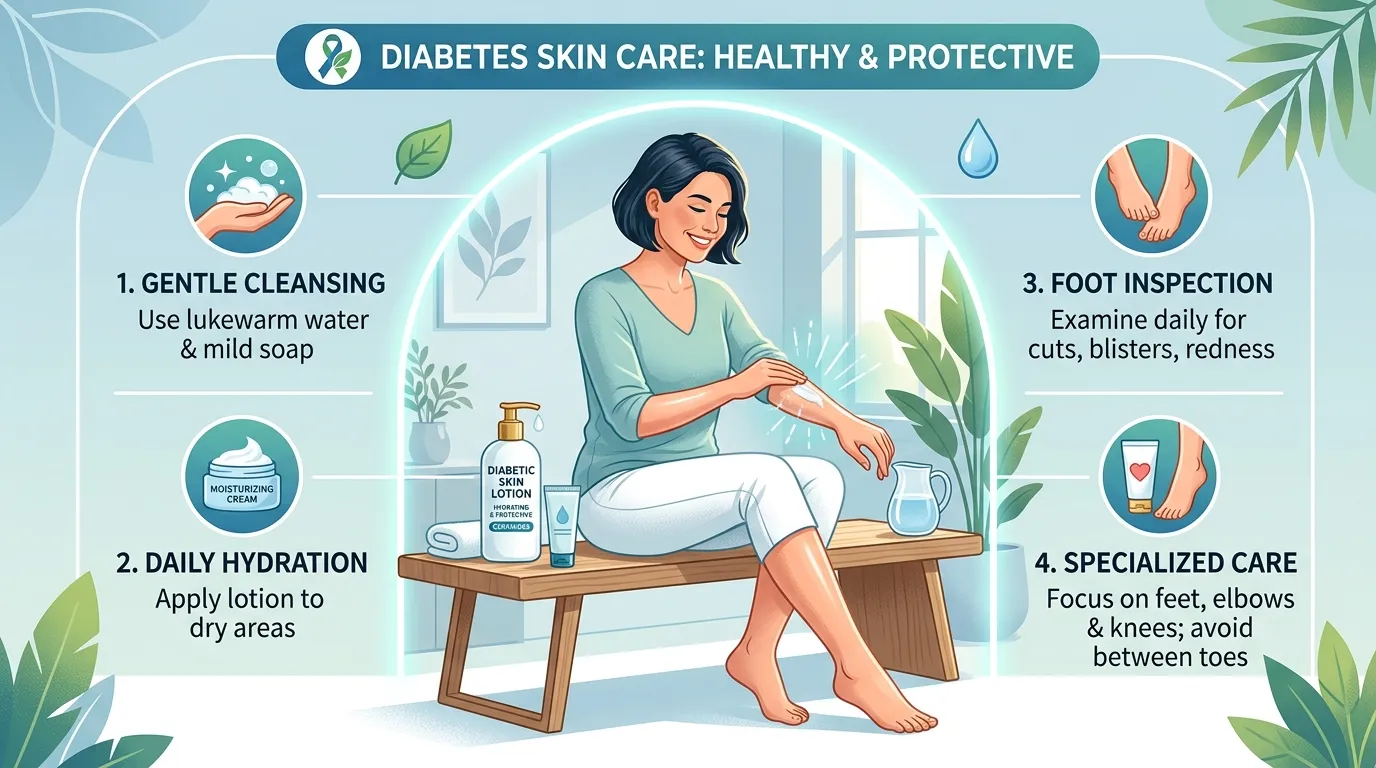
Applying moisturizer every day helps reduce dryness and cracking.
Good times to moisturize include:
- After bathing
- After washing hands
- Before bedtime
- Whenever skin feels dry
- Look for fragrance-free creams or ointments if you have sensitive skin.
Creams generally provide more moisture than lotions because they contain less water and create a stronger protective barrier.
Avoid applying moisturizer between the toes unless your healthcare provider specifically recommends it, since excess moisture in that area may encourage fungal growth.
Bathe Without Drying Out Your Skin
Long, hot showers may feel relaxing, but they can remove the skin's natural oils.
Instead:
- Use warm rather than hot water.
- Limit bathing time.
- Choose mild, fragrance-free cleansers.
- Pat skin dry rather than rubbing vigorously.
- Apply moisturizer immediately afterward while the skin is still slightly damp.
- These simple habits help lock moisture into the skin.
- Stay Hydrated
- Water supports nearly every function in the body, including healthy skin.
- Drinking adequate fluids throughout the day helps maintain hydration.
- Your fluid needs depend on factors such as:
- Activity level
- Climate
- Medical conditions
- Medications
If you have kidney disease, heart failure, or another condition requiring fluid restrictions, follow your healthcare provider's recommendations.
Replacing sugar-sweetened beverages with water or unsweetened drinks can also support better blood glucose management.
Watch for Skin Infections
People with diabetes are more likely to develop skin infections.
High blood glucose creates conditions that allow bacteria and fungi to grow more easily while slowing the body's ability to fight infection.
Common signs include:
- Redness
- Swelling
- Warmth
- Pain or tenderness
- Drainage
- Pus
- Fever
- Skin that feels hot to the touch
Any infection should be evaluated promptly, especially if it spreads or does not improve.
Bacterial Skin Infections
Bacterial infections may include:
- Boils
- Infected hair follicles
- Nail infections
- Skin abscesses
- Symptoms often include:
- Pain
- Redness
- Swelling
- Warm skin
- Drainage
Treatment may involve antibiotics, drainage, or both, depending on the severity.
Fungal Infections
Fungi thrive in warm, moist areas.
Common locations include:
- Under the breasts
- Groin
- Between the toes
- Under skin folds
- Around the genitals
- Symptoms may include:
- Red rash
- Itching
- Burning
- Scaling
- Cracking
- Keeping these areas clean and dry helps reduce the risk.
Antifungal medications are available, but persistent infections should be evaluated by a healthcare provider.
Pay Attention to Small Cuts and Scrapes
Even minor skin injuries deserve attention.
Clean cuts promptly using:
- Mild soap
- Clean running water
- Cover the wound with a clean bandage if appropriate.
- Watch carefully for signs of infection.
- If a wound becomes:
- Red
- Warm
- Swollen
- Painful
- Slow to heal
- contact your healthcare provider promptly.
- Early treatment often prevents more serious complications.
- Avoid Scratching Itchy Skin
- Dry skin frequently causes itching.
- Scratching can:
- Break the skin
- Introduce bacteria
- Increase inflammation
- Delay healing
- Instead of scratching:
- Apply moisturizer.
- Use a cool compress.
- Ask your healthcare provider about persistent itching.
- Treating the underlying cause is usually more effective than scratching.
- Protect Your Skin from the Sun
Sun exposure can damage the skin and increase the risk of sunburn, premature aging, and skin cancer. A severe sunburn can also place stress on the body, which may make blood glucose more difficult to manage for some people.
Protect your skin by:
- Applying a broad-spectrum sunscreen with an SPF of 30 or higher
Reapplying sunscreen every two hours when outdoors, or more often after swimming or sweating
Wearing a wide-brimmed hat and UV-protective sunglasses
Choosing lightweight clothing that covers exposed skin
Seeking shade during the strongest sunlight, typically between late morning and mid-afternoon
Don't forget commonly missed areas such as the ears, back of the neck, tops of the feet, and hands.
Support Healthy Circulation
Good circulation helps deliver oxygen and nutrients to the skin, supporting healing and overall skin health.
Simple ways to encourage healthy circulation include:
- Walking or engaging in regular physical activity
- Avoiding long periods of sitting without moving
- Stretching throughout the day
- Maintaining a healthy weight
- Not smoking
- Managing blood pressure and cholesterol
If you notice persistent coldness, discoloration, numbness, or slow-healing wounds, discuss these symptoms with your healthcare provider.
Perform Daily Skin Checks
Checking your skin every day allows you to identify small problems before they become serious.
Pay special attention to:
- Feet and toes
- Legs
- Hands
- Skin folds
- Under the breasts
- Groin area
- Around insulin injection or continuous glucose monitor (CGM) sites
- Look for:
- Cuts
- Blisters
- Cracks
- Rashes
- Redness
- Swelling
- Drainage
- Bruising
- Areas of unusual warmth
- Changes in skin color
If you have difficulty seeing certain areas, use a mirror or ask a family member to help.
Rotate Injection and Sensor Sites
If you use insulin injections, an insulin pump, or a continuous glucose monitor (CGM), rotating application sites is important.
Repeated use of the same location can contribute to:
- Skin irritation
- Scar tissue
- Lipohypertrophy (thickened fatty tissue under the skin)
- Less predictable insulin absorption
Follow the instructions provided for your medication or device, and inspect sites regularly for redness, swelling, pain, or signs of infection.
Recognize Diabetes-Related Skin Conditions
Some skin conditions occur more often in people with diabetes.
Diabetic Dermopathy
Diabetic dermopathy appears as light brown or reddish, round or oval patches, most commonly on the shins.
These spots are usually painless and do not require treatment, although managing diabetes and protecting the skin from injury may help prevent additional lesions.
Acanthosis Nigricans
This condition causes darker, thicker, velvety patches of skin, often found on the neck, underarms, groin, or other skin folds.
It is commonly associated with insulin resistance and obesity.
Although the patches themselves are usually harmless, they may signal the need for evaluation of blood glucose management and overall metabolic health.
Necrobiosis Lipoidica
This uncommon condition causes yellowish-brown patches with raised borders, most often on the lower legs.
The affected skin may become thin and more prone to injury.
Because these lesions can occasionally ulcerate, evaluation by a healthcare provider or dermatologist is recommended.
Bullosis Diabeticorum
Rarely, people with diabetes may develop painless blisters on the hands, feet, legs, or forearms.
These blisters often heal on their own but should still be evaluated to rule out infection or other skin conditions.
Choose Comfortable Clothing
The clothing you wear can affect skin health.
Choose:
- Soft, breathable fabrics
- Properly fitting shoes
- Clean, dry socks
- Moisture-wicking clothing during exercise
Avoid clothing or footwear that rubs repeatedly against the skin, as friction can lead to blisters or sores.
Wash clothing regularly and change out of damp clothes promptly after exercising or sweating.
Manage Minor Skin Injuries Promptly
Small cuts, insect bites, scratches, or blisters should never be ignored.
Basic first aid includes:
- Wash the area gently with mild soap and clean water.
- Pat dry with a clean towel.
- Apply a clean dressing if needed.
- Monitor the area daily.
Avoid using harsh chemicals or home remedies unless recommended by your healthcare provider.
Seek medical attention if a wound:
- Becomes increasingly red or swollen
- Produces drainage
- Develops a foul odor
- Causes increasing pain
- Does not show signs of healing within several days
- Is accompanied by fever or chills
- When to Contact Your Healthcare Provider
- Early treatment often prevents minor skin problems from becoming serious.
- Contact your healthcare provider if you notice:
- Persistent redness
- Swelling
- Warmth
- Pus or drainage
- Fever
- Severe itching
- Rapidly spreading rash
- Painful blisters
- A wound that isn't healing
- Blackened skin
- Any new skin change that concerns you
People with diabetes should avoid delaying care for skin infections, especially on the feet or lower legs.
Skin Care Is Part of Diabetes Care
Healthy skin reflects healthy habits.
By combining good blood glucose management with daily skin care, regular physical activity, balanced nutrition, and prompt treatment of injuries, you can significantly reduce your risk of skin complications.
Many diabetes-related skin problems begin as small changes that are easy to overlook. A few minutes each day spent checking and caring for your skin can help prevent larger problems in the future.
Frequently Asked Questions
Why does diabetes cause dry skin?
High blood glucose, dehydration, reduced circulation, nerve damage, and certain medications can all contribute to dry skin.
Can skin infections affect blood glucose?
Yes. Infections can place stress on the body, which may cause blood glucose levels to rise and become more difficult to manage.
Should I moisturize every day?
Yes. Daily moisturizing, especially after bathing, helps maintain the skin's protective barrier and may reduce dryness and cracking.
Are all skin problems related to diabetes?
No. People with diabetes can develop the same skin conditions as anyone else. However, diabetes may increase the risk of certain infections and slow healing.
When should I seek medical care?
Seek medical attention promptly for wounds that don't heal, spreading redness, swelling, pus, fever, severe pain, or any signs of infection.
Key Takeaways
Diabetes can increase the risk of dry skin, infections, slow wound healing, and several specific skin conditions.
Managing blood glucose is one of the most effective ways to support healthy skin.
Moisturize daily with fragrance-free products and avoid excessively hot baths or showers.
Inspect your skin every day for cuts, blisters, rashes, redness, or other changes.
Clean and protect even minor injuries promptly, and monitor them closely.
Rotate insulin injection and CGM sites to help reduce skin irritation and improve medication absorption.
Protect your skin from the sun, support healthy circulation, and wear comfortable clothing that minimizes friction.
Contact your healthcare provider promptly if you notice signs of infection or wounds that are slow to heal.